
 TRIAL LESSON
Pianists, Piano Lessons
Rudolf Serkin in London: Beethoven, Integrity and the Art of Serious Piano Listening
Jun
Rudolf Serkin in London
Rudolf Serkin in London: Beethoven, Integrity and the Art of Serious Piano Listening
Rudolf Serkin remains one of the defining Beethoven pianists for listeners who value structure, moral seriousness and a tone that refuses decoration for its own sake.
Why Serkin still matters: he made Beethoven sound like an ethical act: clear, searching, disciplined and alive. That is exactly the kind of listening culture that serious piano study in London should protect.
Quick biography and career milestones
Serkin was born in Eger, Bohemia, in 1903 and moved to Vienna as a child for musical training. His biography is often told through places: Eger, Vienna, Berlin, New York, Philadelphia and Marlboro. London belongs in that chain because the city heard him through the Busch circle, through chamber programmes, through concerto appearances and, later, through the recordings that shaped post-war British listening. He became closely associated with the violinist Adolf Busch, first as a collaborator, then as family after marrying Busch’s daughter Irene. Their musical partnership placed him inside a central European tradition where chamber music, score loyalty and moral independence mattered as much as public virtuosity.
Serkin was never a pianist of easy glamour. The public image is severe because the playing itself asks for seriousness: a strong left hand, dry honesty in rhythm, few sentimental cushions and an almost physical insistence that form must be heard. After the rise of Nazism, the Busch and Serkin families emigrated to the United States. Serkin joined the Curtis Institute of Music, later serving as its director, and in 1951 helped found Marlboro Music with the Busch and Moyse families. Curtis describes him as a renowned Beethoven interpreter; Marlboro records his role as co-founder and artistic director until his death in 1991.
Listening Insight
Read Serkin chronologically if you want the story; listen to him comparatively if you want the lesson. Place one early Beethoven performance beside a late recording and the constant is not tempo, but purpose.
Serkin in London: dates, venues and contemporary reception
London meets Serkin most clearly through concert records, recordings and the memory of serious chamber-music culture. Concert Programmes lists Busch and Serkin appearances at Wigmore Hall in February and March 1934, including chamber concerts with Adolf Busch, Hermann Busch, Karl Doktor and Aubrey Brain. Another record places Serkin at the Royal Festival Hall with Colin Davis and the London Symphony Orchestra on 12 February 1965 in Brahms’s First Piano Concerto.
These are not decorative footnotes. Wigmore Hall represents intimate chamber listening; Royal Festival Hall represents the public concerto tradition. Serkin belonged to both. The Wigmore records also remind us that his London identity was inseparable from Adolf Busch. The pianist was not arriving as a celebrity soloist detached from colleagues; he was part of a chamber language built on argument, restraint and absolute commitment. The London listener therefore encounters him as a pianist who could speak in a quartet conversation and also carry the architectural weight of Brahms and Beethoven across a large hall. That dual identity is valuable for students: the best concerto playing still has chamber listening inside it, and the best chamber playing still needs soloistic courage when the music demands it.
Busch and Serkin chamber programmes at Wigmore Hall.
Marlboro Music founded, extending the chamber ideal.
Royal Festival Hall, LSO and Colin Davis in Brahms.
The Beethoven Serkin: interpretive traits and what to listen for
Serkin’s Beethoven is often described through intensity, but intensity alone misses the point. The remarkable feature is order under pressure. In the sonatas and concertos, listen for how he refuses to soften the argument. Rhythms are kept alive, inner voices are made to speak, and climaxes arrive as consequences rather than gestures.
For adult pianists, this is a useful antidote to surface drama. A passage can be emotionally honest without being swollen; a forte can be powerful without becoming harsh; a tempo can be urgent without losing grammar. Serkin is worth hearing because he keeps those distinctions alive. Serkin teaches the ear to ask whether a phrase has direction, whether a bass line has moral weight, whether a transition has been understood before it has been performed. WKMT’s own classical piano study in London encourages the same discipline: interpretation begins with hearing structure, not merely producing sound.
Try listening to the opening of a Beethoven concerto with three questions in mind. Where is the bass taking the harmony? Which repeated figure carries the pressure? When the piano answers the orchestra, is it answering with force, with wit or with refusal? Serkin often makes those questions audible before the listener has time to name them.
Serkin’s lesson is not to play Beethoven louder; it is to make the musical argument unavoidable.
Essential recordings: a curated listening path
Use recordings as listening laboratories, not as monuments. The following path keeps the range compact enough for practical study. Serkin did not leave the kind of all-embracing discography some pianists created, which makes selection easier. His recorded legacy points repeatedly to Beethoven, Mozart, Brahms, Schubert and chamber music: repertory where structure, proportion and the weight of a musical sentence are impossible to fake.
| Listener | Recording focus | What to notice |
|---|---|---|
| Newcomer | Beethoven piano concertos with Eugene Ormandy | Firm pulse, direct rhetoric, unsentimental slow movements. |
| Sonata listener | Late Beethoven sonatas | How tension is held without theatrical excess. |
| Chamber listener | Busch collaborations and Marlboro recordings | A piano voice that leads by listening. |
| Collector | Sony’s Complete Columbia Album Collection and DG late recordings | The contrast between early fire and late austerity. |
The table is not a ranking; it is a route. Begin with the concertos if you want directness. Move to the late sonatas when you are ready for ambiguity. Add the Busch and Marlboro material when you want to hear how Serkin listens sideways, not only forward. Finally, compare the late DG recordings with the Columbia material and notice how age changes weight but not conviction.
Chamber music, Marlboro and the transatlantic career
Serkin’s authority was never simply soloistic. The Busch partnership shaped his instincts: breathe with another player, accept friction, and let the score decide the hierarchy. Marlboro turned that ethic into an institution. Its history describes a place built to develop young musicians through sustained chamber work, not quick display.
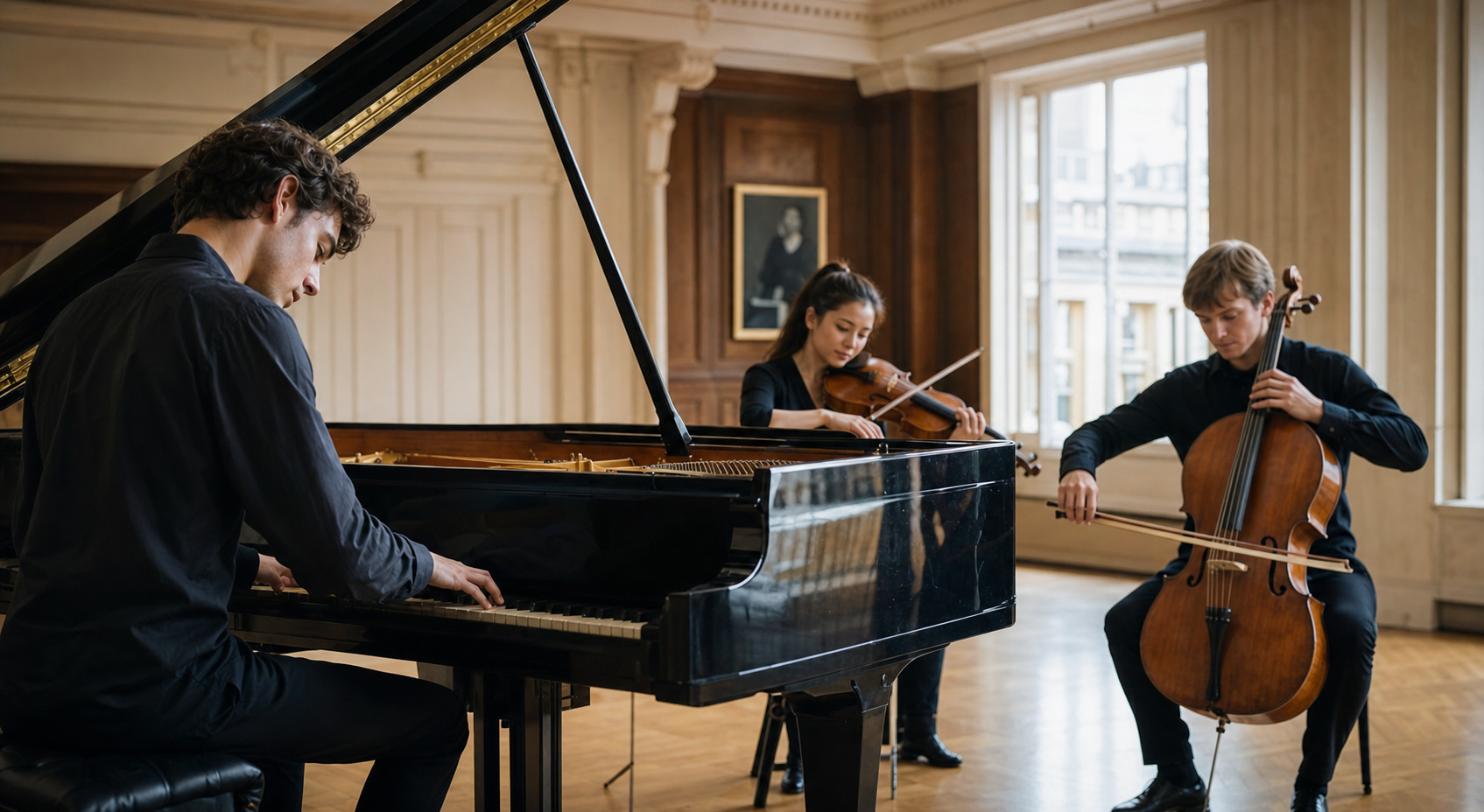
This matters to London because the capital’s strongest musical life is not only in headline concerts. The city is full of small-room seriousness: lunchtime recitals, conservatoire projects, chamber societies, private study groups and listeners who return to the same work several times rather than chasing novelty. It is also in rehearsal rooms, chamber series, student concerts and informed listening communities. Serkin’s Marlboro values travel naturally into that environment. A pianist who has learnt to listen as a chamber musician sits differently at the keyboard: more alert to breathing, more careful with attack, less tempted to dominate every phrase. Serkin’s example points toward a culture where pianists are judged by their musical responsibility, not by speed alone.
Teaching, lineage and influence on British pianism
Serkin’s teaching legacy is inseparable from Curtis and Marlboro. Curtis places him in a distinguished piano lineage; Marlboro shows what that lineage became when turned into a summer community. The influence is therefore practical, not mythical: a teacher sets standards, rehearsals test them, younger musicians absorb them, and audiences eventually hear the result. It appears in the careers of pupils, collaborators and younger musicians who absorbed his insistence on seriousness. The lesson for British pianism is not to imitate his sound mechanically. It is to preserve his hierarchy of values: score, rhythm, inner hearing, chamber awareness and long musical patience.
Teacher’s Note
When an adult learner studies Beethoven, the first question is not how dramatic the passage can sound. It is whether the ear can follow the bass, the harmony, the motive and the silence between events.
That approach naturally supports advanced adults as well as ambitious younger pianists. Many adult players return to Beethoven with plenty of feeling but little structural confidence. Serkin’s example suggests a different route: reduce vanity, strengthen pulse, listen to the bass, and let the rhetoric grow from the score. For readers returning to serious study, WKMT’s adult piano lessons in London can provide a practical framework for turning this kind of listening into weekly progress.
A practical listening routine
Choose one Serkin recording and listen three times. First, follow the pulse without touching the piano. Second, mark where the harmony seems to tighten or release. Third, sing the bass line softly and notice how often it explains the phrase before the right hand does.
This routine is deliberately modest. It turns admiration into usable musicianship, and it prevents historical listening from becoming passive collecting.
The reward is practical: after this kind of listening, a student returns to the keyboard with clearer priorities, less decorative anxiety and a stronger sense of why Beethoven demands patience before force. It also makes interpretation less lonely, because the performer begins to hear a lineage of choices rather than a private struggle.
Where Londoners can hear or research Serkin today
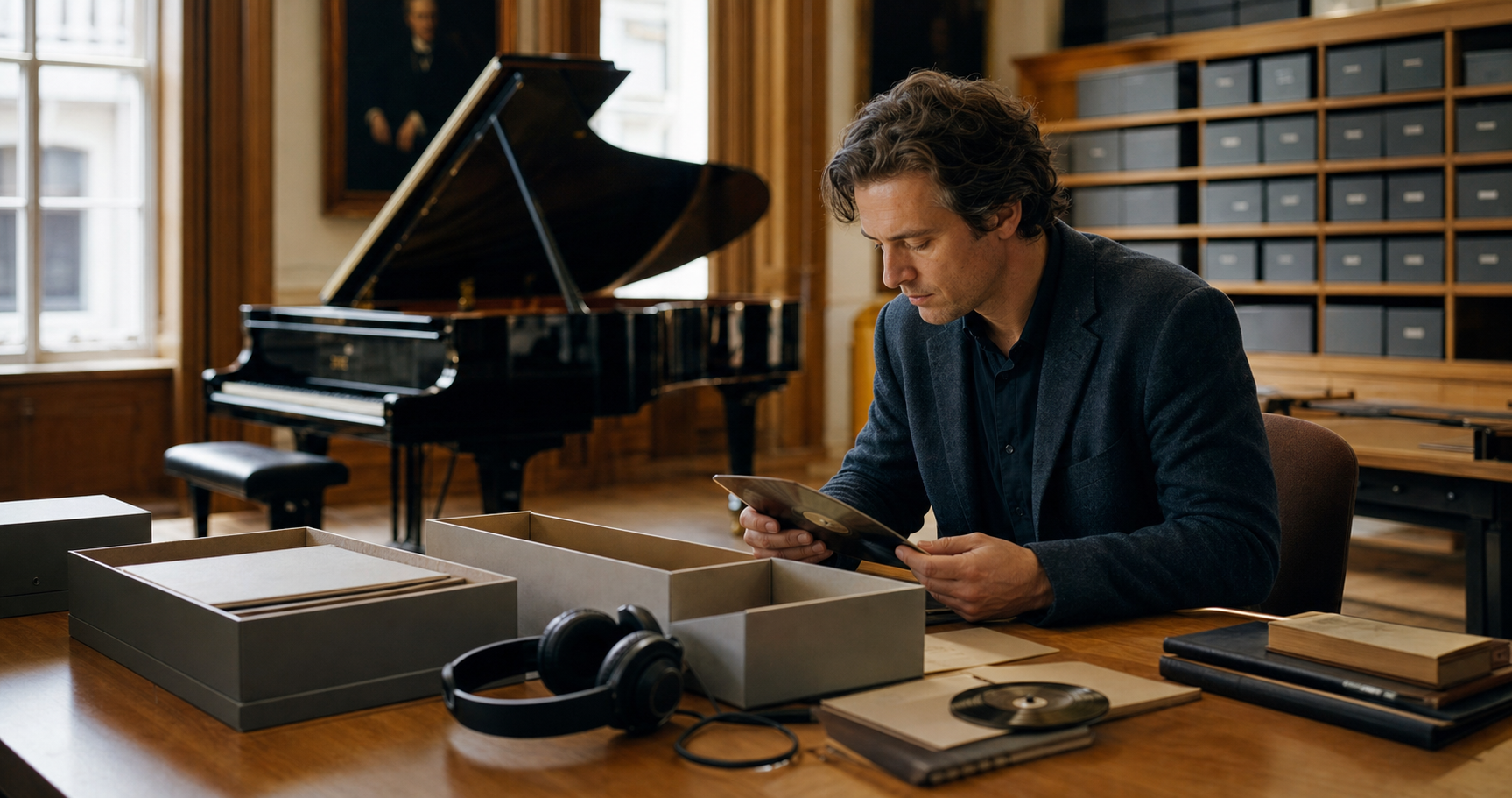
Start with recordings, then triangulate them with concert programmes. A good listening project might take one month: one concerto, one sonata, one chamber recording and one archive search. Keep notes on sound, tempo, balance and the physical sensation of the performance. Concert Programmes is useful for Wigmore Hall and Royal Festival Hall traces; the British Library Sound Archive is the right place to investigate broadcast and recorded holdings; Marlboro’s archive gives institutional context for the chamber ideal. WKMT readers may also enjoy related listening through classical concerts in London by WKMT and the studio’s reflections on the importance of listening.
Bring serious listening into your piano study
If Serkin’s Beethoven sharpens your ear, use that curiosity at the keyboard. WKMT helps London pianists connect interpretation, technique and musical judgement.
Conclusion and practical next steps
Rudolf Serkin in London is more than a biographical subject. It is a way of asking what kind of pianist the city wants to cultivate: one who dazzles briefly, or one who listens deeply enough to serve Beethoven, Brahms, Schubert and chamber music over a lifetime. He is a standard of attention. Listen to his Beethoven for structure, to his chamber work for responsibility, and to his legacy for the kind of seriousness that keeps classical piano study alive.
Sources on Rudolf Serkin in London
- Curtis Institute of Music, “Legacy of Piano”
- Marlboro Music, “History” and “From the Archives: Rudolf Serkin”
- Concert Programmes database, Wigmore Hall and Royal Festival Hall Rudolf Serkin records
- Deutsche Grammophon, “The Rudolf Serkin Edition”
- Sony Classical, “Rudolf Serkin: The Complete Columbia Album Collection” listing
- Encyclopaedia Britannica, “Rudolf Serkin”