
 TRIAL LESSON
Pianists, Piano Lessons
Rafał Blechacz in London: Chopin, Clarity and the Art of Serious Piano Listening
Aug
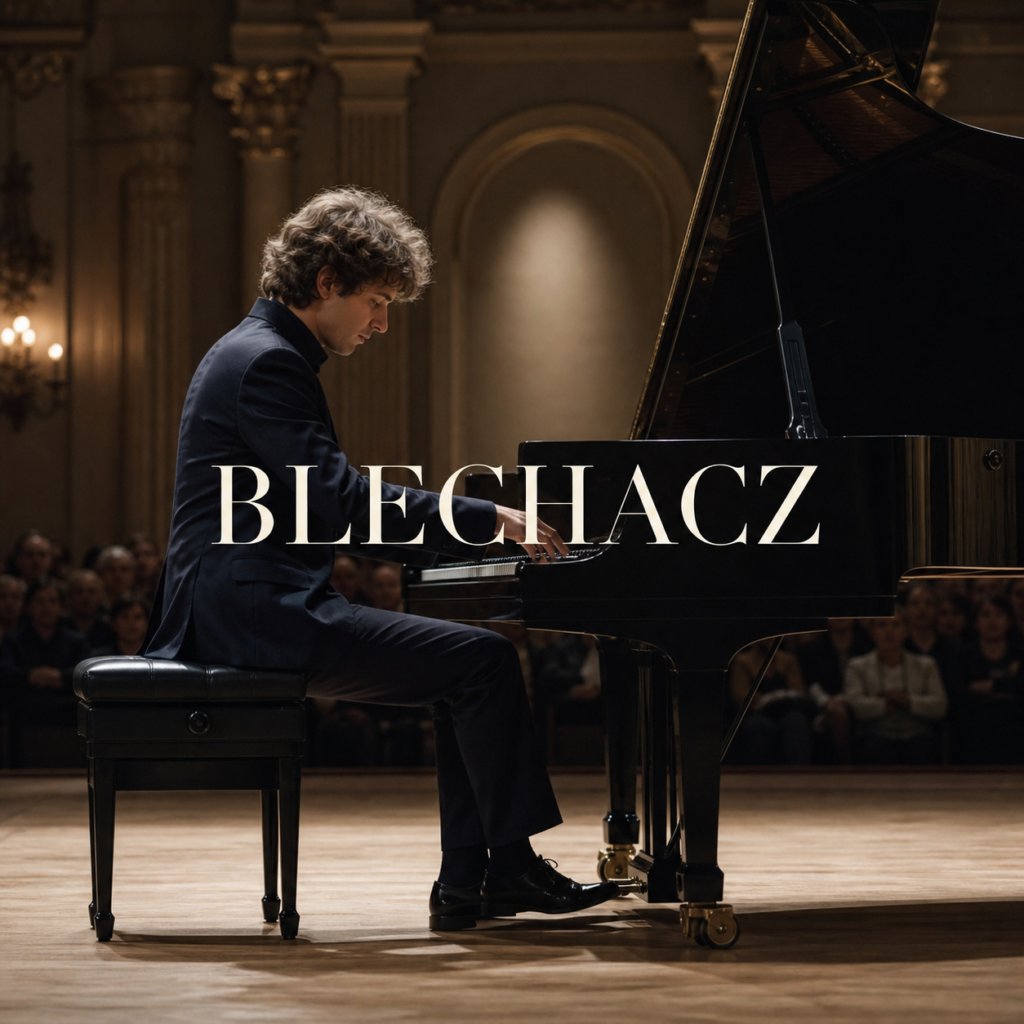
Rafał Blechacz in London
WKMT London listening guide
Rafał Blechacz in London: Chopin, Clarity and the Art of Serious Piano Listening
Rafał Blechacz is one of the defining Chopin pianists of his generation. His London appearances and recordings reward a kind of listening that is attentive to proportion, rhythmic character and the expressive weight of a single inner voice.
A search for Rafal Blechacz usually begins with the extraordinary result of the 2005 International Fryderyk Chopin Piano Competition. He won First Prize, every special performance prize listed by the Competition, the sonata prize funded by Krystian Zimerman and the audience prize. Yet the result alone does not explain the fascination. What matters is the musical intelligence behind it: the way Blechacz can keep a phrase supple without losing its pulse, or make a large structure feel inevitable without turning it rigid.
For London listeners, his artistry belongs naturally to a recital culture that values concentration. His own website records appearances at both Wigmore Hall and the Royal Festival Hall, while reviews of his Wigmore recitals show how British responses have evolved from early reservations to recognition of a fiercely engaged, technically brilliant artist. This guide focuses on what to hear, where to begin with the recordings and how his approach can sharpen a pianist’s own musical judgement.
It is worth approaching that judgement slowly. Blechacz rarely depends on a single spectacular mannerism that can be summarised in a sentence. His identity emerges through relationships: how a bass supports a phrase, how a dance accent changes the character of a bar, and how a moment of freedom remains connected to the movement’s larger direction. Close listening makes those relationships increasingly vivid.
Rafał Blechacz at a glance
Why the 2005 victory still matters
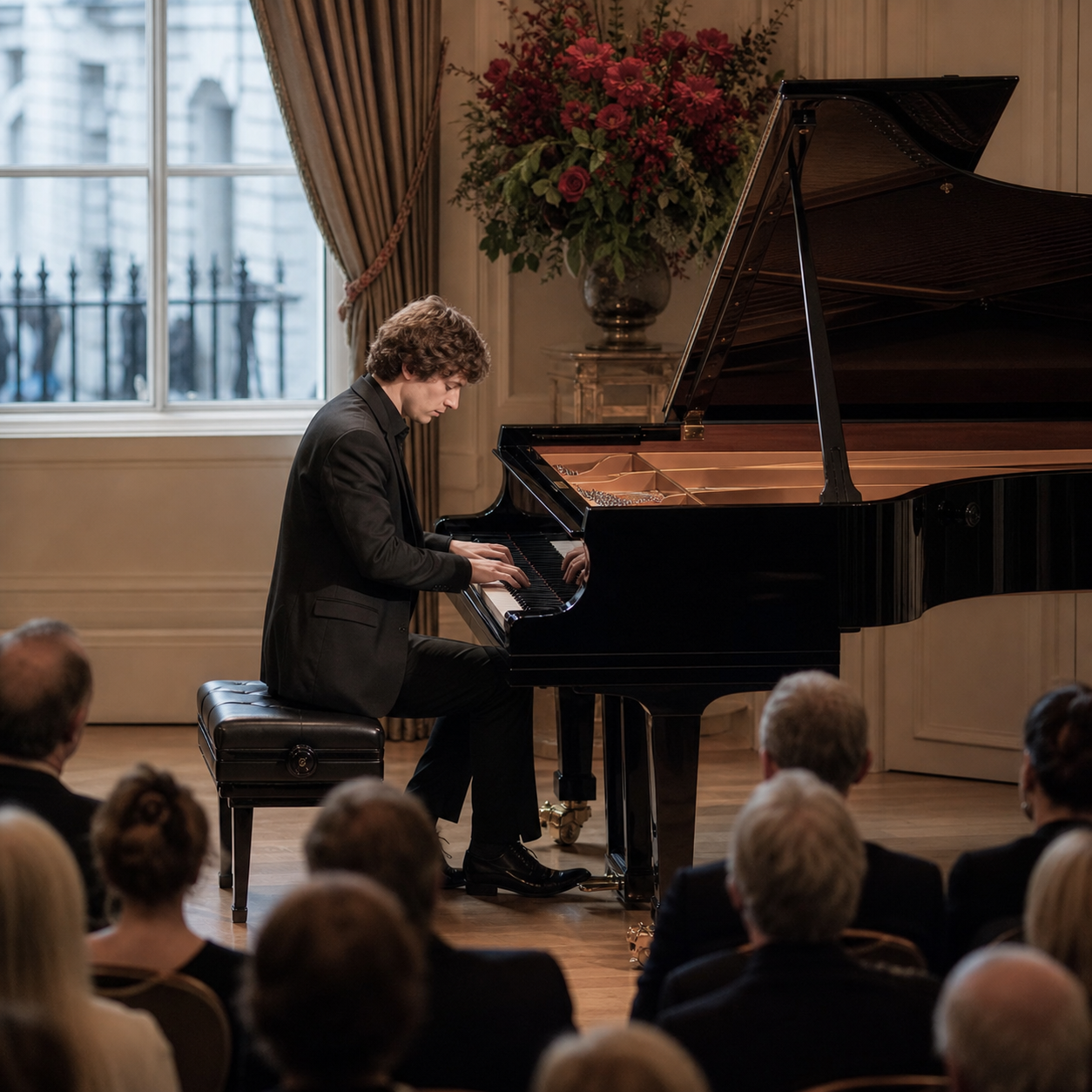
The concentration of a recital room suits Blechacz’s finely judged balance of line, rhythm and colour.
The official Competition archive describes Blechacz as the most decorated pianist in its history at that point. First Prize was accompanied by awards for mazurkas, polonaise, concerto and sonata, together with the audience prize. Such breadth is significant. Chopin asks for very different forms of authority: the grounded accent of a polonaise, the elusive national inflection of a mazurka, the long breath of a concerto and the architecture of a sonata.
Blechacz’s distinction lies in joining these characters without smoothing them into one generic Romantic manner. The mazurkas turn on weight, placement and the relationship between melody and dance. The sonatas require a firmer grasp of direction. In the concertos, the piano must sing while remaining alert to orchestral scale. His Competition success therefore marked more than virtuosity; it revealed an unusually complete understanding of Chopin’s language.
“Clarity is not emotional restraint. At its best, it lets every expressive decision carry greater consequence.”
The Blechacz sound: clarity with a living pulse
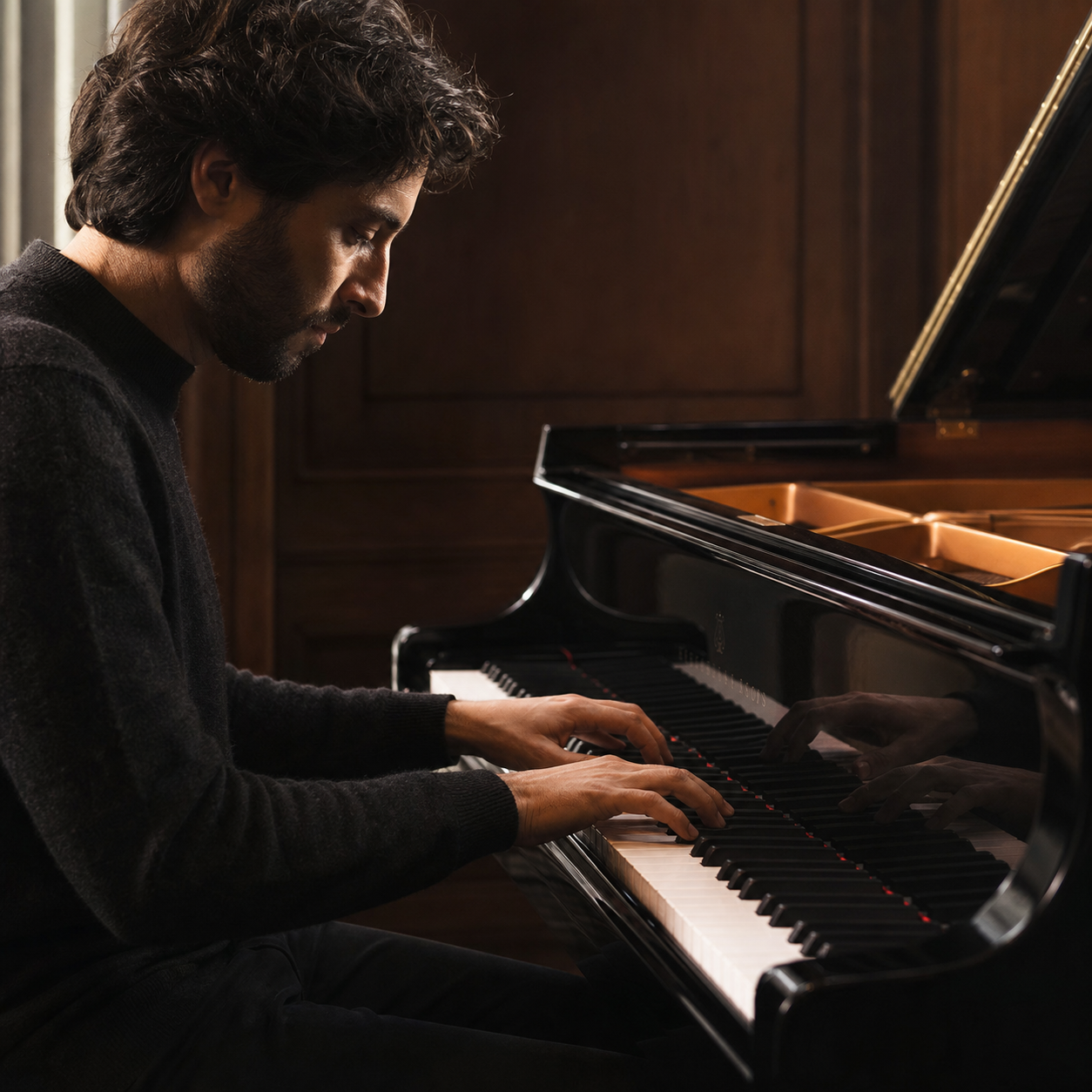
Voicing becomes expressive when the hierarchy between melody, bass and inner parts remains audible.
Listeners often use the word clarity for Blechacz, but it helps to ask what kind. It is not simply clean passagework. His textures tend to have a hierarchy: the singing line is projected, the bass gives harmonic direction and inner notes colour the phrase without crowding it. This makes even dense writing feel spacious.
His rubato also depends on an underlying rhythmic truth. Tempo may breathe, but the dance impulse survives. In Chopin this matters particularly: a delayed arrival becomes meaningful only when the listener still senses the beat against which it leans. Pedalling serves the same aim. Resonance enriches the harmony, while changes of colour remain sufficiently clean to disclose the structure.
Key listening point
Follow the bass for an entire phrase before returning to the melody. Blechacz’s direction often becomes clearest there: harmonic arrivals are prepared through weight and timing rather than exaggerated volume.
A Rafal Blechacz listening guide
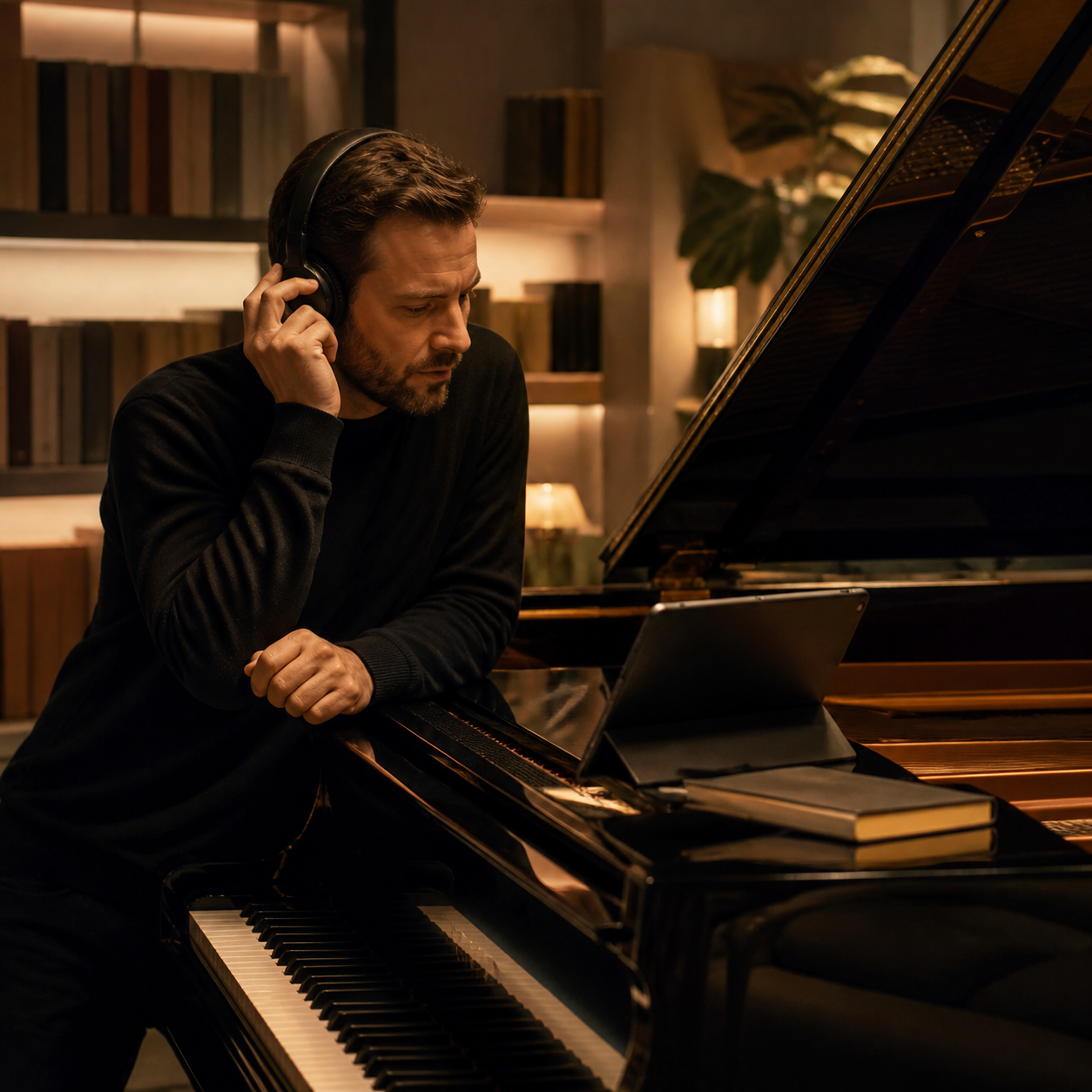
Comparative listening turns admiration into practical musical understanding.
Deutsche Grammophon’s catalogue offers several complementary entrances into Blechacz’s work. The most revealing sequence is not strictly chronological. Begin with the 2007 Chopin Préludes, then move to the 2023 album of the Second and Third Sonatas, and only afterwards compare the concertos, Bach and the Debussy-Szymanowski programme.
| Recording | Listen for | Why it matters |
|---|---|---|
| Chopin: Préludes | Character changing within miniature forms | A compact study of touch, pacing and harmonic atmosphere |
| Chopin: Sonatas Nos. 2 and 3 | Long-range structure and bolder contrasts | Shows how experience enlarged his expressive freedom |
| Chopin: Piano Concertos | Poise between lyricism and orchestral scale | Reveals projection, ensemble awareness and proportion |
| Bach | Articulation, independent voices and rhythmic spring | Separates his musicianship from a Chopin-only reputation |
| Debussy and Szymanowski | Colour without loss of contour | Demonstrates how refined pedalling can preserve definition |
On the 2023 Chopin album, Blechacz spoke of feeling freer with rubato, dynamic contrast and emotional extremes. That statement offers a useful comparison exercise. Hear an early recording and a later one of similar repertoire, then notice where firmness has become flexibility without sacrificing style. For broader context, WKMT’s guide to the importance of listening explains why repeated, purposeful listening belongs inside serious musical study.
Four ways to listen more deeply
1. Map the pulse
Tap the basic beat silently. Notice where the phrase moves away from it and how naturally it returns.
2. Separate the voices
Choose melody, bass or an inner part and follow that line alone through a complete section.
3. Mark colour changes
Identify where touch, register or pedal alters the atmosphere without a major dynamic shift.
4. Compare architecture
After one hearing, describe the emotional route of the whole work in three or four sentences.
London, Chopin and the recital tradition
Blechacz’s documented appearances at Wigmore Hall and the Royal Festival Hall connect two different scales of listening. A recital hall brings the listener close to attack, release and silence. A larger auditorium tests projection and the ability to preserve detail across distance. His playing is compelling in both because the expression begins from proportion rather than effect.
London also has a historical claim on Chopin. The composer’s visits and performances in Britain provide a valuable frame for understanding how intimate piano music travels through public spaces. Readers can explore that history in WKMT’s account of Chopin in London, then place Blechacz among today’s modern classical pianists.
WKMT perspective
A great recording should change the next hour at the piano. Choose one observation, perhaps the balance of an inner voice or the timing of a cadence, and test it slowly in your own repertoire rather than trying to imitate the entire performance.
What serious pianists can learn
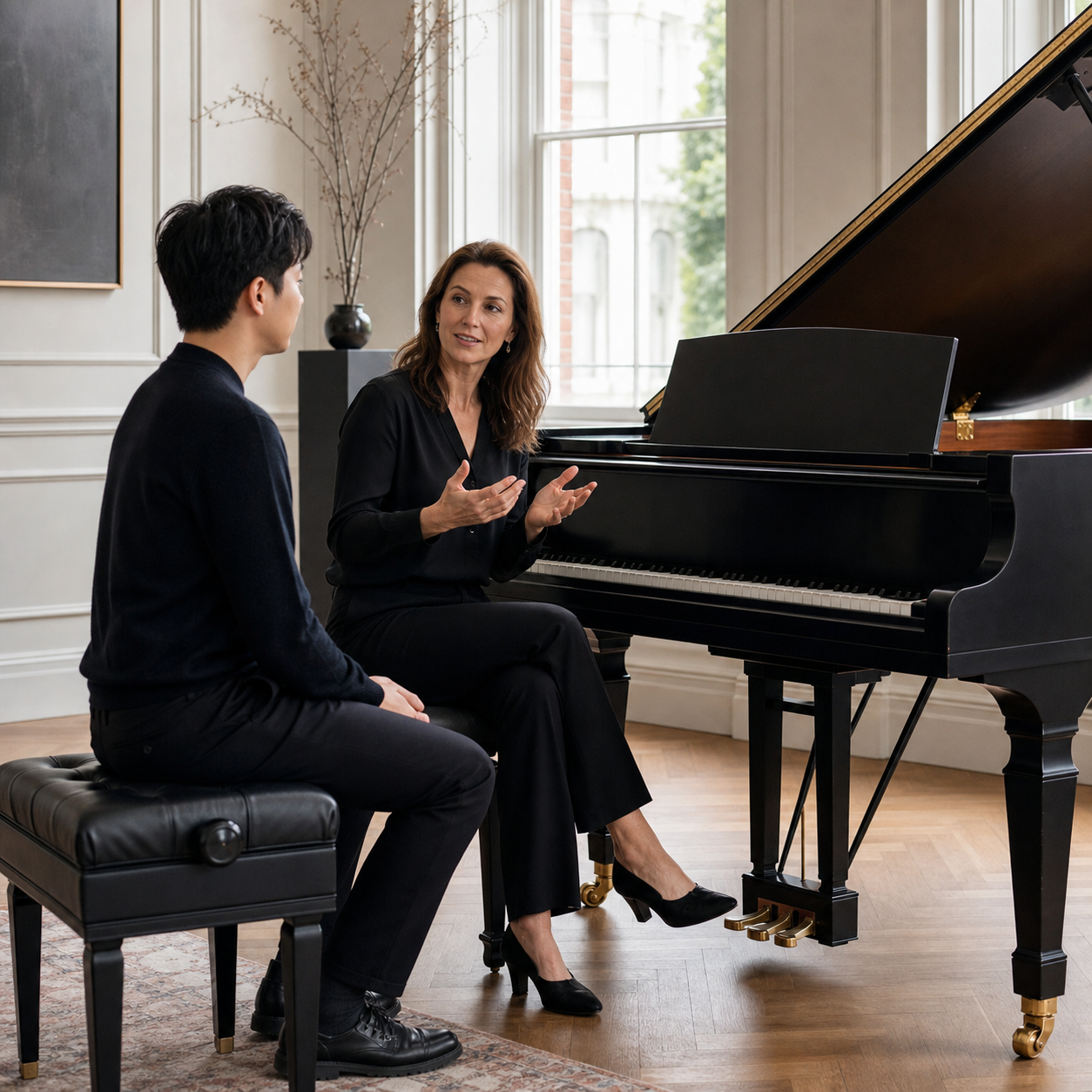
The most useful lesson is not imitation, but a clearer method for making and testing musical choices.
Blechacz’s philosophical study is relevant here. Interpretation is neither unlimited self-expression nor literal obedience. A score creates possibilities and boundaries; the pianist must decide how touch, timing and balance can make its relationships audible. That is a demanding freedom because every choice needs musical justification.
For an adult learner, the practical lesson is to reduce the scale of the question. Instead of asking how to sound like Blechacz, ask whether the melody is truly distinct from the accompaniment, whether a ritardando grows from the phrase and whether the pedal clarifies or obscures the harmony. Such questions make interpretation teachable. They also explain why focused adult piano study in London can be so rewarding: mature listeners often bring a rich musical imagination that careful technique can help realise.
How Blechacz differs from other Chopin interpreters
Comparison is most useful when it avoids a league table. Chopin admits radically different truths. Martha Argerich can make a phrase feel combustible, while Krystian Zimerman often reveals extraordinary control of colour and long-range shape. Rafał Blechacz tends to draw attention to the work’s internal balance: dance rhythm, melodic speech and structural proportion are held in a poised relationship.
In the mazurkas, listen to where the rhythmic accent falls and how little exaggeration is required to establish character. In a polonaise, notice the difference between grandeur and mere heaviness. In the sonatas, follow how local freedom remains accountable to the direction of a movement. These comparisons show why the word “faithful” is inadequate on its own. Blechacz is faithful through active judgement, not through neutrality.
A useful experiment is to compare the same short passage in three performances. Avoid deciding immediately which one is best. Write down what each pianist does with pulse, voicing, dynamic contour and arrival points. Then ask which choices reveal relationships that you had previously missed. The exercise replaces taste alone with attentive description, while leaving room for genuine preference.
Preparing to hear Rafał Blechacz in concert
Concert listening benefits from modest preparation. Read the programme, but do not try to memorise an analysis of every work. Choose two or three landmarks: the return of a principal theme, a transition that changes harmonic direction, or a movement whose character depends on dance. Those points provide orientation while leaving the performance free to surprise you.
In the hall, notice the relationship between the first note and the surrounding silence. Blechacz’s range of articulation becomes clearer when the ear is not chasing every detail at once. During a lyrical passage, follow the release of notes as carefully as their attack. During quicker music, hear groups and gestures rather than counting isolated moments of brilliance.
Afterwards, resist the urge to settle on a verdict immediately. Recall one sound, one change of pace and one structural turn that remained vivid. Returning to a related recording the next day can clarify what belonged to the interpretation, what belonged to the hall and what changed in your own attention. That reflective interval is part of serious listening, not an appendix to it.
A listener’s conclusion
Rafał Blechacz invites attention without demanding spectacle. His authority in Chopin rests on the coexistence of discipline and flexibility: the dance remains alive, the phrase breathes and the large form stays in view. London listeners encountering him in concert or on record can begin with one simple aim: hear how each detail belongs to a larger musical sentence.
That habit travels well beyond Chopin. It turns listening from passive admiration into a form of study and makes the next encounter with a score more curious, more exact and more personal.
Sources on Rafał Blechacz
- International Fryderyk Chopin Piano Competition: XV Competition archive
- Deutsche Grammophon: Rafał Blechacz biography and discography overview
- Deutsche Grammophon: Blechacz on his 2023 Chopin album
- Rafał Blechacz official website
- The Chopin Society UK: Rafał Blechacz recital profile
- The Guardian: Rafał Blechacz at Wigmore Hall, 2019