
 TRIAL LESSON
HOME PAGE
Grade Piano Syllabus & Structured Study Plans at WKMT London

Jan
Grade Piano Syllabus & Structured Study Plans at WKMT London
In a city as culturally diverse as London, finding a truly standardised method of piano instruction can be a challenge. Since 2010, WKMT has been filling that gap by offering a bespoke, research-driven programme led by Experts in Music and internationally acclaimed pianists. Our founder, Juan Rezzuto—an active concert pianist who performs across Europe every year—has cultivated a teaching environment committed to excellence, structure, and individual growth.
Tailored Programmes
Understanding Your Learning Curve
- New Students: We use the first four lessons to gauge how you absorb information, how much practice you can realistically manage, and what inspires you to progress more rapidly.
Here is a bit of referential information about London for the most curious…
Over the past decade, London’s piano education landscape has experienced notable shifts in student demographics, particularly among adult learners. While comprehensive statistical data specific to London is limited, several sources provide insights into these trends.
There has been a discernible increase in adults taking up piano lessons in London. This surge is attributed to various factors:
- Cognitive and Emotional Benefits: Adults are increasingly recognizing the mental advantages of learning the piano, such as enhanced memory, reduced stress, and improved overall mental clarity. Engaging in music has been shown to sharpen cognitive functions and serve as a therapeutic outlet. Pressbooks
- Personal Fulfillment: Many adults view piano lessons as the fulfillment of a long-held aspiration, seeking personal enrichment and a sense of accomplishment. The intrinsic motivation to learn and the desire for self-actualization drive this demographic. Piano Inspires
- Stress Relief: In the demanding urban environment of London, adults turn to piano playing as a means to alleviate workplace burnout and manage stress. Engaging in music provides a creative escape and promotes emotional well-being. Piano Lessons London by WKMT
While the piano remains a popular instrument among younger learners, there are indications of a decline in formal music education within schools. A 2022 report highlighted a reduction in music provision in state schools, which may influence the number of children pursuing piano lessons.
Source The Times & The Sunday Times
In summary, while both children and adults continue to engage in piano education in London, recent years have seen a notable rise in adult learners driven by cognitive, emotional, and personal fulfillment factors.
- Continuing Students: Once we know your learning style, we adapt our teaching strategies to maintain steady momentum and motivation.
What Sets Our Lesson Plans Apart
- Level Assignments & Repertoire: We map out clear goals, pieces to learn, and a timeline for completion, allowing students (and parents) to anticipate their progress.
- Daily Practice Routine: Every plan includes structured practice guidelines designed to enhance skill-building at home.
Some London Insights…
The Imperative of Consistent Daily Practice in Piano Learning
Establishing a consistent daily practice routine is paramount for effective piano learning. Research underscores that regular practice not only enhances muscle memory but also improves hand-eye coordination and accelerates skill acquisition. A study highlighted by Muzie.Live indicates that even 15 to 30 minutes of daily practice can lead to significant progress, emphasizing the importance of frequency over duration.
However, for Londoners, dedicating time to hobbies such as piano practice presents notable challenges due to demanding schedules. Data from the Office for National Statistics reveals that in March 2023, UK adults spent an average of 3 hours and 44 minutes per day on entertainment, socializing, and other free-time activities, a decrease from 4 hours and 30 minutes in March 2020. This reduction suggests increased time constraints, making it more difficult for individuals to commit to regular hobbies.
Despite these challenges, integrating structured practice guidelines into daily routines remains essential for skill development in piano learning. By prioritizing consistent, focused practice sessions, even within limited time frames, learners can effectively enhance their proficiency. Moreover, adopting deliberate practice methods—characterized by goal-oriented tasks and immediate feedback—can further optimize learning outcomes.
In conclusion, while the bustling lifestyle of Londoners may pose obstacles to regular practice, the benefits of maintaining a consistent daily routine are unequivocal. Through deliberate scheduling and commitment, aspiring pianists can overcome time constraints and achieve meaningful progress in their musical journey.
- Forecasting Completion: We project when a student might finish a particular level, offering a transparent horizon of expectations and milestones.
Study Pathways
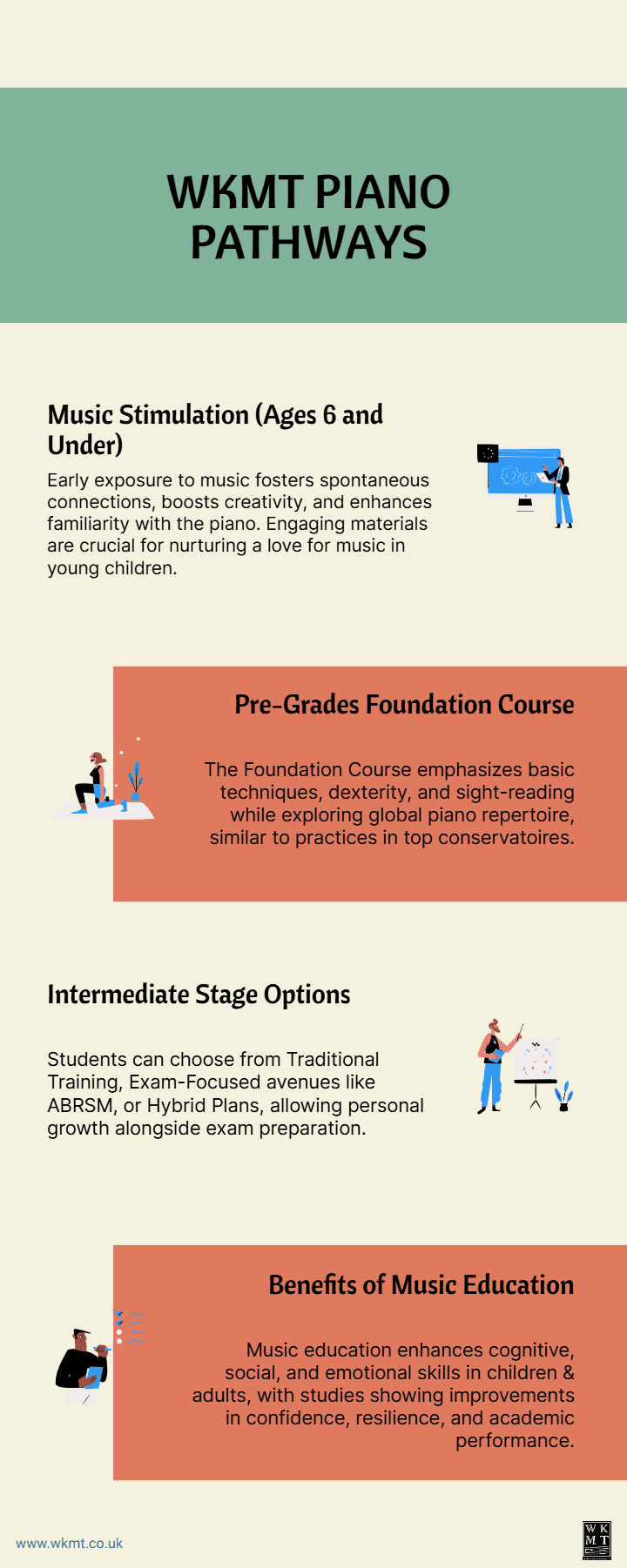
- Music Stimulation (Ages 6 and Under) We prioritise nurturing a spontaneous and positive connection to the instrument. Visual, engaging pedagogical materials encourage creativity and familiarity with the piano at an early stage.
- Pre-Grades (Foundation Course) This signature programme targets the core elements essential to any robust musical education: basic technique, dexterity, sight-reading, and exploration of varied repertoire. Unlike approaches that limit learning to a narrow selection of pieces, we draw from global piano literature—mirroring the standards of leading conservatoires such as the Paris Conservatoire or Rome’s top music schools.
- Intermediate Stage After the foundational phase, students may follow one of three paths:
- Vocational/Traditional Training
- Exam-Focused (e.g., ABRSM Grades)
- Hybrid Plans that combine exam preparation with additional repertoire to strengthen specific technical or musical needs. This option lets students work toward recognised certifications while benefiting from a broader repertoire.
- Advanced We typically concentrate on British Diploma qualifications (Trinity College ATCL, LTCL, and FTCL) or the equivalent ABRSM diploma challenges. This allows advanced learners to refine their skills at a professional standard and gain internationally acknowledged credentials.
Learning Tools
Lesson Reports
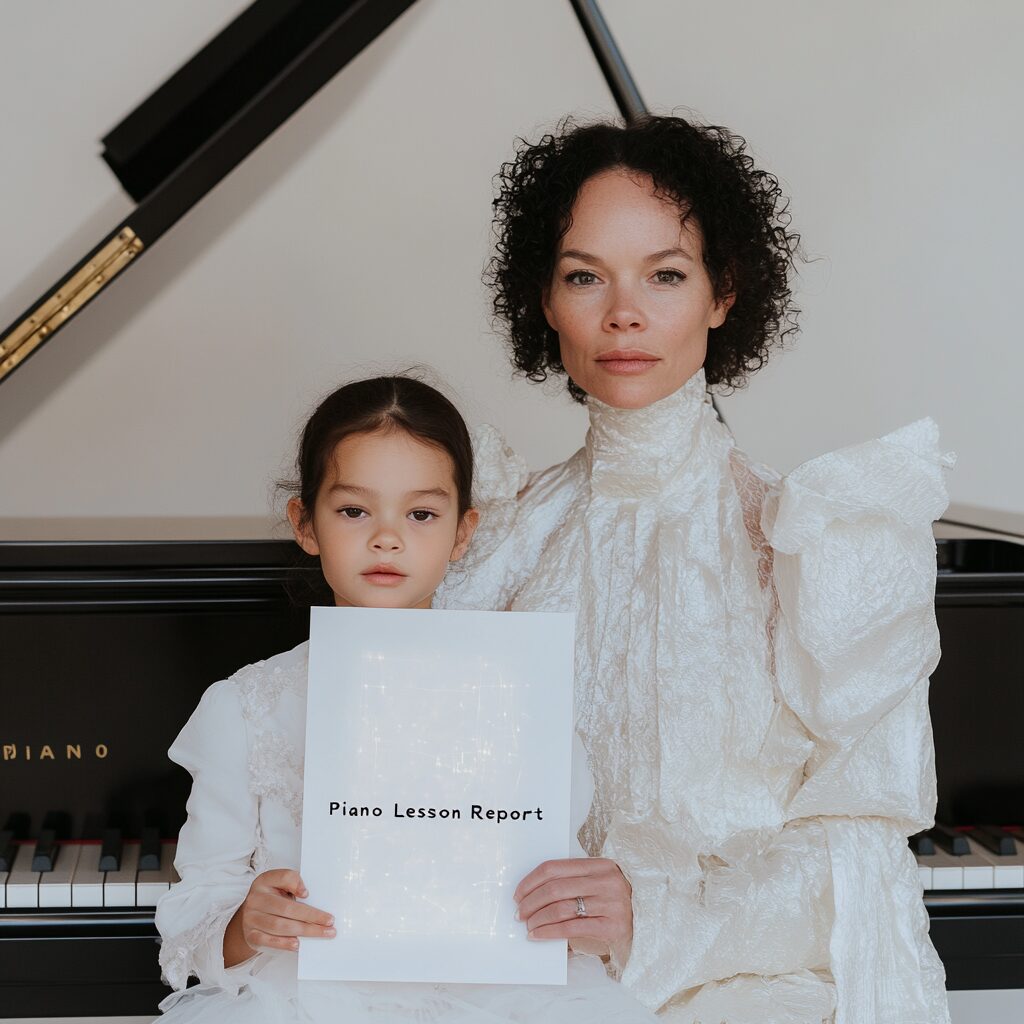
After each session, we provide a detailed report summarising the material covered and clearly outlining tasks for home practice. These reports track each student’s pace of progress, highlight any challenges, and serve as a continual reference point for both teacher and student.
Interesting Facts…
The Value of Detailed Lesson Reports in Piano Education
Thorough lesson reports are instrumental in fostering effective piano education by combining data-driven insights with personalized feedback. By clearly outlining tasks for home practice, these reports provide a structured approach to goal setting, improving time management and enhancing skill development. Research in the British Journal of Music Education confirms that regular and targeted feedback significantly boosts student confidence and learning outcomes. (cambridge.org)
Additionally, detailed lesson reports allow for better data analysis and tracking of progress. Teachers can use the collected data to align lessons with the piano syllabus and adapt strategies to address specific challenges. Such alignment is crucial for achieving long-term goals, whether preparing for an exam or mastering a new skill. Research from the Journal of Piano Research highlights how data collection and personalized feedback lead to measurable improvements in students’ proficiency. (journalofpianoresearch.org)
In summary, detailed lesson reports serve as a study guide for both teachers and students, enabling informed decision-making, tracking progress through statistics, and fostering the development of piano skills with precision and care.
Notes on the Scores
Scores are our traditional archive for lesson improvements. Teachers annotate them meticulously, shaping each student’s unique interpretation—or “version”—of a piece. This hands-on approach to musical development ensures that every learner’s creative potential is fully realised.
Scientific Backup
Our structured and individualized piano instruction methodology at WKMT is supported by various academic and scientific studies highlighting its effectiveness:
Structured Piano Lessons
Implementing a structured lesson plan is crucial for effective piano teaching. Having a clear structure in piano lessons is vital, as it helps both teachers and students navigate the learning process efficiently.
Individualized Piano Instruction
Personalized piano instruction has been shown to enhance cognitive functions. A study published in Aging & Mental Health found that individualized piano instruction improved executive functioning and working memory in older adults.
Cognitive Benefits of Piano Training
Research indicates that piano training can serve as an effective cognitive intervention. A study available on Academia.edu suggests that individualized piano instruction may mitigate age-related cognitive decline, highlighting its potential as a cognitive intervention.
These findings align with our approach at WKMT, where we emphasize structured and personalized piano lessons to foster both musical proficiency and cognitive development.
At WKMT, our commitment to structured, high-calibre piano education—led by seasoned professionals—has helped countless students flourish since 2010. Through comprehensive lesson planning, transparent progress tracking, and a global repertoire, we instil confidence, skill, and a genuine love for music in every learner.