
 TRIAL LESSON
Piano Lessons
Piano Recital Tips for Children: Preparing the Music and the Moment
Sep
WKMT London parent guide
Piano Recital Tips for Children: Preparing the Music and the Moment
A recital asks a child to do more than remember notes. They must walk into a new space, begin without the familiar lesson routine and continue when attention changes under an audience’s gaze. Preparation works best when the music and the moment are rehearsed together.
In brief
The most useful piano recital tips are to prepare early, practise complete performances, rehearse the entrance and ending, test the instrument when possible and plan how to recover after a slip. Parents should keep the day predictable and praise communication rather than perfection. Teachers can use small, friendly performance opportunities so the final recital is not the child’s first experience of being heard.
Piano recital tips begin before the final week
Choose repertoire that can become secure without exhausting the child. Technical polish matters, but so do memory landmarks, clear beginnings and the ability to restart from several places.
In the final week, reduce frantic repetition. One attentive run, followed by repair of two or three specific moments, is more useful than repeatedly proving that the whole piece can survive.
Rehearse the whole event
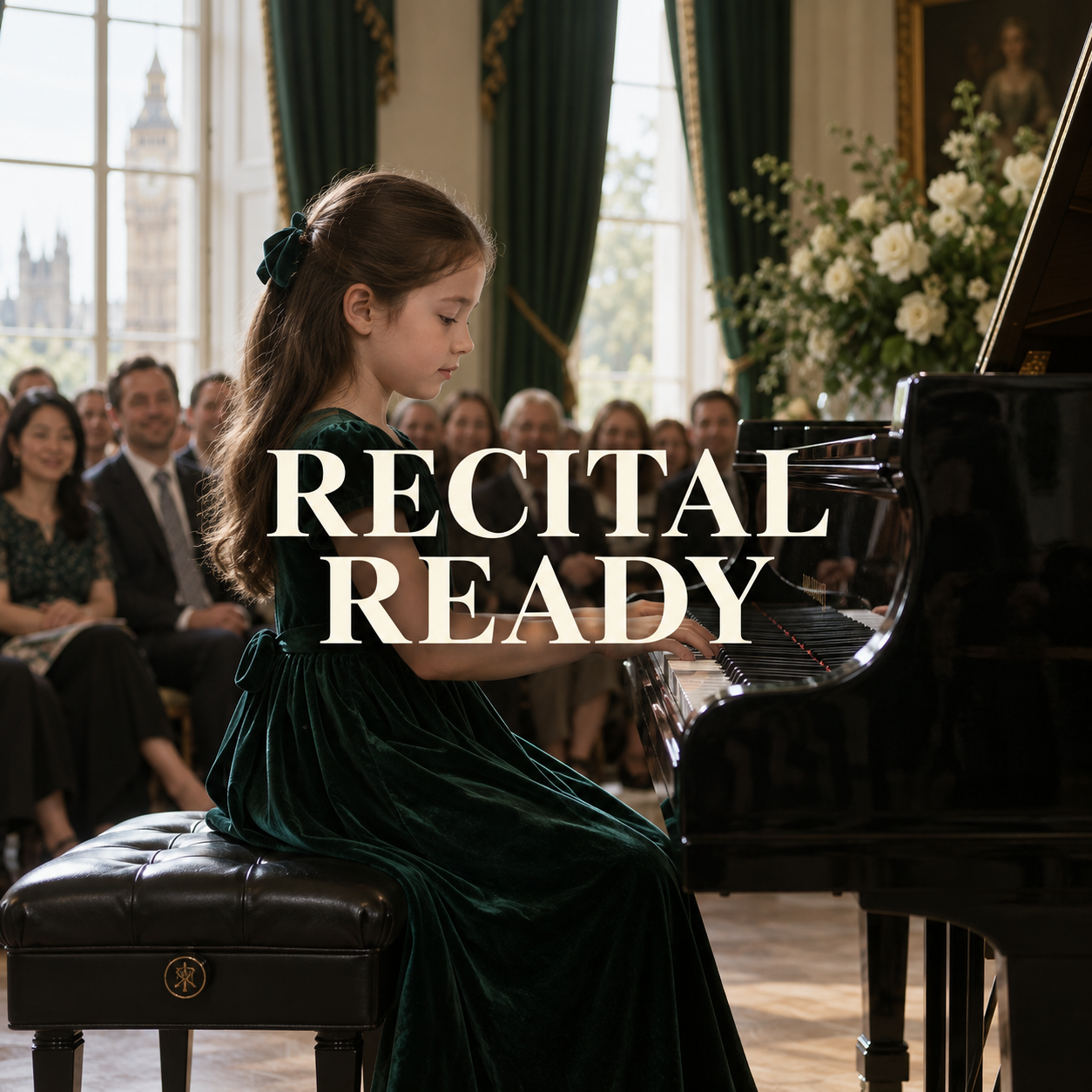
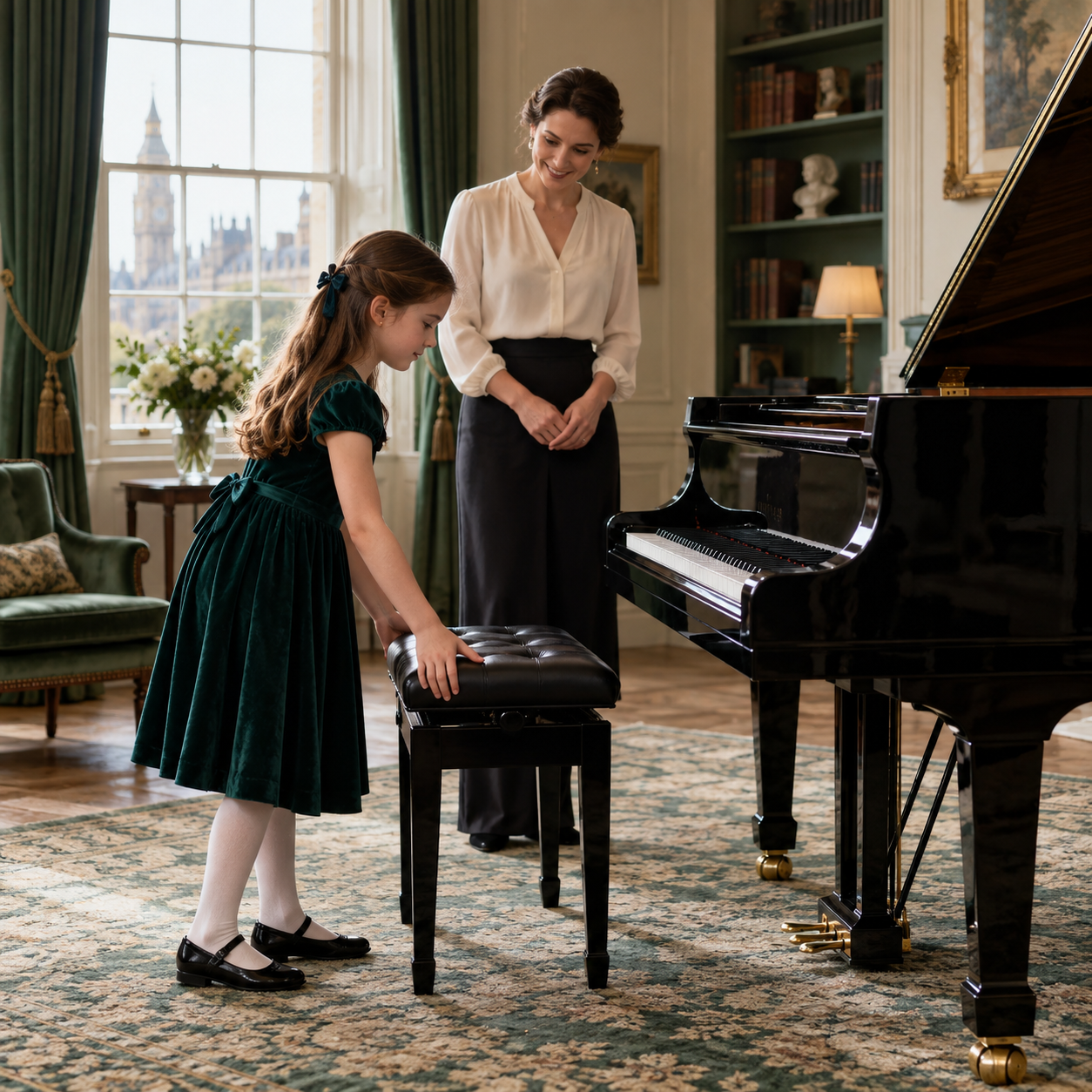
During children’s piano lessons in London, teachers can rehearse walking to the piano, adjusting the stool, breathing and beginning. These ordinary actions become anchors when the room feels unfamiliar.
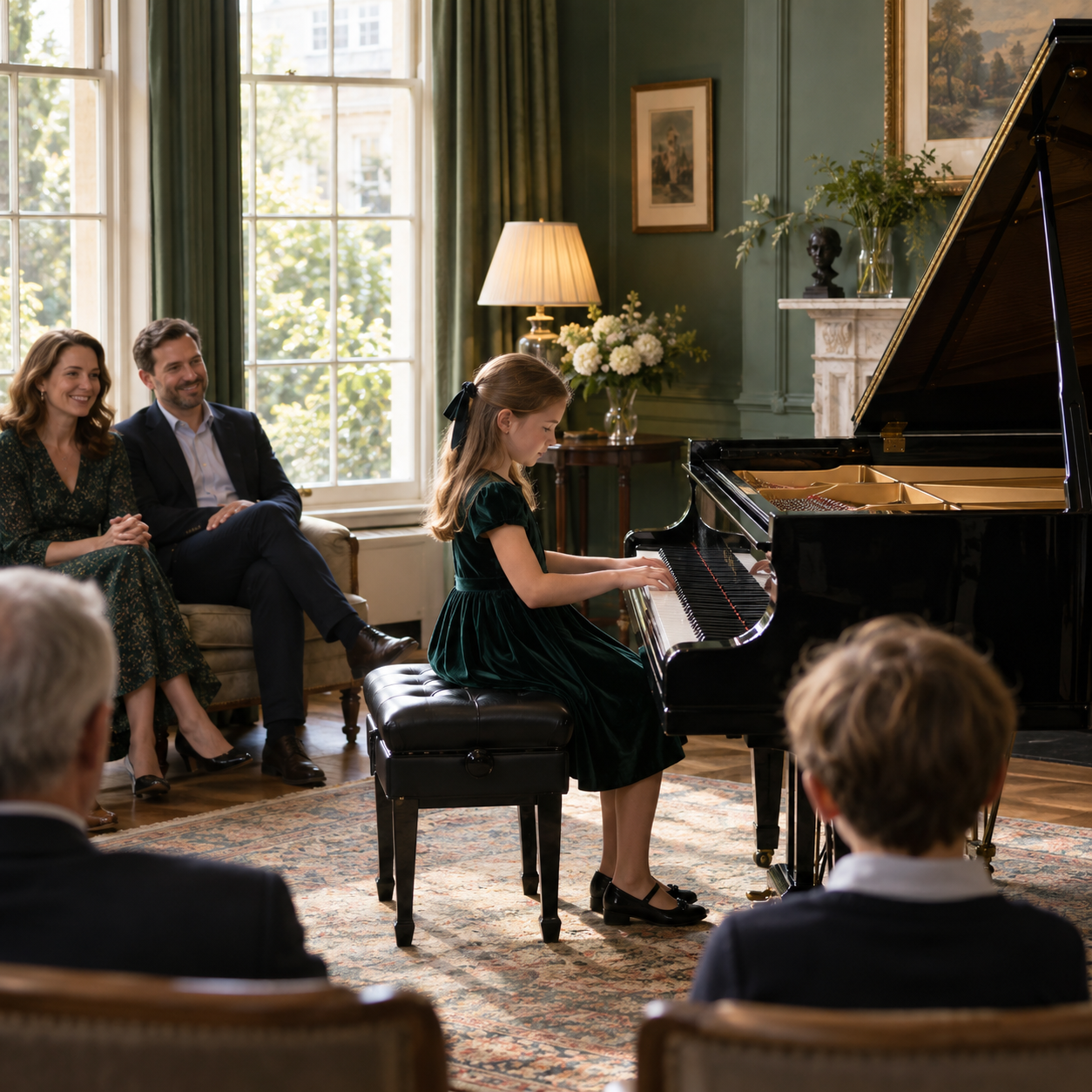
Practise on different instruments and for small audiences. A family member, another pupil or a phone recording introduces just enough pressure for the child to learn how attention changes.
Give nerves a useful interpretation
A faster heartbeat is not proof that something is wrong; it is the body preparing for a demanding event. Children benefit from simple language: excitement and nerves can feel similar, and both can travel alongside a musical intention.
WKMT’s recital anxiety guide expands this approach. Ask the child what they want the audience to notice in the music, shifting attention from self-monitoring to communication.
Confidence is not the absence of nerves; it is knowing what to do when nerves arrive.
Plan recovery, not perfection
Agree on two rescue points and practise moving to them after a deliberate pause. The child learns that a slip is an event inside the performance, not the end of it.
Parents should avoid last-minute technical instructions. Offer practical calm, arrive with time to spare and let the teacher hold the musical plan.
After the recital
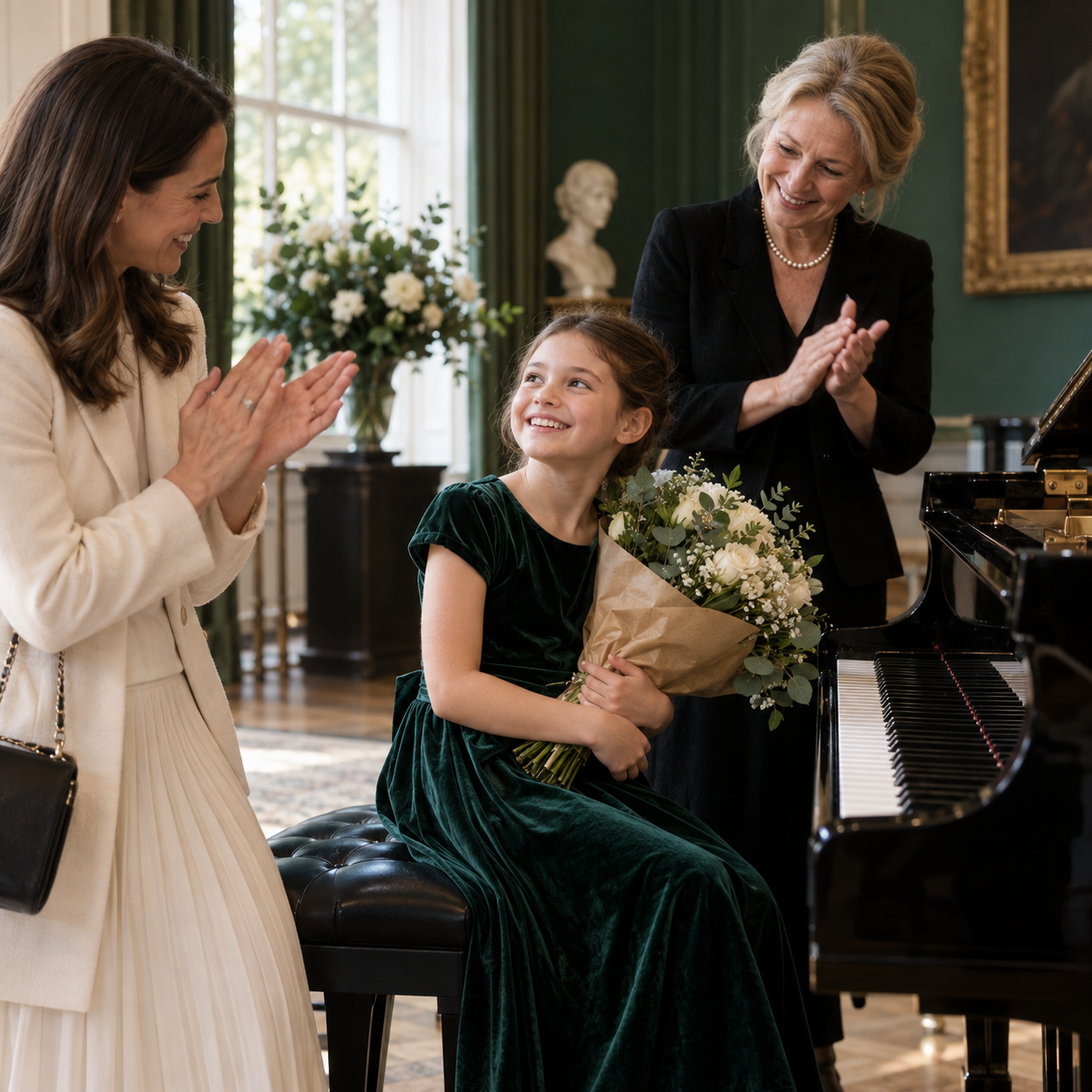
Begin with one truthful success: a clear opening, a brave recovery or an expressive phrase. Detailed correction can wait until the emotional intensity has settled.
These piano recital tips turn performance into part of learning. The goal is not a flawless child, but a young musician who can prepare, communicate and return willingly.
WKMT London
Help your child build performance confidence through thoughtful repertoire, staged experience and responsive teaching.
Explore children’s piano lessonsSources for piano recital tips
- Toronto Metropolitan University: performance anxiety in children
- SAGE: children’s musical performance anxiety
- Music Institute of Chicago: performance preparation
- Music performance preparation research
- RCM Centre for Performance Science
- BAPAM
Sources checked 28 September 2026. Educational guidance; individual circumstances and progress vary.