
 TRIAL LESSON
Pianists
Pavel Kolesnikov in London: Texture, Imagination and Piano Listening
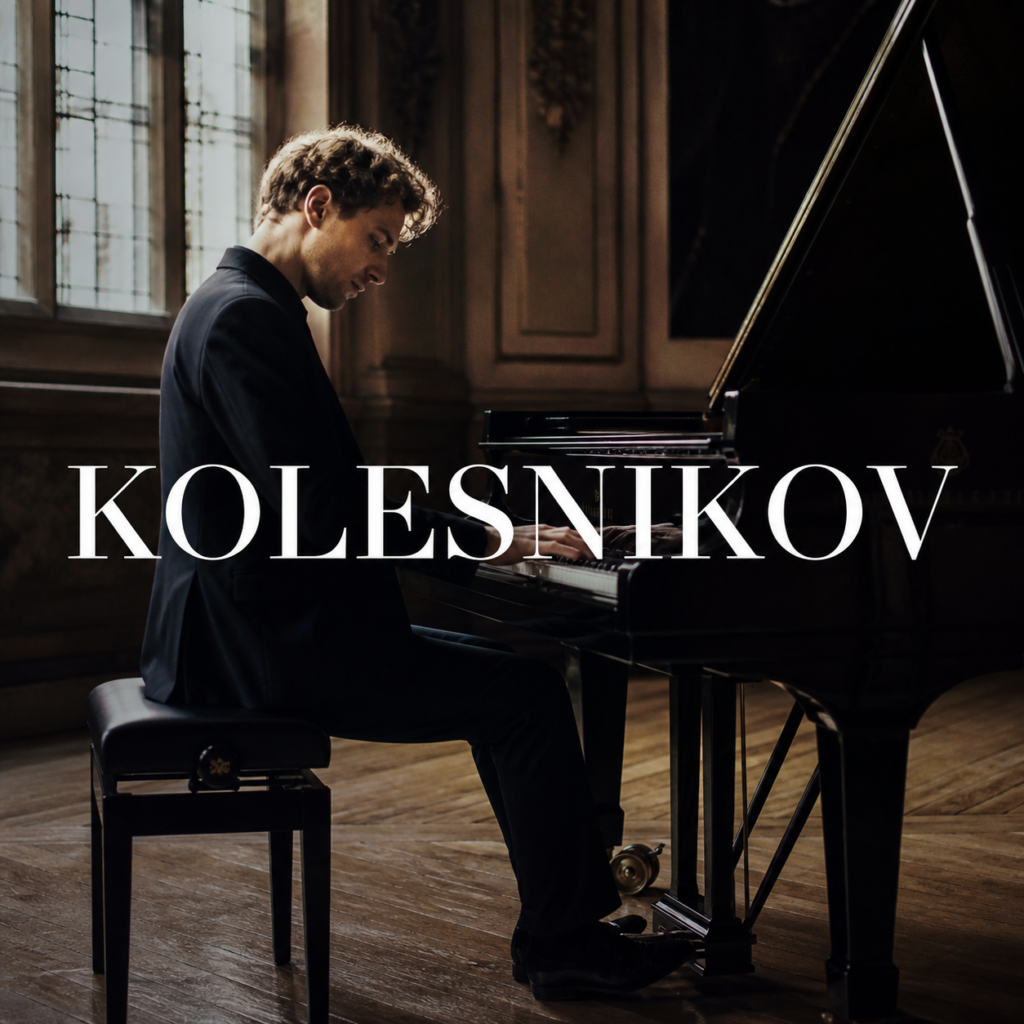
Aug
WKMT London listening guide
Pavel Kolesnikov in London: Texture, Imagination and Piano Listening
Pavel Kolesnikov makes the piano sound less like a fixed mechanism and more like a changing field of colour. For London listeners and learners, his playing offers a precise question: how can touch, timing and imagination reveal a score without decorating it?
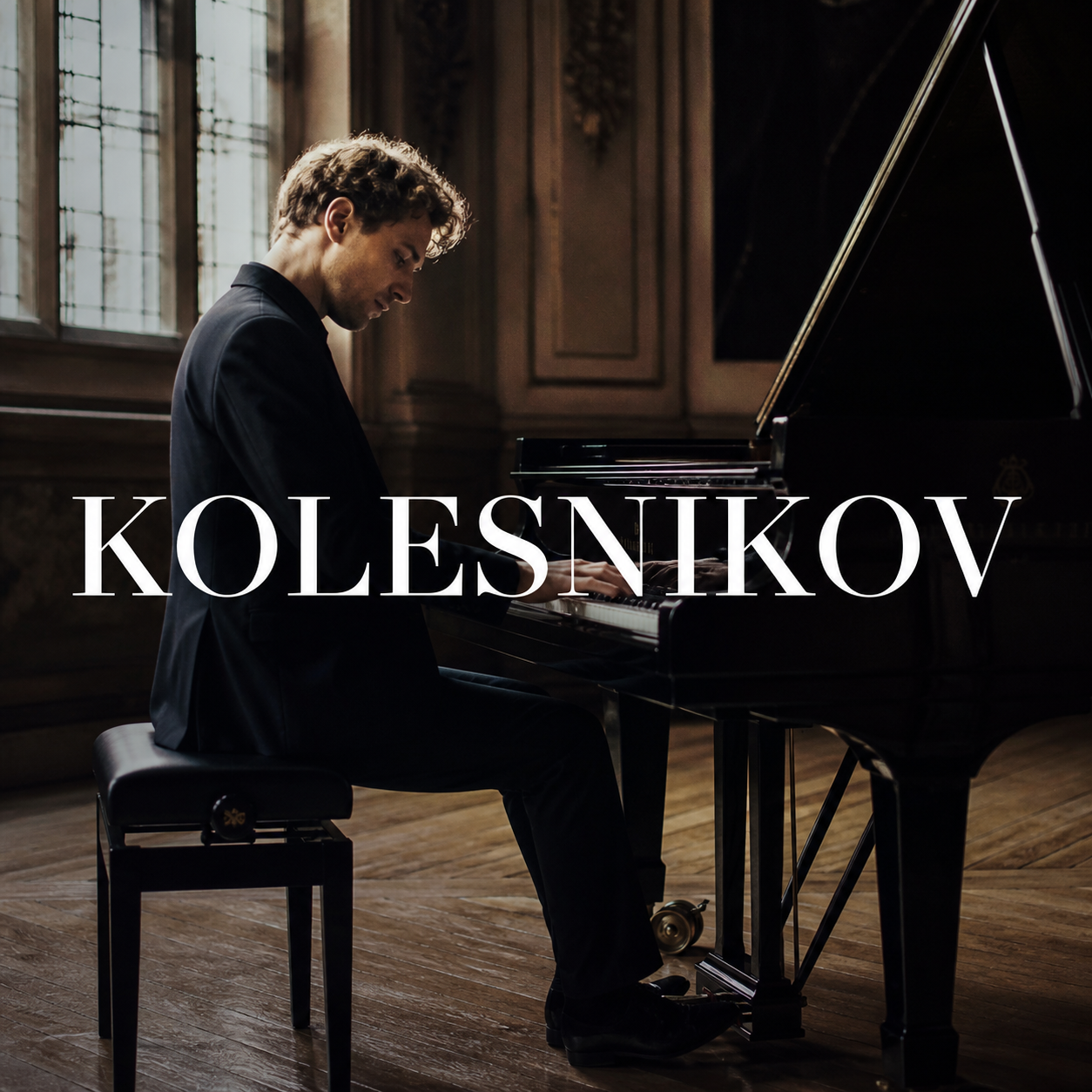
Pavel Kolesnikov studied both violin and piano before committing to the keyboard. The Hyperion artist biography traces his training in Moscow, Brussels and London, his 2012 Honens prize and his subsequent international career. The harmonia mundi biography also identifies London as his home and describes the breadth of his recital and orchestral work.
That London connection matters. WKMT London teaches one-to-one classical piano lessons in Kensington, Camberwell, Bermondsey, Highbury and online. In a lesson, texture is not an abstract compliment. It is the audible result of posture, attack, release, pedalling and the ability to hear several lines at once.
Pavel Kolesnikov: a career shaped by curiosity
Winning Honens brought Pavel Kolesnikov wider attention, but his identity has been built through repertoire choices as much as prizes. His recordings include Tchaikovsky’s The Seasons, Chopin mazurkas, Louis Couperin, Beethoven, Bach’s Goldberg Variations and music by Reynaldo Hahn. The catalogue suggests a pianist interested in atmosphere, dance, rhetoric and memory rather than a narrow display tradition.
The Hyperion notes for Tchaikovsky’s The Seasons describe a recording that resists treating the cycle as salon miniatures. In the Goldberg Variations release, the challenge changes: repeated structures must remain coherent while every variation acquires its own physical and emotional character.
Surface
Notice whether a note begins with brightness, warmth or almost no edge.
Depth
Follow the bass and inner voices rather than treating them as accompaniment.
Time
Hear how a pause alters expectation without destroying the pulse.
Memory
Ask how a returning idea has changed because of what came between.

How Pavel Kolesnikov makes piano texture audible
Piano texture is often discussed as if it were simply balance: melody louder, accompaniment softer. Pavel Kolesnikov points towards something more flexible. An inner voice can feel near or far; a bass note can change the room around a phrase; a repeated figure can sound like motion, memory or interruption. These differences come from the relationship between touch and listening.
At the instrument, choose four bars and play each layer alone. Decide whether it speaks, supports, answers or changes the harmony. Rebuild the passage without using the sustaining pedal at first, then add only the pedal needed to connect the intended resonance. This kind of listening also supports WKMT’s guide to Wigmore Hall concerts and classical piano listening.
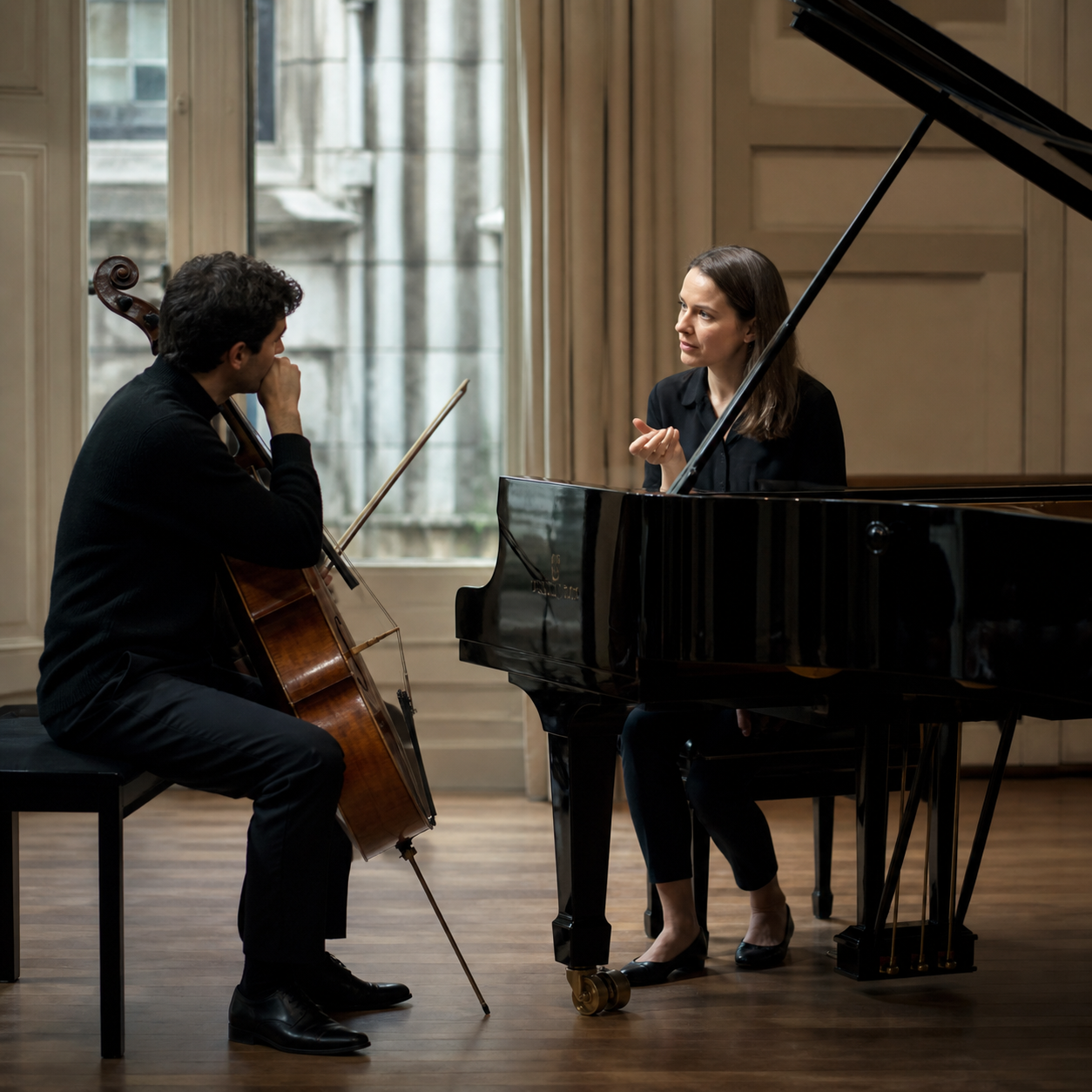
Imagination becomes convincing when it can be heard in the relationship between one note and the next.
Pavel Kolesnikov in London’s concert life
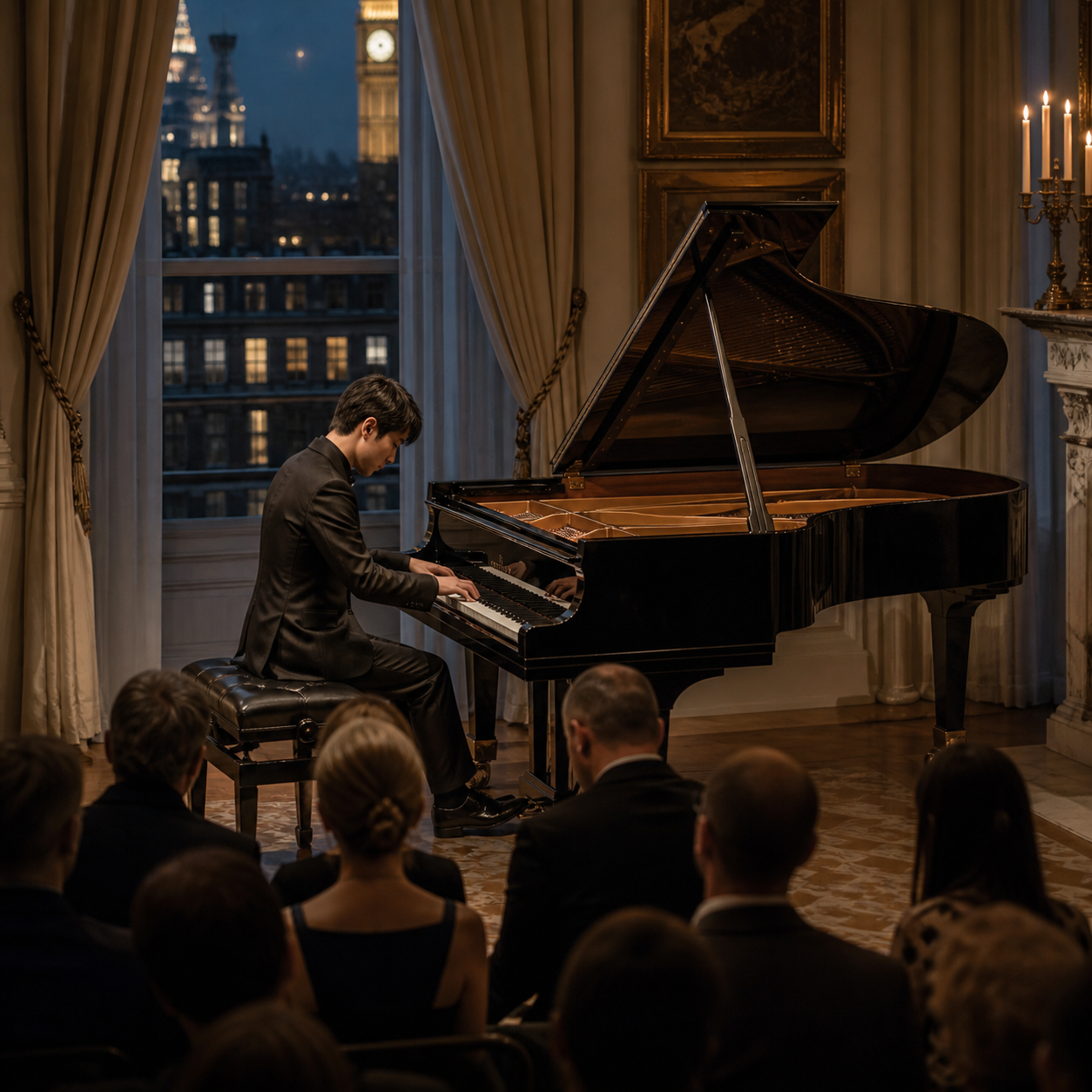
Pavel Kolesnikov has appeared repeatedly in the city’s major musical spaces. Wigmore Hall named him Artist in Residence for its 2020/21 season, while London programmes have placed him at the Southbank Centre, the Barbican and with the London Philharmonic Orchestra. A London Philharmonic Orchestra programme documents his November 2025 appearance and situates his work within the capital’s continuing orchestral culture.
The Wigmore Hall 2024/25 programme offers another useful context: recital listening in London rewards intimacy, concentration and the ability to register minute changes of sonority. Pavel Kolesnikov suits that culture because his quiet playing is not a retreat from drama. It asks the audience to move closer.
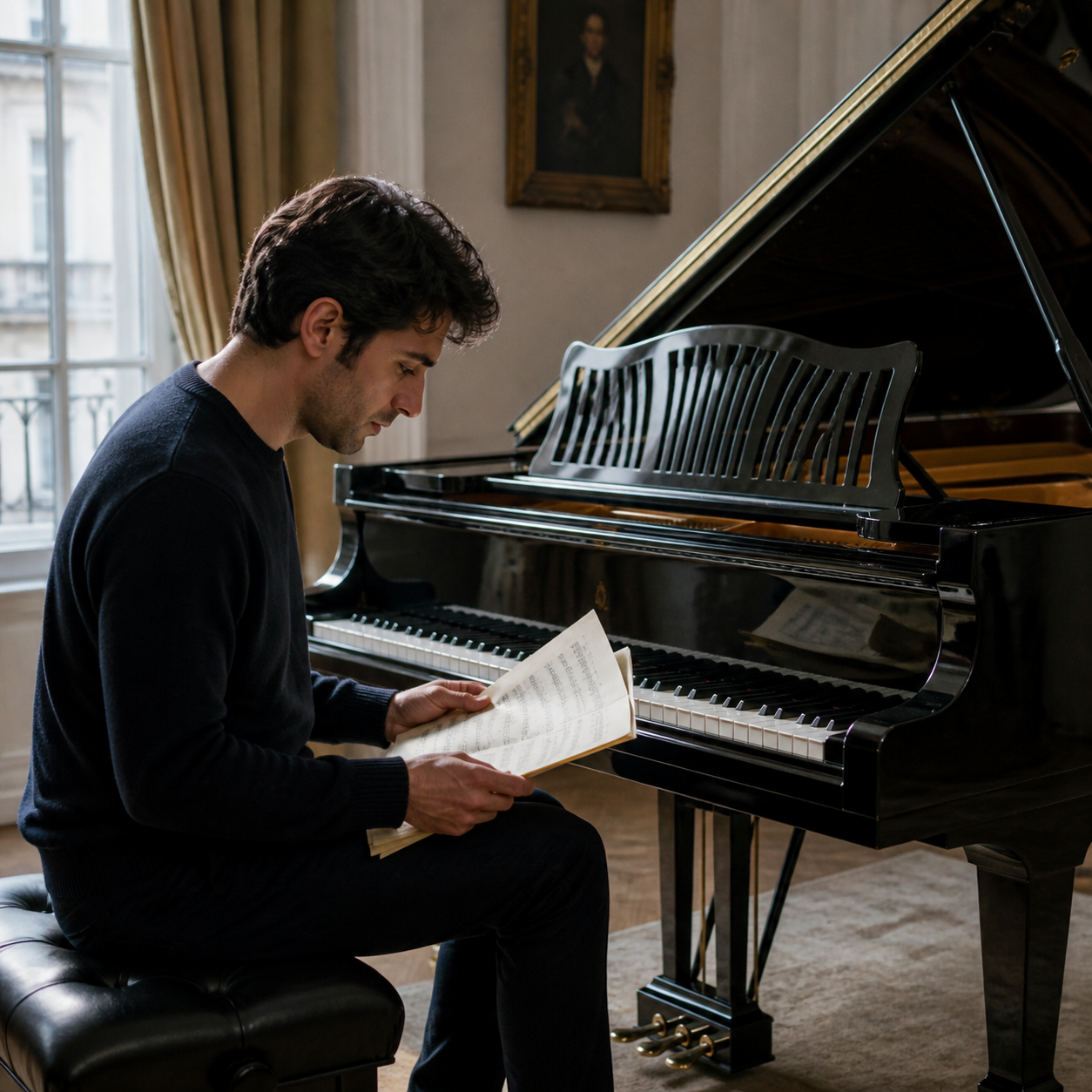
A Pavel Kolesnikov listening route
Begin with Tchaikovsky’s The Seasons for miniature character and atmosphere. Continue with Chopin’s mazurkas for dance, accent and ambiguity, then hear the Goldberg Variations for architecture and transformation. Add the Hahn recording for colour at the boundary between voice and piano; the Hyperion Hahn album page provides recording context.
Selected performance
Bach: Goldberg Variations — Pavel Kolesnikov. Embedded from YouTube; rights remain with the original publisher and performers.
What piano learners can keep from Pavel Kolesnikov
Do not imitate a delicate surface or eccentric pause. Keep the underlying habits: listen beyond the top line, let harmony govern time, separate voices by character and test whether every colour changes the musical meaning. Pavel Kolesnikov demonstrates that serious interpretation can be both disciplined and surprising.
WKMT London
Develop technique, score reading and interpretation through individual classical piano study in London.
Sources
- Hyperion Records: Pavel Kolesnikov biography
- harmonia mundi: Pavel Kolesnikov
- Hyperion: Tchaikovsky, The Seasons
- Hyperion: Bach, Goldberg Variations
- London Philharmonic Orchestra: November 2025 programme
- Wigmore Hall: 2024/25 programme
Sources last checked 29 August 2026.