
 TRIAL LESSON
Piano Lessons
Piano Warm-Up Exercises: A Serious Adult Learner’s Guide
Aug
WKMT London adult practice guide
Piano Warm-Up Exercises: A Serious Adult Learner’s Guide
Good piano warm-up exercises prepare attention and movement without tiring the hands before the real work begins. For an adult pianist, five to ten calm minutes can establish pulse, balance and listening while revealing whether today’s body needs adaptation.
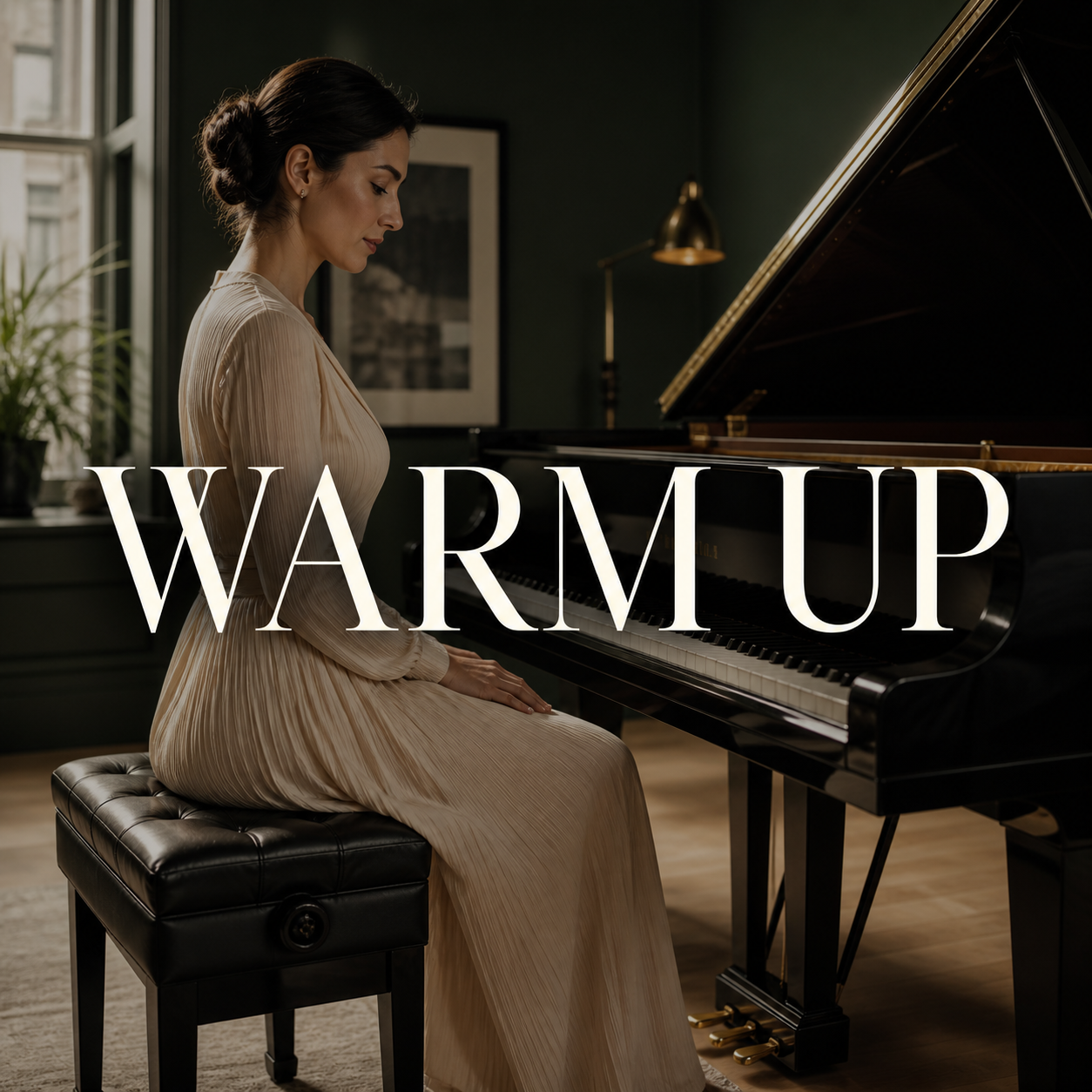
Adults often arrive at the piano from a desk, commute, childcare or a day of manual work. The first task is therefore not to prove fitness. It is to notice the current state of the body and create a reliable path into music. Piano warm-up exercises are most useful when they are brief enough to repeat and specific enough to improve the next passage.
At WKMT London, individual adult piano lessons in London connect posture, technique and interpretation. Teachers work in Kensington, Camberwell, Bermondsey, Highbury and online. A warm-up is adjusted to repertoire and experience; it is not a universal sequence imposed regardless of the player.
Before piano warm-up exercises: arrive at the instrument
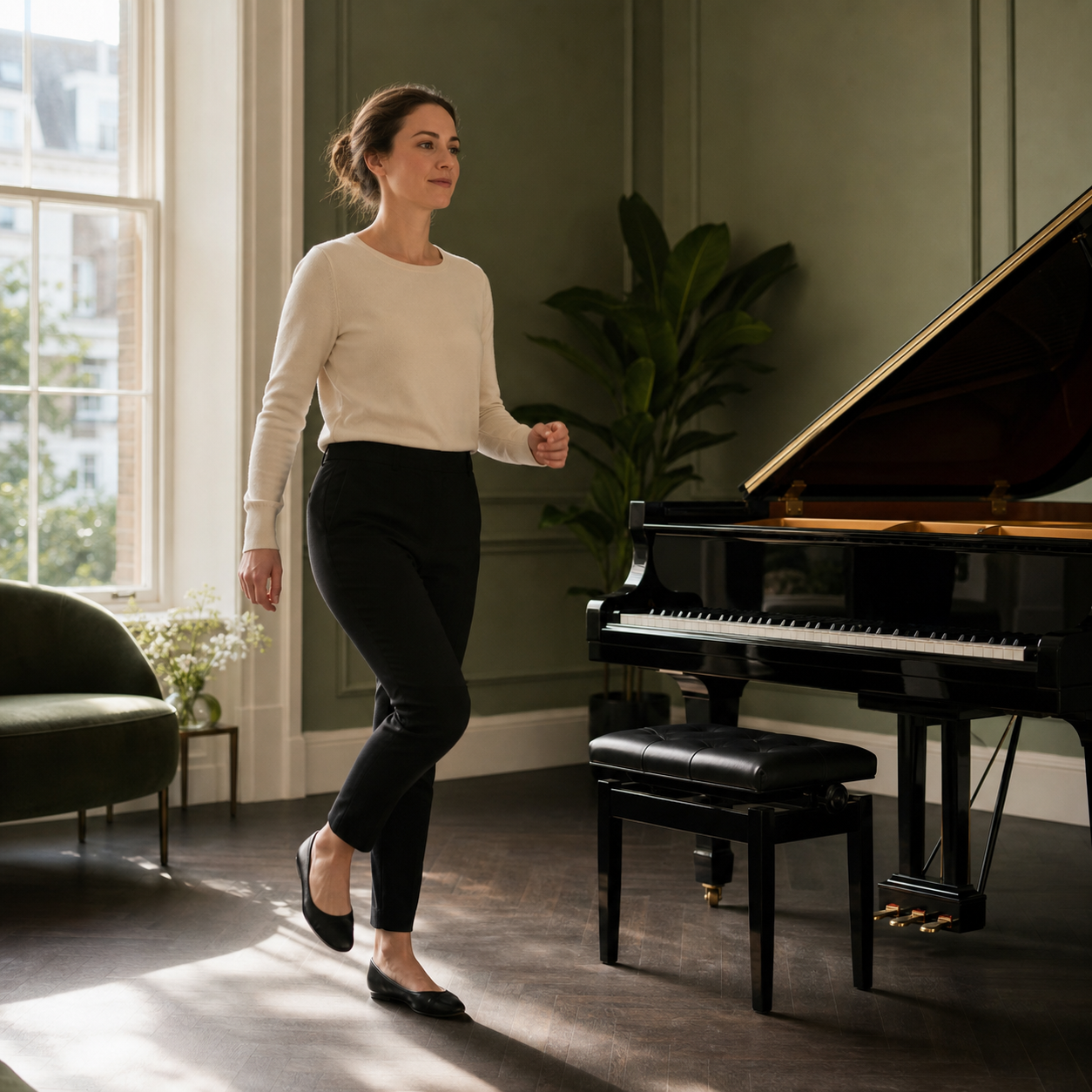
Start with the environment. Place the bench so the forearms can travel freely and the feet are supported. Let the hands rest, release the jaw and notice whether breathing is being held. The aim is a poised, movable posture, not a rigid position. Two or three slow shoulder circles and easy arm swings can help, provided they stay comfortable.
The British Association for Performing Arts Medicine explains that warming up increases blood flow and prepares freer movement, while warning that warm-up is not the same as stretching. Its practical guide, Don’t Cramp Your Style, places gentle stretches after playing once tissues are warm. BAPAM’s wider healthy practice resources also emphasise pacing, recovery and early attention to symptoms.
Settle
Check bench distance, supported feet, easy breath and free shoulders.
Mobilise
Use gentle whole-arm and wrist movement without forcing range.
Connect
Play a quiet five-note pattern and listen for even release.
Transfer
Move directly into one slow phrase from today’s repertoire.
Five progressive piano warm-up exercises
1. Silent keyboard geography
Place the fingertips on five adjacent keys without depressing them. Let the elbow find a comfortable height and move the hand as one light unit to a new position. This exercise checks orientation and release before sound adds pressure.
2. Five-note balance
Play 1-2-3-4-5 and back in a comfortable key, slowly and quietly. Listen for the end of each note as carefully as the beginning. If a finger collapses or the wrist fixes, reduce the dynamic and range rather than pushing through.
3. Paired legato and release
Play two notes connected, then release completely. Repeat with different finger pairs. This makes the alternation between effort and rest audible and keeps piano warm-up exercises from becoming a continuous grip.
4. Slow scale with destinations
Choose one familiar scale. Play in groups of four, breathing at each destination. Aim for an easy thumb passage and a clear tonal centre. One attentive octave is more valuable than several tense runs.
5. Repertoire bridge
Take the first difficult gesture from today’s piece and simplify it: block a broken chord, play one voice, or reduce the leap. Restore the written texture only when the simplified action feels organised.
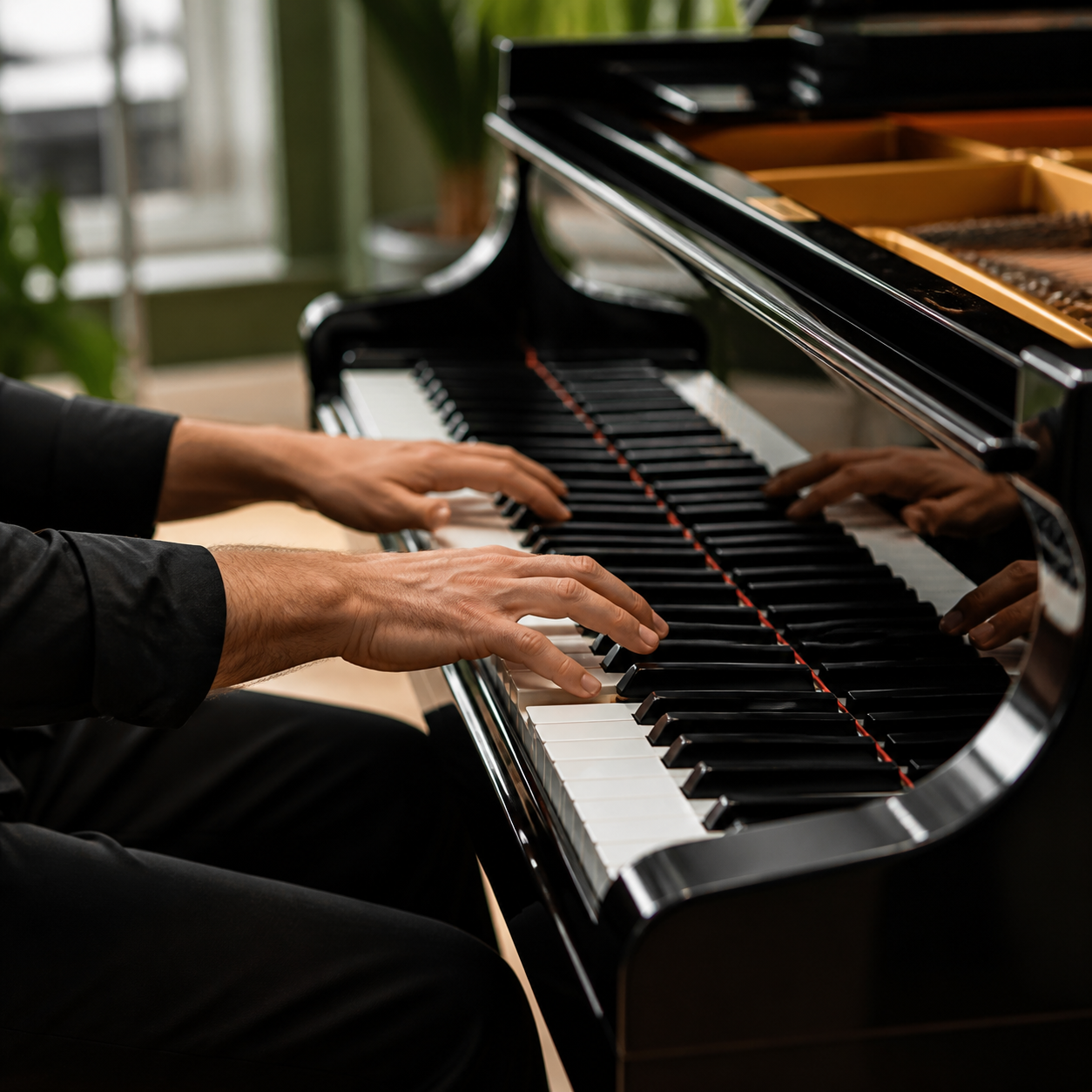
A useful warm-up leaves you more available for music, not more impressed by the amount of work already done.
What piano warm-up exercises should not do
Piano warm-up exercises should not produce pain, numbness, tingling, unusual weakness or a growing loss of control. They should not force the fingers apart, load small joints aggressively or continue until fatigue. Stop, rest and reconsider the task if symptoms appear. Persistent or recurring symptoms need assessment from an appropriately qualified health professional.
The Royal College of Music’s healthy musician guidance recommends warming up, taking breaks and warming down. The Musicians’ Union and BAPAM performance health guide for teachers reinforces the importance of healthy habits and clear professional boundaries.
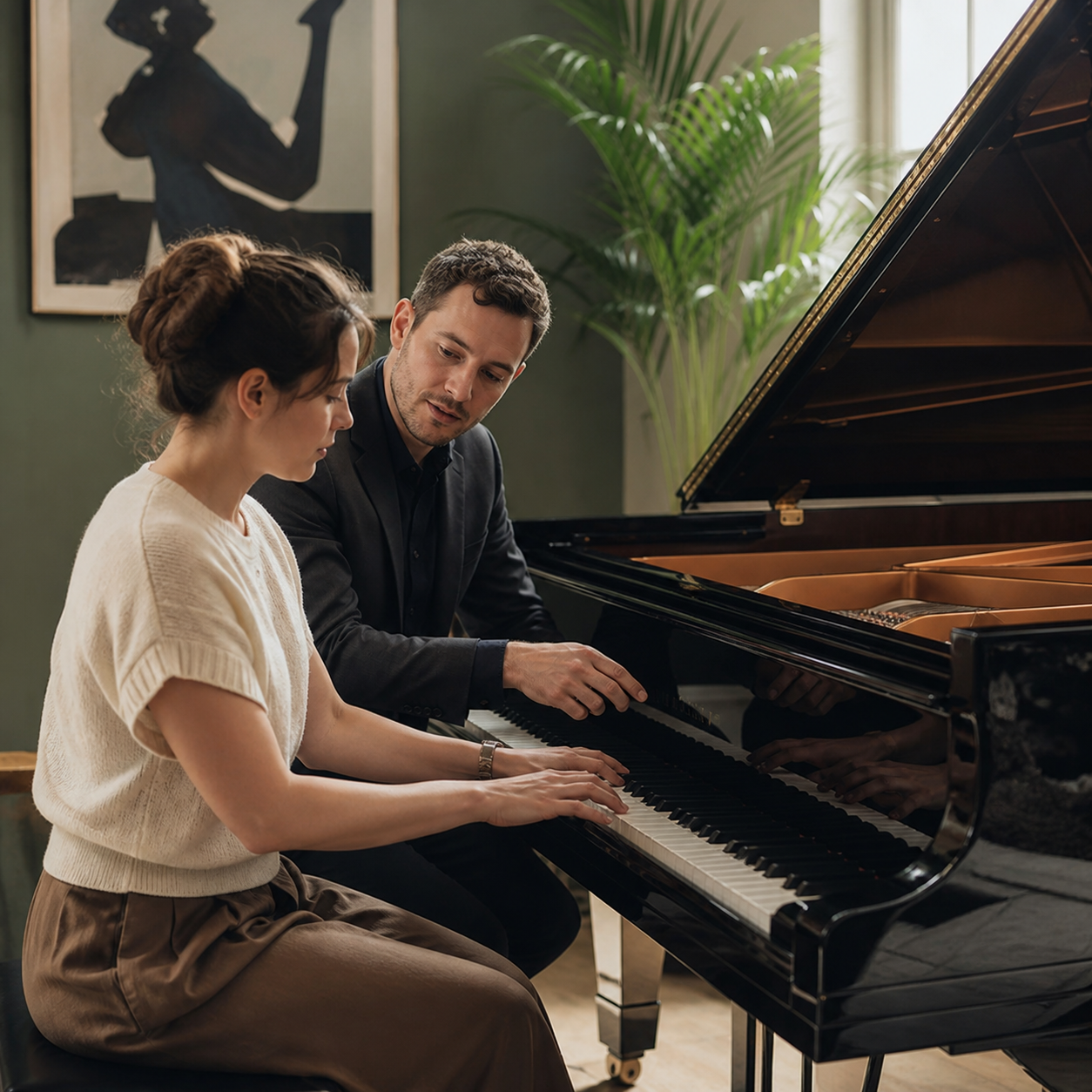
Match piano warm-up exercises to the repertoire
A Bach invention may need independent voices and small releases. A Chopin nocturne may need chord balance and pedal clarity. A fast Classical movement may need light repeated notes and rhythmic grouping. The best piano warm-up exercises anticipate the coordination that the music requires without rehearsing the hardest version too soon.
A 2024 study of playing-related musculoskeletal disorders among piano students, available through the US National Library of Medicine, reports the prevalence and complexity of these problems. It does not justify diagnosing yourself from an article; it does support taking symptoms, workload and prevention seriously.
Build a warm-up you will actually use
Write a three-line version on a card: arrive, coordinate, transfer. Keep it for one week and note whether the first ten minutes of repertoire work become calmer. Change only one element at a time. Piano warm-up exercises succeed through consistency and relevance, not novelty.
WKMT London
Build a practical technique and repertoire plan with individual adult piano tuition at WKMT London.
Sources
- BAPAM: Don’t Cramp Your Style
- BAPAM: Healthy Practice Resources
- Royal College of Music: The Healthy Musician
- Musicians’ Union and BAPAM: Performance Health Guide
- Healthy Conservatoires: Guidance
- National Library of Medicine: piano student health study
Sources last checked 29 August 2026. This educational guide is not medical advice.