
 TRIAL LESSON
Piano Lessons
Note-Reading Games: When Play Helps Children See Patterns on the Piano Page
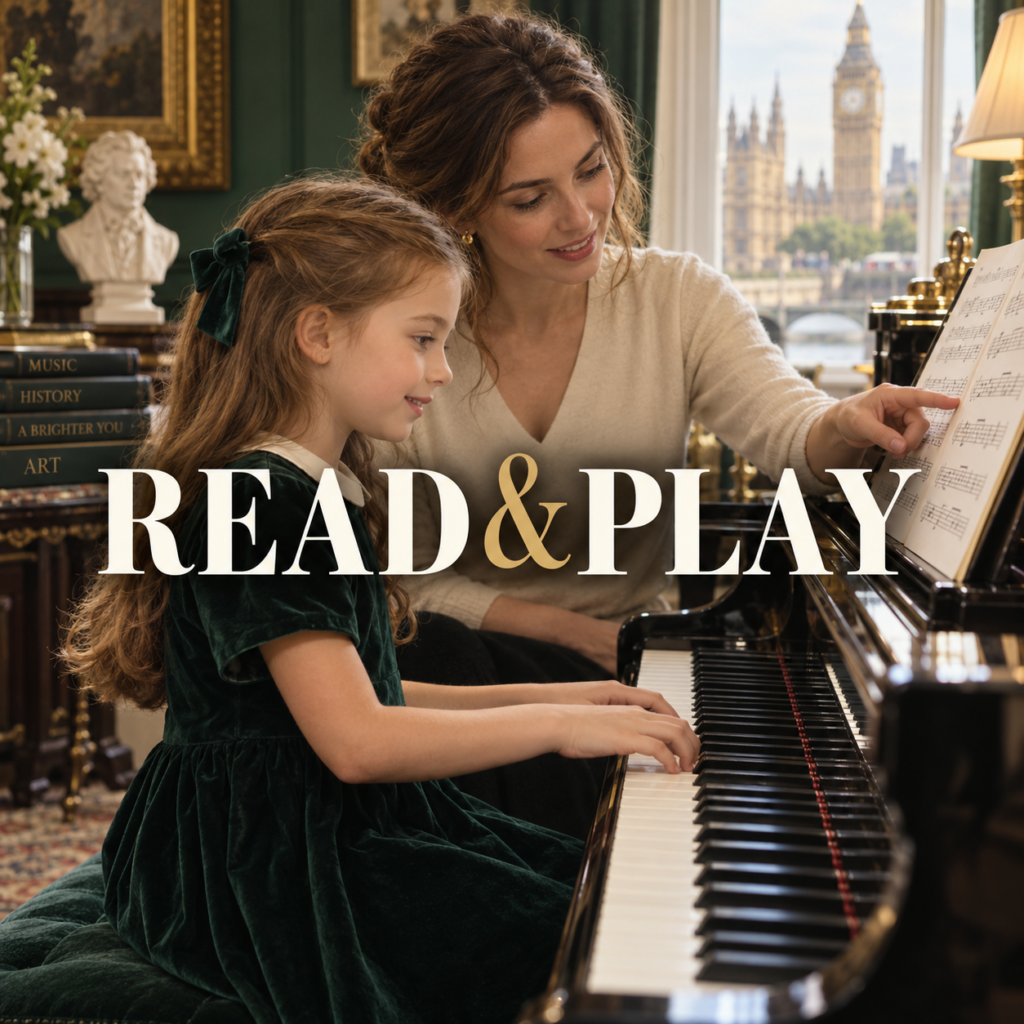
Oct
WKMT London parent guide
Note-Reading Games: When Play Helps Children See Patterns on the Piano Page
The best reading game does not hide notation behind entertainment. It isolates one musical decision, gives a child a quick reason to notice it and then returns that skill to a real phrase at the piano. Play becomes useful when recognition grows into fluent musical action.
In brief
Effective note reading games help children recognise patterns rather than memorise isolated note names. Useful activities practise line and space movement, landmark notes, steps and skips, rhythmic cells, intervals and keyboard geography. Keep each game short, match it to the child’s present repertoire and finish by reading a musical phrase so the skill transfers from play to performance.
Note reading games should teach relationships
A score is not a string of unrelated letters. Fluent readers notice whether notes move up or down, repeat, travel by step or skip, and form familiar rhythmic groups. Note reading games are strongest when they direct attention to these relationships. A child who sees a rising three-note pattern can prepare a coordinated movement before naming every pitch.
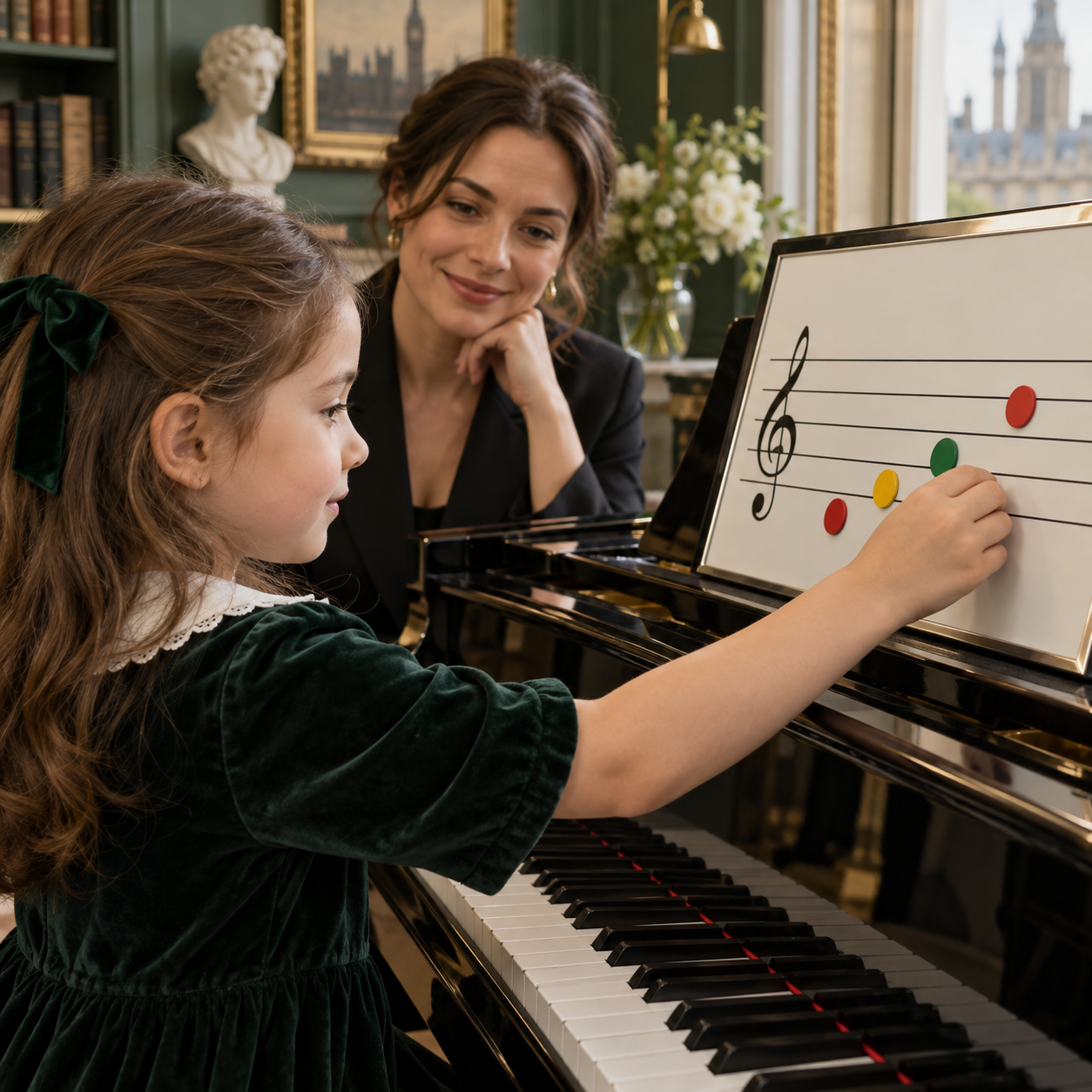
Begin with one contrast. Place three counters on a simple five-line staff and ask whether the pattern rises, falls or repeats. Move the same contour to a different starting point. Then play both versions. The child discovers that notation describes relationships that can travel, not a fixed picture tied to one place on the keyboard.
Landmark notes make the stave less crowded
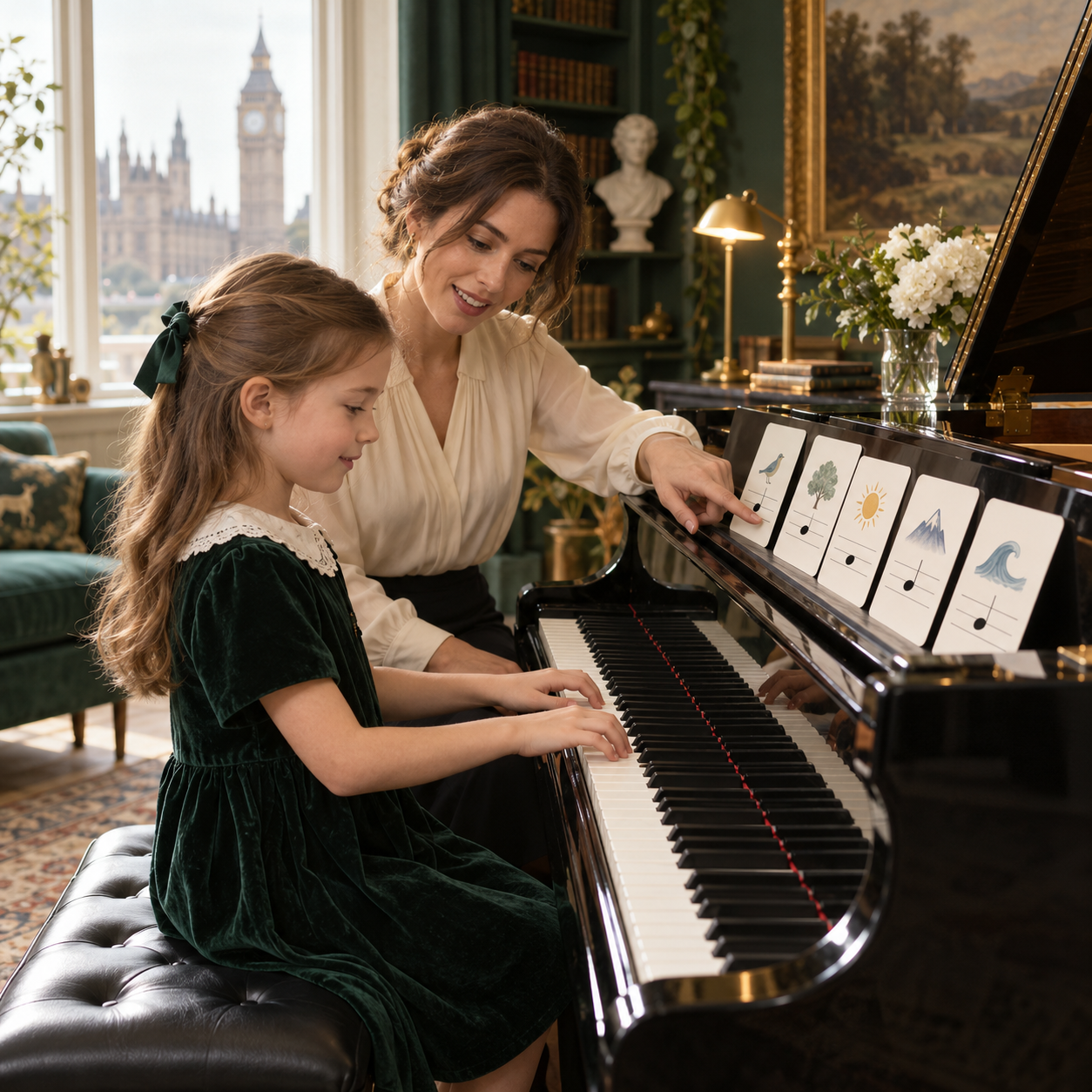
Choose a few secure landmarks such as middle C, treble G and bass F. Show a card for two seconds, hide it and ask the child to place a token on the keyboard. Next, place a nearby note and ask whether it sits a step or skip away. Speed is secondary; the aim is a dependable route from symbol to sound.
In children’s piano lessons in London, a teacher can adjust the number of landmarks and the visual density of the page. WKMT’s guide to reading sheet music properly reinforces the same principle: scan for structure before asking the fingers to solve every detail.
Turn rhythm into movement before adding pitch
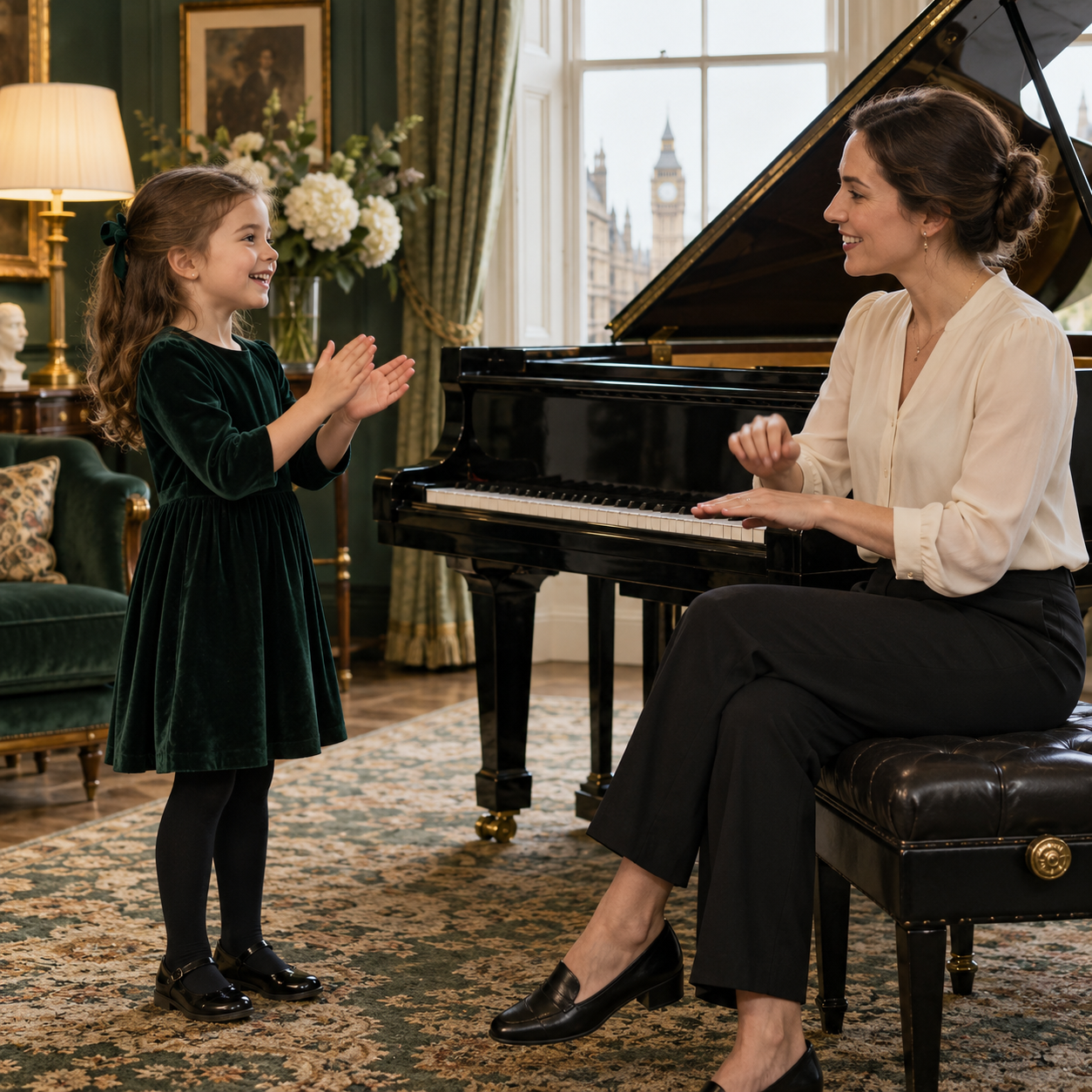
Rhythm cards can be clapped, tapped or walked before they reach the piano. Make two short patterns using crotchets, quavers and rests; perform one and ask the child to identify it. Then let the child become the caller. Alternating perception and production keeps the game musical and reveals whether the symbol has acquired an expected sound.
Research on music reading shows that performing from notation joins visual attention, anticipation, timing and movement. Silent symbol naming is therefore only one part of the task. Note reading games should gradually reunite rhythm and pitch so that the eye learns to stay ahead of the hands without sacrificing pulse.
Play helps reading when the child begins to predict sound before the hands move.
Four purposeful note reading games
Try Pattern Detective: circle every repeated rhythmic cell in four bars. Use Step, Skip or Same: reveal one interval at a time and answer before playing. Build a Rhythm Relay in which parent and child alternate one-bar cards without losing the beat. Finally, play Find the Change, comparing two nearly identical phrases and hearing the altered note.
Keep scores simple enough for success and change one variable at a time. A game that becomes frantic, heavily competitive or dependent on guessing has lost its purpose. Two focused minutes can be more valuable than a long worksheet, especially when the final challenge is to find the same pattern inside the week’s piece.
How parents can tell whether play is transferring
Look for quieter signs of progress. The child finds a starting note without help, tracks direction across a phrase, notices a repeated rhythm or recovers after a pause without returning to bar one. These behaviours matter more than collecting points in an app because they show notation guiding independent musical thought.
Note reading games should eventually make themselves less necessary. As patterns become familiar, replace cards with short unfamiliar pieces and let the child preview before playing. The goal is not instant sight-reading perfection. It is a calm, growing ability to turn marks on a page into an inner sound and a purposeful movement.
WKMT London
Give your child a thoughtful route from playful discovery to confident, independent music reading.
Explore children’s piano lessonsSources on note reading games
- PMC: Eye on Music Reading review
- PMC: meta-analysis of eye movements in music reading
- PubMed: tonal and textural influences on sight-reading
- Journal of Research in Music Education
- ABRSM: music literacy resources
- Ofsted: music subject report
Sources checked 11 October 2026. Educational guidance; individual circumstances and progress vary.