
 TRIAL LESSON
Pianists, Piano Lessons
Martin Helmchen in London: Chamber Music, Clarity and Serious Piano Listening
Aug
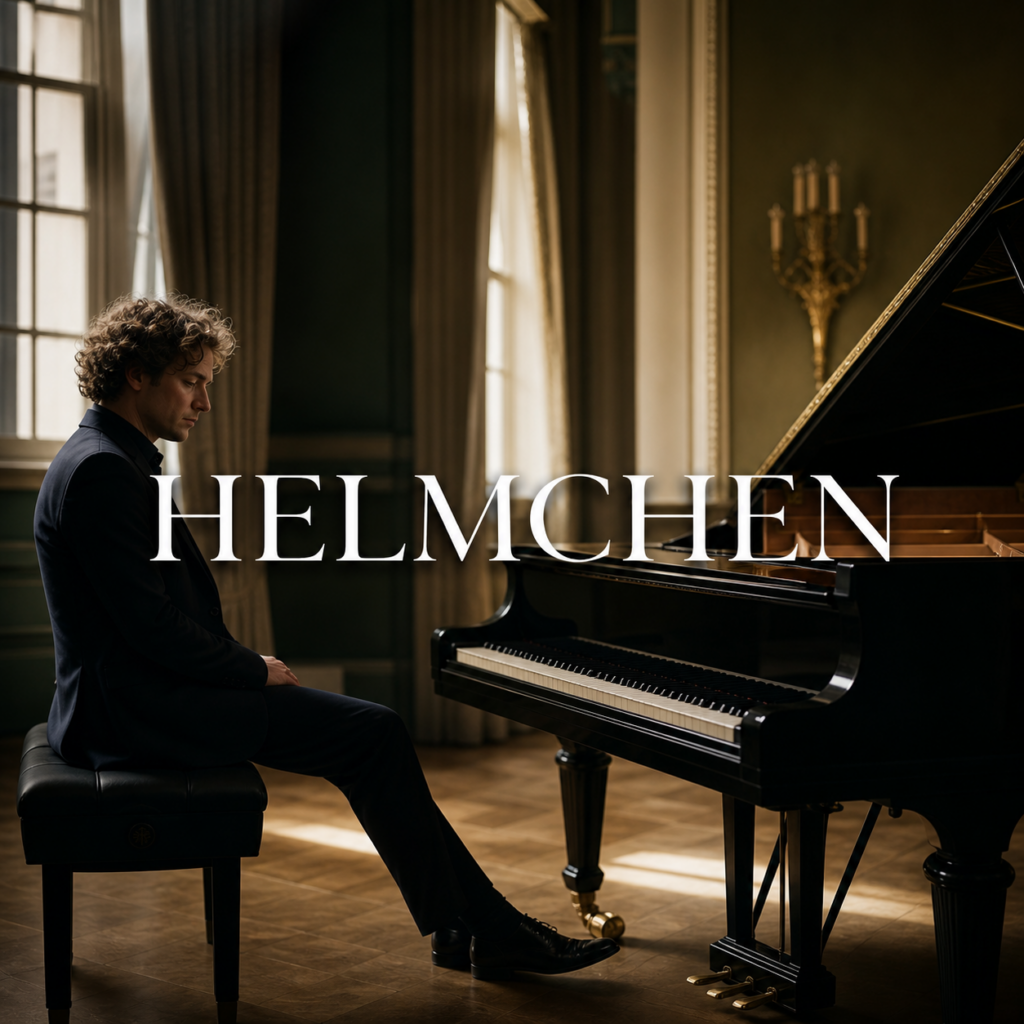
Martin Helmchen in London
WKMT London listening guide
Martin Helmchen in London: Chamber Music, Clarity and Serious Piano Listening
Martin Helmchen makes the piano sound like a thinking partner. His chamber-music instinct, Schubert patience and Beethoven clarity offer London learners a practical way to hear balance, timing and musical responsibility before entering the lesson room.
Quick answer
Martin Helmchen is especially useful for London piano learners because his playing makes chamber musicianship audible at the keyboard. His best lessons for students are not about celebrity; they are about balance, timing, voicing, listening across the instrument, and the patience to make a phrase speak before making it impressive.
Some pianists dazzle by taking possession of the room. Helmchen is more interesting because he can make the room seem to listen back. In a concerto, the orchestra is not a frame around the piano; it is a field of replies. In chamber music, the keyboard becomes one intelligence among several. Even in solo repertoire, the ear is drawn towards proportion: where a voice sits, how an inner line changes the harmony, and when restraint carries more charge than display.
For a London learner comparing serious face-to-face piano study, that matters immediately. A student who hears only speed learns to admire the surface. A student who listens to Helmchen for balance begins to notice the decisions a good teacher can make visible in a lesson: the weight of a bass note, the release of a chord, the direction of a phrase, and the exact place where one sound must give way to another. That is why this guide belongs naturally beside classical piano study in London at WKMT.
Martin Helmchen at a glance
Why Martin Helmchen rewards serious listening
Helmchen’s public profile combines several strands that rarely sit together so naturally. Alpha Classics describes him as one of today’s most sought-after pianists, with two decades on major international stages. Kronberg Academy lists him as a Visiting Professor, teaching piano and chamber music. Those two facts are important together: the artistry is not separated from transmission. His playing often sounds like someone who understands the difference between performing at people and listening with them.
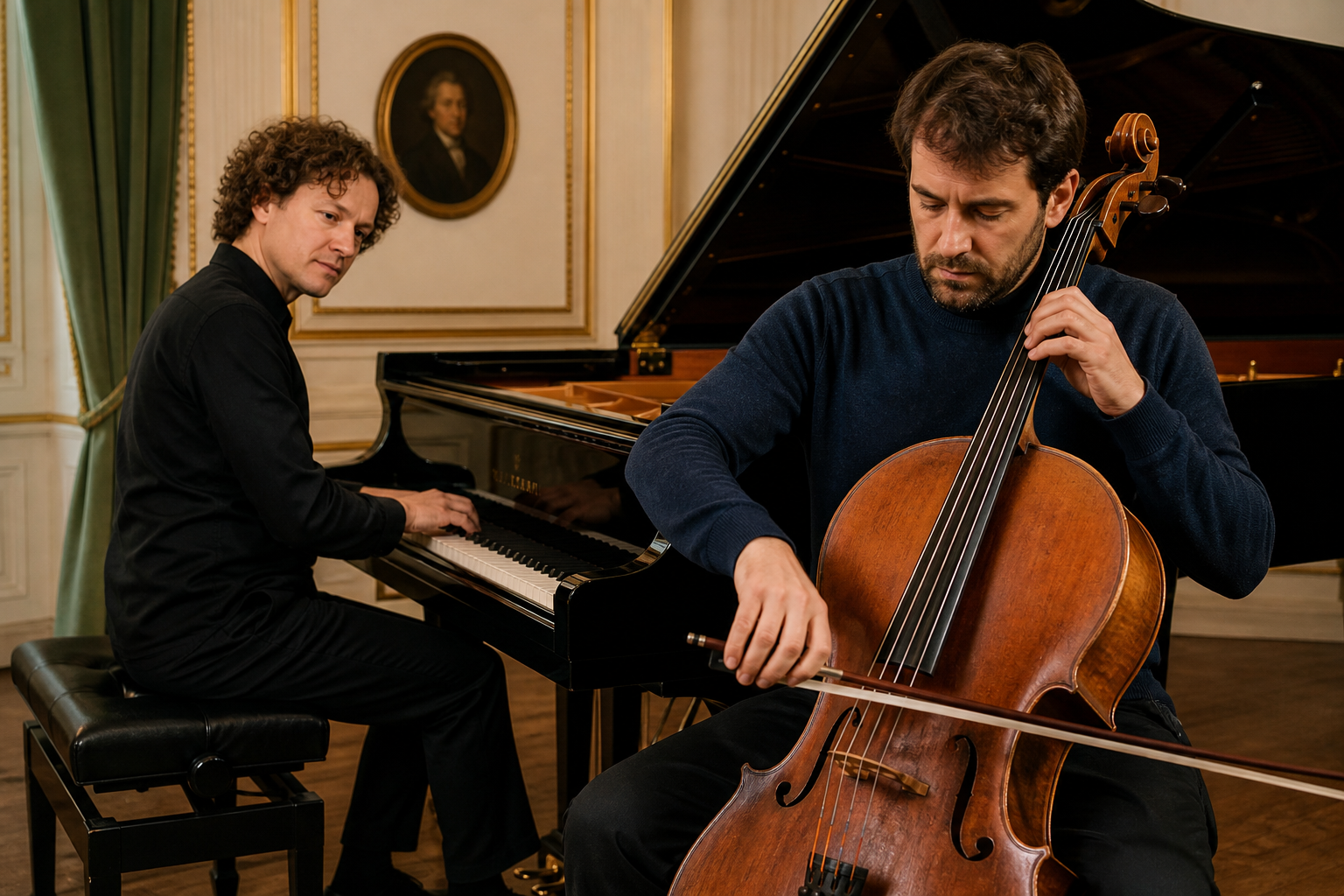
This is most obvious in chamber music. The pianist’s task is not simply to play softly under a violin or cello. It is to shape the harmonic floor, judge the air around a phrase, and know when the keyboard must become almost orchestral. Helmchen’s long partnerships, including Wigmore Hall appearances with Frank Peter Zimmermann and chamber recordings with Marie-Elisabeth Hecker, make him a fine model for this kind of musical intelligence.
The chamber-musician’s ear at the piano
A solo pianist can become dangerously self-sufficient. Chamber music cures that. It asks for breath, reaction, courtesy, nerve and timing. In Helmchen’s playing, the chamber habit is audible even when he is alone: phrases tend to feel addressed, not displayed. The attack of a note is rarely just an attack; it is an entrance, a response, or a change in the conversation.
That is a useful discipline for students. Many learners practise a piece as if each hand were a separate project. A teacher has to restore the musical conversation: melody with bass, inner voice with harmony, finger with pedal, phrase with phrase. Helmchen offers a clear listening route into that work. Instead of asking whether the passage is generally beautiful, ask what each layer is doing for the others.
A pianist’s maturity is often heard in what he allows another voice to keep.
A four-pass listening map for Martin Helmchen
Use one complete performance rather than a short extract. On the first hearing, let the music move. On the next four hearings, narrow the attention. This is how concert listening becomes useful for practice.
Schubert, Beethoven and the courage to play simply
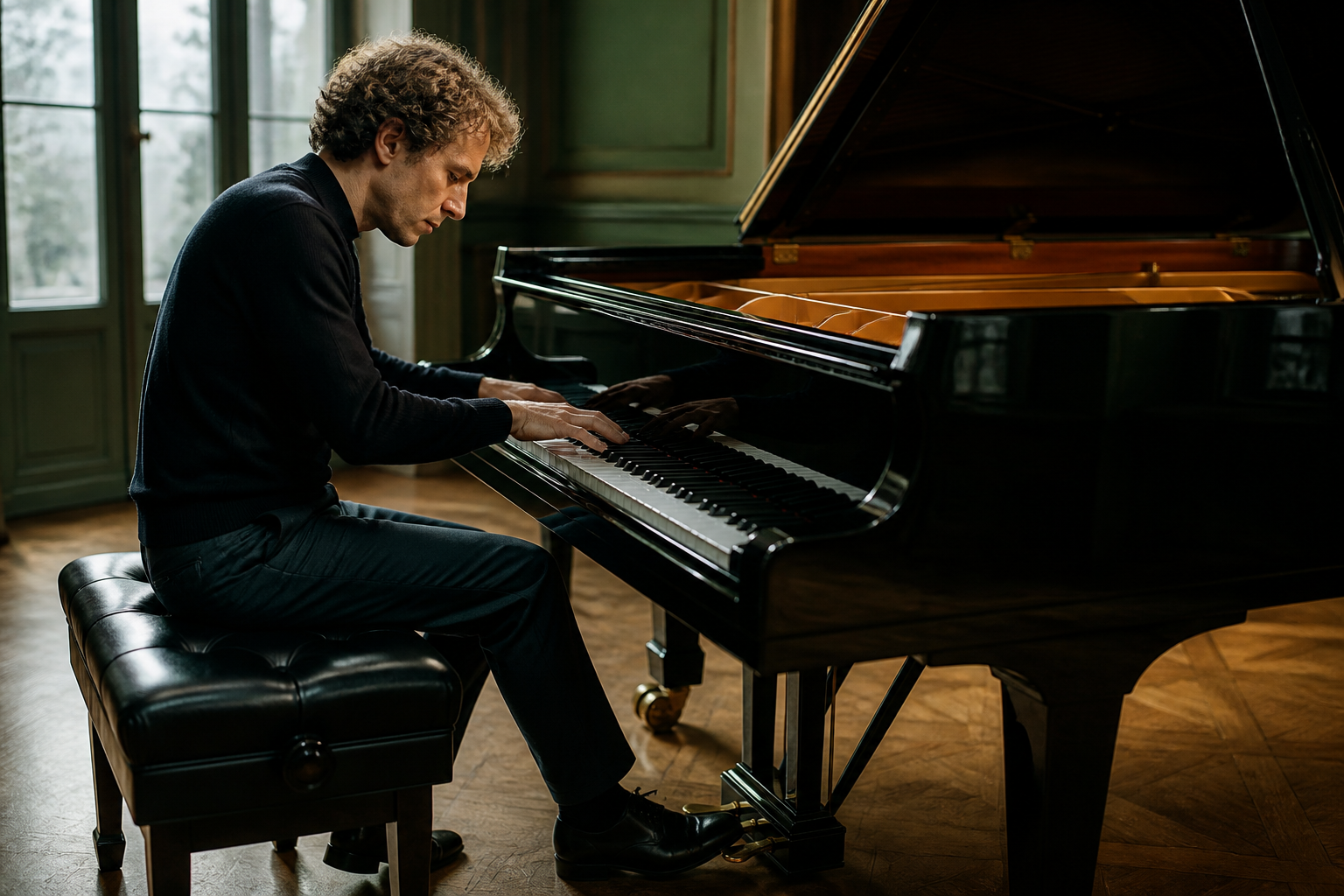
Helmchen’s recent Schubert project gives this listening approach a strong centre. Outhere Music states that his complete Schubert sonata recording is planned across four double albums between now and 2028. That is not a casual undertaking. Schubert exposes whether a pianist can hold long spans together without over-explaining them. The danger is to decorate the music until its private logic disappears.
Beethoven asks a different courage. In the concertos, especially the more conversational passages, the pianist must be characterful without becoming blunt. Helmchen’s Beethoven recordings with Andrew Manze and the Deutsches Symphonie-Orchester Berlin are useful because they keep the classical argument alive. The sound has energy, but the ear still follows structure.
Watch a complete performance
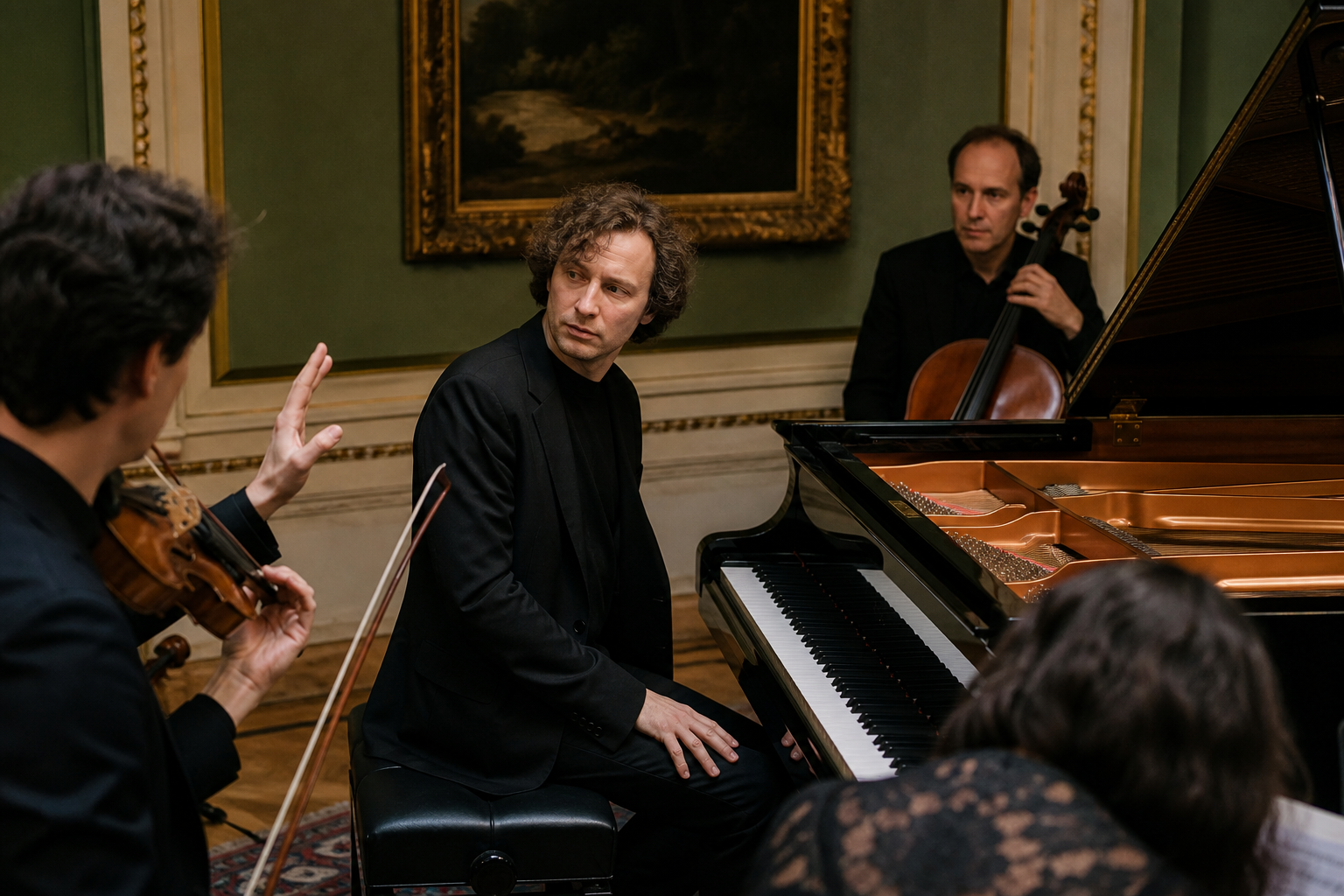
The video below is useful because it gives a whole musical span rather than a promotional fragment. Notice how the piano sound changes when the orchestra answers, and how the phrase remains clear without being over-bright.
Martin Helmchen performs Mozart’s Piano Concerto No. 17 with Andrew Manze and the NDR Radiophilharmonie.
What a London student can take into the lesson room
The practical value of this listening is not imitation. A student does not need to sound like Martin Helmchen, and a teacher should never reduce a living artist to a set of tricks. The value lies in the questions his musicianship raises. Can the left hand support without thickening? Can the right hand sing without forcing? Can the pedal help resonance without hiding poor legato? Can a phrase breathe while the pulse remains clear?
These are exactly the questions that make in-person teaching powerful. A recording can awaken the ear, but a teacher can see the physical reason a sound is failing: a locked wrist, a collapsed fingertip, a late release, a bass that is pressed rather than prepared. WKMT’s work with Scaramuzza technique and its wider writing on the importance of listening both lead back to the same principle: the ear and the body must learn together.
Listen more carefully, then play more honestly
WKMT offers face-to-face classical piano lessons in London for students who want technique, interpretation and listening to develop together.
Quick questions
What should I listen for first in Martin Helmchen?
Begin with balance. Follow which voice carries the phrase, how softly the surrounding texture remains alive, and how timing changes without disturbing the pulse.
Why is chamber music so important to his playing?
Chamber music trains response. Helmchen’s piano sound often feels conversational because he treats the keyboard as part of a shared musical space, not as a separate display instrument.
Can this help adult piano learners?
Yes. Adult learners often understand the musical idea before the body can execute it. Listening to Helmchen gives precise goals for tone, voicing and phrase direction before those goals are tested with a teacher.
Editorial note
This article is an educational homage and listening guide. It is not affiliated with, authorised by, sponsored by or endorsed by the pianist, their estate, management, record label, publisher or concert representatives. Names, recordings, performances and biographical references are used for cultural commentary, teaching context and source-backed music education. Any portrait-style image used by WKMT in this article is an original AI-generated editorial illustration, not a documentary photograph or official likeness, unless otherwise credited.
Sources on Martin Helmchen
- Outhere Music / Alpha Classics: Martin Helmchen artist page
- Kronberg Academy: Martin Helmchen faculty profile
- Outhere Music / Alpha Classics: Schubert Piano Sonatas, Vol. 1
- Outhere Music / Alpha Classics: Beethoven Piano Concertos 1 and 4
- Wigmore Hall: Frank Peter Zimmermann and Martin Helmchen, 24 November 2023