
 TRIAL LESSON
Pianists, Piano Lessons
Leif Ove Andsnes in London: Nordic Clarity, Mozart and the Art of Serious Piano Listening
Jun
Leif Ove Andsnes in London
WKMT London piano culture
Leif Ove Andsnes in London: Nordic Clarity, Mozart and the Art of Serious Piano Listening
Leif Ove Andsnes offers London listeners a rare model of musical concentration: luminous touch, disciplined structure and a refusal to confuse seriousness with heaviness.
Quick overview: who he is and why London listeners should care
Leif Ove Andsnes is a Norwegian pianist and chamber musician, born in 1970, whose international career has centred on concerto cycles, recital work, chamber collaboration and a particularly lucid approach to Mozart, Beethoven, Grieg, Schubert and contemporary repertoire. His official concert diary, last checked on 16 June 2026, continues to show an active European and international schedule, including recital programmes moving between major halls and festivals.
For London listeners, the interest is not simply celebrity. Andsnes belongs to the kind of pianist who changes the way a hall hears texture. At the Royal Albert Hall, Wigmore Hall and Barbican, his performances have been discussed for precision, quick response and an ability to make complex writing feel freshly spoken rather than explained. That is why his London appearances matter to serious students as well as concertgoers: they offer a standard of listening before they offer a display of technique.
The useful lesson is not to imitate Andsnes’s sound. It is to notice how little he wastes: rhythm, voicing and colour are directed towards structure.
The artist in context: Nordic clarity and what it means for Mozart and Grieg
“Nordic clarity” can become a vague phrase if it is used only as atmosphere. In Andsnes’s case it is more practical: a preference for transparent balance, decisive rhythm and tonal colour that remains clean even when the music becomes impassioned. It suits Grieg because Grieg’s piano writing often depends on sharp profile, folk-inflected rhythm and sudden changes of light. It suits Mozart because the music punishes over-explanation. Every accompaniment figure must breathe, but none may become sentimental padding.
Andsnes’s long partnership with the Mahler Chamber Orchestra is important here. The Mozart Momentum project, documented by the artist and the orchestra, focused on Mozart’s astonishing creative years of 1785 and 1786. Rather than presenting the piano concertos as museum pieces, the project heard them as theatrical, conversational and structurally daring. The Guardian’s 2022 Proms review described pianist and orchestra as creative equals in Mozart at the Royal Albert Hall, with “pristine focus and quicksilver touch”.
For pianists, this matters because it redirects attention from prettiness to articulation. A phrase can be beautiful and still have joints. A singing line can float while the left hand keeps the architecture honest. In classical piano study in London, that balance is often the difference between playing notes accurately and playing music that thinks.
Landmark London performances and collaborations
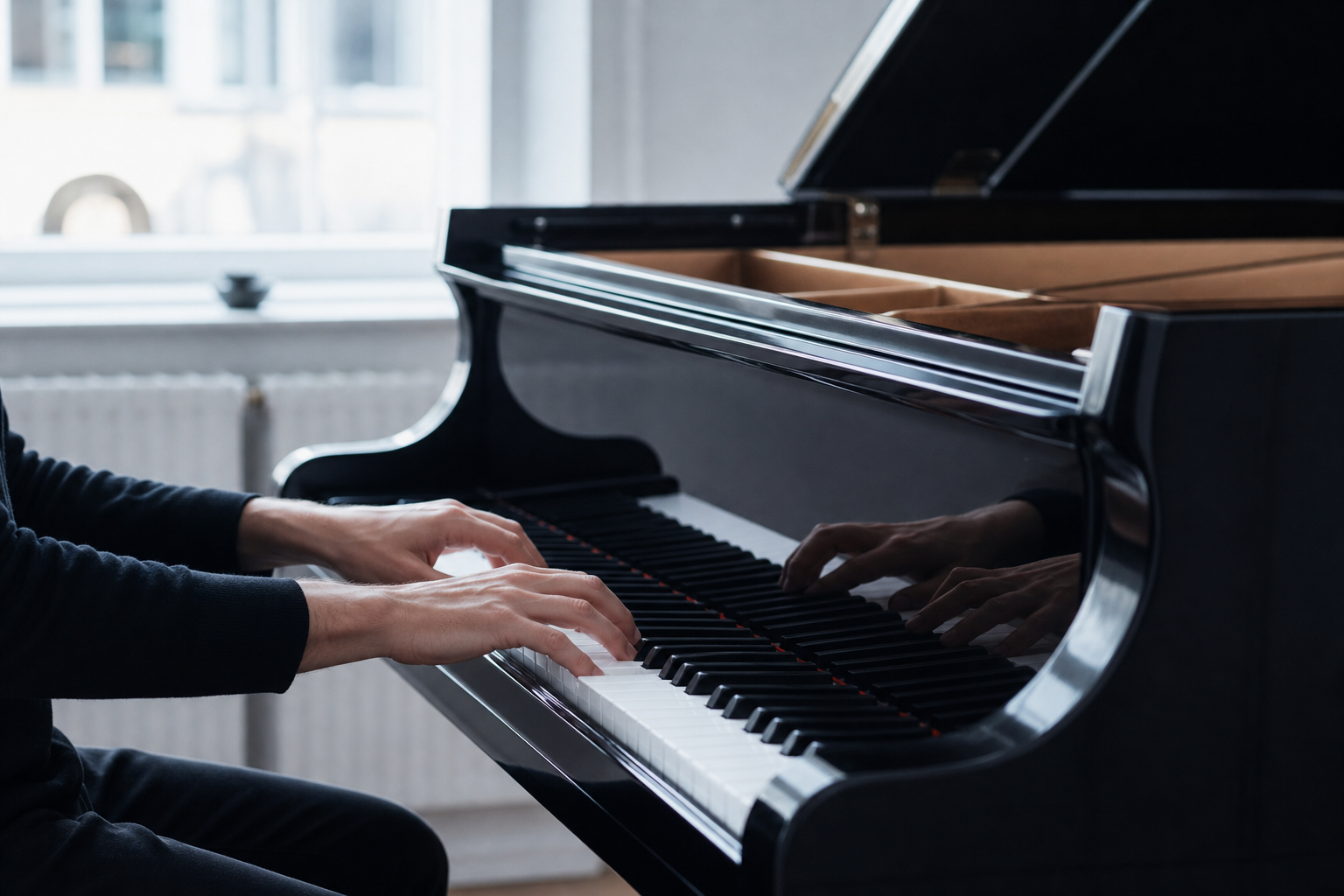
London has heard several sides of Andsnes. The 2015 BBC Proms brought the Mahler Chamber Orchestra and Andsnes’s Beethoven Journey to the Royal Albert Hall. The Guardian noted a fresh reading of Beethoven’s First and Fourth concertos, and later that Proms series was remembered as the final stage of a multi-year traversal of the concertos. In 2022, again at the Proms, the same partnership turned to Mozart’s 1785 and 1786 works, giving London a public version of the Mozart Momentum argument.
Wigmore Hall has supplied the more intimate counterweight. In January 2025 Andsnes returned with a programme involving Geirr Tveitt, Grieg and Chopin. The Guardian called him an insightful champion of Tveitt and described the recital’s unusual sonorities with unusual care. In May 2025, the hall presented Andsnes with Bertrand Chamayou in Schubert and Kurtag; the review emphasised their complementary balance, with Chamayou more animated and Andsnes cooler and analytical. On 17 September 2025, Wigmore Hall listed Andsnes with Christian Tetzlaff in Mozart, Ravel, Brahms and Donghoon Shin, including a UK premiere.
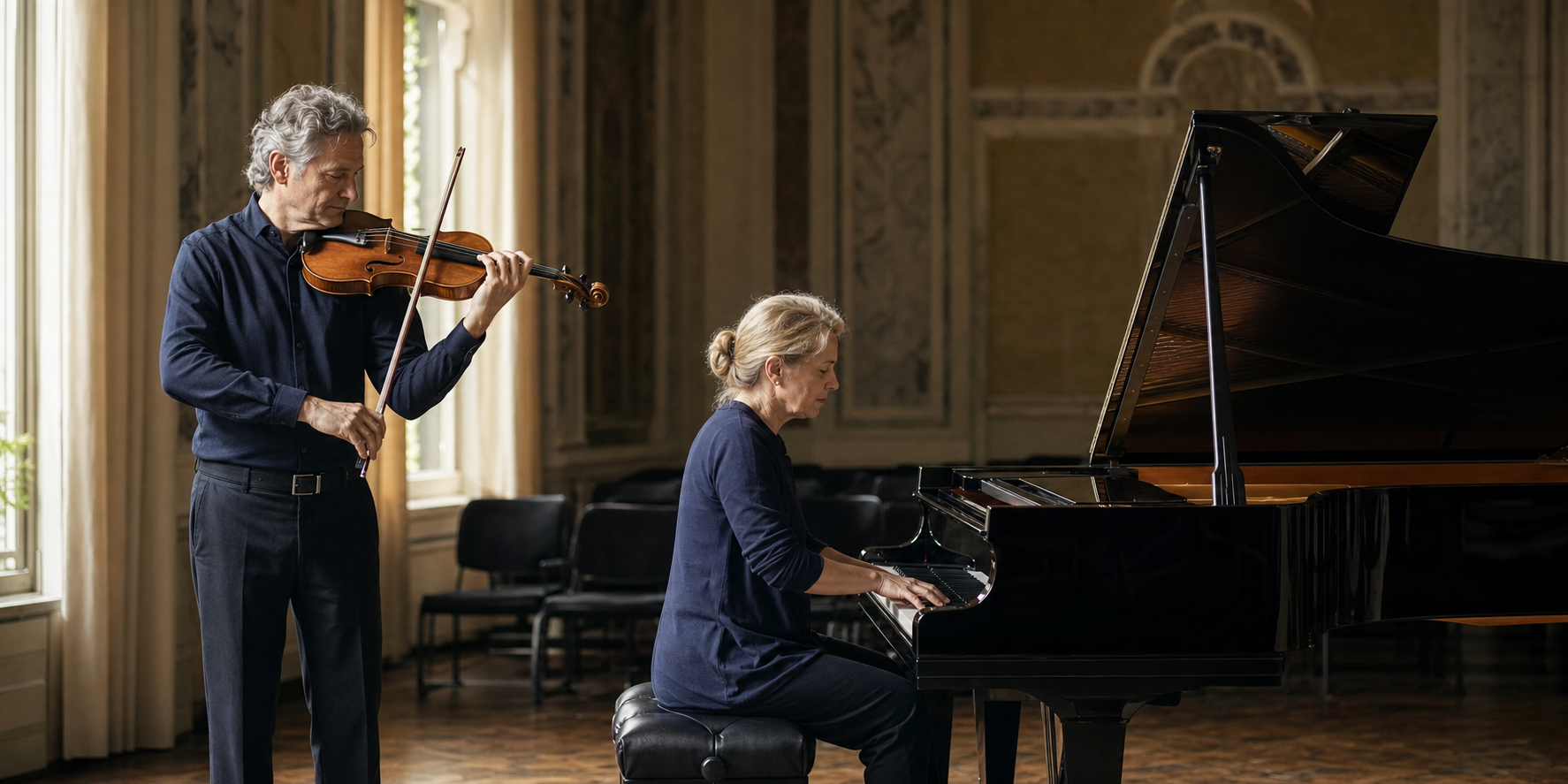
These London appearances are not scattered diary entries. They show a musician who moves convincingly between concerto leadership, solo recital, four-hand repertoire and chamber partnership. That range is useful for listeners because it prevents a narrow reading of his art. The same pianist who can project Beethoven across the Albert Hall can also make a Kurtag miniature sound like a private question.
Large-scale concerto cycles: Beethoven and Mozart with the Mahler Chamber Orchestra.
Recitals, chamber music, modern miniatures and concentrated listening.
Artist-profile style programming and concerto leadership in London’s orchestral culture.
Discography and listening roadmap for London audiences
Begin with the Mozart Momentum recordings if you want the clearest route into Andsnes’s recent artistic argument. Listen for the relationship between piano and orchestra: the piano leads, replies, interrupts and listens. The point is not a glossy soloist placed in front of an accompaniment, but a chamber conversation on concerto scale.
Move next to the Beethoven Journey with the Mahler Chamber Orchestra. The project is valuable because Andsnes directs from the keyboard, which sharpens the relationship between attack, orchestral pacing and piano rhetoric. If Mozart shows his transparency, Beethoven shows his structural command.
For Nordic repertoire, place Grieg near the centre rather than at the edge. Andsnes’s Grieg is not a postcard landscape. The appeal lies in rhythm, speech-like inflection and sudden weather changes. His advocacy of Tveitt at Wigmore Hall extends that Nordic line into less familiar repertoire and gives London listeners a reason to hear Norwegian piano music as a living tradition, not an appendix to Grieg.
| Listener type | Start here | Listen for |
|---|---|---|
| Newcomer | Mozart Momentum | Quick conversational balance between piano and orchestra. |
| Collector | Beethoven Journey | Architecture, direction from the keyboard, long-range pacing. |
| Nordic repertoire listener | Grieg and Tveitt programmes | Rhythmic profile, clean colour and unsentimental atmosphere. |
| Chamber listener | Tetzlaff, Chamayou and other collaborations | Shared timing, restraint and the art of not overplaying. |
How to listen: focus points for serious piano listening
The first focus point is voicing. Andsnes often lets inner lines remain audible without forcing them forward. In Mozart, this creates an impression of conversation: one hand states a thought, the other modifies it, the orchestra reframes it. Listen for whether the melody is merely louder or genuinely placed.
The second is pacing. Serious listening does not mean slow listening. It means hearing proportion. Andsnes can move quickly without sounding rushed because phrase length and harmonic direction remain legible. In Chopin, this can feel almost austere; in Grieg, it prevents colour from becoming indulgent.
The third is pedalling. Clarity is not dryness. A well-pedalled line can glow, provided the harmony remains intelligible. When the sound blurs, ask whether the blur is expressive atmosphere or simply a loss of grammar. This is also a practical point for adult pianists working on tone at home or in adult piano lessons at WKMT.
Clarity is not a cold virtue. In the right hands it is the condition that allows musical warmth to be believed.
Where to hear Andsnes in London
For current dates, the safest route is the official artist concerts page and the venue calendars for Wigmore Hall, the Barbican, Southbank Centre and the BBC Proms. Last checked on 16 June 2026, the artist’s official concerts page showed forthcoming recitals and festival dates, while Wigmore Hall’s archive documented recent 2025 London chamber appearances.
When booking, match the hall to the repertoire. Wigmore Hall suits chamber nuance and piano-duet repertoire; the Royal Albert Hall shows how concerto projects carry across a vast space; the Barbican and Southbank Centre often place major pianists within larger orchestral or festival contexts.
WKMT readers who want to deepen this kind of listening can connect recital-going with lesson work, masterclasses and London piano culture through WKMT London piano masterclasses and advanced piano lessons in London.
Further reading and sources on Leif Ove Andsnes
For readers who want to connect listening with study, WKMT offers London piano lessons and classical piano study. Related WKMT reading and study paths include adult piano lessons, advanced piano lessons, London masterclasses and recent pianist-listening articles such as the Clara Haskil and Stephen Hough features.
- Leif Ove Andsnes official concerts page https://leifoveandsnes.com/concerts/
- Leif Ove Andsnes, Mozart Momentum 1785 project page: https://leifoveandsnes.com/project/mm1785-mozart-momentum-1785-1786-volume-1/
- Wigmore Hall, Christian Tetzlaff violin and Leif Ove Andsnes piano, https://www.wigmore-hall.org.uk/whats-on/202509171930
- Wigmore Hall, Leif Ove Andsnes and Bertrand Chamayou, https://www.wigmore-hall.org.uk/whats-on/202505211930
- The Guardian, Proms 28 and 29 Mahler Chamber Orchestra/Andsnes review
- The Guardian, Leif Ove Andsnes review at Wigmore Hall
- The Guardian, Andsnes and Bertrand Chamayou review at Wigmore Hall