
 TRIAL LESSON
Uncategorized
Impressionism and Neoclassicism in Music
Jun
Impressionism and Neoclassicism in Music
Impressionism and Neoclassicism in Music — Debussy, Ravel and Their Piano Legacy
By WKMT London | Updated July 2026
Two overlapping French movements reshaped how the piano sings, shimmers and remembers. Understanding impressionism and neoclassicism in music is the key to playing Debussy and Ravel with the tone-colour and control they demand.
Impressionism and neoclassicism in music are two of the most rewarding areas a serious pianist can study, and they were carried above all by two composers: Claude Debussy and Maurice Ravel. This was a comparatively brief period, roughly from the 1890s to the 1930s, yet it proved a decisive turning point. It moved keyboard writing away from the emotionally charged Romantic climax and towards colour, atmosphere and precision — and it fed directly into the harmonic language of jazz and much of the music that followed. For a pianist, learning this repertoire is less about power and more about listening: to the pedal, to the overtones, to the silence between sounds.
This guide explains what impressionism and neoclassicism actually mean at the keyboard, walks through the essential piano works of Debussy and Ravel, sets out honest difficulty levels using approximate ABRSM grade equivalents, and offers practical technical guidance for students who want to approach this music properly rather than merely reading through the notes.
What this guide covers
- What impressionism means at the piano — pedalling, whole-tone colour and layered sonority
- The essential Debussy piano works and where they sit in difficulty
- Ravel’s impressionist masterpieces — from Jeux d’eau to Gaspard de la Nuit
- Neoclassicism at the keyboard — the Sonatine, Le Tombeau de Couperin and the Piano Concerto in G
- A difficulty ladder and practice guide for students
Impressionism at the piano: colour before climax
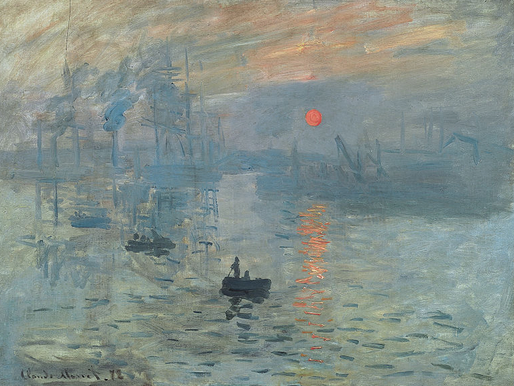
The beginning of what we call Impressionist music is a deliberately blurred line — which is fitting for a style built on suggestion rather than statement. We tend to think first of Debussy, who moved in the same Parisian circles as painters such as Monet, Pissarro and Renoir. The idea behind the music was to step away from writing that was heavily emotionally charged, and instead to conjure the impression of a landscape, a reflection on water, or the play of light. Interestingly, Debussy himself disliked being filed among the “impressionists”; he considered the label imprecise.
His influences were broad. He drew on Gounod and Massenet, and on the Russians — Tchaikovsky, Balakirev (whose Islamey remains a byword for difficulty) and Rimsky-Korsakov, whose Scheherazade, rich in orchestral tone-colour and exotic modes, also left its mark on Ravel. From these sources Debussy assembled a distinctive palette: pentatonic scales with an Oriental inflection borrowed from Javanese gamelan, whole-tone scales for a floating, dreamlike quality, and older church modes for an archaic atmosphere.
At the keyboard, three technical ideas define the impressionist sound. First, pedalling as colour: the sustain pedal is used not merely to connect notes but to blend overtones into a wash, and half-pedalling and flutter-pedalling allow the player to clear or thicken that wash gradually. Second, layered sonority: melody, harmony and resonance often occupy different dynamic planes within the same hand, so voicing becomes everything. Third, whole-tone and modal fingering: passages that avoid the usual pull of major and minor need a relaxed, even touch so that no single note dominates. A particularly clear example of these ideas is Debussy’s Images, where the piano is asked to sound like moving water and light.
In impressionist writing the pedal is not an accessory to the notes — it is one of the voices. A student who treats it as an on/off switch will never find the tone the music was written for.
The essential Debussy piano works
Debussy’s keyboard output is where most students first meet this style, and it rewards patience. In terms of pure musicality he sits closer to Chopin than to the virtuoso tradition — the demands are of touch and timing rather than raw display.
The Suite bergamasque contains his most famous single movement, Clair de Lune. It is often underestimated: pianists and examiners broadly place it around ABRSM Grade 8, and its difficulty lies less in the notes than in the control, voicing and rubato needed to play it well. The Préludes, Book I offer a spectrum of colour — La Fille aux cheveux de lin is one of the more approachable entry points to Debussy, while La Cathédrale engloutie demands large sonorities and careful pedalling to evoke a cathedral rising from and sinking beneath the sea. Images and the Estampes push tone-painting further and belong to the advanced student.
Ravel’s impressionist masterpieces
Where Debussy is closer to Chopin, Ravel’s technique is bound up with Liszt — his writing is more overtly virtuosic and exactingly notated. Ravel prized clarity and craftsmanship, and his impressionist works ask for both watercolour and precision at once.
Jeux d’eau (1901) is a foundational impressionist study in cascading, water-like figuration and shimmering upper-register writing — a genuine post-Grade-8 / diploma undertaking. From the suite Miroirs, Une Barque sur l’Océan asks the pianist to suggest a boat rocking on open water through rolling arpeggiation and a wide dynamic range. And then there is Gaspard de la Nuit (1908): three tableaux — Ondine, Le Gibet and Scarbo — that stand among the most demanding pieces in the entire piano repertoire, well beyond Grade 8 and firmly at diploma level. Ravel reportedly set out to write something more difficult than Balakirev’s Islamey, and he succeeded.
Neoclassicism at the keyboard
If impressionism looked outward to light and landscape, Neoclassical music looked backward — to the clarity, forms and restraint of the eighteenth century, reimagined through a modern harmonic lens. Debussy was rebellious against tradition yet still won the Prix de Rome; Ravel, in particular, carried the neoclassical impulse furthest at the piano. Alongside music of powerful imagery, he wrote works that pay open homage to the French Baroque composers such as Rameau and Couperin.
The essential neoclassical piano works are three. The Sonatine (1903–05) is compact, elegant and classical in outline, its outer movements framing a poised Menuet — a diploma-level piece that nonetheless teaches restraint better than almost anything else in the repertoire. Le Tombeau de Couperin (composed 1914–17) is a six-movement suite honouring the Baroque keyboard tradition, each movement dedicated to a friend of Ravel’s who died in the First World War; its dance forms — Prélude, Fugue, Forlane, Rigaudon, Menuet and Toccata — sit anywhere from Grade 6–7 to full diploma level in the closing Toccata. Finally, the Piano Concerto in G major (1929–31) fuses neoclassical poise with the jazz and blues rhythms Ravel absorbed on his American tour — a reminder that this music opened the door directly onto the twentieth century.
The connections run deep. To understand how Ravel’s neoclassicism reworks earlier structures, it helps to know something of the sonata form he was reacting to, and of related figures such as the Catalan miniaturist Federico Mompou, whose spare, resonant writing shares some of the same French lineage.
A difficulty guide for students
The table below gathers the works discussed above with approximate ABRSM grade equivalents. Treat these as a guide to a polished performance — the level at which the piece communicates, not merely the level at which you can play the right notes.
| Work | Composer | Style | Approx. level |
|---|---|---|---|
| La Fille aux cheveux de lin | Debussy | Impressionist | Grade 6–7 |
| Le Tombeau de Couperin — Prélude / Menuet | Ravel | Neoclassical | Grade 6–7 |
| La Cathédrale engloutie | Debussy | Impressionist | Grade 7–8 |
| Clair de Lune | Debussy | Impressionist | Grade 8 |
| Sonatine | Ravel | Neoclassical | Grade 8 / diploma |
| Jeux d’eau | Ravel | Impressionist | Diploma |
| Une Barque sur l’Océan | Ravel | Impressionist | Diploma |
| Le Tombeau de Couperin — Toccata | Ravel | Neoclassical | Diploma |
| Gaspard de la Nuit | Ravel | Impressionist | Advanced diploma |
How to practise this repertoire
The impressionist and neoclassical styles reward a particular kind of practice — slow, ear-led and physically relaxed. The following sequence works well for students moving into this music for the first time.
- Learn the harmony before the fingering. Block out the chords and hear how each sonority colours the next. In whole-tone and modal passages, knowing why a chord sounds weightless changes how you voice it.
- Practise the pedal as a separate discipline. Play a passage with no pedal first to secure the legato in the fingers, then add half-pedalling deliberately, listening for the moment the wash becomes muddy and clearing it.
- Voice from the top down. Bring out the melodic line and let inner resonance sit beneath it. Arm-weight, not finger force, produces the singing tone this music needs.
- Keep the pulse honest. Rubato in Debussy and Ravel is expressive, not arbitrary — the underlying tempo must be felt even as the surface bends around it.
- Build the virtuoso passages in small cells. In Jeux d’eau or Scarbo, isolate two or three beats, secure them at tempo, then link. Speed follows security; it never precedes it.
Debussy and Ravel are not “easier” than the Romantics because they are quieter. The control required to play softly, evenly and with genuine colour is among the hardest things a pianist ever learns.
Is this a good starting point for piano study?
Honestly, impressionist and neoclassical music is best approached once a student has a secure foundation — typically from around Grade 5 upward. The style forgives nothing in the way of pedalling and voicing, and a beginner will not yet have the control to make it sound as intended. That said, it is a wonderful goal: the promise of playing Clair de Lune or a movement of Le Tombeau de Couperin well is exactly the kind of motivation that sustains years of disciplined work. For adult learners in particular, this repertoire is often the reason they return to the piano, and a structured programme of adult piano lessons can make it genuinely reachable.
Frequently asked questions on impressionism and neoclassicism in music
Impressionism uses colour, atmosphere and blurred harmony to suggest images and moods — think of Debussy evoking water or light. Neoclassicism, by contrast, revives the clear forms and restraint of the eighteenth century through a modern harmonic language, as in Ravel’s Le Tombeau de Couperin. Ravel wrote in both styles across his career.
Claude Debussy and Maurice Ravel are the central figures, with earlier groundwork by composers such as Chabrier. Debussy is usually seen as the founder of the style, though he disliked the “impressionist” label himself.
Most teachers and examiners place Clair de Lune around Grade 8. Its challenge lies less in the notes than in the control, voicing and rubato needed to play it convincingly, which is why it is rarely played well below that level.
Broadly, yes — Ravel’s writing is more overtly virtuosic and exactingly notated, closer to the Liszt tradition. Gaspard de la Nuit is among the most difficult works in the entire repertoire. Debussy’s difficulties are more about touch, pedalling and timing than raw technical display.
Debussy and Ravel’s use of extended chords, modal harmony and unresolved colours filtered directly into jazz harmony. Ravel’s own Piano Concerto in G openly incorporates jazz and blues rhythms, showing how close the two worlds had become by the 1930s.
Begin with an approachable Debussy Prélude such as La Fille aux cheveux de lin, or an easier movement from Ravel’s Le Tombeau de Couperin, once you are secure at around Grade 5–6. Learn the touch and pedalling on smaller pieces before attempting Clair de Lune or the diploma works.
Study impressionist & neoclassical piano in London
WKMT teaches Debussy, Ravel and the wider French repertoire through the Scaramuzza technique — building the tone-colour and control this music demands, from first steps to diploma level.