
 TRIAL LESSON
Pianists, Piano Lessons
Haochen Zhang in London: Competition, Clarity and the Art of Serious Piano Listening
Aug
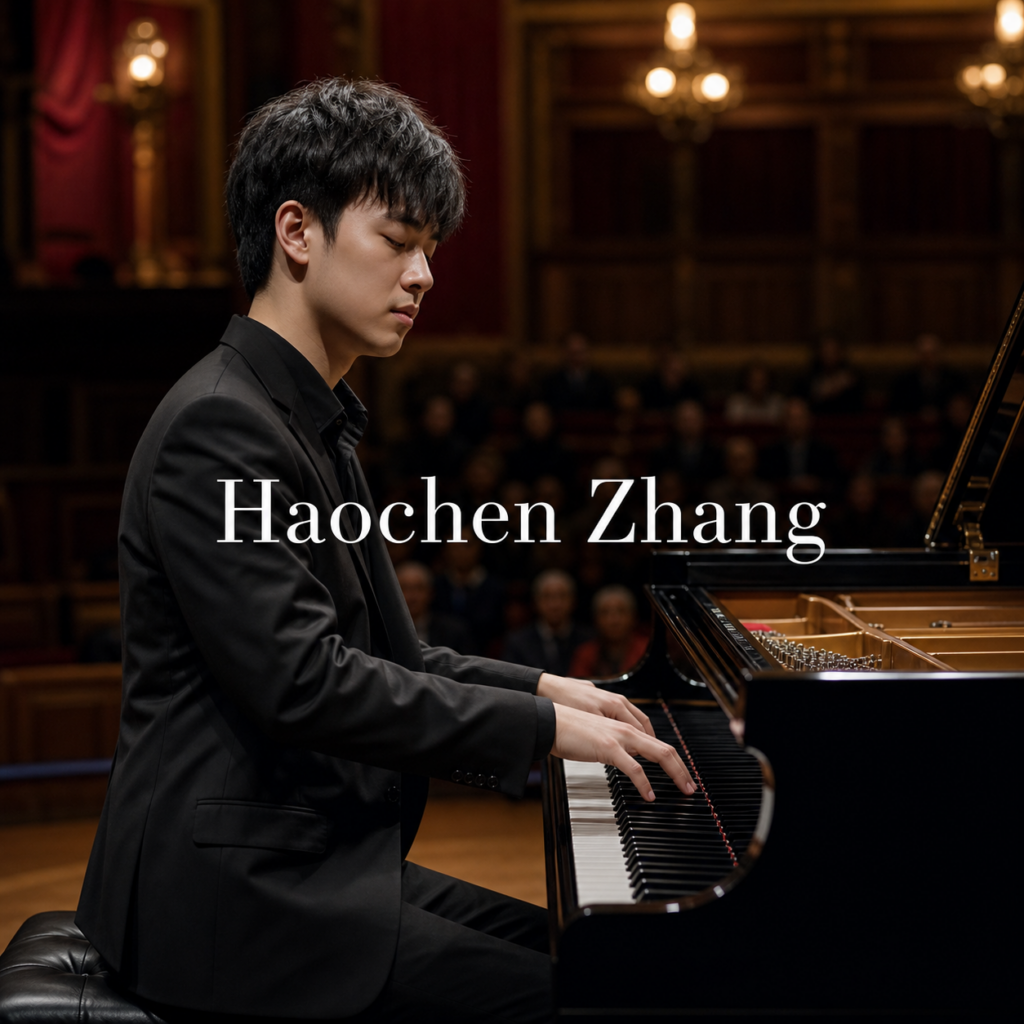
Haochen Zhang in London
WKMT London listening portrait
Haochen Zhang in London: Competition, Clarity and the Art of Serious Piano Listening
Haochen Zhang rewards the listener who hears beyond virtuosity. His playing invites us to follow structure, colour and dramatic timing as closely as speed or brilliance.
Why Haochen Zhang matters to London listeners
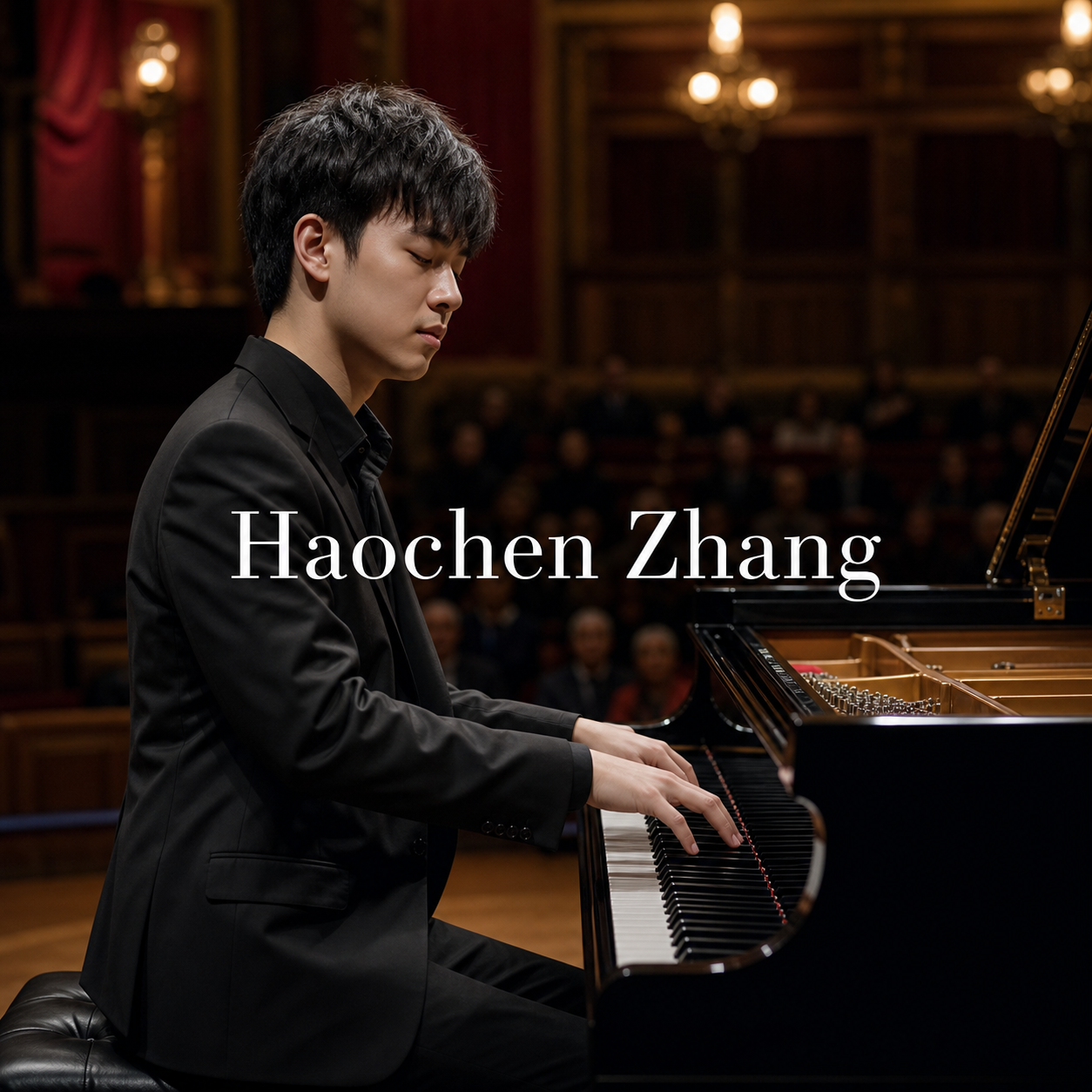
Haochen Zhang entered international attention through the 2009 Van Cliburn International Piano Competition, yet the most interesting feature of his mature work is not the medal itself. It is the way formidable technique serves an unusually patient musical imagination. A phrase can remain restrained until its harmony demands release; a large sonata can feel directed towards one structural horizon rather than divided into impressive episodes.
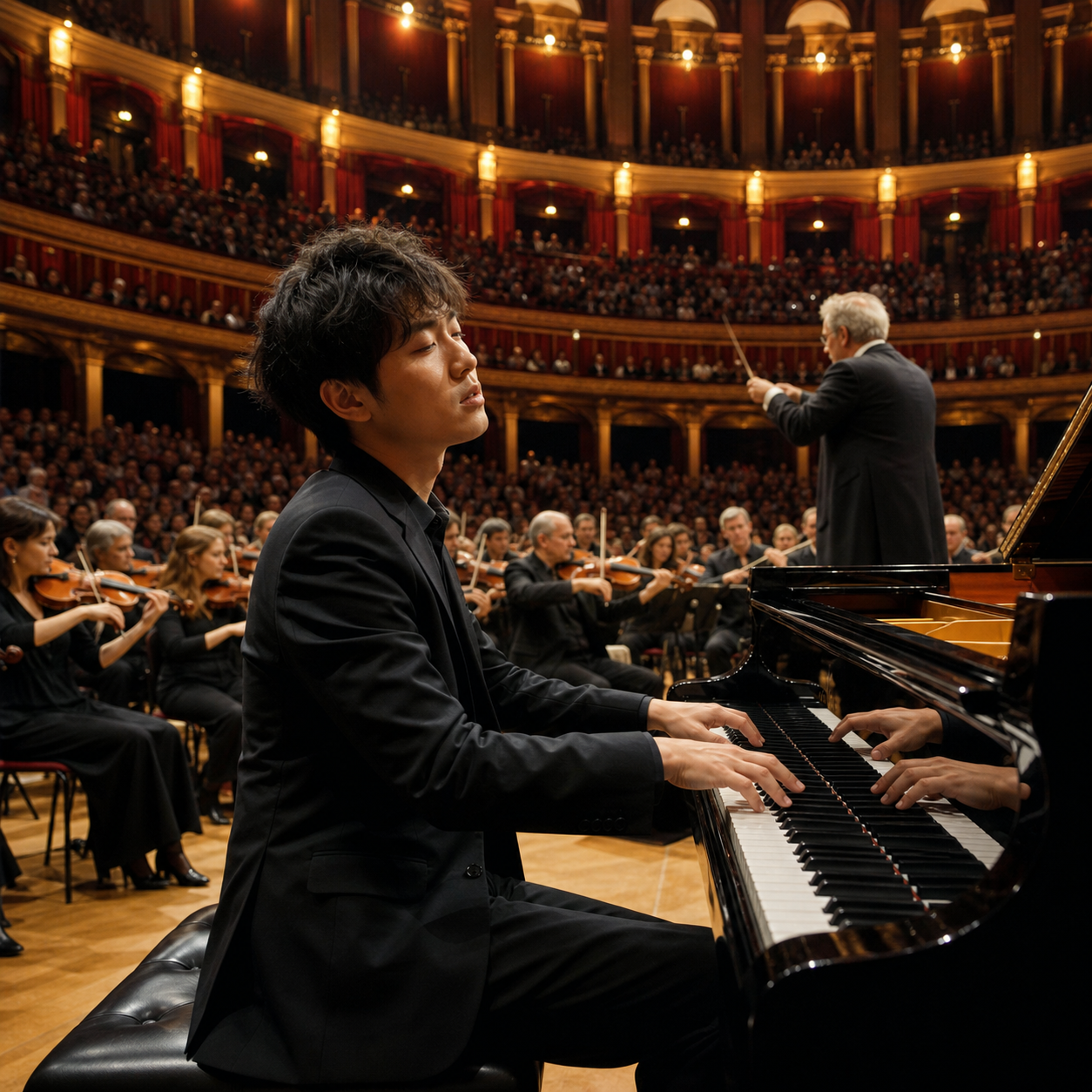
London heard that combination at the Royal Albert Hall on 19 July 2014, when Zhang made his BBC Proms appearance with Long Yu and the China Philharmonic Orchestra in Liszt’s First Piano Concerto. The Royal Albert Hall archive records both the concerto and his encore, La campanella. It was a revealing pairing: Liszt as public architecture, then Liszt as quicksilver theatre.
For anyone engaged in classical piano study in London, Zhang offers a useful model. Competition preparation need not produce cautious playing; clarity need not become cold; and power becomes persuasive only when the listener understands where it is going.
From Shanghai to the Cliburn stage
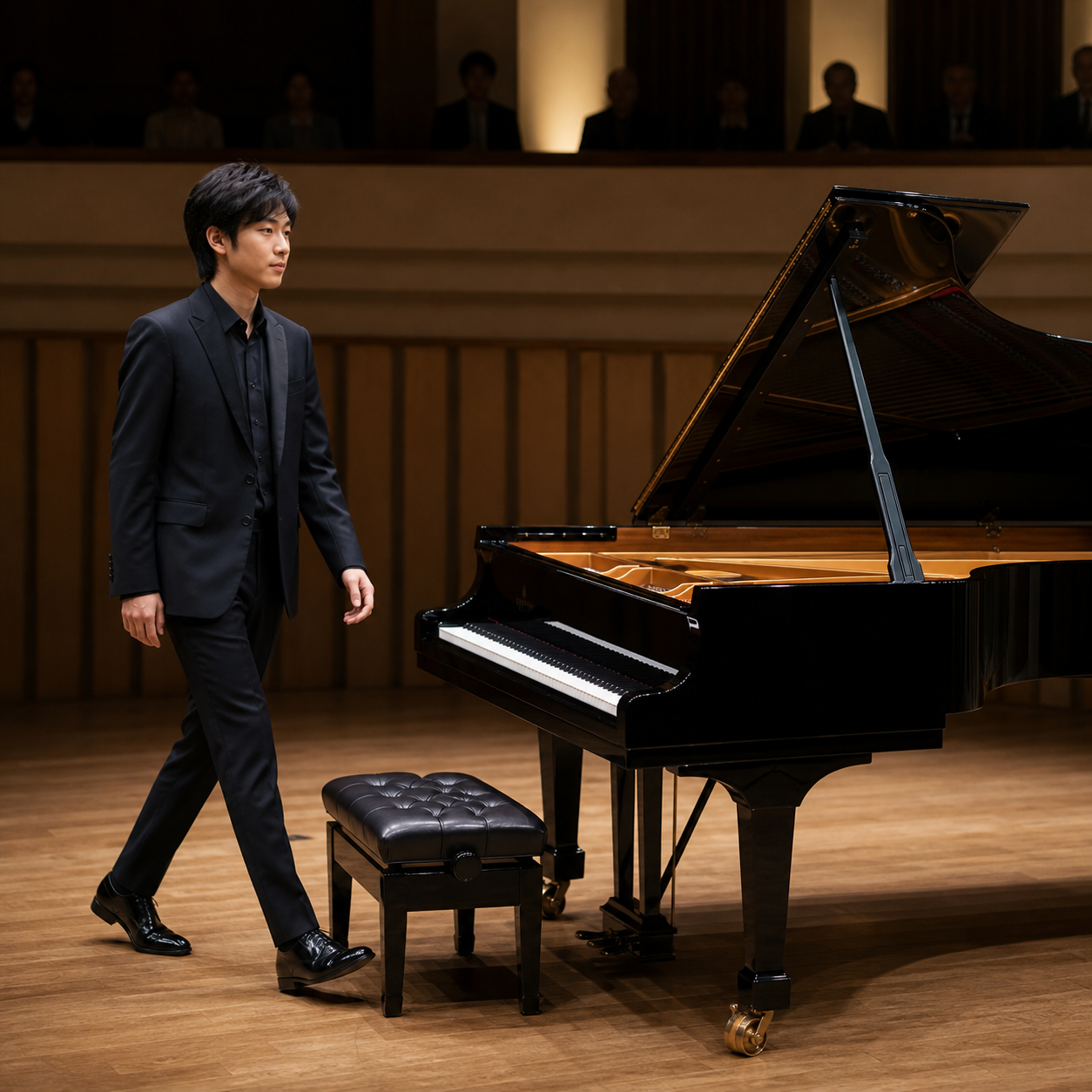
Zhang began piano lessons before the age of four and appeared at Shanghai Concert Hall when he was five. His training later took him through Shenzhen Arts School and the Shanghai Conservatory before the Curtis Institute of Music in Philadelphia, where he studied with Gary Graffman. These details matter less as prodigy folklore than as evidence of several musical cultures meeting: disciplined early formation, a strong conservatoire tradition and the broad repertorial demands of American concert life.
At nineteen, he shared the 2009 Cliburn gold medal with Nobuyuki Tsujii. The official Cliburn Gold Medalist recording preserves a programme spanning Stravinsky’s Three Movements from Petrushka, Chopin’s Twenty-Four Preludes, Mason Bates and Liszt’s Spanish Rhapsody. That breadth is telling. It asks for percussive definition, long-range tonal memory, new-music precision and Romantic bravura, often within the same week.
“Competition technique becomes artistry only when every brilliant surface points towards character, proportion and time.”
A career in four listening stages
Cliburn gold establishes the breadth and stamina of the young pianist.
The Proms places his Liszt before a vast London audience.
The complete Beethoven concertos reveal sustained classical thinking.
Liszt’s Études and the Beethoven–Liszt recital album deepen the portrait.
Haochen Zhang in London: the Proms as a listening test
The Royal Albert Hall changes the scale of piano sound. A gesture that feels immediate in a recital room must retain shape across a vast auditorium, while orchestral colour can swallow detail that would be effortless to project in a studio. Liszt’s First Concerto is therefore an ideal test of Zhang’s strengths: its four connected movements demand velocity, but its success depends on transitions, dialogue and the return of ideas.
In the 2014 Prom, the piano shared the evening with the China Philharmonic’s first Proms appearance. The historical occasion could easily have encouraged display for its own sake. Instead, the useful listening question is architectural: how does the soloist make the concerto feel like one accelerating argument? Hear the opening exchange as a proposition, the lyrical passages as changed perspective, and the finale as accumulated consequence.
What to listen for: clarity without rigidity
Serious listening is not a search for faults. It is the attempt to understand an interpretation’s internal logic. Zhang’s playing is especially rewarding when heard through four lenses: pulse, voicing, harmonic arrival and the management of scale.
| Listening lens | What to notice | Why it matters at the piano |
|---|---|---|
| Pulse | Small freedoms sit inside a stable larger motion. | Rubato speaks without dissolving direction. |
| Voicing | Inner lines alter the colour of repeated material. | Texture becomes conversation, not accompaniment beneath melody. |
| Arrival | Dynamic growth follows harmony rather than habit. | A climax feels earned instead of merely loud. |
| Scale | Local beauty remains connected to the movement’s span. | Long works retain memory and destination. |
His 2022 set of Beethoven’s five piano concertos with the Philadelphia Orchestra and Nathalie Stutzmann makes a strong laboratory for these questions. Begin with the Fourth Concerto: notice how the solitary opening avoids grand announcement and instead establishes a private tone that the orchestra must answer. Then compare the Fifth, where public brilliance requires firmer profile. The value lies in hearing one pianist change rhetorical scale while keeping the same concern for line.
For a more concentrated encounter, the 2025 Beethoven and Liszt release places the Hammerklavier Sonata beside Liszt’s Sonata in B minor. The Cliburn’s release note confirms the pairing. Both works test whether a pianist can make extreme difficulty intelligible as form. Listeners interested in the physical and historical questions behind this repertory can also explore WKMT’s account of the Liszt tradition and modern piano technique.
The pianist’s place after the prize
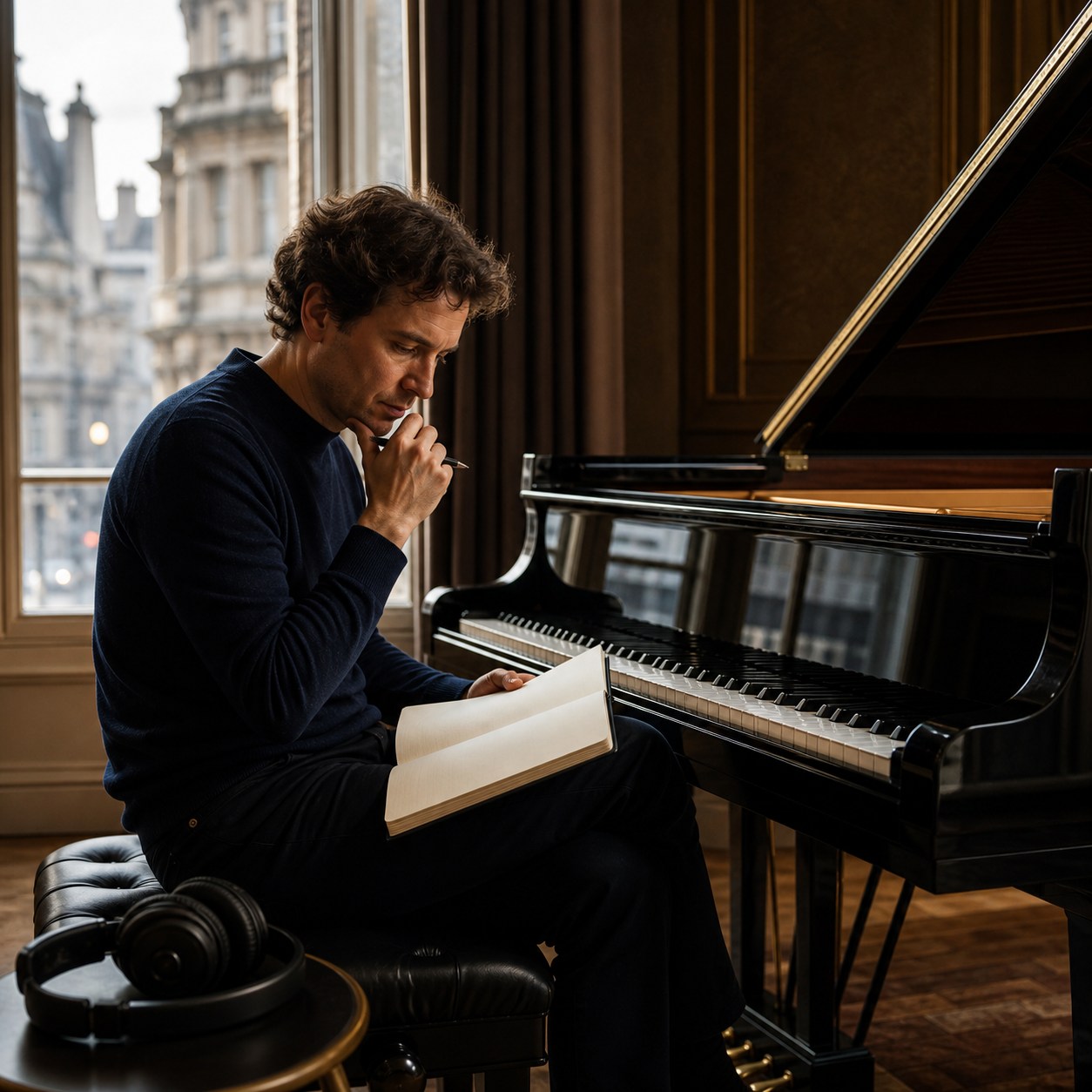
Competitions provide a recognisable public narrative: preparation, judgement, result. Musical life afterwards is less tidy. A pianist must decide which repertory deserves repeated attention, how recordings differ from concerts and whether a recognisable voice can remain curious. Zhang’s discography suggests a preference for large structures that expose thought over time: Beethoven concertos, Liszt’s Transcendental Études, the Hammerklavier and the Liszt Sonata.
That choice distinguishes him from the caricature of the competition virtuoso. The Transcendental Études demand almost every spectacular resource, yet their deeper challenge is differentiation. Each étude needs its own climate, motion and weight. On his official biography, the 2023 Liszt recording sits beside a career that includes the London Symphony Orchestra, London Philharmonic Orchestra and BBC Proms. The connection is consistent: command is the starting condition, not the final message.
The 2017 Avery Fisher Career Grant adds another marker, but it is more illuminating to compare programmes than prizes. Schumann’s inward miniatures, Janáček’s compressed drama, Prokofiev’s orchestral virtuosity and Beethoven’s extended argument ask for different kinds of concentration. Zhang does not solve them by imposing one recognisable manner. The common thread is his attention to when an idea should gather energy and when it should remain withheld. That restraint makes sudden force more eloquent.
London audiences can place Zhang within a city that hears many competition laureates but values them for different reasons. The most productive comparison is therefore not who plays faster. Ask how each artist makes time pass, how clearly a return is prepared, and whether a familiar score sounds newly inevitable. WKMT’s guide to the importance of listening offers a useful companion to that habit.
How to hear Haochen Zhang from London
As of 16 August 2026, Zhang’s official schedule lists engagements in the United States, Switzerland, France, Singapore and Hong Kong, but no forthcoming London appearance. That absence should be treated as a current schedule check, not a prediction. Consult the artist’s official website and venue calendars before making plans.
Meanwhile, recordings provide a better introduction than a random sequence of clips. Start with the complete Beethoven concertos to hear changing classical rhetoric across a coherent cycle. Move to the Liszt Transcendental Études for colour, risk and differentiation. Finish with the Beethoven–Liszt album, where two monumental sonatas ask the listener to retain musical memory over long spans.
A three-pass listening method
- First pass: follow character and emotional direction without taking notes.
- Second pass: mark three structural arrivals and what prepares each one.
- Third pass: focus on one craft element: pulse, voicing, pedal or dynamic pacing.
If a London concert is announced, choose seats for musical purpose rather than status. Central positions usually clarify balance; slightly raised seating can reveal orchestral layers; proximity increases physical impact but may compress the whole. WKMT’s overview of London concert halls helps readers compare the city’s listening environments.
What adult pianists can take to the keyboard
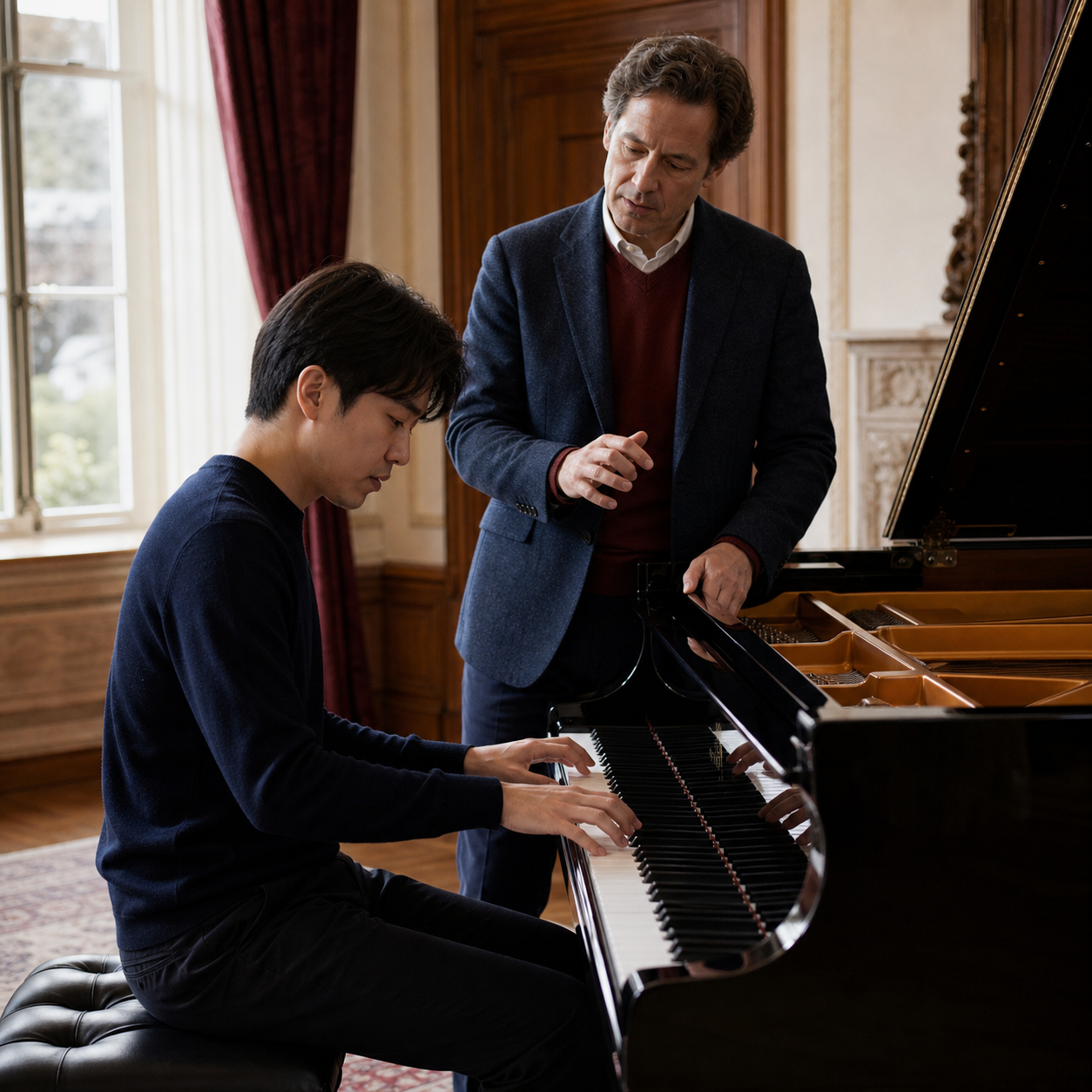
Zhang’s example is especially valuable for adult musicians because it shifts attention from flawless execution to organised hearing. Before increasing tempo, decide where a movement is going. Before adding pedal, identify which harmony should remain present. Before making a climax louder, ask whether its bass, voicing and timing already make it structurally important.
A practical application begins away from the instrument. Take a clean page and draw the movement as a simple line: opening, first change of direction, central tension, return and final release. Then play only the joins between those regions. This exposes whether tempo, breathing and dynamic shape connect convincingly. It also prevents repeated practice from polishing attractive details while leaving the journey unclear.
This is demanding work, but it is also liberating. Adults often bring strong intellectual and emotional resources to music while worrying that technical progress is too slow. Close listening turns those resources into practical advantage. A student can learn to hear proportion now, even while the hands continue to develop. Carefully structured adult piano lessons in London can connect that interpretive awareness to healthy movement, reliable practice and repertoire chosen at the right level.
The aim is not to reproduce Zhang’s sound. Different hands, instruments and rooms require different solutions. The durable lesson is to make every physical choice accountable to the ear. When the musical destination is precise, technique becomes easier to diagnose: a blurred texture may need less pedal, a heavy ascent may need better release, and an unconvincing climax may need a longer breath rather than more effort.
Develop a more purposeful way of hearing and playing
WKMT connects serious listening, interpretation and grounded piano technique within a London teaching community.
Sources on Haochen Zhang
- Haochen Zhang official website: biography, recordings and schedule; checked 16 August 2026.
- The Cliburn: 2009 Gold Medalist recording and programme.
- The Cliburn: 2025 Beethoven and Liszt album announcement.
- Royal Albert Hall archive: BBC Proms performance, 19 July 2014.
- Hong Kong Philharmonic: artist biography and recent career overview.
- BIS / Naxos: Beethoven, The 5 Piano Concertos.