
 TRIAL LESSON
Pianists
Alexandre Kantorow in London: Virtuosity, Clarity and the Modern Concert Pianist
Aug
WKMT London listening guide
Alexandre Kantorow in London: Virtuosity, Clarity and the Modern Concert Pianist
Alexandre Kantorow brings formidable physical command to music that still sounds volatile, poetic and newly imagined. His London appearances offer listeners and piano learners a revealing question: how can virtuosity enlarge a musical argument rather than merely decorate it?
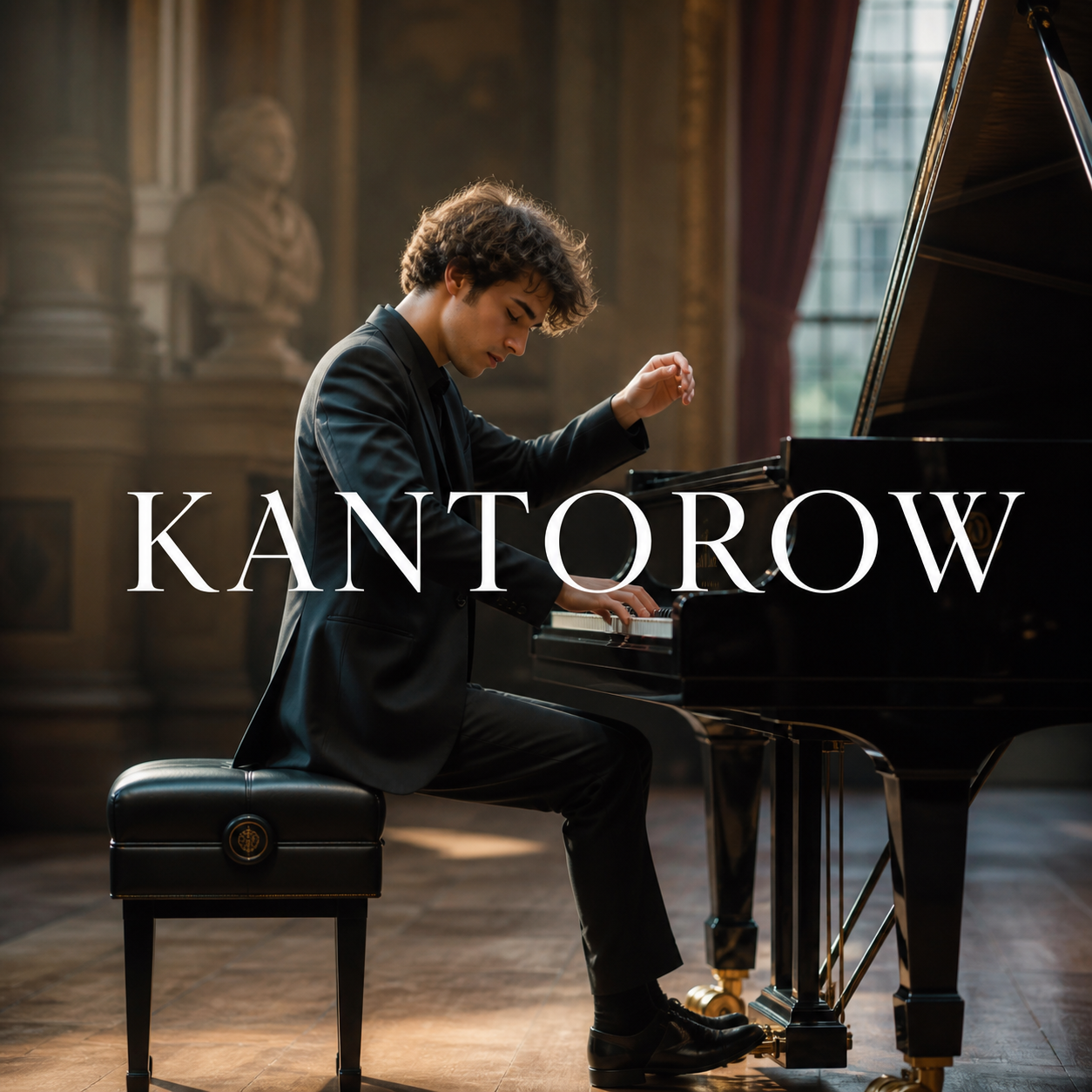
The career facts are striking, but they are useful only if they lead back to sound. Kantorow’s official biography records the 2019 Tchaikovsky success, the 2024 Gilmore Artist Award, his exclusive BIS recording relationship and his studies with Pierre-Alain Volondat, Igor Lazko, Frank Braley and Rena Shereshevskaya. Those teachers represent different traditions, yet his playing rarely feels like a collage of inherited manners.
Alexandre Kantorow London searches often begin with a concert date. A better route is to hear what each London setting reveals. The Royal Albert Hall tests concerto scale; Wigmore Hall exposes chamber balance and minute colour; work with the London Philharmonic Orchestra places his rhetoric inside a large symphonic frame. For learners taking classical piano lessons in London, these are not remote distinctions. They describe how touch, timing and listening change with musical scale.
Alexandre Kantorow London milestones
Kantorow made his BBC Proms debut with the Royal Philharmonic Orchestra and Vasily Petrenko in Beethoven’s Fourth Piano Concerto. The Royal Philharmonic Orchestra’s account documents the sold-out 2023 concert, while the BBC Proms programme archive preserves the wider festival context. Beethoven’s Fourth rewards a soloist who can make intimacy carry across a huge room without turning every phrase into a proclamation.
At Wigmore Hall, the scale changes. Its 2023/24 brochure records his debut, and the 2024/25 season programme places him in chamber music with violinist Daniel Lozakovich. Wigmore’s 125th-anniversary festival announcement then names him among the pianists invited for the 2026 celebrations. This continuity matters more than a single appearance: London has heard him as concerto soloist, recital personality and chamber partner.
Scale
Hear how a phrase is projected without losing its inner voices.
Character
Notice how quickly colour and articulation establish a new dramatic scene.
Structure
Follow recurring intervals and harmonies across apparent contrasts.
Risk
Ask whether freedom increases tension while preserving the underlying pulse.
What Kantorow’s virtuosity actually does
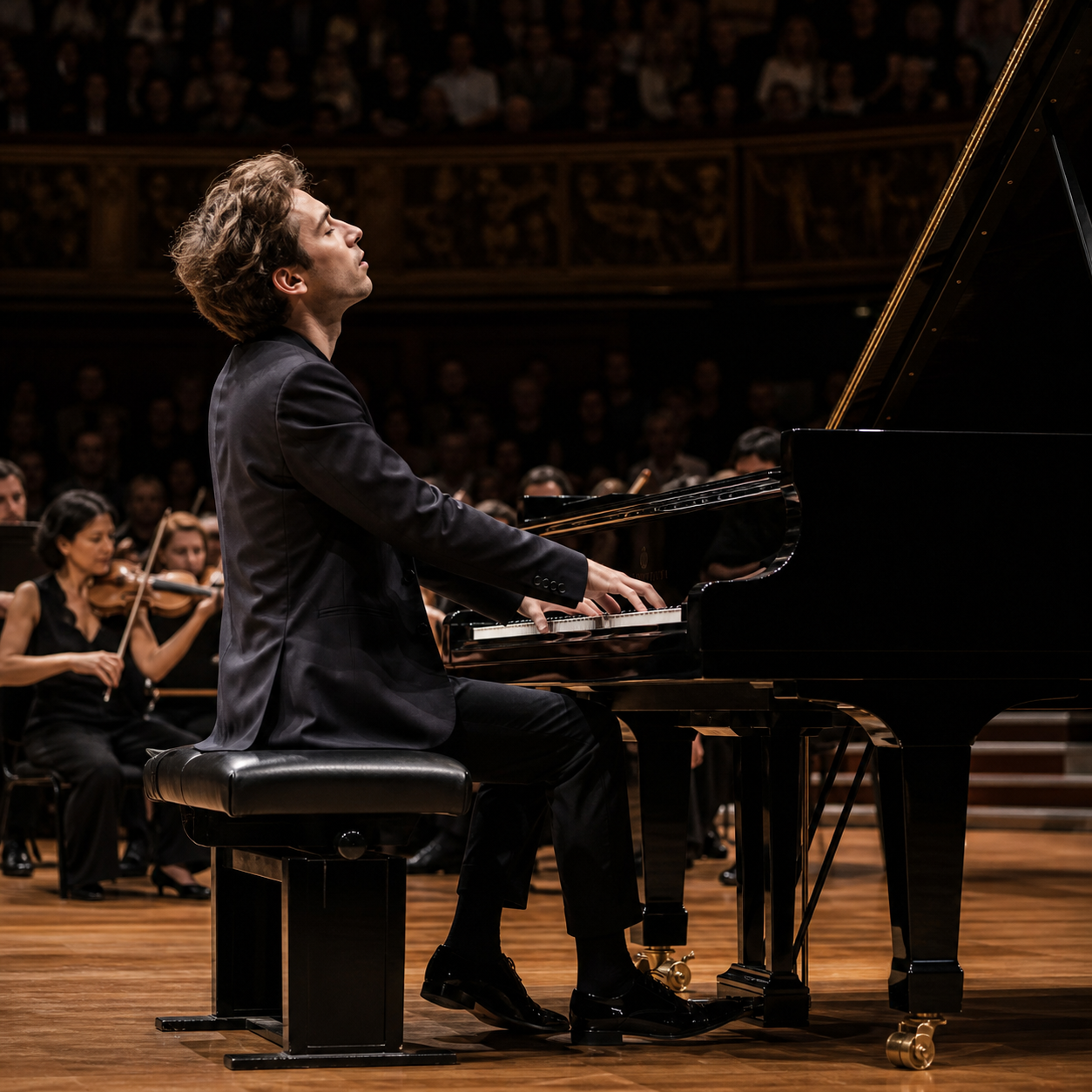
Virtuosity is sometimes reduced to velocity and volume. Kantorow’s best performances suggest four more demanding functions. Technique can make a dense texture transparent, preserve rhythm through extreme physical writing, change character in a single gesture and keep a destination audible across a long movement. The result may sound spontaneous because the hierarchy is unusually clear.
His celebrated Tchaikovsky Second Concerto is a useful example. The work is less familiar than the First and can sprawl if its contrasts are treated as episodes. Kantorow’s approach turns the heroic writing, lyrical withdrawal and chamber-like passages into parts of one journey. The Gramophone conversation about Brahms’s Second Sonata reveals a similar concern with motifs, abrupt shifts and narrative continuity.
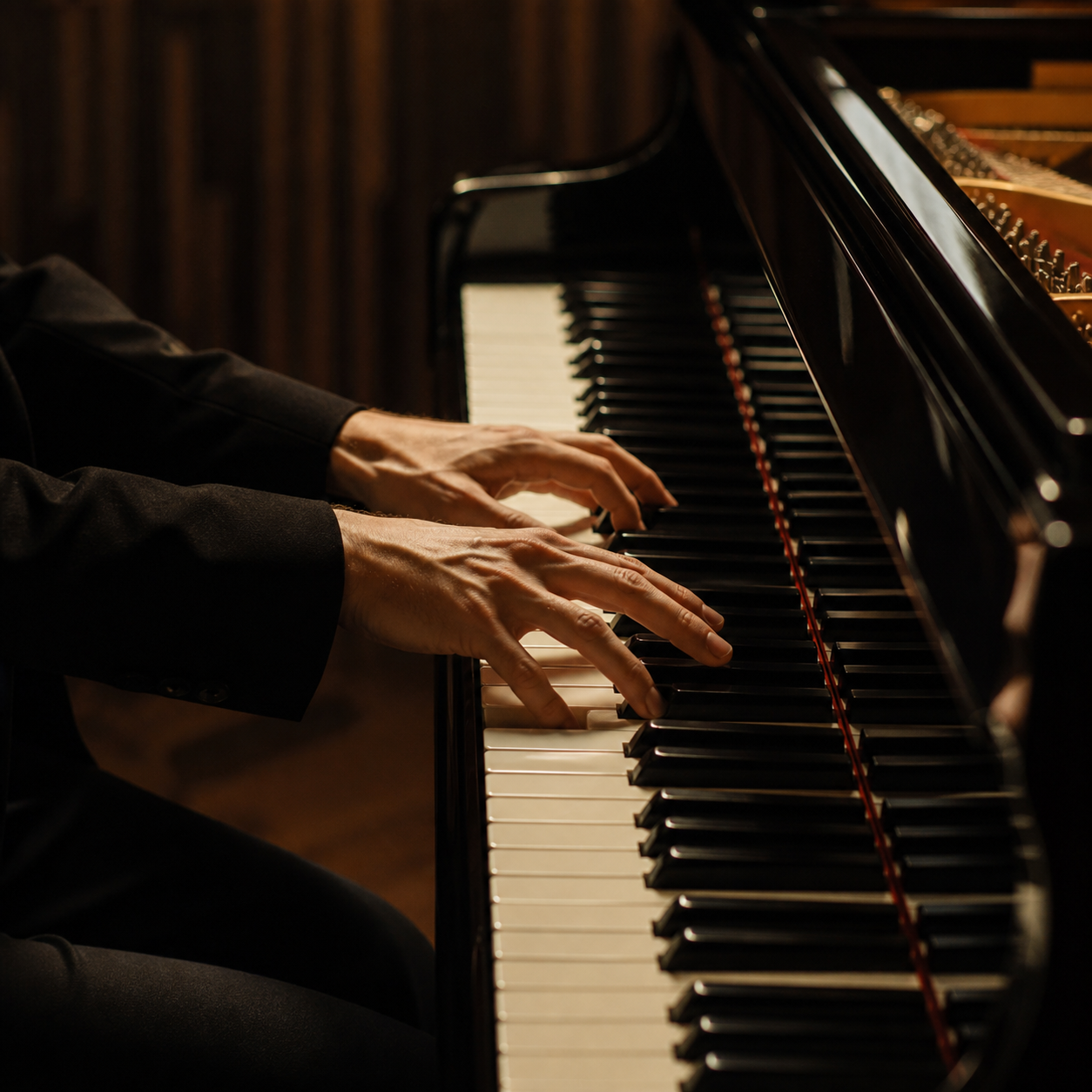
The most persuasive brilliance does not ask us to admire difficulty; it makes a difficult musical idea suddenly legible.
An Alexandre Kantorow London listening route
Begin with Beethoven’s Fourth Concerto from the Proms context and listen to the first solo entry: the piano does not compete with the orchestra, but changes the room’s emotional temperature. Continue with Tchaikovsky’s Second Concerto for scale and propulsion. Then move to Brahms’s early sonatas, where explosive gestures must still reveal thematic connections. Finally, hear chamber music, in which authority is measured by responsiveness rather than dominance.
Selected performance
Tchaikovsky Piano Concerto No. 2, finale — Alexandre Kantorow, Orchestre symphonique de Montréal and Kent Nagano. Embedded from medici.tv on YouTube for educational commentary; rights remain with the channel and rights holders.
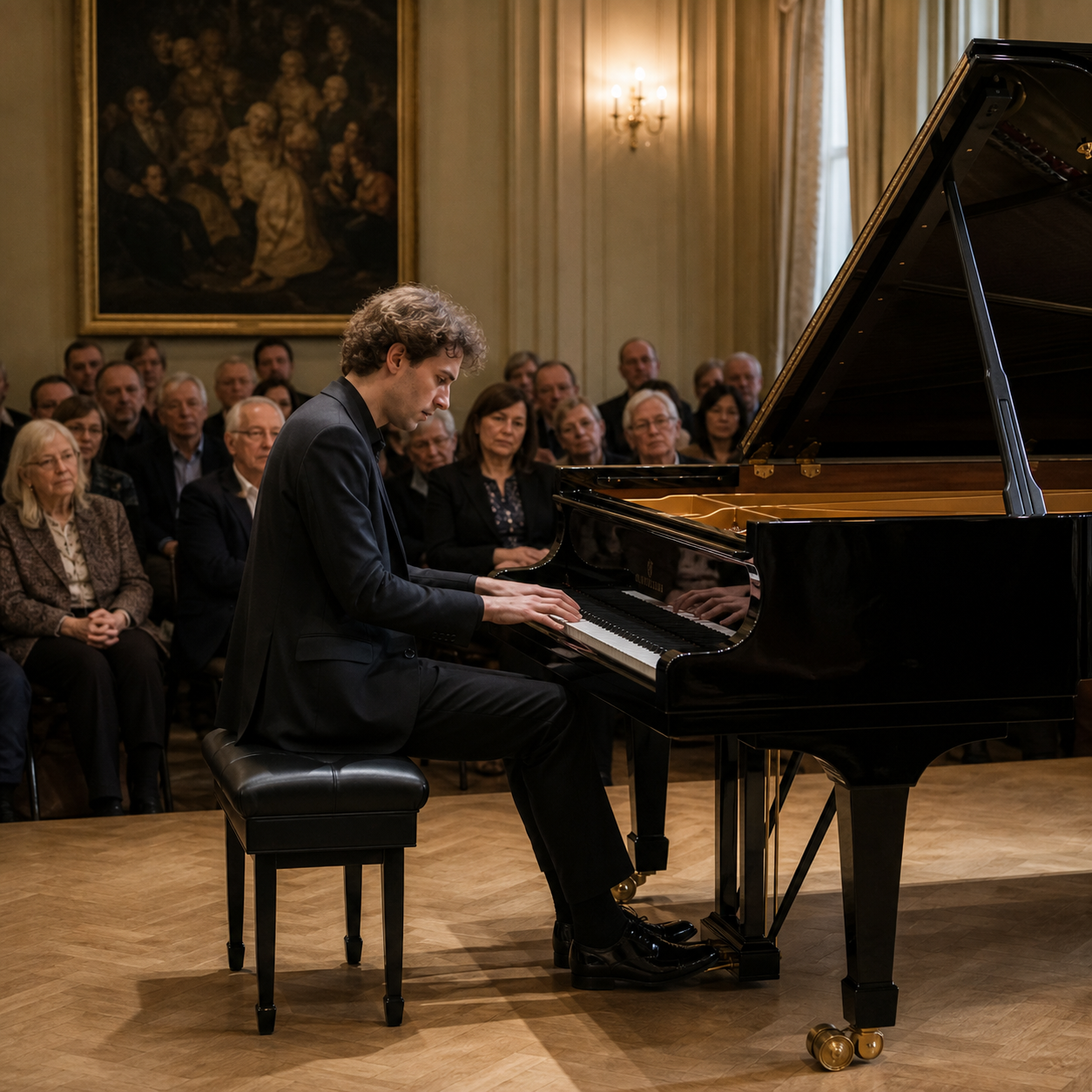
What piano learners can take from Kantorow
Do not copy speed, force or an isolated rubato. Keep the deeper habits. Build a map before polishing detail; hear every inner line; let harmony govern timing; practise character changes without losing pulse; and use technical security to make more expressive choices, not fewer. Alexandre Kantorow London performances show that modern concert pianism can be intellectually clear without becoming cautious. An Alexandre Kantorow London listening session is most useful when one observed detail leads to a precise experiment at the piano.
A related WKMT guide to Wigmore Hall concerts and piano listening explores how close listening in London’s recital culture can feed daily study.
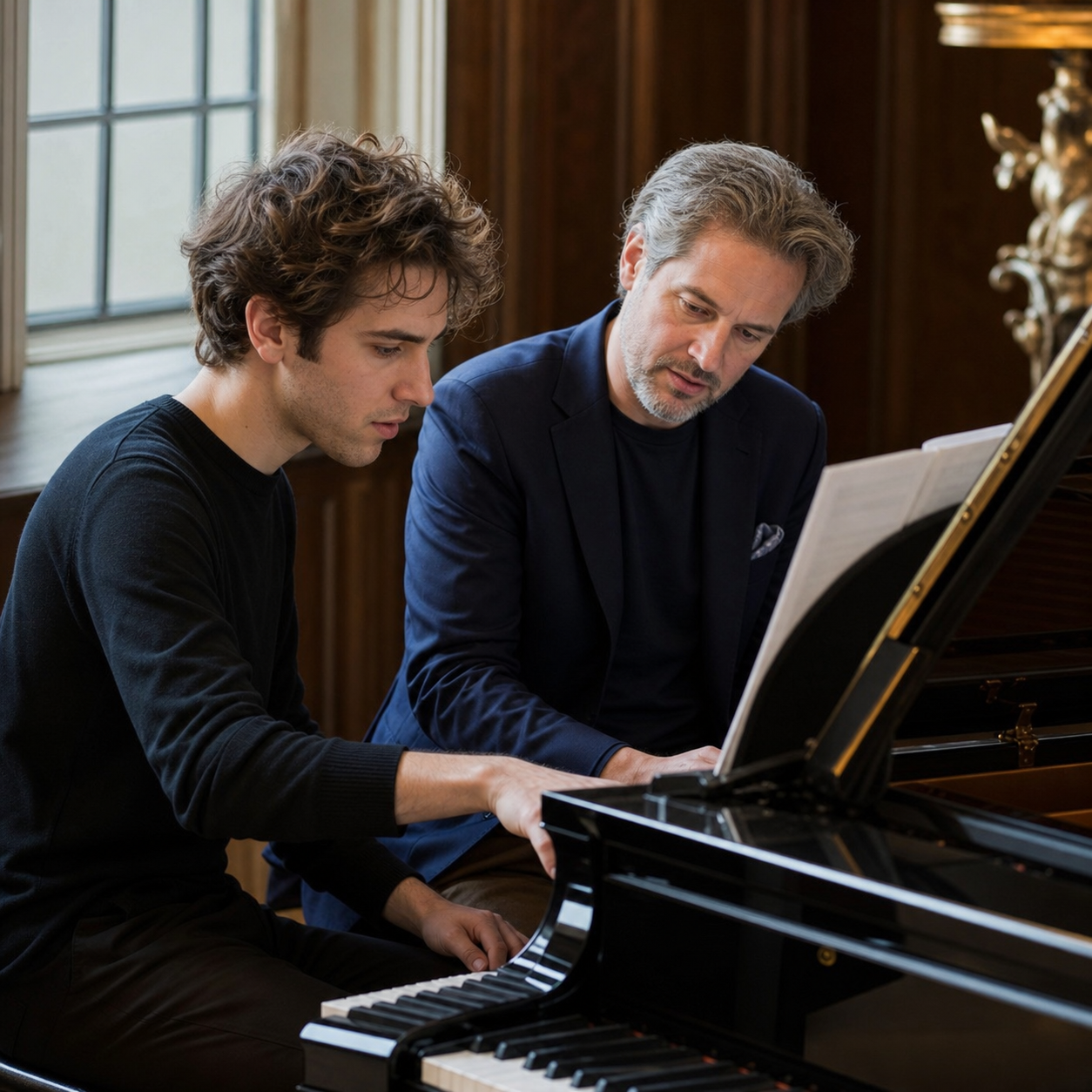
WKMT London
Develop technique, score reading and interpretation through individual classical piano study in London.
Sources
- Alexandre Kantorow: official biography
- Royal Philharmonic Orchestra: 2023 Proms concert
- BBC Proms: 2023 programme archive
- Wigmore Hall: 2024/25 season programme
- Wigmore Hall: 125th-anniversary festival
- London Philharmonic Orchestra: March 2026 programme
Sources last checked 30 August 2026.