
 TRIAL LESSON
Uncategorized
Guitar tablature vs. Standard Notation

Jan
When starting to learn guitar, many guitarists will use tablature (tab for short) to be able to read the music that they want to play.
A tab is a simplified form of notation specific to the guitar (there are also tabs for bass and drums), it simply lays out the guitar fretboard as a diagram like so.

From Open Strings to Notes on the Stave
Begin with six reference points. In standard tuning, strings 6 to 1 sound E2, A2, D3, G3, B3 and E4. Here C4 means middle C on the piano. Conventional guitar music is written in treble clef an octave above its sounding pitch: those open strings are written E3, A3, D4, G4, B4 and E5. Remembering that octave difference helps guitarists and pianists agree on register, not just on a note name.
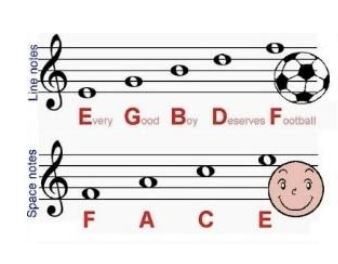
The written open sixth string, E3, sits below the stave with three ledger lines; A3 sits on the second ledger line below the stave, D4 sits immediately below the bottom line, G4 is on the second line, B4 is on the middle line, and E5 occupies the top space. Learn these anchors alongside the instrument rather than memorising the whole fretboard in one sitting.
A First-Position Reading Map
Read each sequence below from the open string upwards. The numbers are frets, not left-hand finger numbers:
- String 1: E (0), F (1), G (3).
- String 2: B (0), C (1), D (3).
- String 3: G (0), A (2).
- String 4: D (0), E (2), F (3).
- String 5: A (0), B (2), C (3).
- String 6: E (0), F (1), G (3).
Each fret raises the pitch by one semitone. There is no intervening natural-note gap between E and F or between B and C; the other adjacent natural-note pairs are two frets apart. Accidentals fill those gaps: fret 1 on the A string, for example, can be named A sharp or B flat according to the musical context. At fret 12, every string reaches the octave above its open pitch.
Read a Phrase, Not Only a Position
Choose two or three written notes, say their names, locate them and play their rhythm slowly. Then try the phrase without looking continuously at the fretting hand. The same sounding pitch may be available on more than one string, so fingering is a musical decision involving tone and the notes that follow.
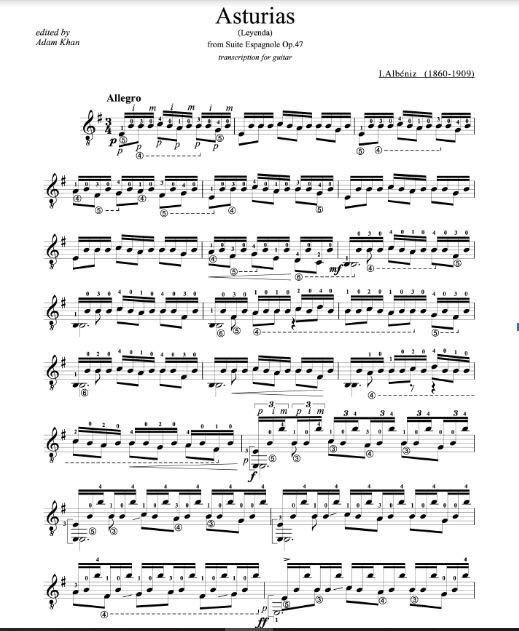
Tablature is not inherently rhythm-free: more detailed editions include stems, rhythmic values and expressive instructions, or sit beneath a standard stave. The useful question is what information the particular score gives you. Standard notation makes pitch and rhythm readily shareable with other instrumentalists; tablature can make the chosen guitar fingering explicit. They can complement each other.
For tuning, manageable first exercises and a short vocabulary guide, see Teaching yourself guitar.