
 TRIAL LESSON
Piano Lessons
Frustration Tolerance: How Piano Lessons Make Difficult Moments Manageable
Sep
WKMT London parent guide
Frustration Tolerance: How Piano Lessons Make Difficult Moments Manageable
The note that will not land is rarely just a note. For a child, it can become a verdict: I cannot do this. A thoughtful piano lesson changes the scale of the moment, turning a blocked goal into one small musical question that can be heard, tested and solved.
In brief
Frustration tolerance is the ability to remain regulated enough to respond constructively when a goal is blocked or a task feels difficult. Piano lessons can exercise it through brief, achievable challenges, clear feedback, choice of strategy and calm recovery after mistakes. This is educational practice, not therapy, and a distressed child should be supported or allowed to pause rather than forced to persist.
What frustration tolerance looks like in a piano lesson
Frustration tolerance does not mean enjoying every difficulty or hiding disappointment. It appears in the small space between feeling stuck and choosing what happens next. A child may take a breath, name the awkward rhythm, ask for help or try only the final two notes. The feeling remains real, but it no longer controls the whole lesson.
The piano makes that process unusually concrete. A missed landing can be isolated; a rhythm can be clapped; two hands can become one. The child receives immediate sound in return. Because the problem can shrink without becoming meaningless, challenge is no longer an endless demand to try harder. It becomes a sequence of decisions.
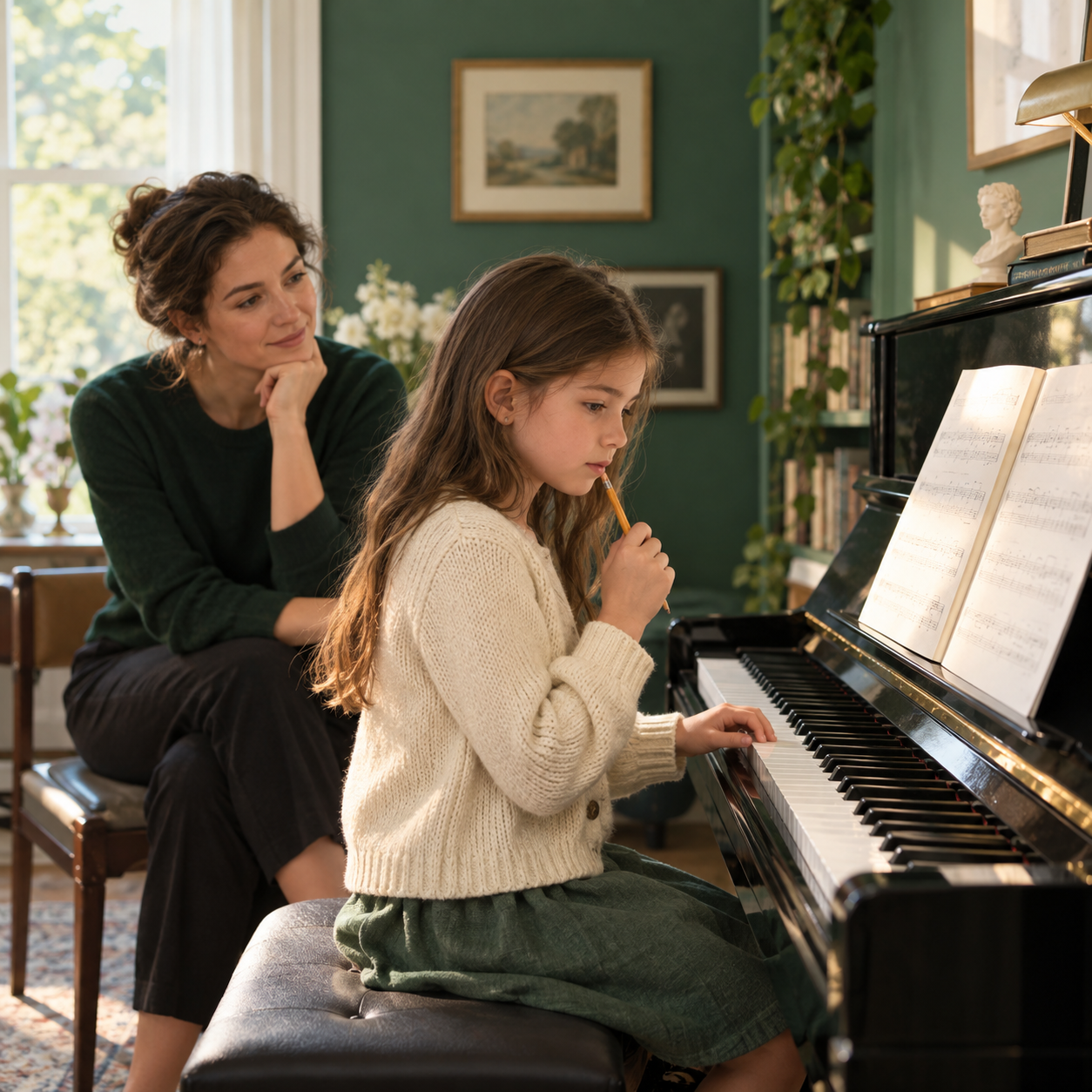
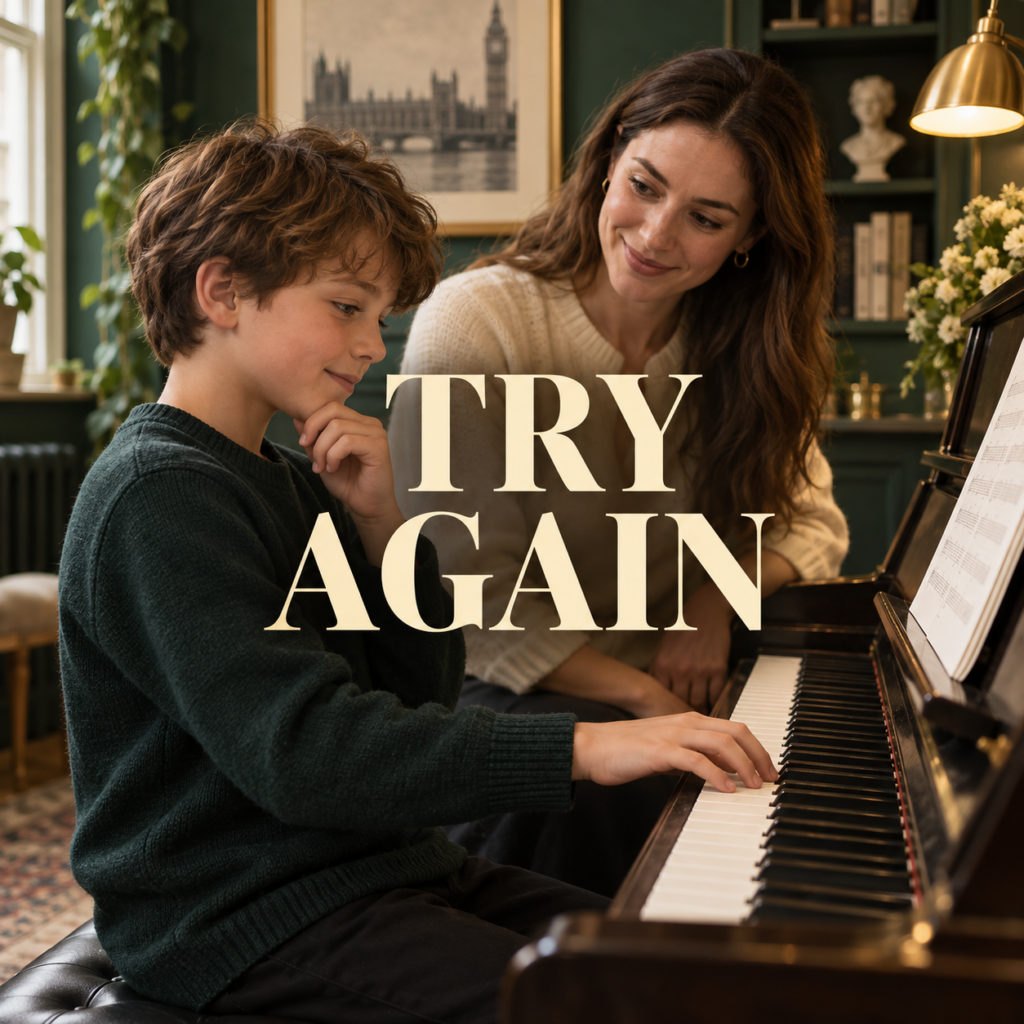
The right-sized challenge builds frustration tolerance
A task must sit close enough to the child’s present ability that support can make a difference. If four bars produce panic, one beat may be the useful unit. If slow playing still feels crowded, the teacher can remove pitch and tap the rhythm. This is not lowering standards. It is locating the point at which effort can produce information.
Research on self-regulation stresses practice through manageable activities and gradually increasing demands. In children’s piano lessons in London, the musical version is precise: keep the artistic goal, reduce the number of things the child must control at once, then rebuild the phrase. The experience of success should be earned and audible, not manufactured through empty praise.
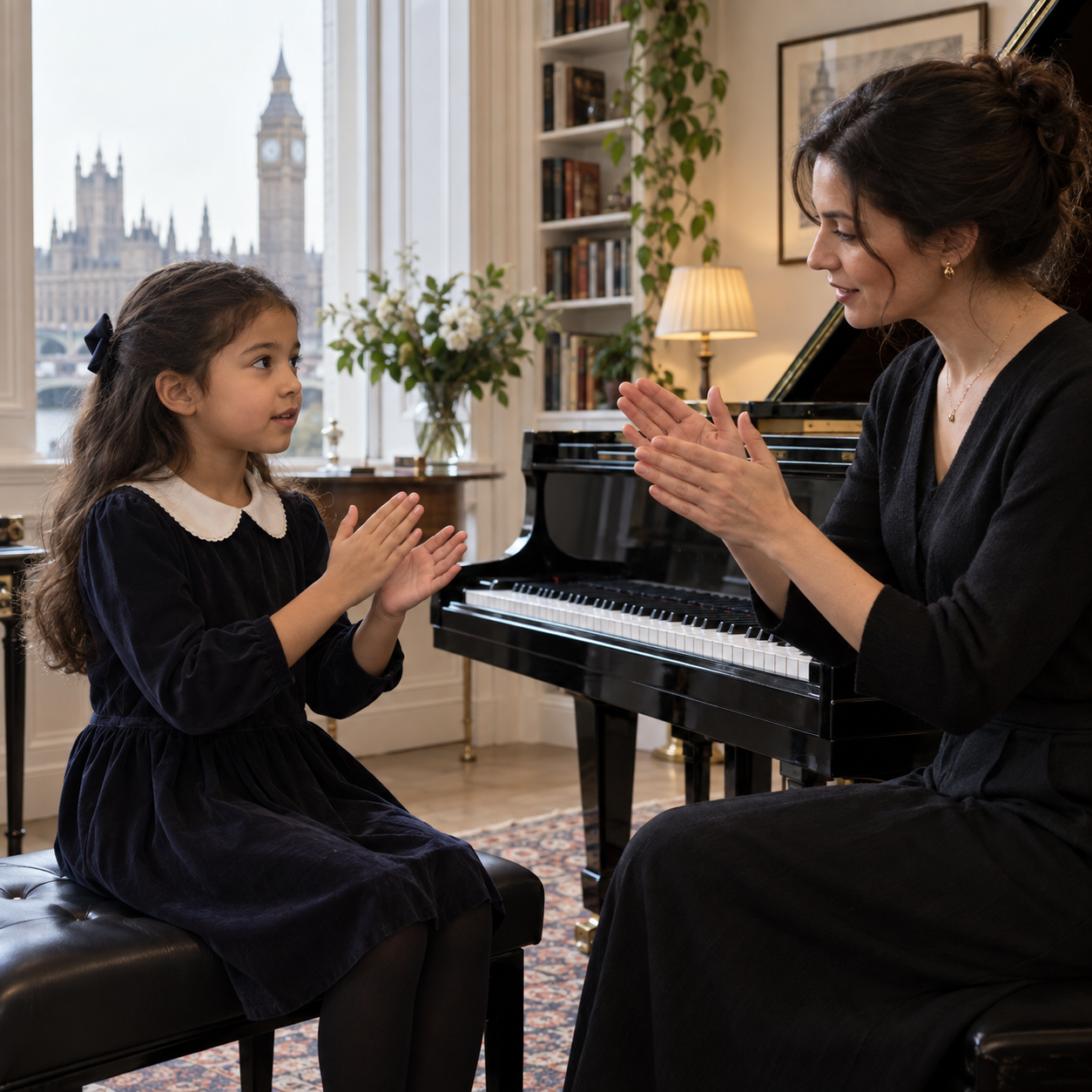
Name the feeling, then give the hands a job
When a child is upset, ‘You can do it’ may feel like contradiction. A calmer response begins with recognition: that passage is frustrating because the hands must arrive together and they are not agreeing yet. Naming the obstacle validates the feeling without turning it into a prediction. The next instruction should be physical and short: place the landing notes silently, or clap the last beat with me.
Choice can restore agency. The pupil might decide whether to sing first or play one hand, whether to make two careful attempts or record one. Both options lead towards the same musical aim. WKMT’s guide to task persistence at the piano explores the related skill of staying with a problem once its next step is visible.
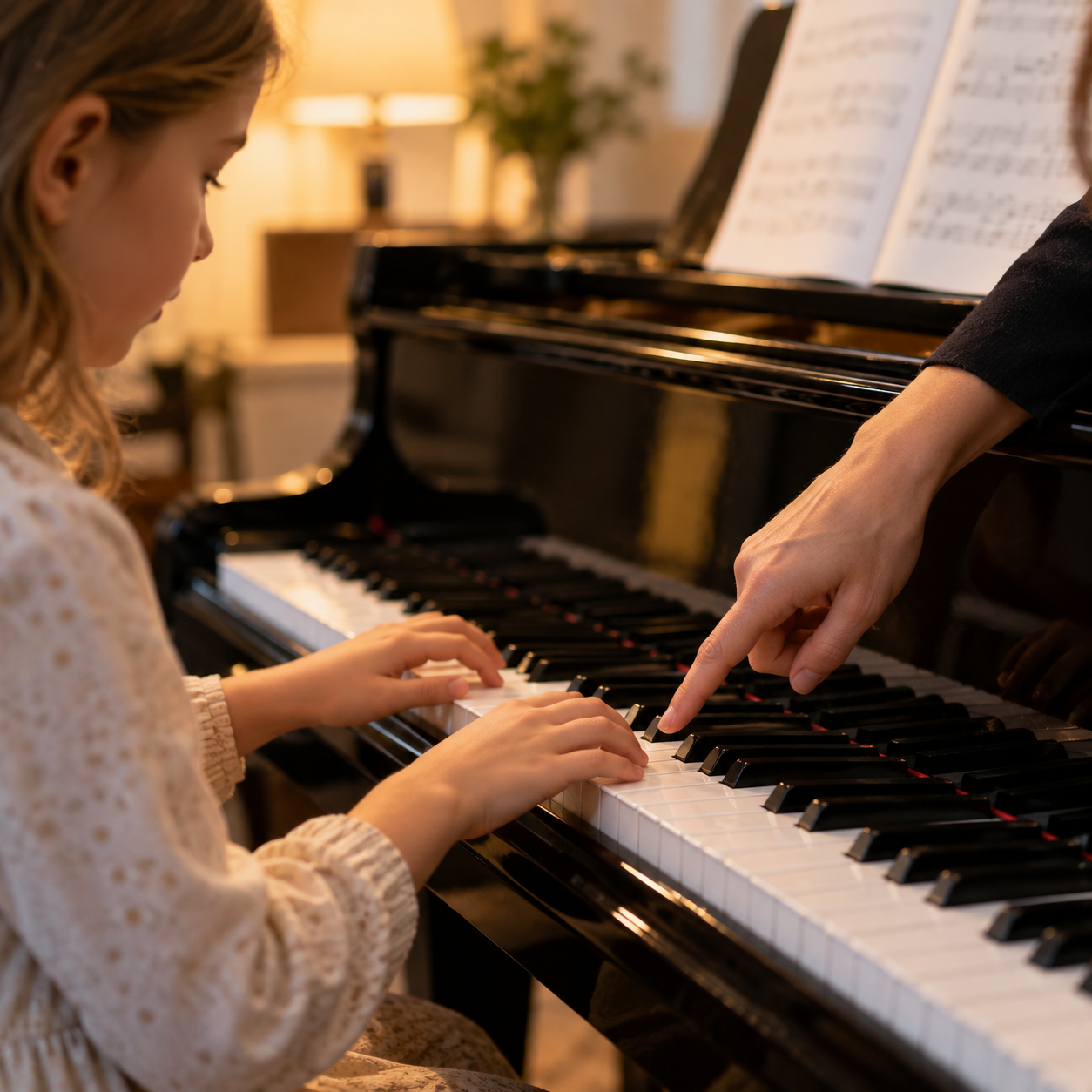
A child does not learn to manage difficulty by being told that it is easy, but by discovering a next step that genuinely changes the sound.
A three-minute reset for a difficult passage
First, stop the run-through and describe one obstacle without blame. Second, reduce it to a movement the child can complete slowly. Third, make one change and listen for its effect. Finally, reconnect the repaired fragment to a phrase the pupil already enjoys. The entire reset can take three minutes; its value lies in its shape, not its duration.
Parents can borrow the same structure at home. Ask, ‘What is the smallest part that feels difficult?’ rather than pointing out every wrong note. Agree a stopping point before beginning. If tension rises, change activity or finish with familiar music. WKMT’s piano practice tips for parents offer further ways to help without taking ownership of the session.
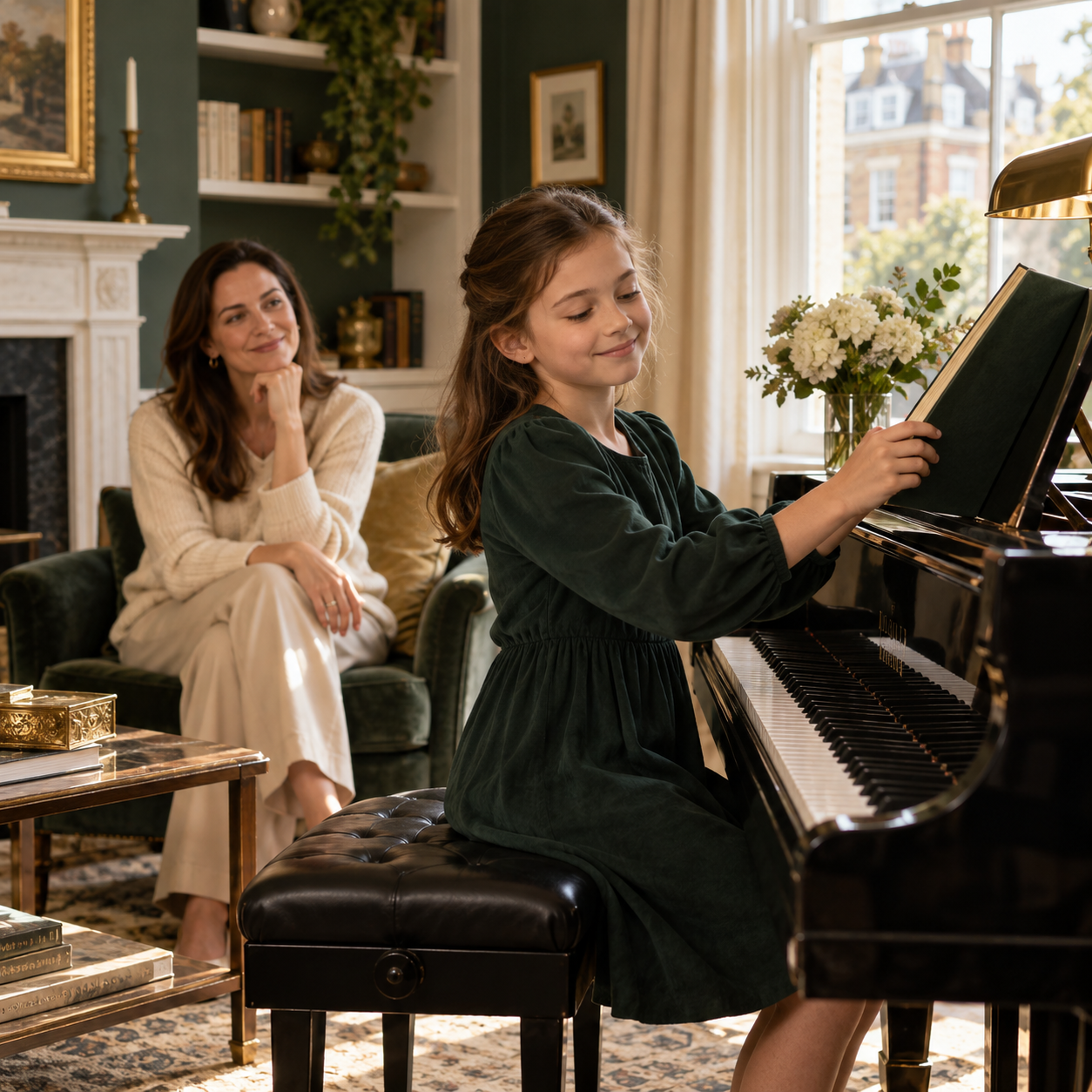
When persistence should become a pause
Healthy challenge still allows curiosity, communication and recovery. Repeated tears, fear of the lesson, physical tension or conflict around every practice session are not signs that a child needs more pressure. The repertoire, task size, schedule or teaching relationship may need to change. Some children also need support beyond what a piano teacher is qualified to provide.
Frustration tolerance grows unevenly and differs with age, temperament, sleep, attention and circumstance. Piano cannot promise a general transformation. What it can offer is a recurring, bounded experience: a difficult sound appears, an adult helps make it understandable, and the child discovers that stopping, thinking and trying differently can alter the result.
Executive function and self-regulation in context
The Center on the Developing Child at Harvard University explains the core skills involved in attention, planning and self-regulation. It provides useful context for understanding why a calm next step matters when a child meets frustration. Embedded from YouTube for educational commentary; rights remain with Harvard University and the rights holders.
WKMT London
Give your child a patient lesson environment where challenge is graded carefully and musical independence grows without fear of mistakes.
Explore children’s piano lessonsSources
- Harvard Center on the Developing Child: executive function activities
- Child Mind Institute: supporting children who are struggling
- Child Mind Institute: helping children learn from failure
- Frontiers in Psychology: frustration tolerance in music education
- PMC: frustration and cognitive control in school-age children
- Frontiers in Neuroscience: music training and cognitive development
Sources checked 23 September 2026. Educational guidance; individual circumstances and progress vary.