
 TRIAL LESSON
Piano Lessons
Bilateral Integration: How Piano Helps Children Coordinate Two Different Hands
Sep
WKMT London parent guide
Bilateral Integration: How Piano Helps Children Coordinate Two Different Hands
At the piano, two hands rarely do exactly the same job. One may hold a steady pulse while the other shapes a melody; one releases as the other arrives. Bilateral integration allows these different actions to belong to one musical idea, and children build it through patient, carefully graded experience.
In brief
Bilateral integration is the ability to use both sides of the body together in a coordinated way. At the piano, children use bilateral integration when the hands play together, alternate, cross the midline or perform different rhythms and articulations. Progress is usually strongest when each action is secure separately before the hands are combined in short musical patterns.
Bilateral integration at the piano
Bilateral integration begins long before a child plays a two-page piece. Clapping a steady beat with both hands, tapping left and right in alternation and finding matching groups of keys already ask the two sides of the body to cooperate. The keyboard adds a precise sound consequence, so timing and balance can be heard as well as felt.
Coordination does not mean symmetry. In much piano music the hands have different roles, and that difference is the point. A left hand may repeat quietly while the right hand moves freely; later they exchange responsibility. The child learns to maintain one action without allowing the more interesting hand to pull everything off course.
How bilateral integration grows without overload
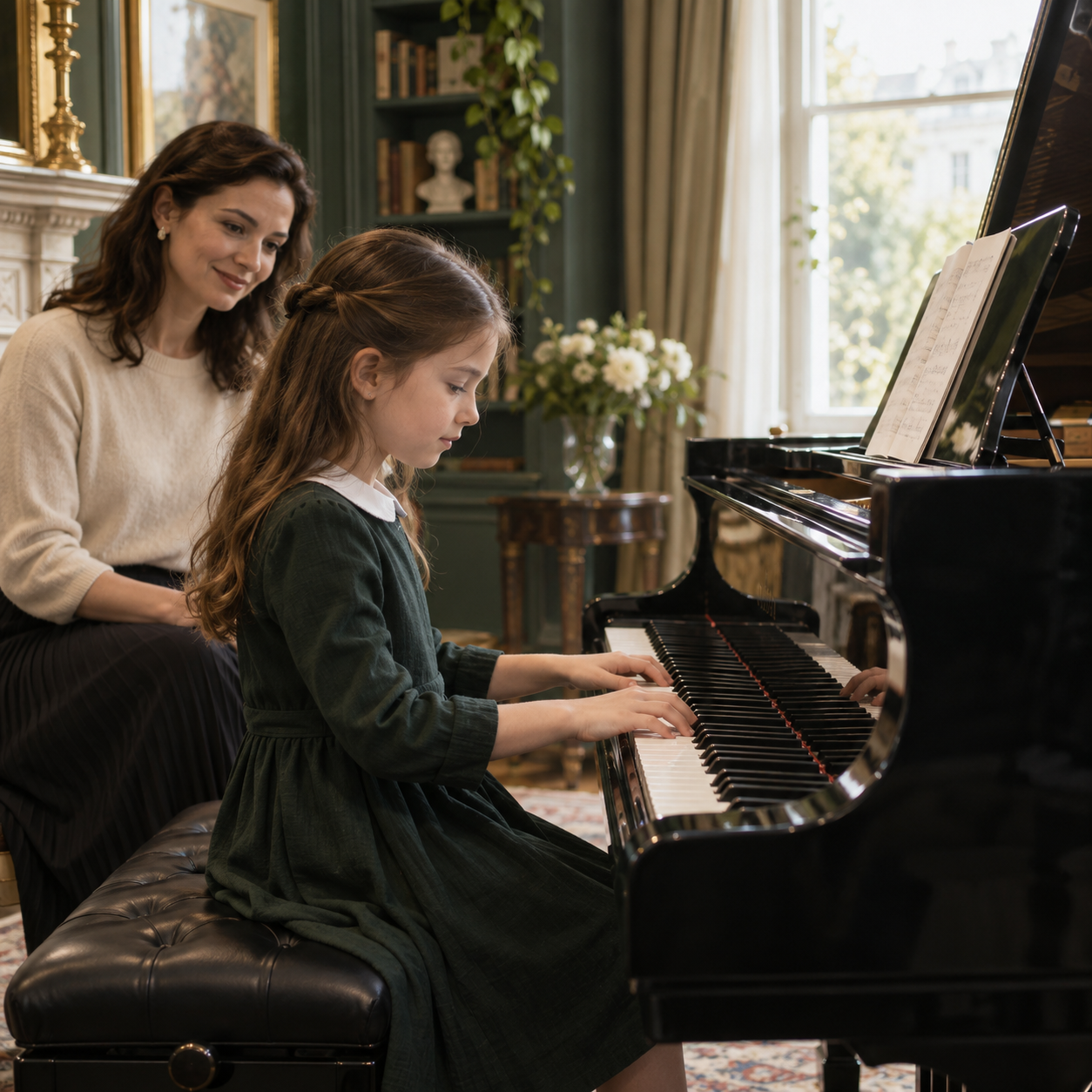
Start with a shared rhythm and different notes. Next keep the notes simple while one hand plays legato and the other detached. Only then introduce contrasting rhythms. This sequence protects attention: the child changes one variable at a time and can identify what caused a breakdown.
In piano lessons for children in London, a teacher can reduce the task to one beat of preparation and one beat of sound. Bilateral integration becomes reliable through successful joins, not through forcing a long passage. Slow practice helps only when the pulse stays connected and both hands know where they are going.
Rhythm, midline and the two-hand map
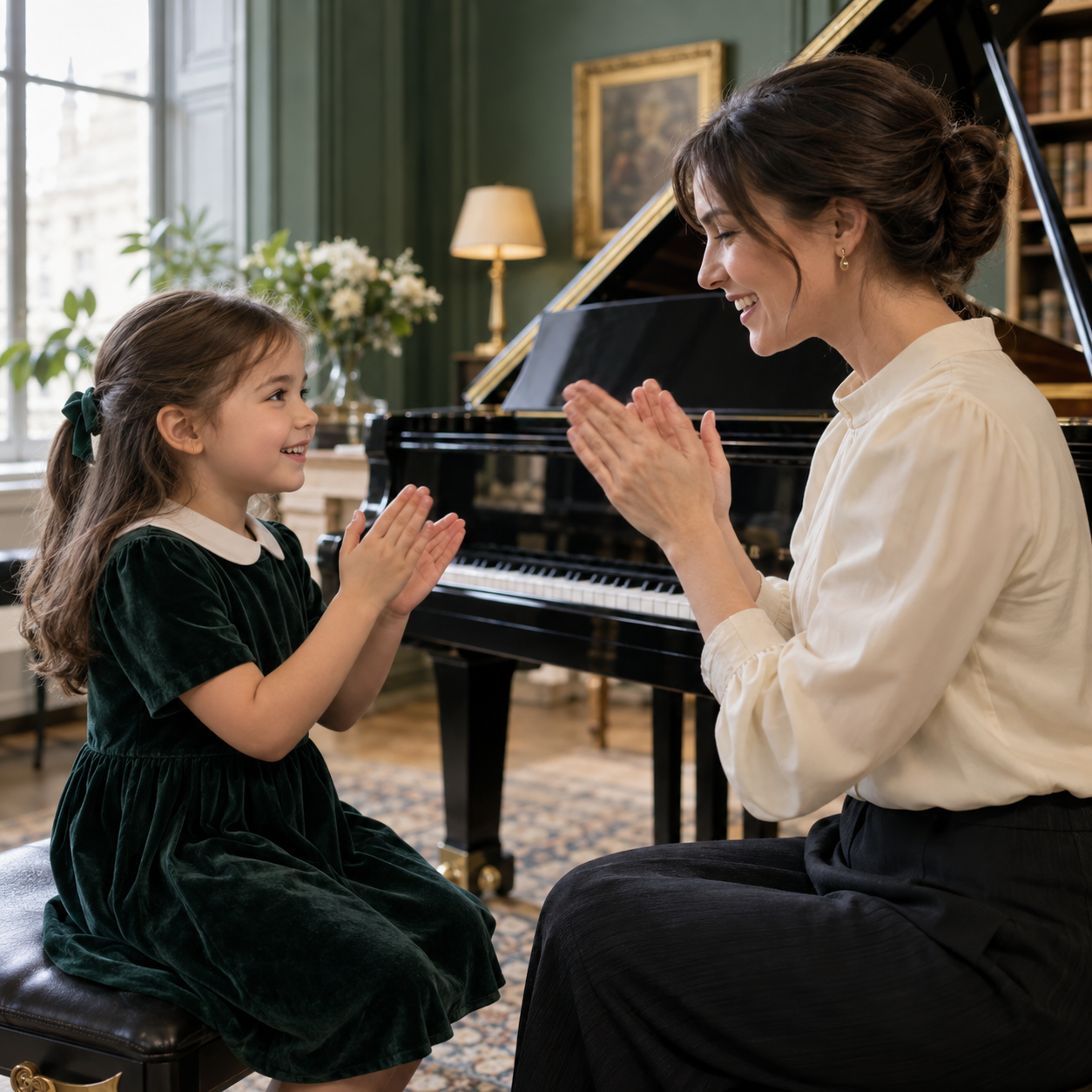
Alternating movement establishes a left-right map. Children can tap knees, pass a small rhythm between hands or play call-and-response on two groups of black keys. Crossing the midline may appear when one hand reaches into the other’s territory, but it should arise from a musical task rather than an exercise performed for its own sake.
Research on instrumental learning and movement suggests that music training can be associated with practised improvements in manual dexterity and bimanual coordination. The responsible interpretation is specific: children become better at the coordinated skills they rehearse. Piano is not a treatment, and ordinary lesson observations cannot diagnose a developmental condition.
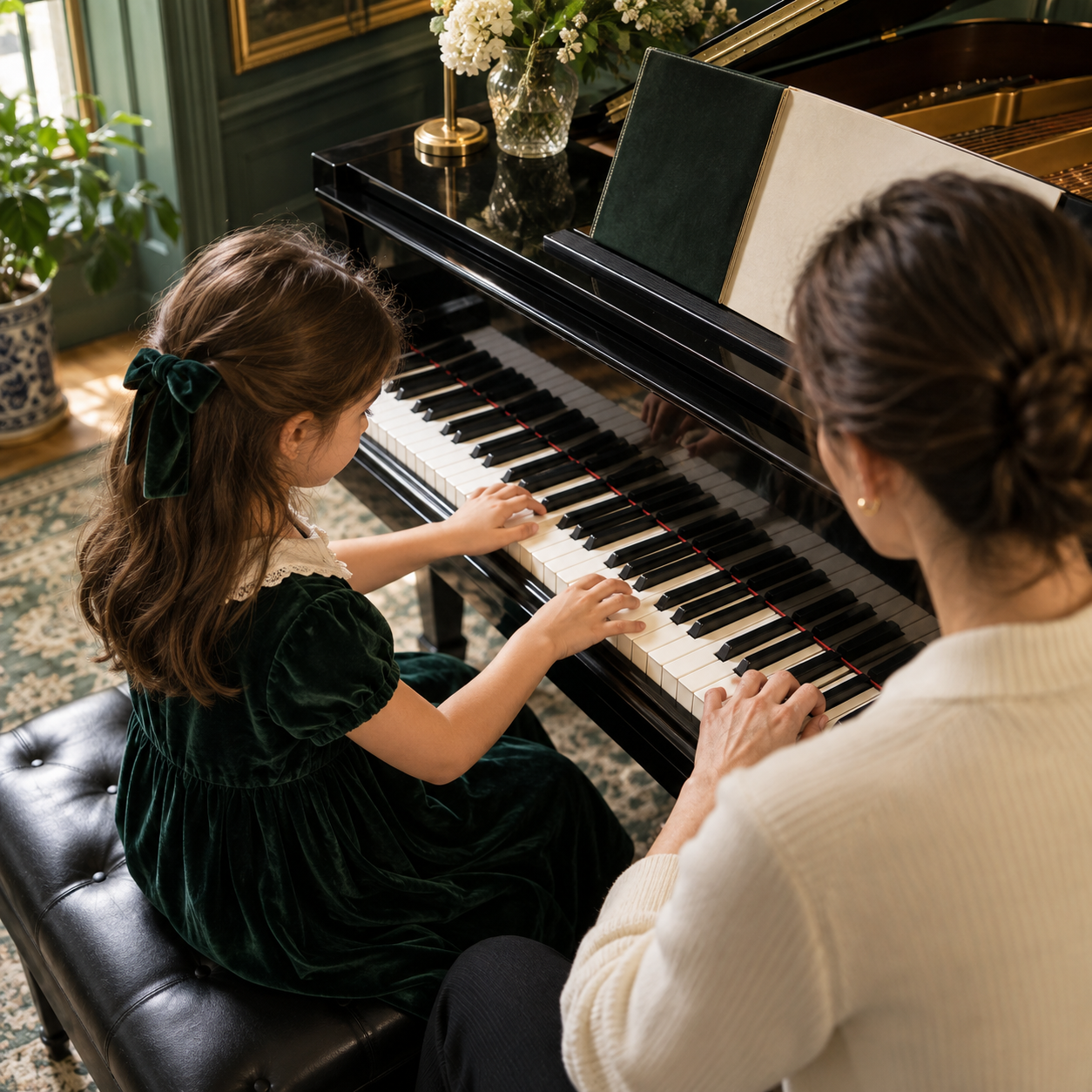
Two hands become coordinated when the child hears one musical purpose carried by different movements.
Four games for bilateral integration
Try mirror patterns in which both hands move outwards and return. Play a left-hand drone while the right hand improvises on three notes. Use a hand-to-hand rhythm relay with no gap between the final beat of one hand and the first beat of the other. Finally, let one hand play quiet repeated notes while the other shapes a two-bar melody.
Keep every game short enough for the child to hear success. If bilateral integration unravels, remove pitch, tap the rhythm and rebuild the join. WKMT’s guide to motor sequencing at the piano explains how individual actions become an ordered chain; here, two chains must share timing and purpose.
What parents can notice in practice
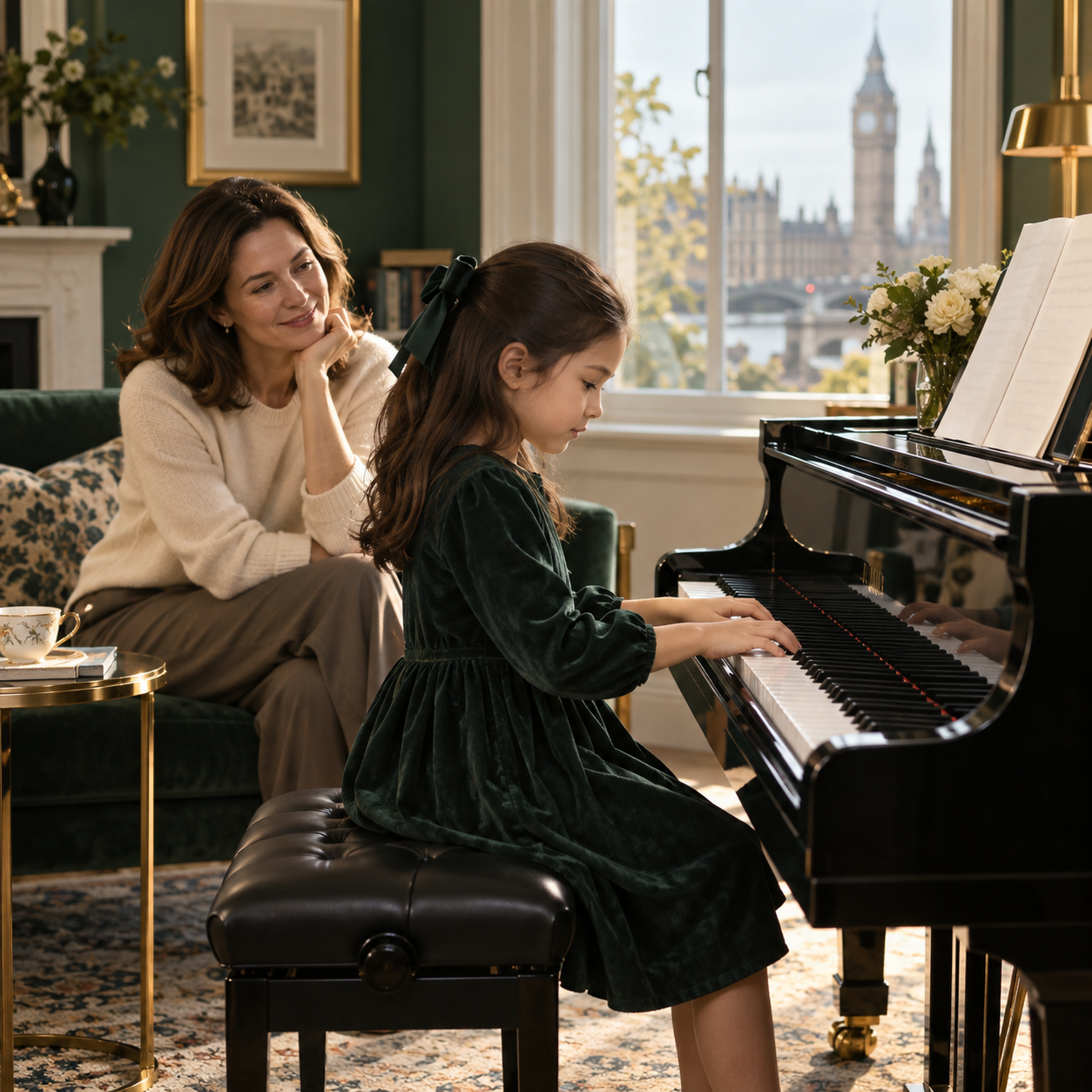
Look for a calmer start, steadier pulse and less need for one hand to copy the other. A child may keep the left hand going through a right-hand correction, prepare both hands before beginning or recover at the next phrase without returning to bar one. These are useful signs that bilateral integration is becoming musical rather than merely mechanical.
Two accurate bars are enough for one attempt. Ask which hand has the melody, where the hands meet and what must be ready before the join. If wider coordination concerns persist across everyday activities, families should consult an appropriately qualified professional. The piano lesson should remain encouraging, adaptive and centred on the child’s experience of music.
WKMT London
Give your child a lesson environment where movement, rhythm and listening develop together with patience and imagination.
Explore children’s piano lessonsSources on bilateral integration
- Frontiers in Psychology: music training and children’s manual dexterity
- PLOS ONE: music training and timed movements across development
- Scientific Reports: rhythm perception and motor learning in children
- Frontiers in Psychology: auditory-motor interactions in music
- PubMed Central: motor-sensory learning through piano practice
- NHS: developmental co-ordination disorder overview
Sources checked 20 September 2026. Educational guidance; individual circumstances and progress vary.