
 TRIAL LESSON
Piano Lessons
Memorising Piano Music: How Adult Learners Build More Than Muscle Memory
Sep
WKMT London adult learner guide
Memorising Piano Music: How Adult Learners Build More Than Muscle Memory
The most unsettling memory lapse is not forgetting every note. It is knowing that the music continues while the hands no longer know why. Secure memory begins when an adult pianist can enter the piece through sound, harmony, shape and movement, not through a single fragile chain.
In brief
Memorising piano music securely means building several overlapping retrieval routes: auditory memory for how the piece sounds, analytical memory for harmony and form, visual landmarks from the score, and motor memory for coordinated movement. Adults should practise short sections, test varied starting points, recall away from the piano and revisit material over time rather than relying on uninterrupted repetition.
Why muscle memory feels strong until it suddenly does not
Repeated movement is valuable. It allows a scale pattern, chord change or leap to become quicker and less effortful. The problem arises when memorising piano music depends on one uninterrupted motor chain. A distraction, unfamiliar instrument or moment of anxiety breaks the sequence, and the player has no independent map from which to restart.
Adults often understand this only after a convincing run collapses in a lesson. The failure is not evidence of a poor memory. It shows that one kind of memory has been asked to carry the whole performance. The solution is not simply more repetition, but more routes into the same passage.
Hear
Anticipate the phrase without touching the keys.
Map
Name harmony, form and arrival points.
Move
Coordinate a reliable, economical gesture.
Retrieve
Start from several landmarks on demand.
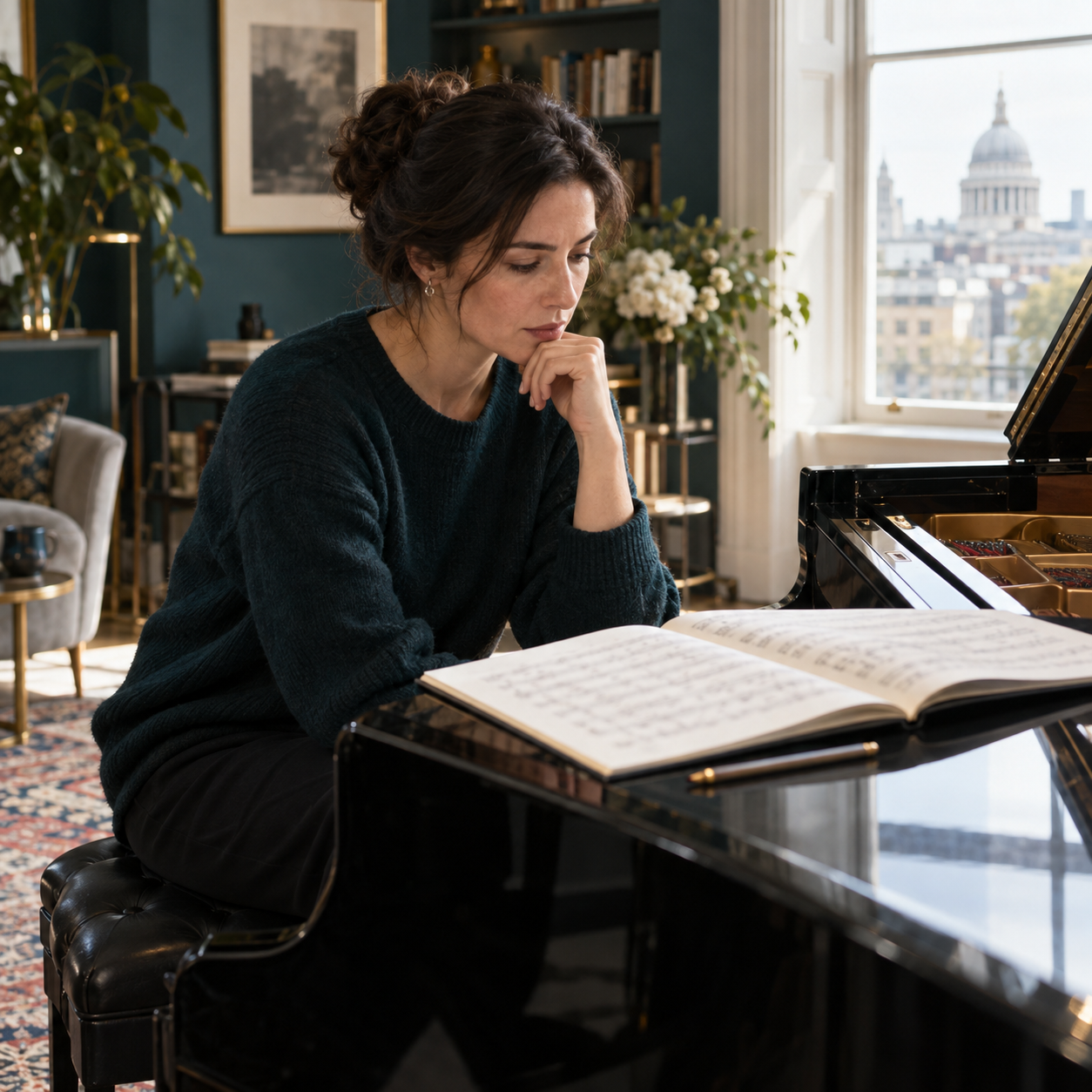
Four routes for memorising piano music securely
Auditory memory lets you anticipate the next sound and notice when the performance has departed from it. Analytical memory names the harmony, phrase, sequence or formal return. Visual memory recalls the disposition of the score and keyboard, while motor memory stores coordinated gesture. These systems overlap; no pianist experiences them as four sealed compartments.
Research with professional pianists suggests that auditory memory can be particularly helpful after short practice, while studies of expert performance describe stable retrieval cues prepared during learning. When memorising piano music, the practical question is therefore not ‘Which memory type am I?’ but ‘Which route is missing here?’
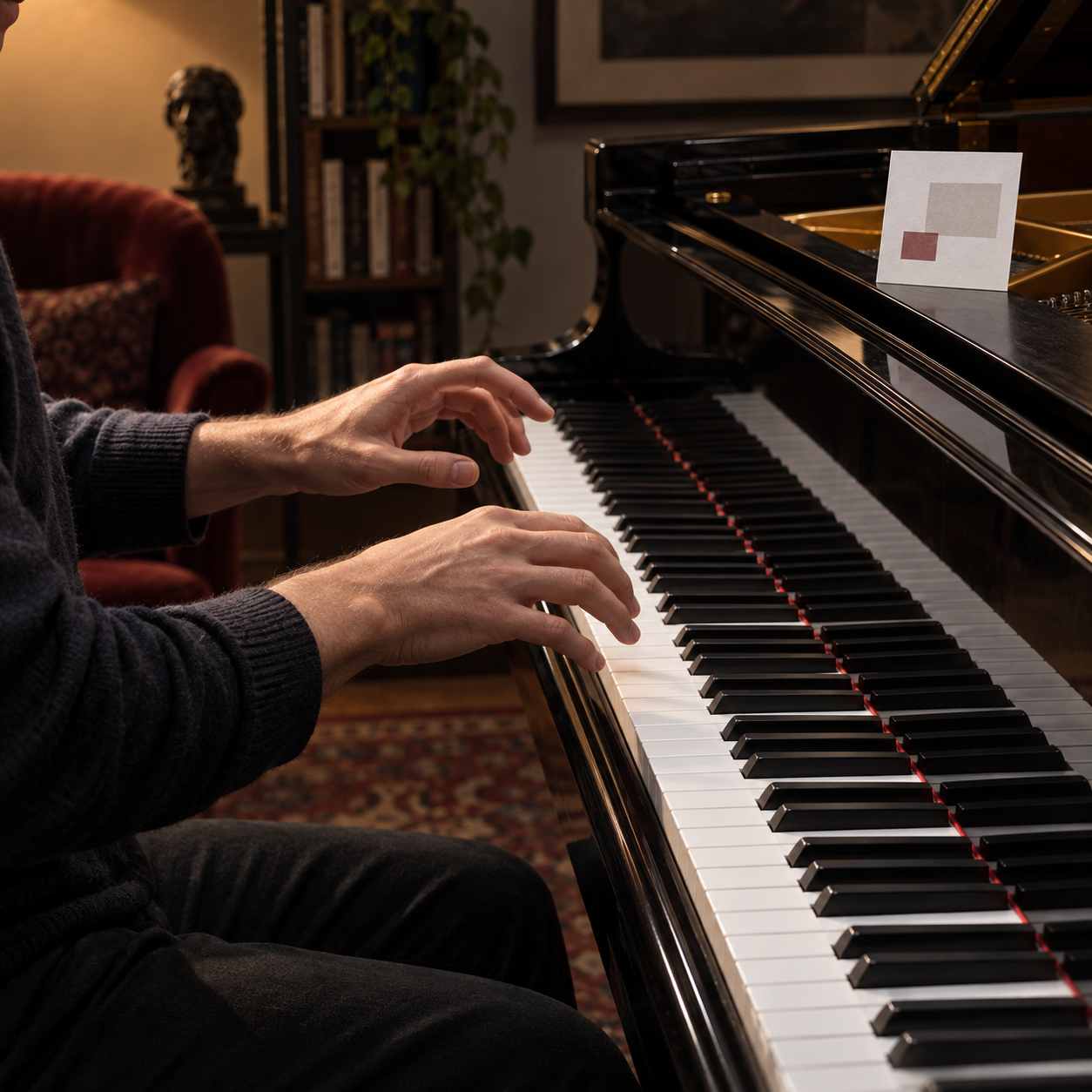
Build landmarks before attempting a complete run
Divide the score by musical events rather than equal numbers of bars: opening statement, cadence, new texture, modulation, return. At each landmark, name the harmony or sing the entry. Then close the score and begin from that point. If only the opening is secure, the piece has been learned as a corridor with one door.
Reverse chaining is useful for difficult endings. Learn the final unit, then add the preceding unit so that every longer attempt finishes in familiar territory. Combine this with spaced returns across several days. WKMT’s guide to piano practice after work shows how a compact session can still contain purposeful recall.
Reliable memory is not a single chain of notes; it is a network of musical reasons.
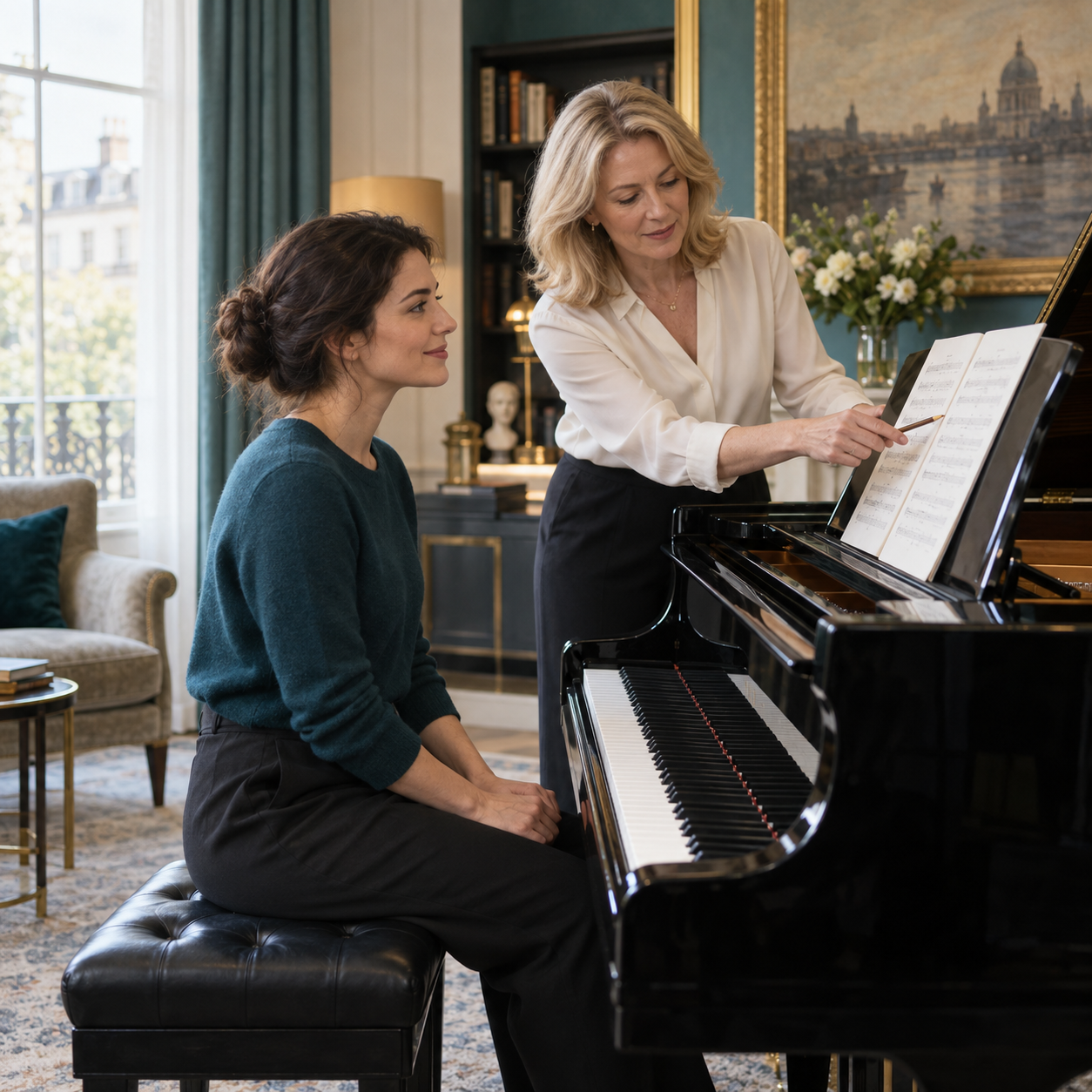
Test memory away from the keyboard
Close the score and describe the first phrase: key, opening interval, bass direction, cadence and fingering decision. Hear it internally at a slow tempo. On paper, sketch the form using letters and arrows rather than reproducing notation. These tests reveal knowledge without allowing the hands to answer first.
Then return to the piano and start from three unpredictable landmarks. Play one hand alone, or play the bass while singing the melody. Varying the cue makes retrieval more flexible. Memorising piano music becomes durable when the player can reconstruct a passage, not merely replay it.
Performance memory without the demand for perfection
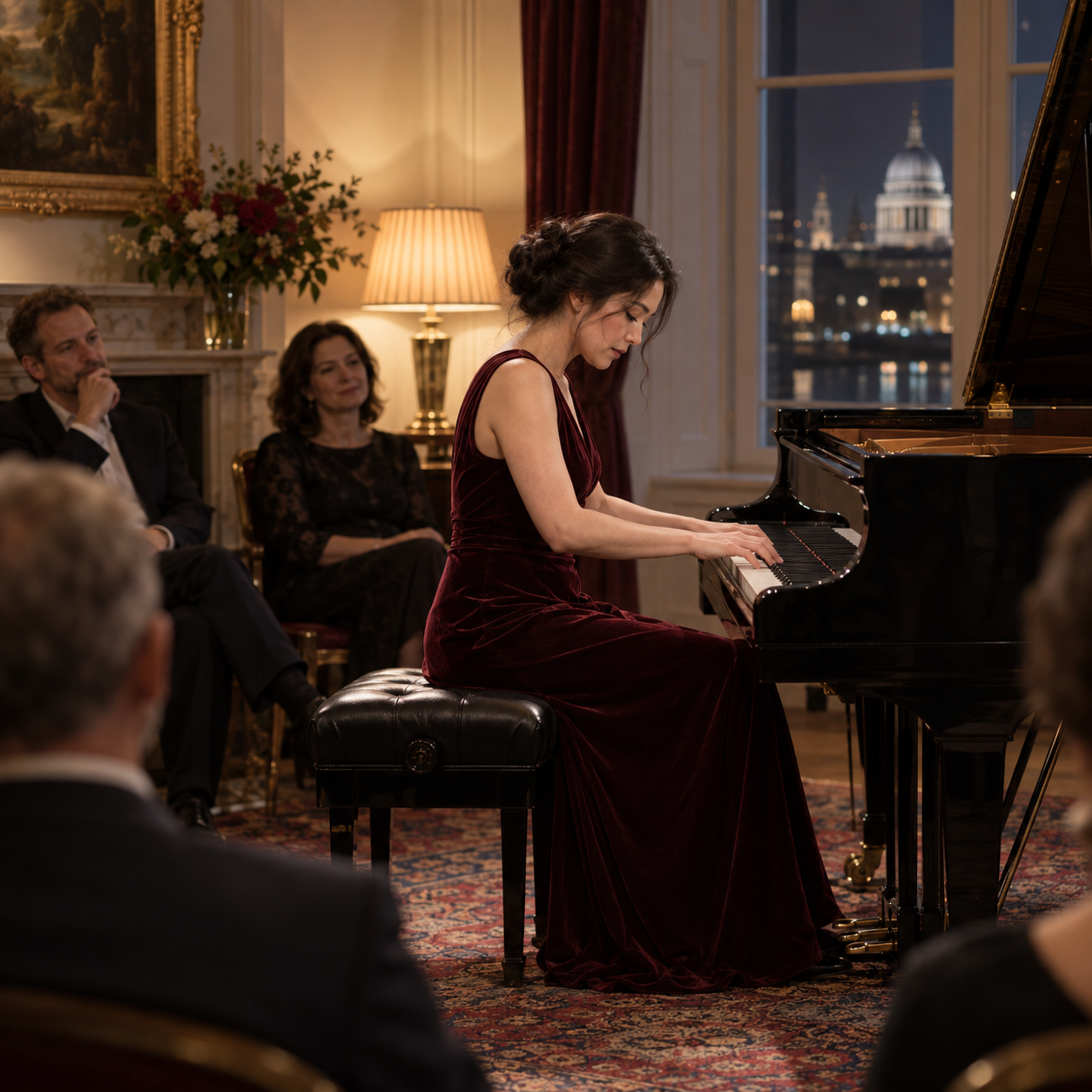
Playing from memory is not compulsory for every adult or every repertoire. The score may remain part of an intelligent performance, particularly in chamber music and contemporary work. Memorisation is valuable when it frees listening and communication, but damaging when it becomes a test of personal worth.
In adult piano lessons at WKMT London, a teacher can identify whether a lapse comes from harmony, attention, fingering or an insecure transition. The goal is not to remove all risk. It is to build enough understanding that, when something unexpected happens, the music still has several ways forward.
Why automatic repetition creates fragile recall
Performance psychologist Noa Kageyama explains a common memorisation error and the value of deliberate retrieval. Use the ideas as prompts, then adapt them to the score with a teacher. Embedded from YouTube for educational commentary; rights remain with Noa Kageyama and the rights holder.
WKMT London
Build a thoughtful practice method that connects technique, understanding, memory and the music you want to perform.
Sources on memorising piano music
- Frontiers in Psychology: recording thoughts while memorising
- Frontiers in Psychology: music memory after short practice
- Royal College of Music: recording thoughts as an aid to memorisation
- Musicae Scientiae: professional pianists memorising contemporary music
- Musicae Scientiae: piano teachers’ perceptions of memorisation
- PMC: musicians and memory meta-analysis
Sources checked 14 September 2026. Educational guidance; individual circumstances and progress vary.