
 TRIAL LESSON
Piano Lessons
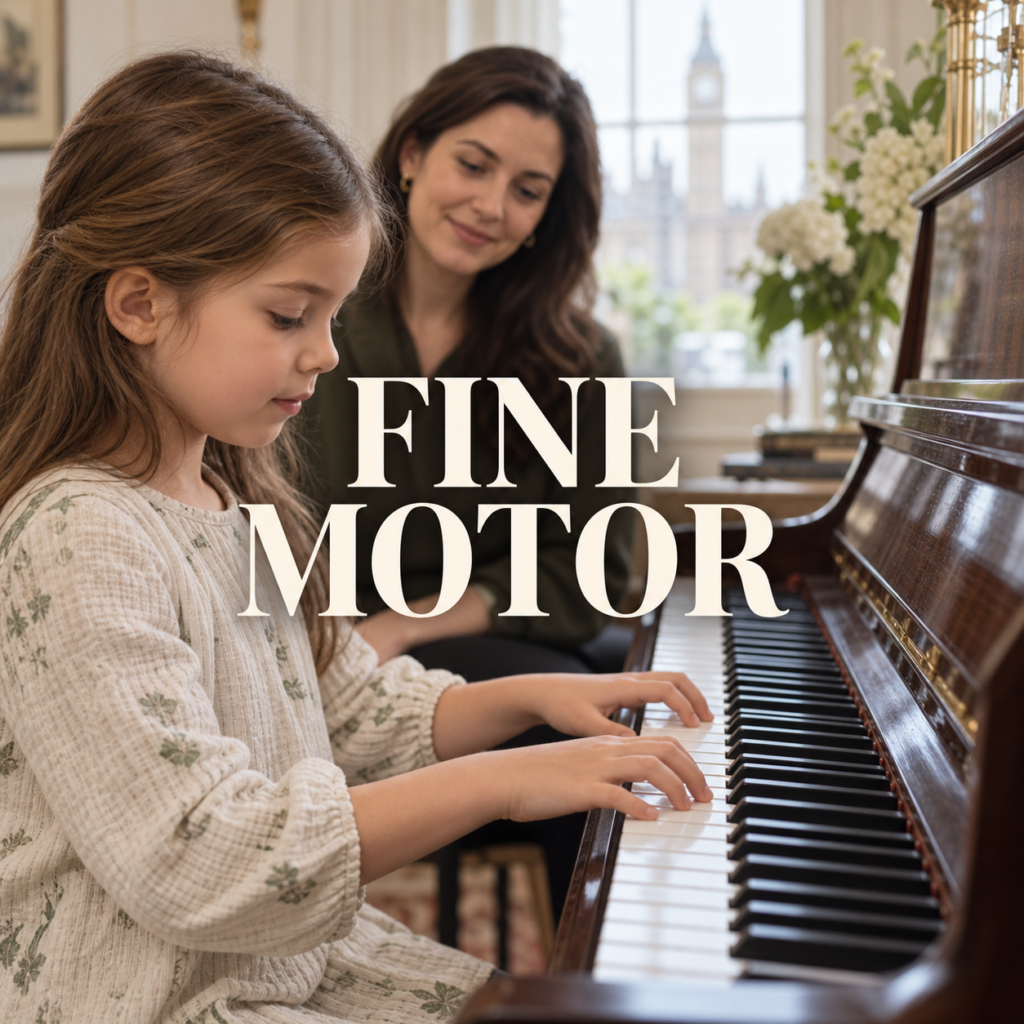
Fine Motor Development: What Piano Practice Can Support in Children
Sep
WKMT London parent guide
Fine Motor Development: What Piano Practice Can Support in Children
At the piano, a small movement produces an immediate sound. That close link between intention, touch and feedback makes music a rich setting for fine motor development—provided lessons stay musical and age-appropriate.
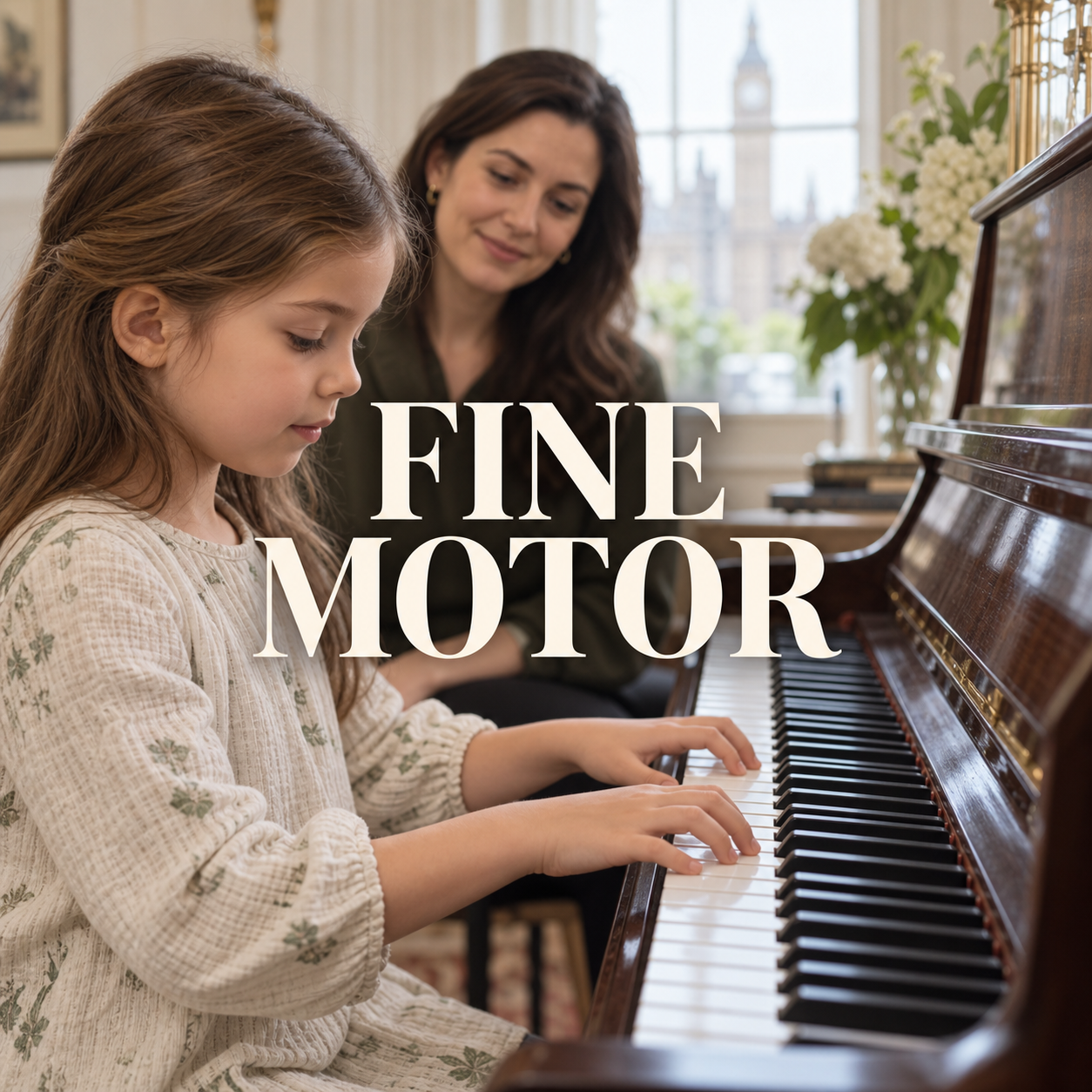
How piano supports fine motor development
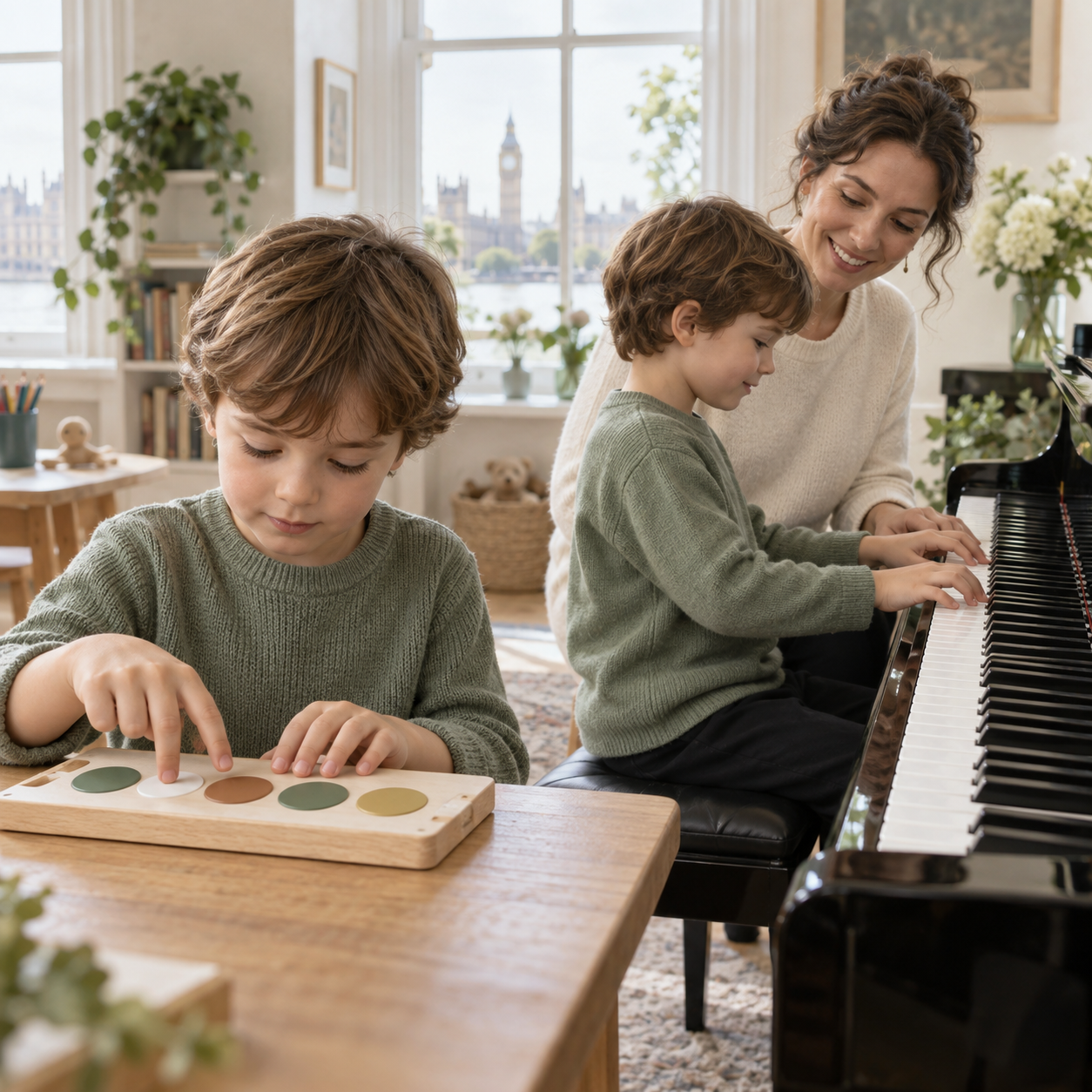
Fine movement at the piano is not finger strength in isolation. A child must sit securely, orient the forearm, prepare a fingertip, depress a key with appropriate force and release without unnecessary tension. Each action belongs to a phrase and a pulse, so coordination has a purpose the ear can recognise.
The keyboard also makes errors informative. A late note, harsh attack or uneven pair of sounds gives immediate feedback. With patient guidance, the child learns to change one variable at a time: hand shape, timing, distance from the keys or the amount of effort used.
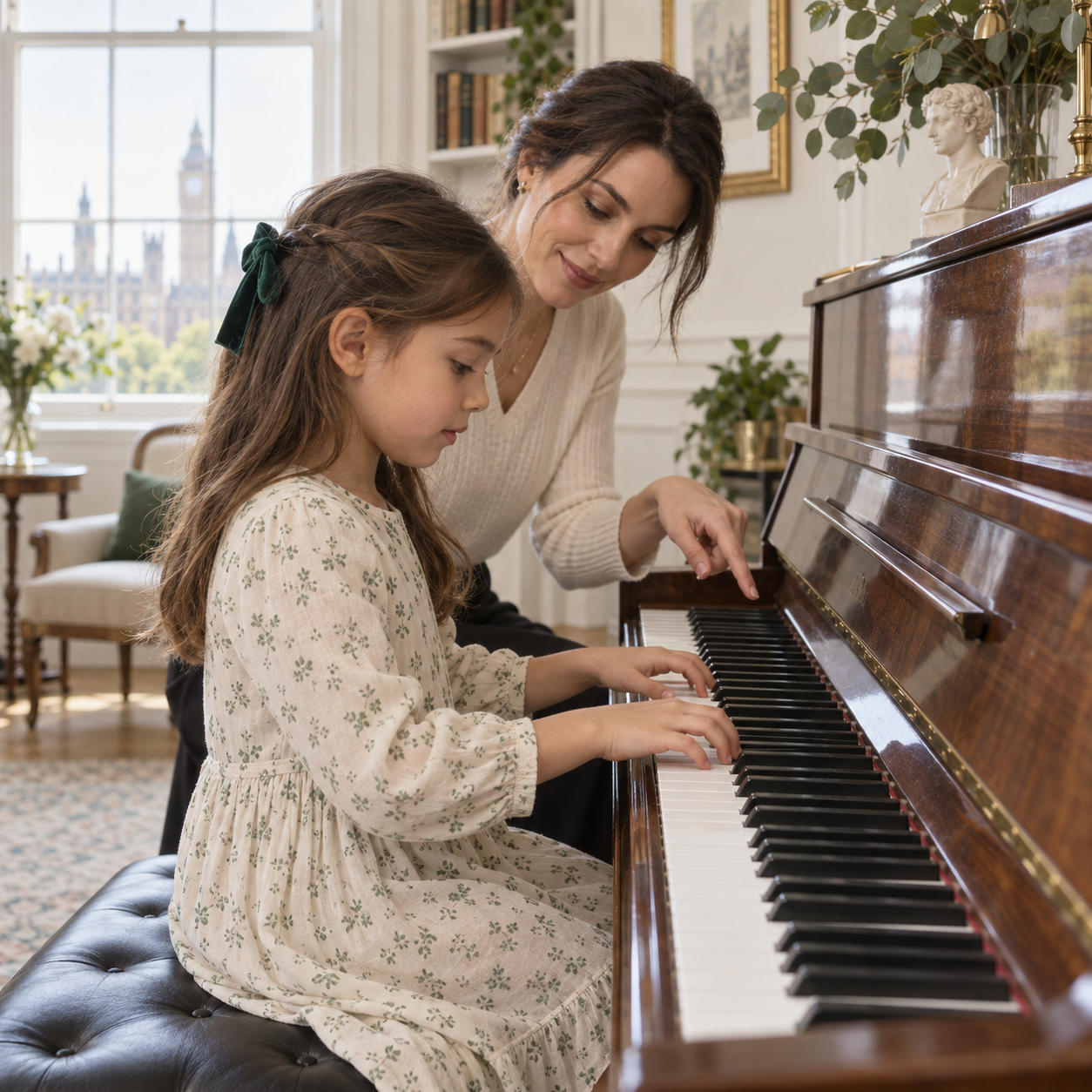
Prepare
Place the hand comfortably and know which finger will begin.
Play
Use a slow pulse and the least force needed for a clear sound.
Listen and adjust
Change one movement after hearing the result, then try again.
What research can and cannot tell parents
A frequently cited study by Eugenia Costa-Giomi compared children receiving two years of piano instruction with children who had no formal music training. Fine motor measures improved significantly in the instructed group. The study is encouraging, but it does not mean every child will progress identically or that piano treats a developmental condition.
Research on young experienced pianists has also found stronger manual dexterity and more accurate joint-position sense than in non-pianists. Because such comparisons can reflect selection and years of experience, careful language matters. Music study is a plausible, demanding motor-learning environment, not a guaranteed clinical intervention.
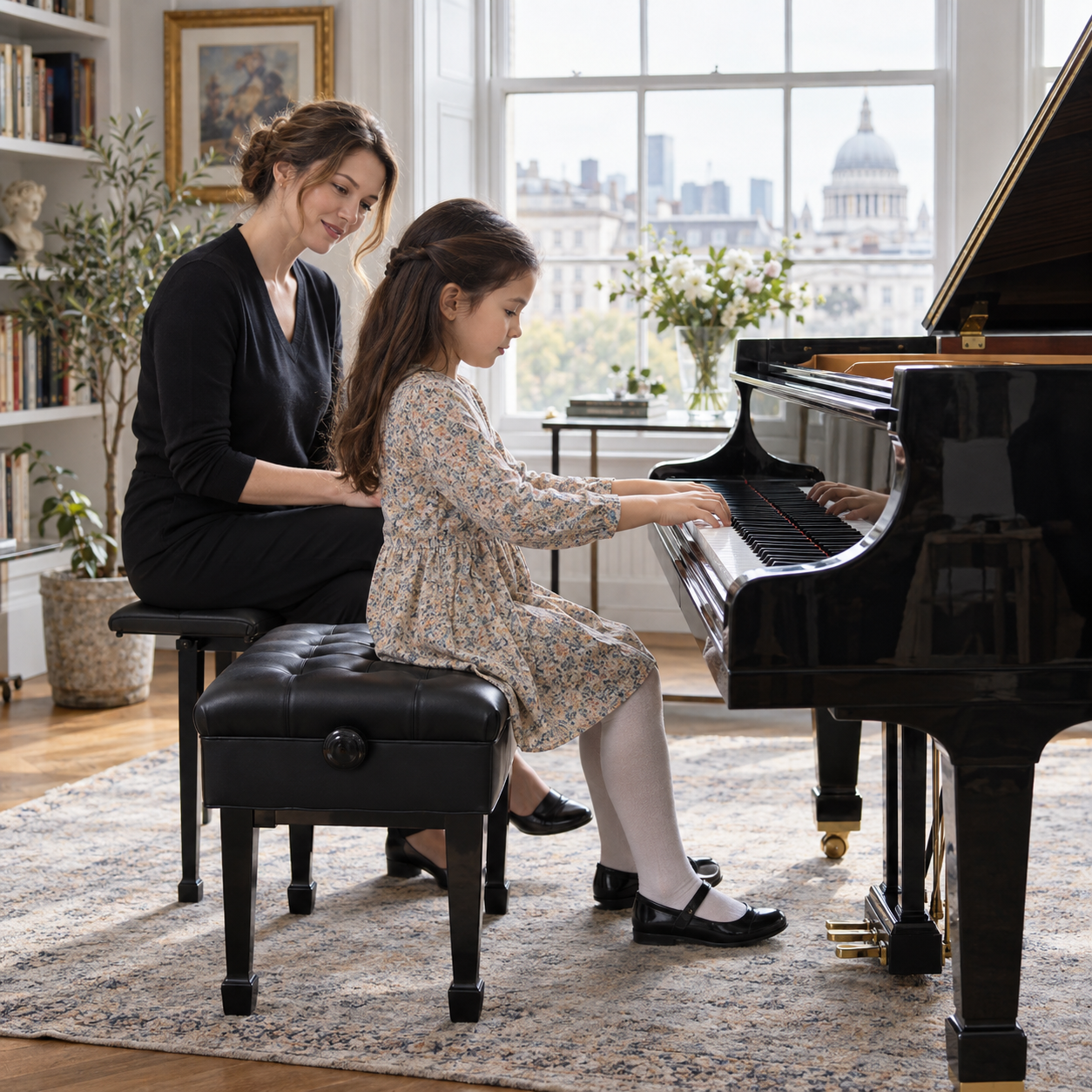
The best small movement is not the most impressive one—it is the movement that produces the intended sound without strain.
A fine motor development pathway at the keyboard
Begin with whole-arm comfort and one clear sound. Then use two neighbouring fingers, short five-note shapes, alternating hands and simple contrary motion. Independence grows from stable coordination; forcing isolated fingers too early can create stiffness and frustration.
A useful five-minute sequence might include silent fingertip preparation, four slow alternating notes, a call-and-response rhythm, and one familiar phrase. The child should hear a musical success inside each task. This keeps fine motor development connected to attention, imagination and confidence.
Why teaching quality matters more than drills
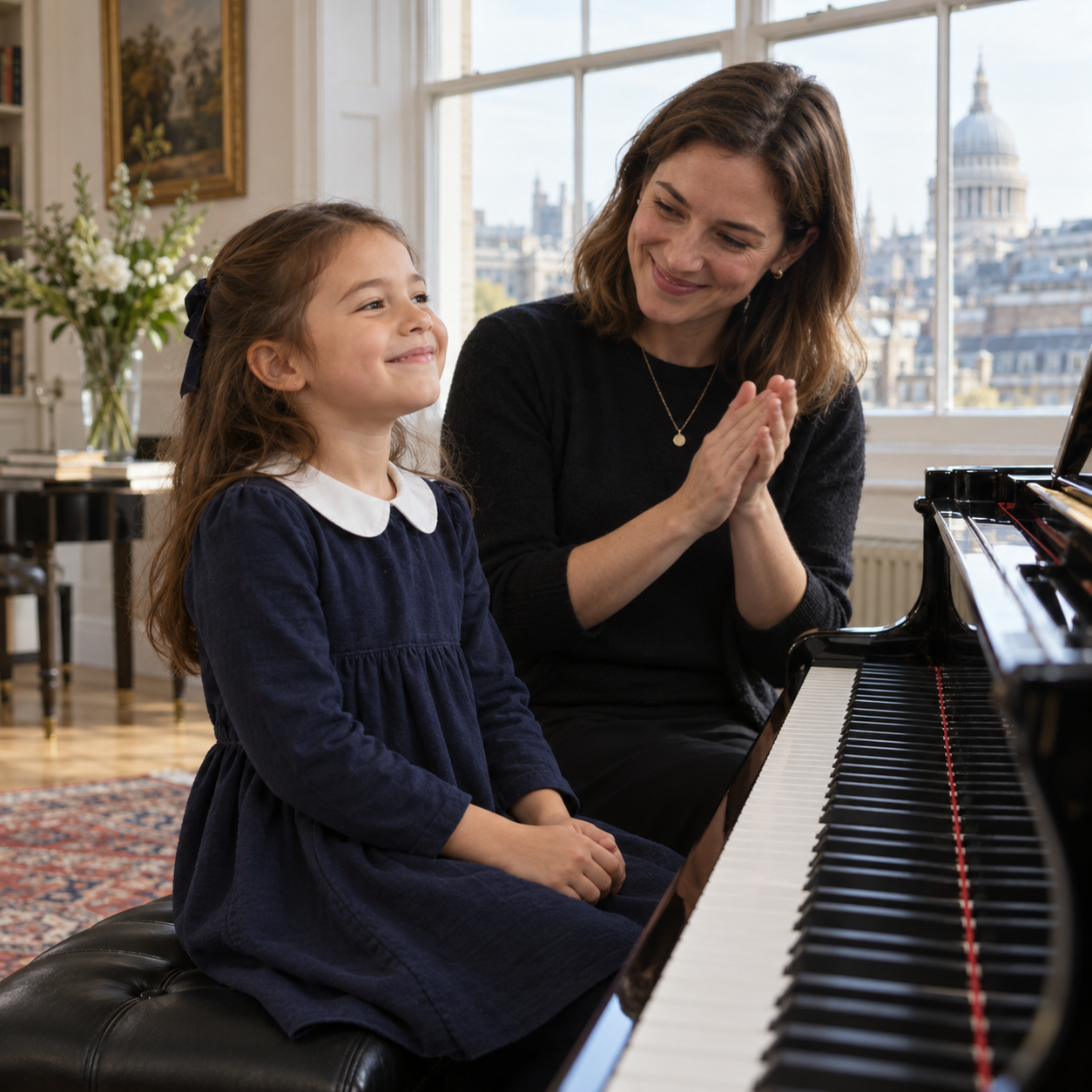
Teachers can adjust bench height, score position, hand span and repertoire to the individual child. They can also distinguish a normal learning difficulty from persistent pain, fatigue or an unusual movement pattern that should be discussed with an appropriate health professional.
WKMT London lessons use real-time observation and sound. The aim is not to make children complete mechanical exercises faster; it is to help them move efficiently enough that rhythm, colour and expression become available. Technique serves communication from the first lesson. For related guidance, read WKMT’s page on effective teaching for children.
WKMT London
Give your child structured piano study in which movement, listening and musical confidence develop together.
Sources on fine motor development for piano classes
- PubMed: music instruction and fine motor abilities
- PubMed: proprioception and fine motor function in young pianists
- PMC: critical review of music interventions and child development
- NHS: developmental review guidance
- Harvard Center on the Developing Child
Sources checked 9 September 2026. Educational guidance; individual learning and development vary.