
 TRIAL LESSON
Piano Lessons
Brain Training: Why Piano Gives Adults More Than a Puzzle
Sep
Brain training through piano with our new guide
WKMT London adult learning guide
Brain Training: Why Piano Gives Adults More Than a Puzzle
Brain training often promises quick gains through isolated puzzles. Piano asks something richer: coordinate sound, movement, notation, memory and expression in a skill that keeps opening into music.
Brain training often promises quick gains through isolated puzzles. Piano asks something richer: coordinate sound, movement, notation, memory and expression in a skill that keeps opening into music. In a lesson, the subject becomes practical: what should the ear follow, what action changes the result, and how can the learner repeat that change without losing curiosity?
Why piano differs from a brain training game
A puzzle usually repeats a narrow rule and records speed or accuracy. Piano changes the goal as the music changes. Brain training at the keyboard includes reading ahead, inhibiting an early finger, balancing voices and evaluating sound. The activity is cognitively complex, but its purpose is expressive. That meaning can sustain practice long after novelty-based games become routine.
Preview
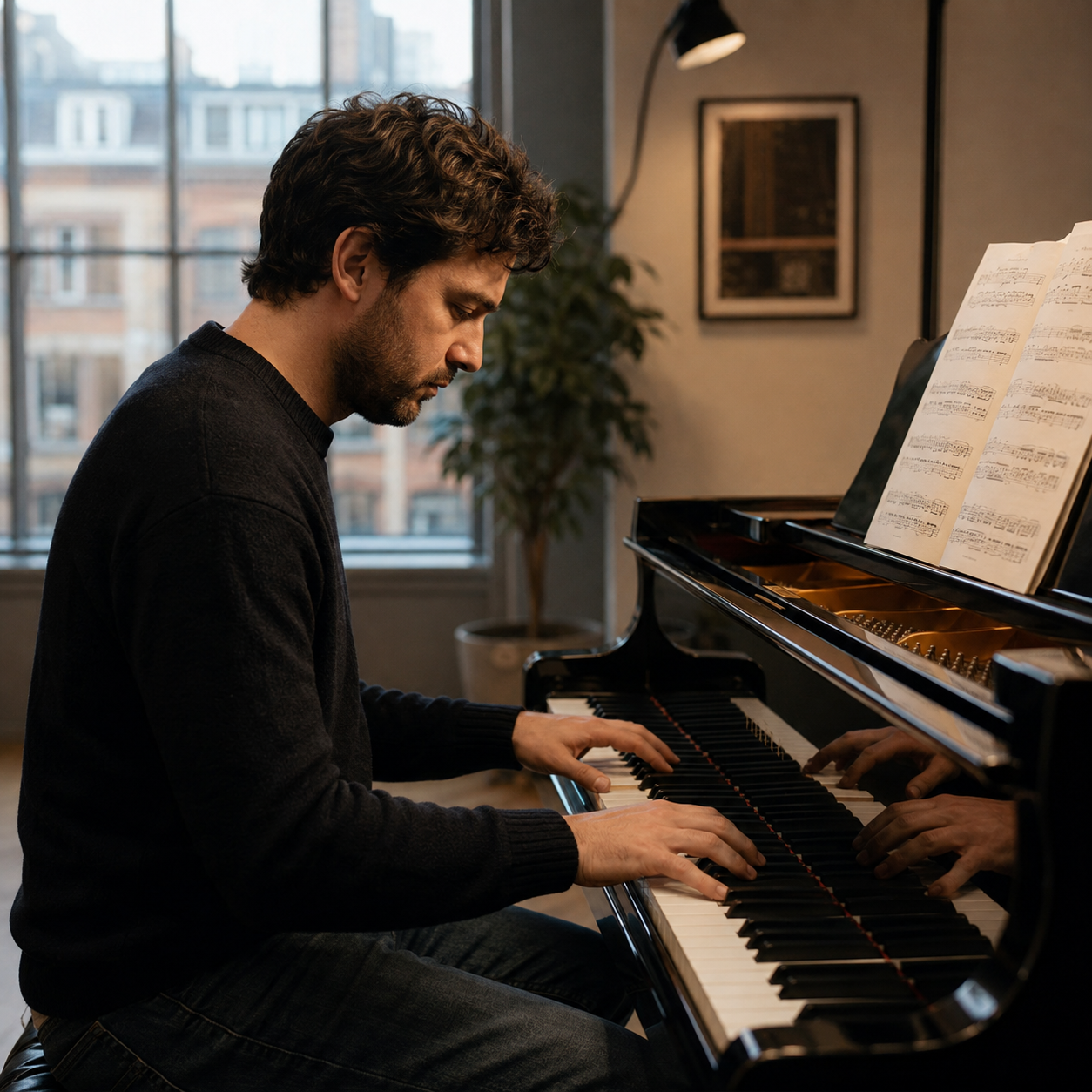
Read, hear and plan before playing.
Coordinate
Join rhythm, fingering and sound at a workable tempo.
Evaluate
Name the musical result, then alter one variable.
Transfer claims need restraint
Studies of music training report associations and, in some interventions, changes in selected cognitive measures. Samples, controls and training length vary. Responsible brain training language separates near transfer—getting better at music-related tasks—from far transfer, such as general intelligence or disease prevention. Adults can value piano without requiring it to justify itself as medicine.
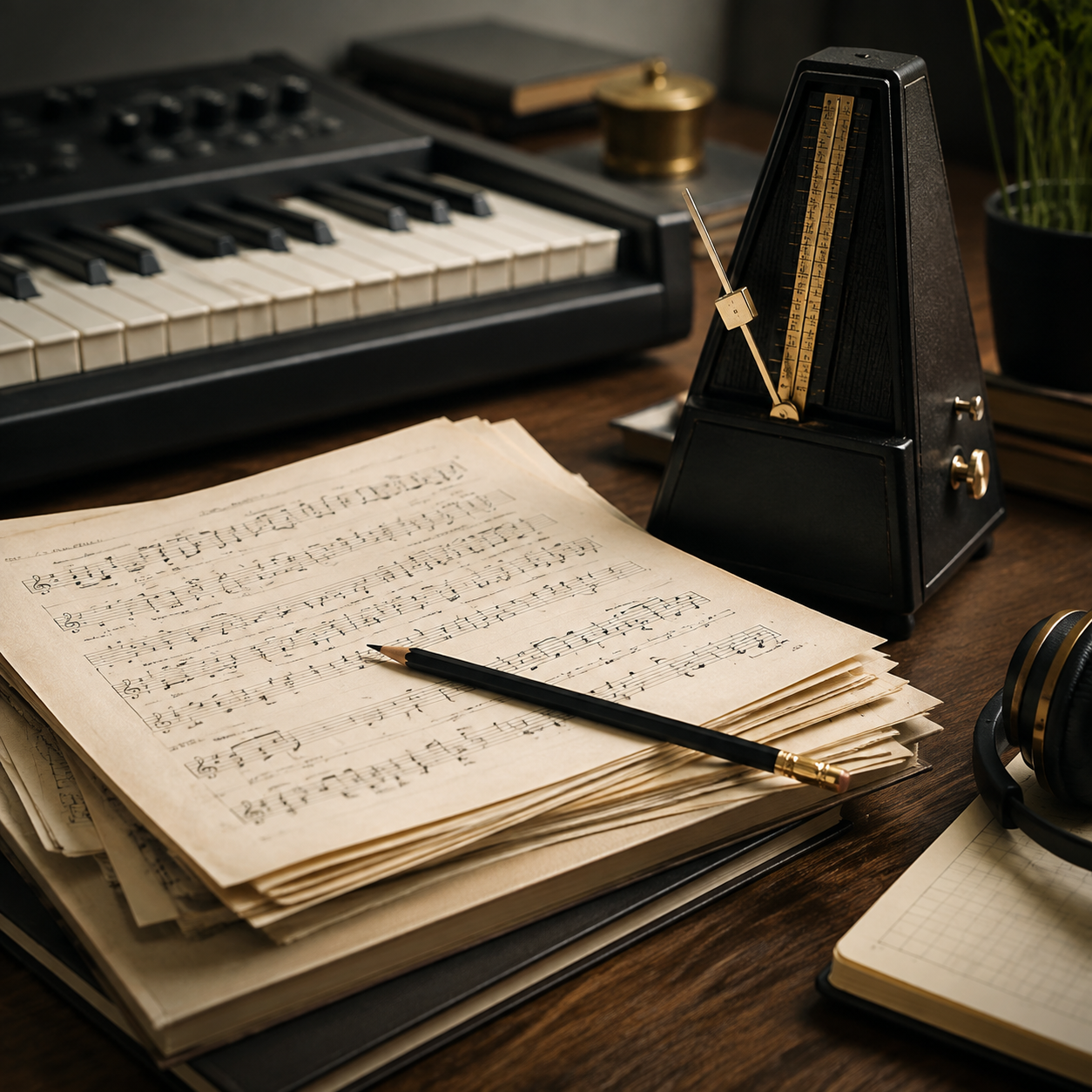
Progress becomes trustworthy when the learner can hear what changed and understand why.
A practice cycle that recruits several systems
Read two bars away from the instrument, tap the rhythm, sing the melody, choose fingering and then play slowly. Close the score and retrieve the opening. This brain training cycle links visual, auditory, motor and memory routes while remaining musically coherent. Change only one variable per repetition so feedback stays interpretable rather than turning complexity into confusion.
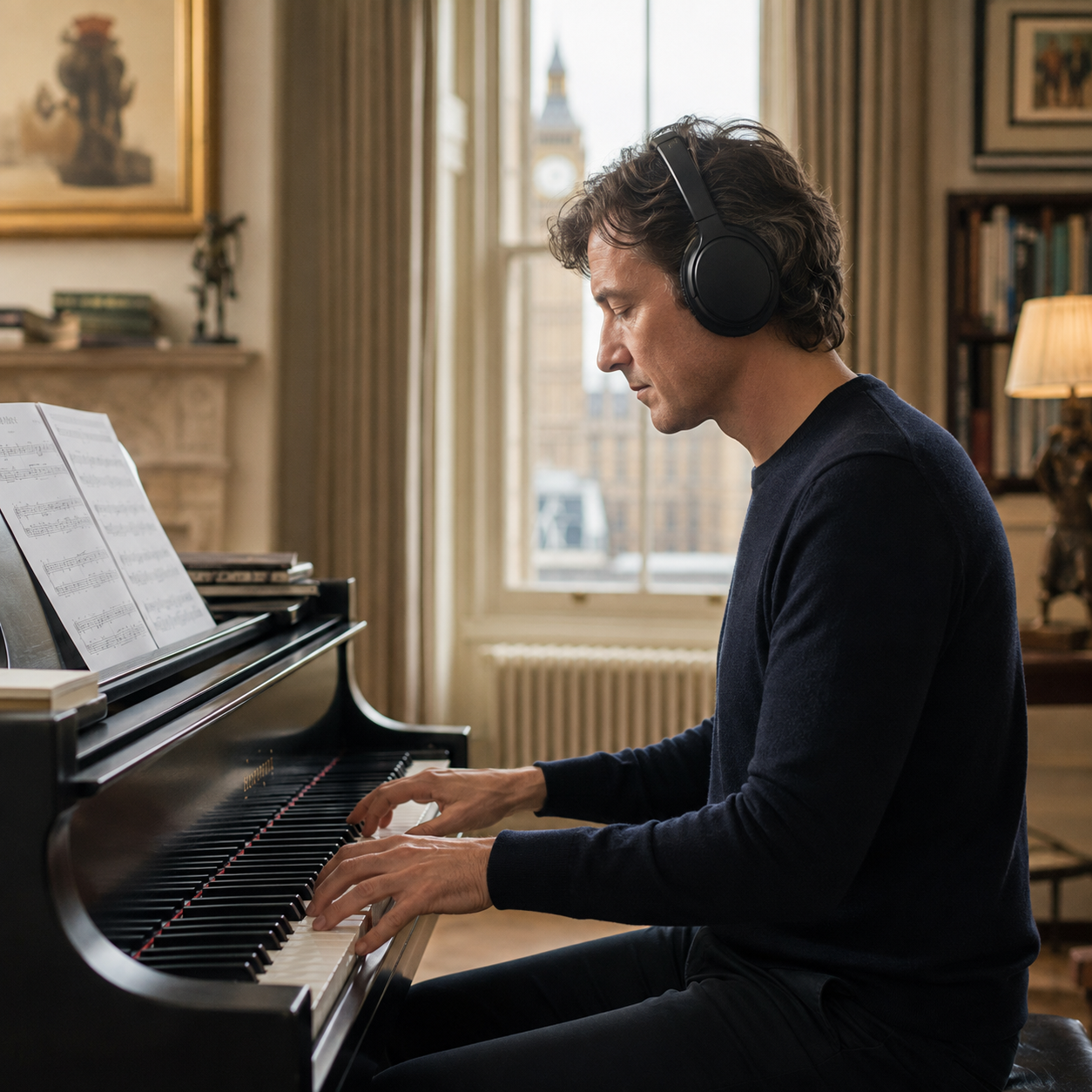
A teacher turns complexity into progression
The difficulty of piano is useful only when it is scaled. A teacher can remove one hand, simplify rhythm, choose a better fingering and restore layers in order. In London adult lessons, brain training becomes a by-product of learning repertoire with care. The immediate measure is musical: greater control, clearer hearing and a phrase that communicates more convincingly.
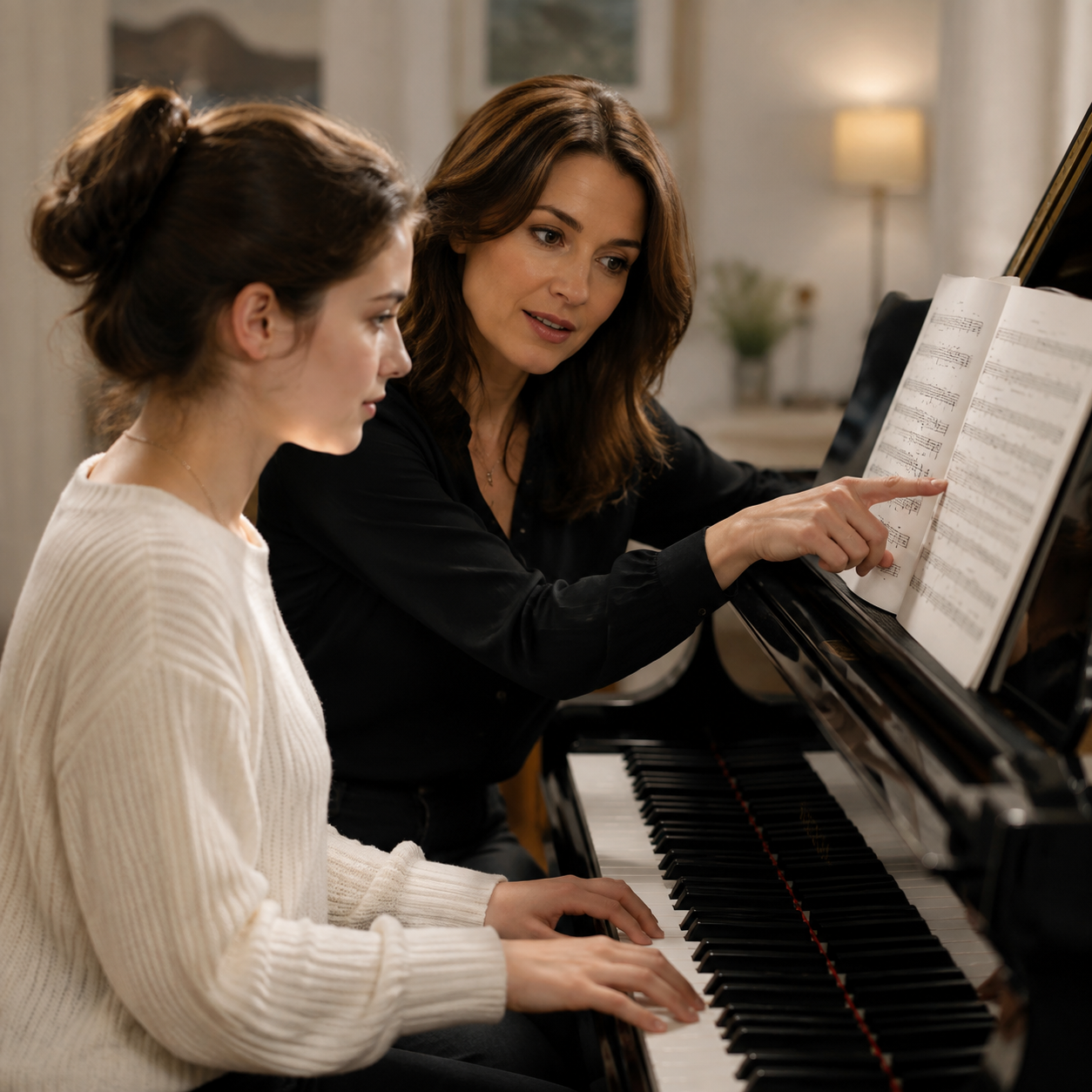
For a connected perspective, read WKMT’s practical piano guidance. The value of brain training is clearest when it supports musical independence rather than exaggerated promises.
WKMT London
If you want to develop brain training through serious, face-to-face musical study, explore WKMT’s London teaching.
Sources and further reading for brain training
- National Institute on Aging cognitive health
- Cochrane evidence resources
- Nature npj Science of Learning
- British Psychological Society
- PubMed research database
Sources checked 8 September 2026. Educational guidance only; no clinical or developmental outcome is guaranteed. Images are AI-generated editorial artwork.