
 TRIAL LESSON
Piano Lessons
Memory Training: How Adult Piano Practice Builds Recall
Sep
Memory Training in London with WKMT
WKMT London adult practice guide
Memory Piano Training: How Adult Piano Practice Builds Recall
Memory training at the piano is not endless repetition. It is the deliberate linking of sound, movement, harmony, notation and retrieval until a musical route can be rebuilt from several starting points.
Memory training at the piano is not endless repetition. It is the deliberate linking of sound, movement, harmony, notation and retrieval until a musical route can be rebuilt from several starting points. In a lesson, the subject becomes practical: what should the ear follow, what action changes the result, and how can the learner repeat that change without losing curiosity?
Why repetition alone is weak memory training
A passage can feel familiar while remaining impossible to start without the score. Familiarity is recognition; performance requires retrieval. Effective memory training closes the page for ten seconds, asks what comes next, then checks. The gap may feel less fluent than repetition, but it reveals the exact place where knowledge is missing and makes the next attempt more purposeful.
Retrieve
Close the score and reconstruct a short unit.
Check
Compare immediately and correct one detail.
Revisit
Return after a delay from a new starting point.
Build more than one route through the piece
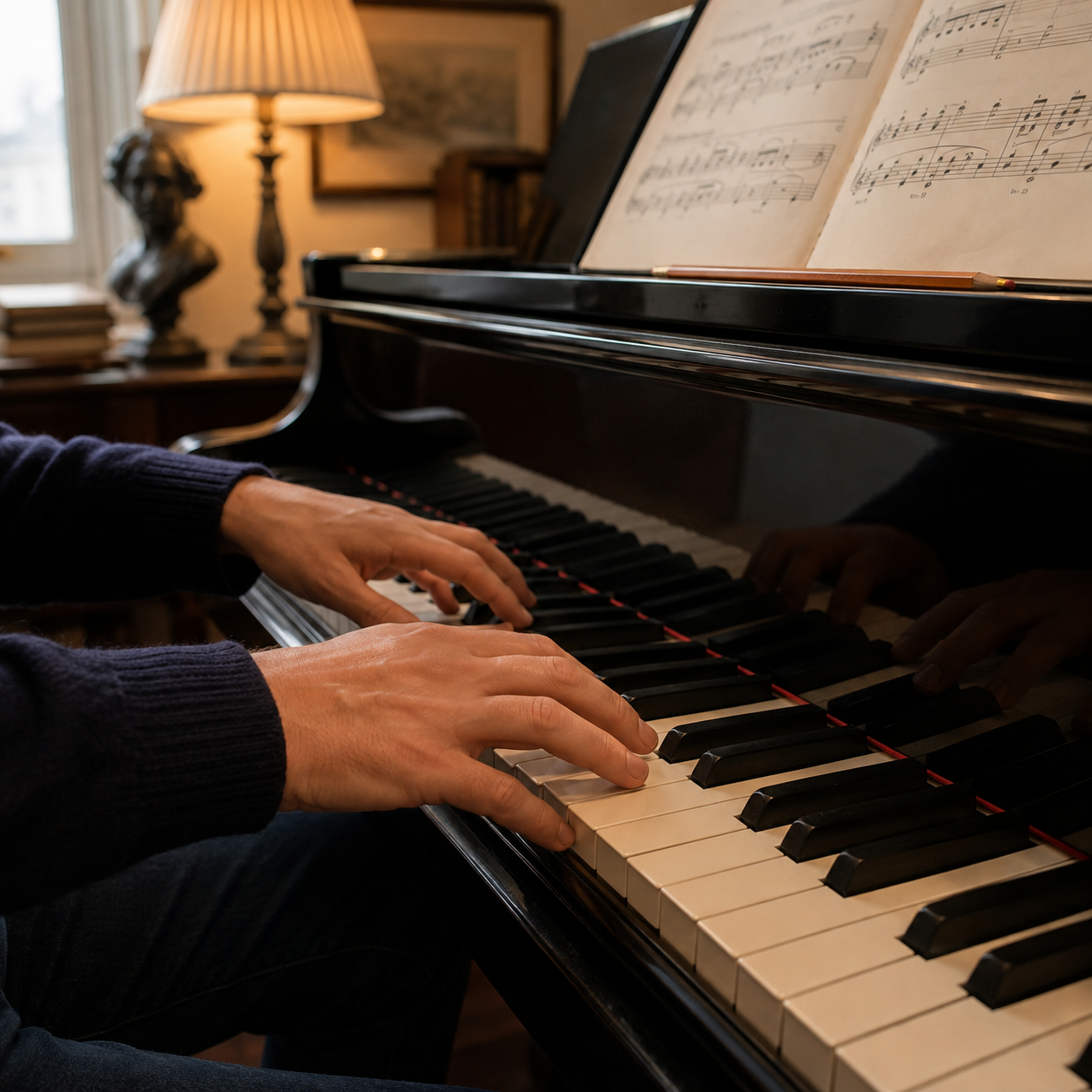
Motor memory is useful but vulnerable when anxiety interrupts a sequence. Add visual landmarks, harmonic labels, melodic hearing and structural sections. Memory training becomes resilient when the adult can begin at four planned points, play the left hand alone and describe the cadence. These routes support one another without demanding a photographic memory.
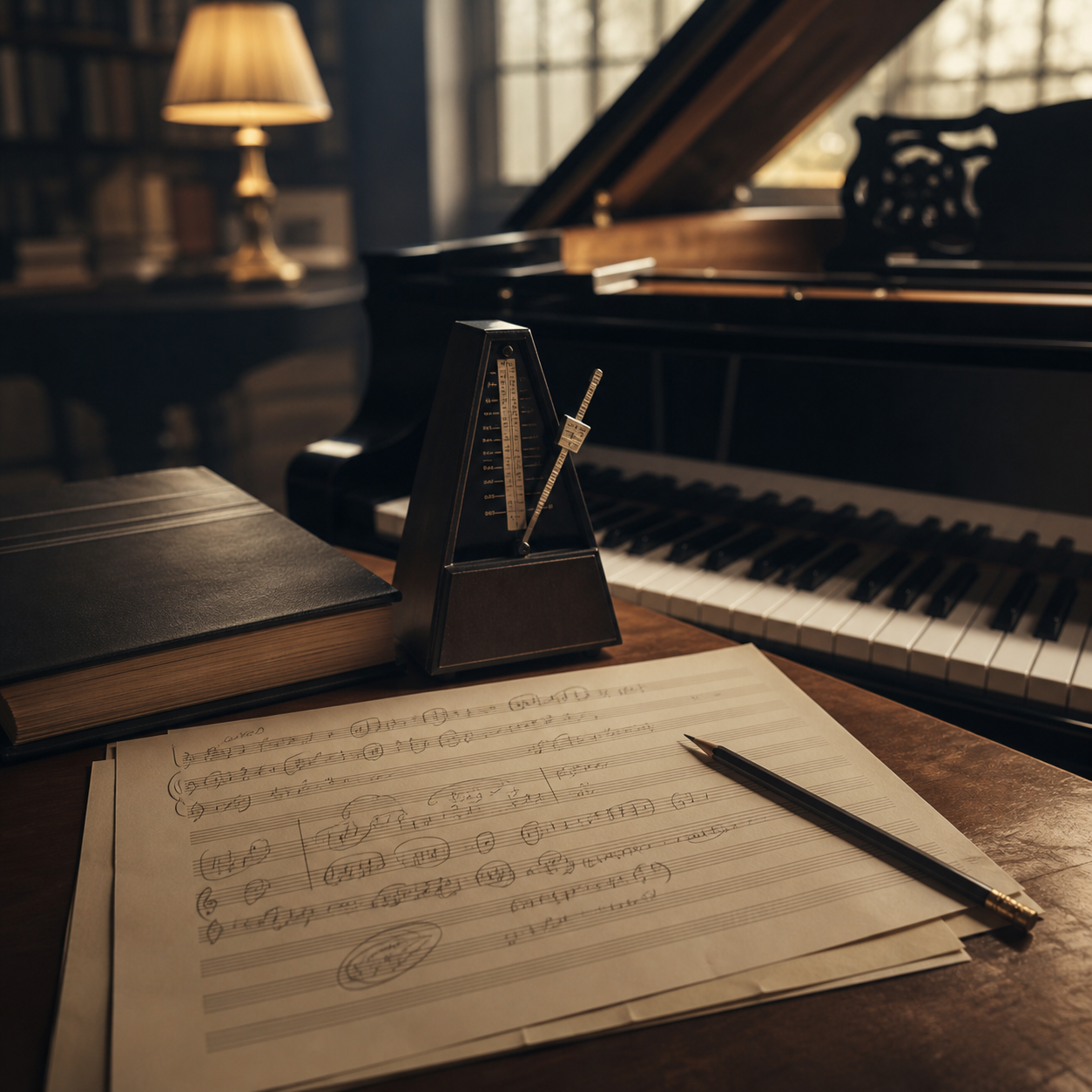
Progress becomes trustworthy when the learner can hear what changed and understand why.
A ten-minute retrieval routine
Practise two bars slowly, look away and imagine the fingering, then play from memory. Check the score, correct one detail and wait thirty seconds before retrieving again. End by starting from the second bar. This memory training routine uses spacing and active recall while keeping musical quality central. Stop before fatigue turns checking into guessing.
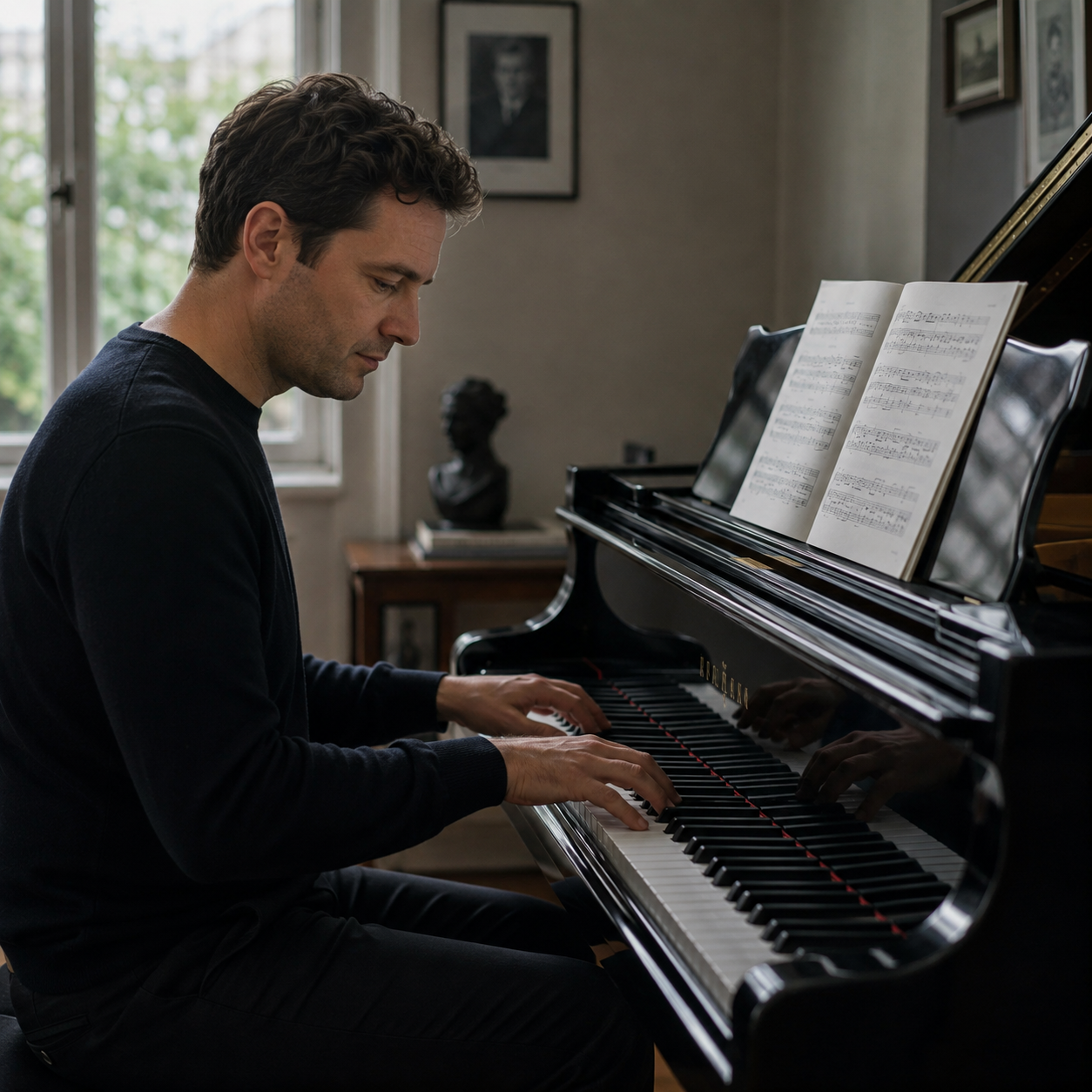
Use memory in service of interpretation
The goal is not a party trick. Secure recall can free attention for balance, timing and communication, but only when memorisation remains connected to meaning. In an adult lesson, the teacher can test different cues and identify which route fails. Memory piano training then becomes tailored musical study rather than a generic brain exercise.
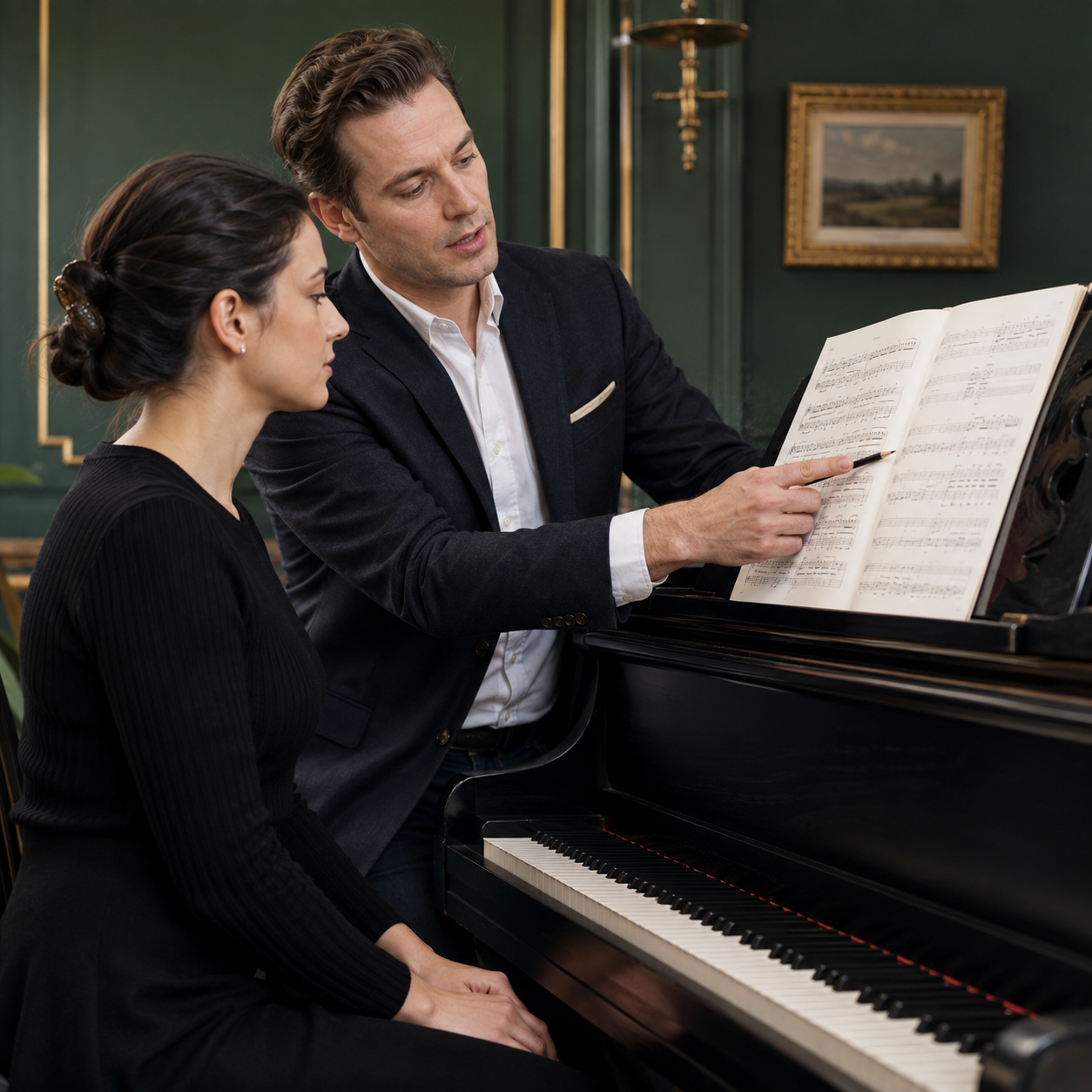
For a connected perspective, read WKMT’s practical piano guidance. The value of memory piano training is clearest when it supports musical independence rather than exaggerated promises.
WKMT London
If you want to develop memory training through serious, face-to-face musical study, explore WKMT’s London teaching.
Sources and further reading on memory training for piano
- Harvard Bok Center on retrieval practice
- The Learning Scientists
- National Institute on Aging
- British Psychological Society
- PubMed research database
Sources checked 8 September 2026. Educational guidance only; no clinical or developmental outcome is guaranteed. Images are AI-generated editorial artwork.