
 TRIAL LESSON
Piano Lessons
Creative Thinking Skills: What Piano Lessons Give Young Learners
Sep
Creative thinking skills for piano lessons for children
WKMT London parent guide
Creative Thinking Skills: What Piano Lessons Give Young Learners
Creative thinking skills at the piano grow when children are asked to hear possibilities, make choices and revise an idea—not simply reproduce the teacher’s answer.
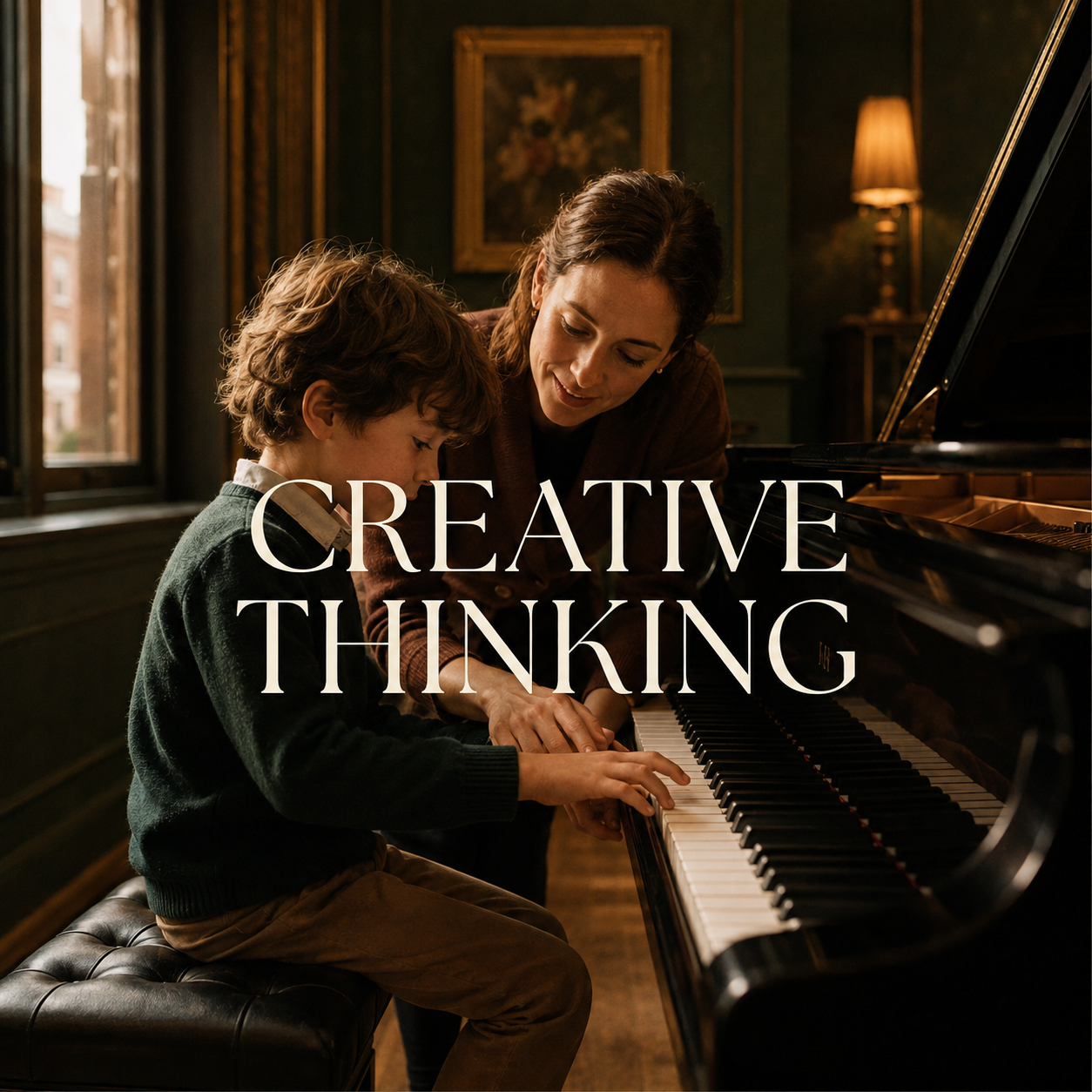
Creative thinking skills at the piano grow when children are asked to hear possibilities, make choices and revise an idea—not simply reproduce the teacher’s answer. In a lesson, the subject becomes practical: what should the ear follow, what action changes the result, and how can the learner repeat that change without losing curiosity?
How creative thinking Piano skills appear in a piano lesson
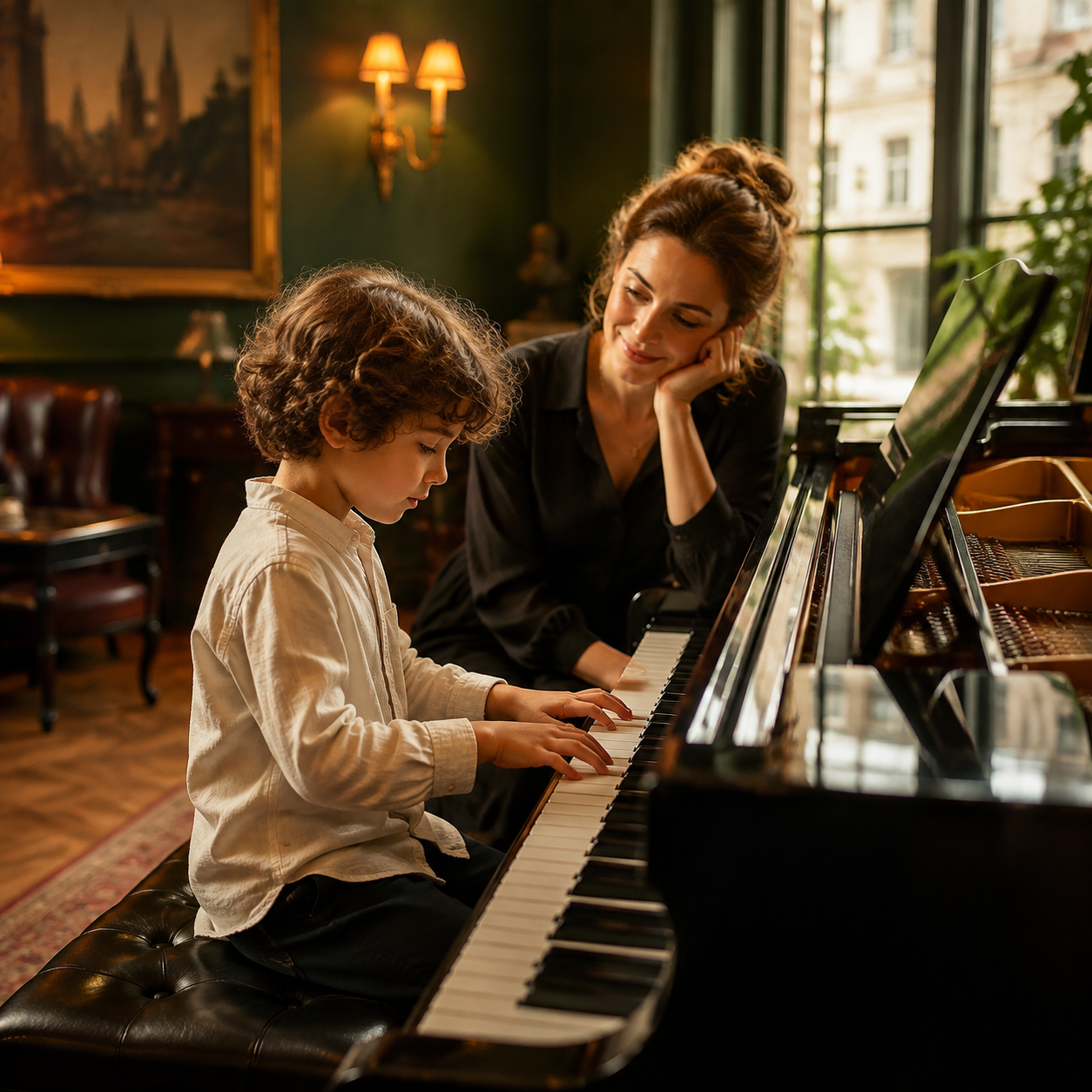
A teacher may ask for three different endings to a four-bar melody, two ways to make a storm sound, or a left-hand pattern that fits a tune. The task has boundaries, but more than one valid answer. Creative thinking piano skills develop because the child must generate, select and refine. Notation then becomes a resource for imagination rather than a set of instructions that forbids curiosity.
Generate
Make two or three possible musical answers.
Choose
Name which version communicates most clearly.
Revise
Change one element and listen again.
Why technique and creativity belong together
Freedom without means can become frustrating. Scales, rhythm and fingering give a child more choices, just as vocabulary gives a storyteller more precision. Creative thinking skills are therefore not an escape from careful work. The teacher alternates imitation with invention: copy a phrase to acquire a tool, then use that tool in a new musical sentence.
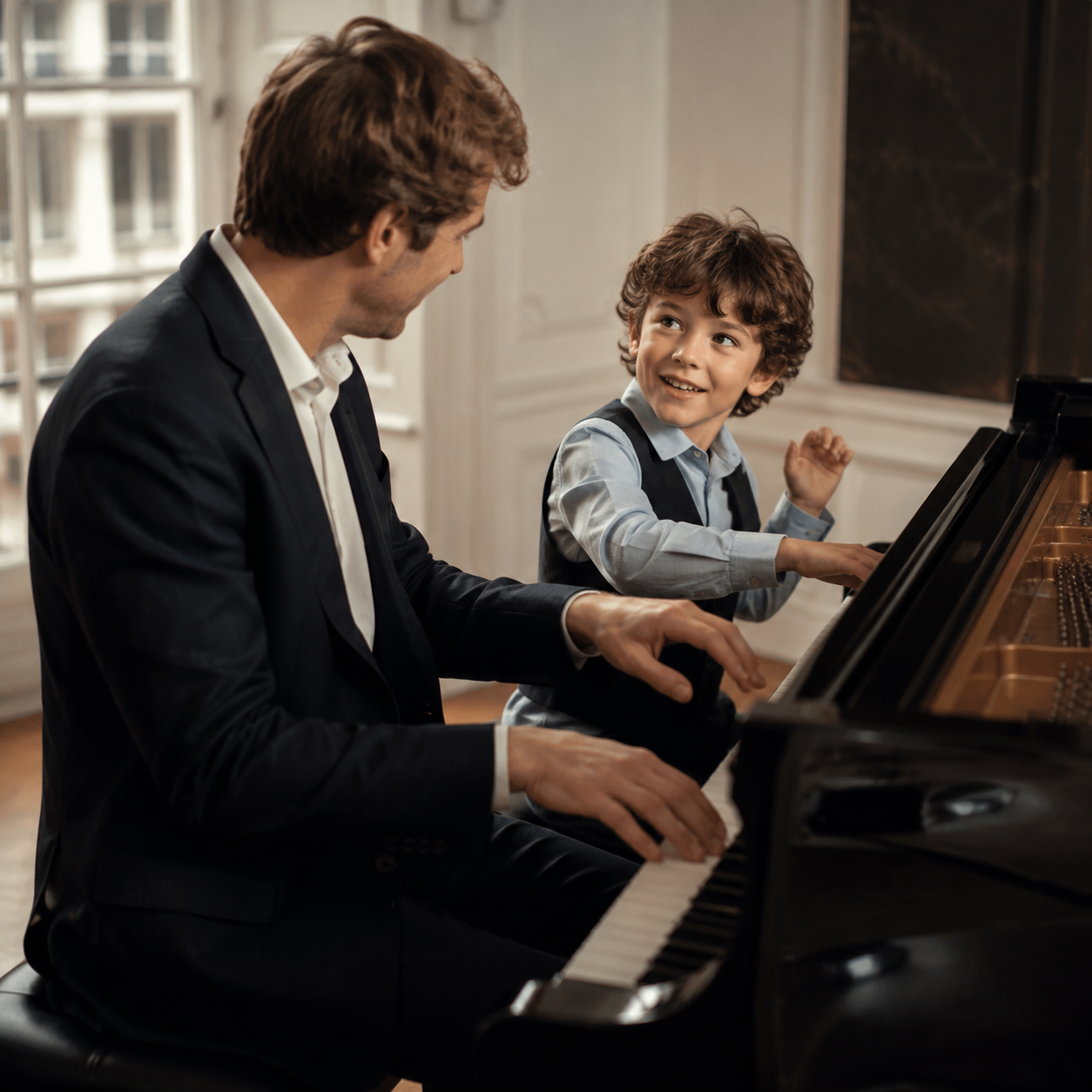
Progress becomes trustworthy when the learner can hear what changed and understand why.
A short creative routine for home practice
Choose three adjacent notes and invent a question. Repeat them in a different rhythm as an answer. Add one low note with the left hand and decide where silence belongs. This two-minute game exercises creative thinking piano skills without asking a parent to teach composition. Save the favourite version on a phone recording so the child can return, listen and revise tomorrow.

The teacher’s role is to make choice audible
Children need specific feedback. Instead of saying only that an improvisation was good, a teacher can notice the repeated rhythm, surprising pause or clear ending. This helps the child understand why an idea worked. In structured London lessons, creative thinking skills can grow beside reading, coordination and repertoire, giving imagination a secure musical language.
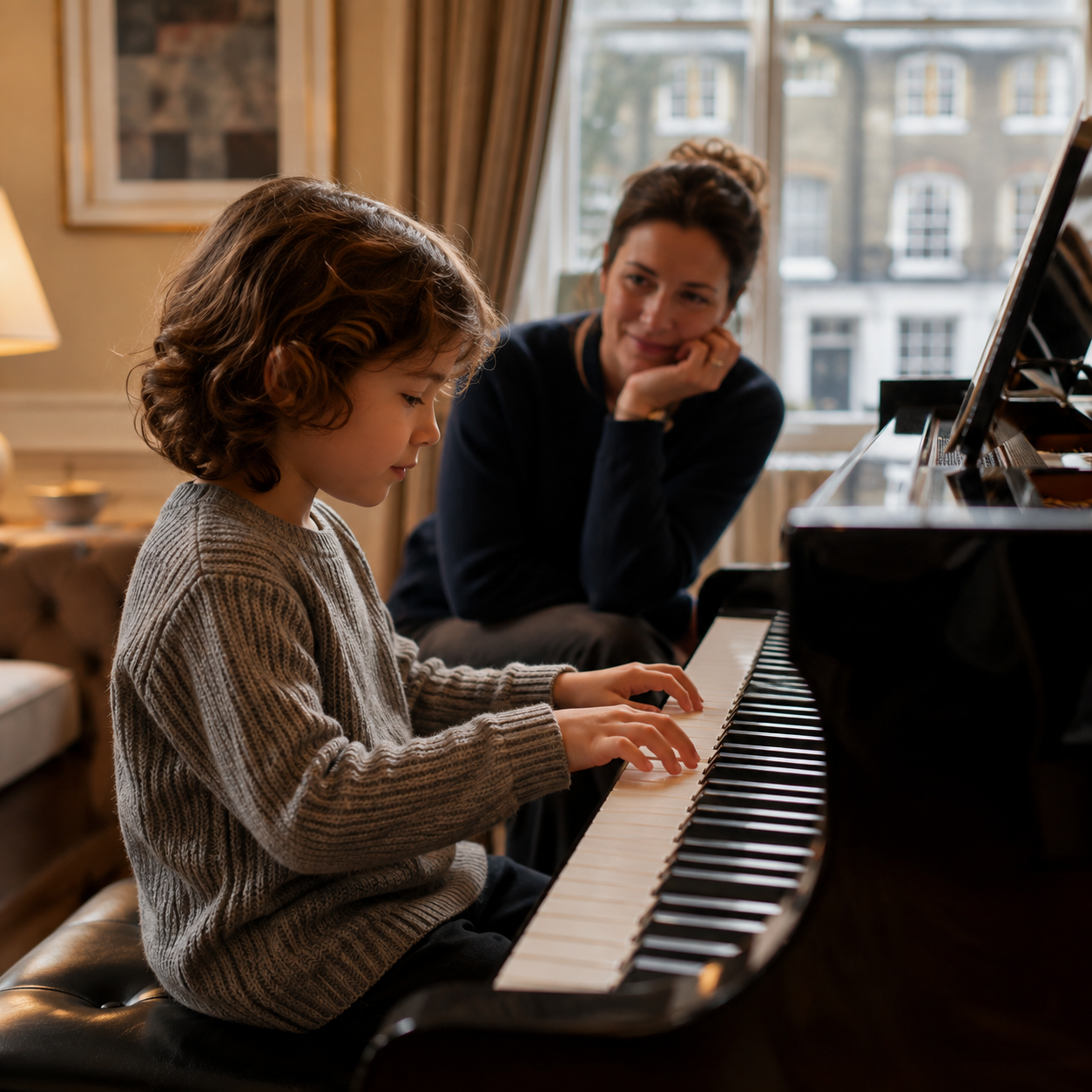
For a connected perspective, read WKMT’s practical piano guidance. The value of creative thinking skills is clearest when it supports musical independence rather than exaggerated promises.
WKMT London
If you want to develop creative thinking piano skills through serious, face-to-face musical study, explore WKMT’s London teaching.
Sources and further reading on creative thinking skills
- Harvard Center on the Developing Child
- Arts Council England research
- Education Endowment Foundation
- Victoria and Albert Museum learning
- UNICEF learning through play
Sources checked 8 September 2026. Educational guidance only; no clinical or developmental outcome is guaranteed. Images are AI-generated editorial artwork.