
 TRIAL LESSON
Piano Lessons
Mental Flexibility: Why Piano Study Rewards Adult Minds
Sep
WKMT London adult learning guide
Mental Flexibility: Why Piano Study Rewards Adult Minds
Mental flexibility is one of the quiet pleasures of adult piano study: the moment when the mind stops treating a difficulty as one locked door and starts finding several ways through.
Adults often arrive at the piano with a private fear that children do not have. They worry that the mind has become too fixed, the hands too late, the ear too slow. The piano answers that fear in a practical way. It does not flatter the learner. It gives a problem, then another angle on the same problem: sing it, count it, reduce it, change the fingering, hear the bass, slow the jump, name the harmony.
That is mental flexibility in musical form. Not vague brain training, not a miracle claim, but the daily experience of adapting with evidence.
Mental flexibility is not the same as talent
Talent is an unhelpful word when it makes adults passive. Mental flexibility is more useful because it names something a learner can practise. If a bar fails at full speed, the adult can change the question. What happens if the rhythm is spoken? What if the left hand becomes a bass line rather than a collection of notes? What if the hardest movement is practised silently on the fallboard before returning to the keys?
These choices are not tricks. They are the adult learner’s advantage. Adults can understand why a method works, and that understanding can make practice less emotional and more durable.
What the evidence says about piano and flexible thinking
A recent PubMed-indexed study examined a one-year piano intervention and cognitive flexibility in older adults, comparing piano practice with active music listening. Other research has explored links between music training and cognitive flexibility, while broader reviews remain careful about cause, dose and transfer. That caution matters. Piano lessons should not be sold as guaranteed medical treatment.
The stronger claim is also more honest: piano study is a rich, demanding activity that makes adults practise switching attention. The eyes read; the ear checks; the hands move; the memory predicts; the teacher interrupts with a better question. Over months, that process can make learning itself feel more flexible.
Switching attention
Adult pianists move between score, sound, touch and pulse, often within a single phrase.
Changing strategy
A teacher helps the learner replace repetition with a better diagnostic question.
Staying curious
Flexible practice reduces the shame of mistakes by turning them into information.
Where adults usually get stuck
The first trap is heroic repetition. The adult plays the same bar twenty times, each time slightly faster, each time slightly more tense. The second trap is global self-judgement: “I cannot do this” replaces the more accurate “I do not yet know which movement is failing.” Mental flexibility begins when the problem becomes specific.
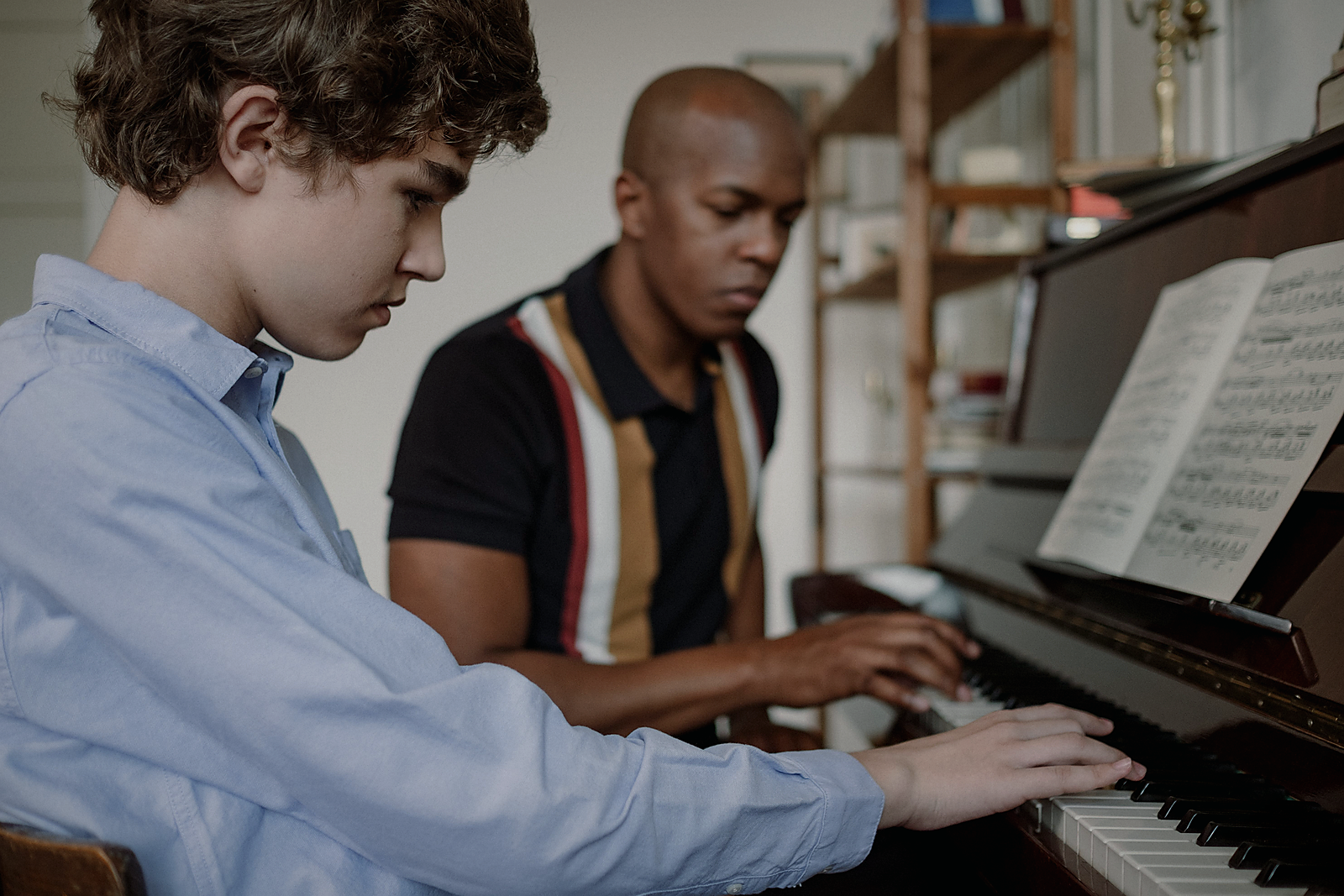
A face-to-face lesson is powerful here because the teacher can see what the learner cannot. A wrist locks before a wrong note. A breath disappears before a phrase collapses. A finger prepares too late because the eye is still reading the previous beat. The adult does not need more willpower at that moment. The adult needs a clearer route.
A video for the adult learner’s ear
The video below is not a substitute for lessons, but it is a useful reminder that adult piano learning sits inside wider questions about attention, memory and adaptation. Watch it with restraint: the aim is not to collect motivational promises, but to notice how musical activity asks the brain to coordinate several demands at once.
Related video
Living Pianos discusses learning piano after 60 and brain health. Embedded from YouTube for educational context; rights remain with Living Pianos / YouTube.
The most useful adult learner is not the fastest one. It is the one who can change method before frustration becomes identity.
How to practise mental flexibility after work
Begin with a five-minute diagnostic session. Choose one bar and name the issue before playing: rhythm, fingering, jump, voicing, reading or memory. Then pick one method. Clap it. Sing it. Play only the skeleton. Practise the landing note. Return to the phrase and listen for one improvement. This is how mental flexibility becomes a habit rather than a slogan.
For adults in London, the value of a lesson is that the teacher can refine that process. The lesson does not simply add information. It stops the learner from spending a week practising the wrong problem.
WKMT London
WKMT London offers face-to-face adult piano lessons for beginners, returning learners and serious amateurs who want structured, intelligent progress.
Explore adult piano lessonsSources for mental flexibility
- PubMed: one-year piano intervention and cognitive flexibility in older adults
- Frontiers / PMC: music training and cognitive flexibility
- Brain Sciences: music and cognitive flexibility review
- Open Book Publishers: music training and executive function
- NCBI Bookshelf: neuroplasticity overview
- WKMT London: adult piano lessons in London
Sources last checked 3 September 2026.