
 TRIAL LESSON
Piano Lessons
Attention Skills: Why Piano Practice Helps Children Stay With One Task
Sep
WKMT London parent guide
Attention Skills: Why Piano Practice Helps Children Stay With One Task
Attention skills grow through small acts of returning: finding the place, hearing the change, trying again. Piano gives children a concrete task in which focus has a sound, a shape and an achievable end.
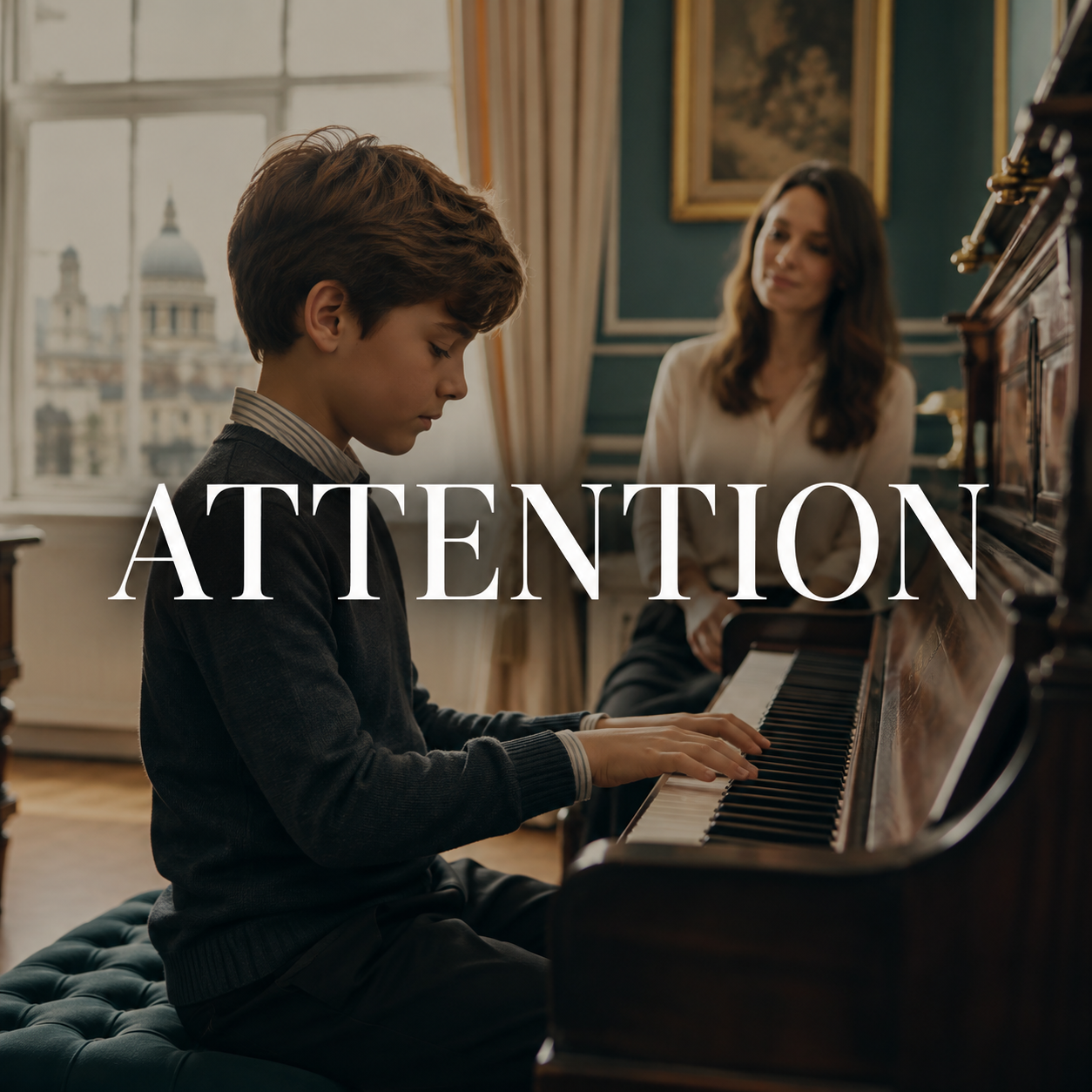
Parents often describe attention as if a child either possesses it or does not. Teaching tells a more hopeful story. Attention changes with interest, fatigue, task length, emotional safety and the clarity of the instruction. At the piano, these conditions can be adjusted. A teacher can shorten the passage, remove one hand, sing the rhythm or set a clear stopping point.
This does not mean piano lessons cure attention difficulties or guarantee academic gains. The strongest case is simpler. Music gives attention skills somewhere specific to operate: the child holds a pulse, notices pitch, remembers a correction and coordinates movement over a short span of time.
How attention skills appear at the keyboard
A beginner’s task may last only twenty seconds: play four notes evenly and stop on the final sound. Yet the child must prepare the hand, recall the order, monitor the pulse and resist continuing after the endpoint. Those are several forms of control inside one musical action.
Good teaching makes the demand visible without turning it into a lecture. The child might point to the tricky bar, clap it, play it once, then decide whether it matched the plan. That sequence trains attention skills more honestly than asking for ten unfocused repetitions.
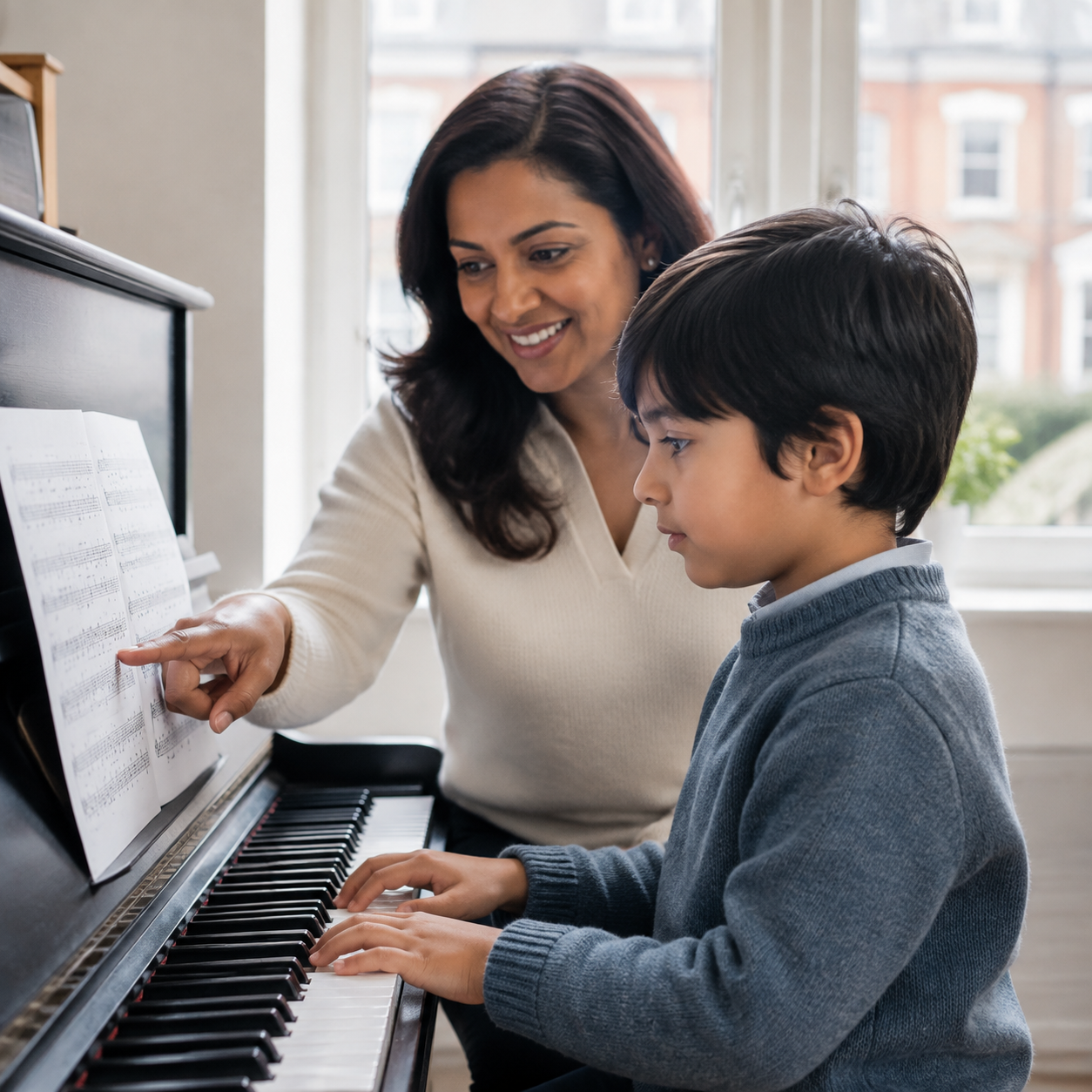
Choose one target
Name one audible aim: even pulse, correct notes, or a quiet ending.
Keep it bounded
Use two bars or one phrase so success can be recognised before fatigue takes over.
Invite a verdict
Ask the child what changed. Self-evaluation turns compliance into active listening.
What research says, with proper caution
Research on music and attention is varied. A 2009 randomised study indexed by PubMed examined music during a sustained-attention task in young children exposed to auditory distraction. A 2020 Frontiers study reported changes in attention measures after a music intervention. These studies are interesting, but they do not prove that ordinary piano lessons transfer automatically to every classroom task.
A wider meta-analysis of music training and children’s cognitive or academic outcomes found that apparent benefits shrink when research design is controlled more rigorously. Parents should welcome that caution. It directs attention back to the real value of learning music: a rich skill in its own right, with plausible habits of listening, sequencing and persistence.
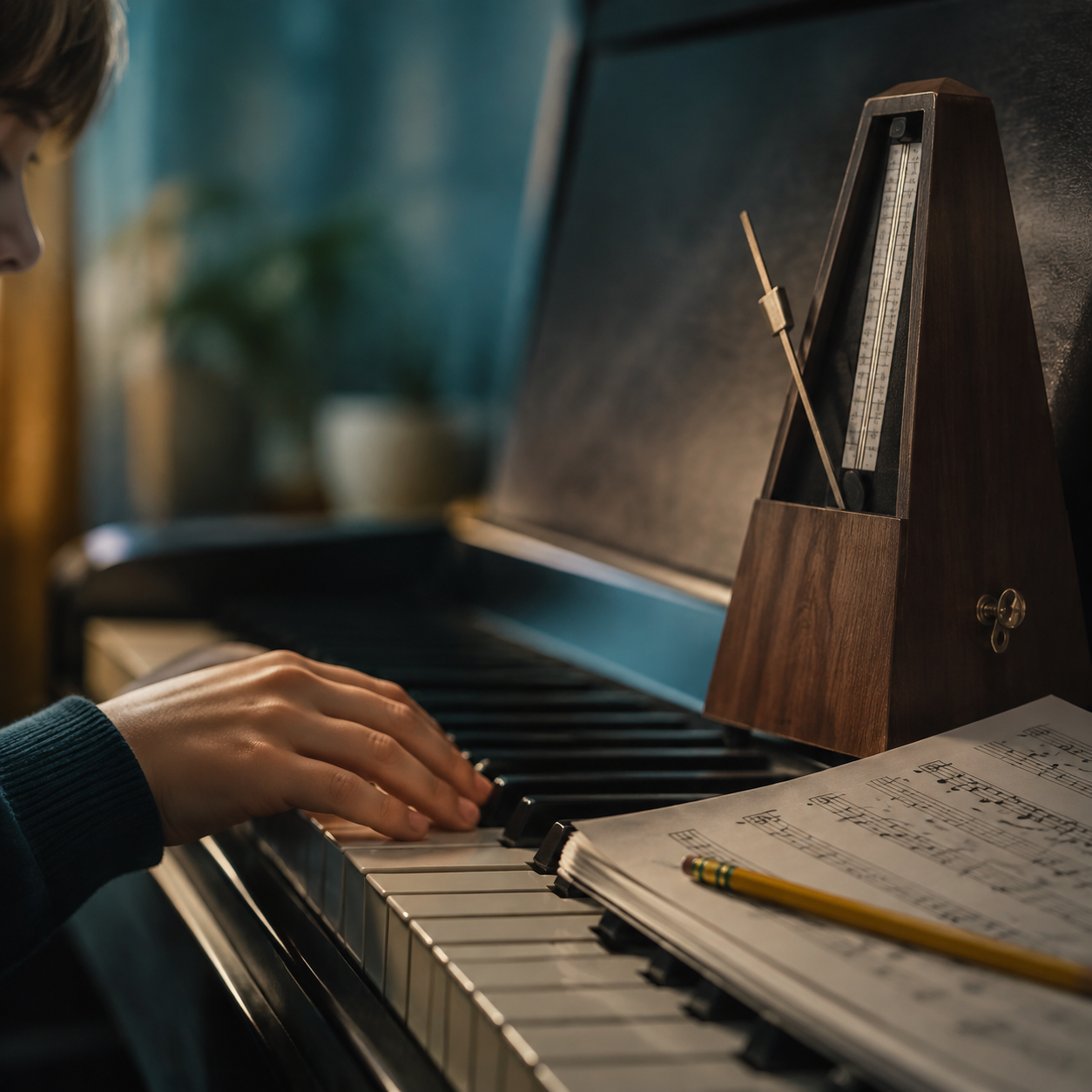
Attention is strengthened less by demanding more minutes than by making each minute intelligible.
A five-minute home routine for attention skills
Begin with a predictable arrival: sit, place the feet, open the same page. Let the child choose one target with the parent. Play once, pause, and name one thing heard. Repeat only if the second attempt has a purpose. End by playing something familiar and enjoyable.
This routine is short enough to protect goodwill. It also reduces negotiation because the end is known. Parents do not need to become substitute teachers. Their role is to protect the conditions for attention skills: a calm space, a clear instruction and permission to stop after the agreed task.
Why a teacher’s observation matters
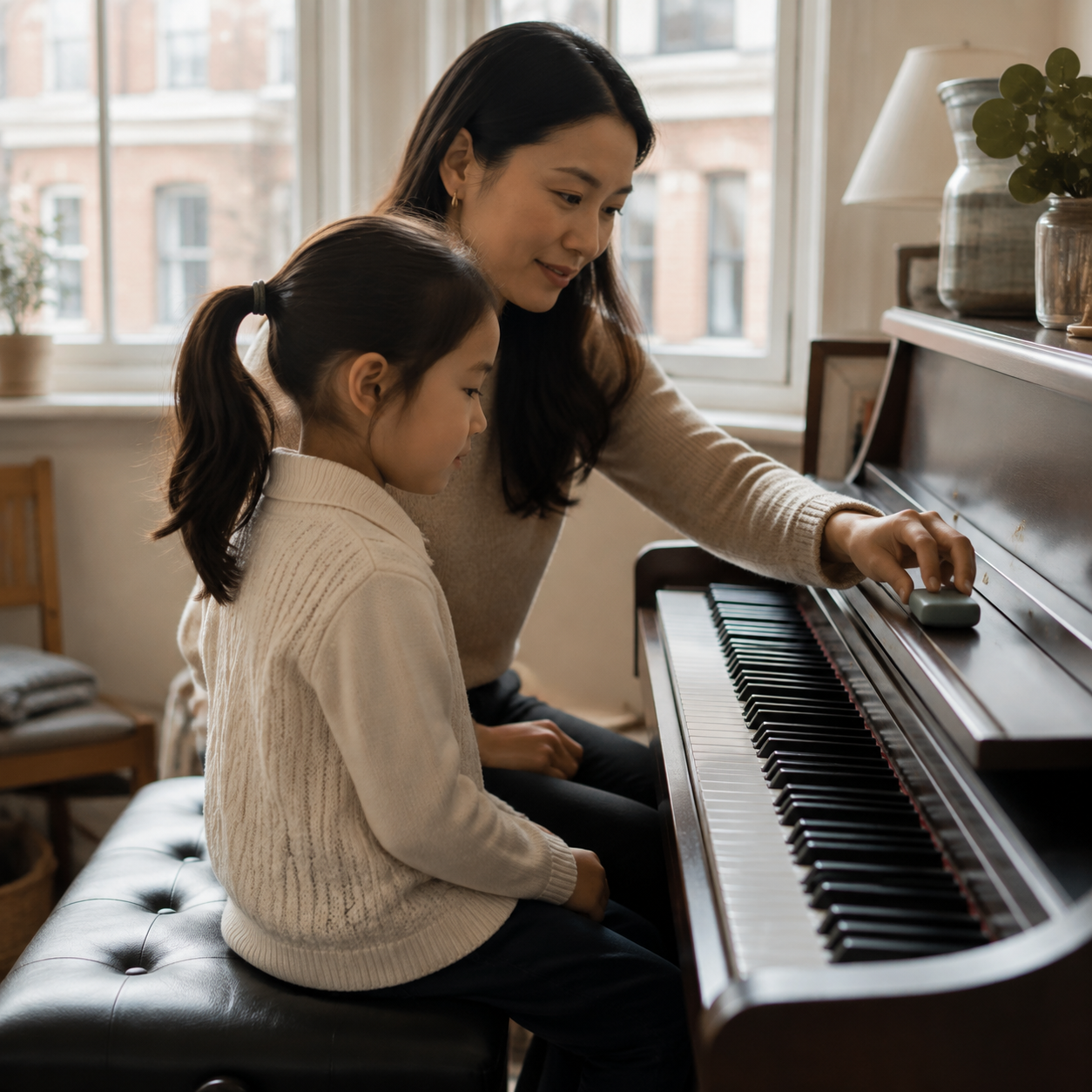
A teacher can distinguish between several look-alike problems. The child may not understand the notation, may be physically uncomfortable, may have forgotten the fingering, or may simply need a shorter unit. Labelling all of these as poor concentration misses the teaching opportunity.
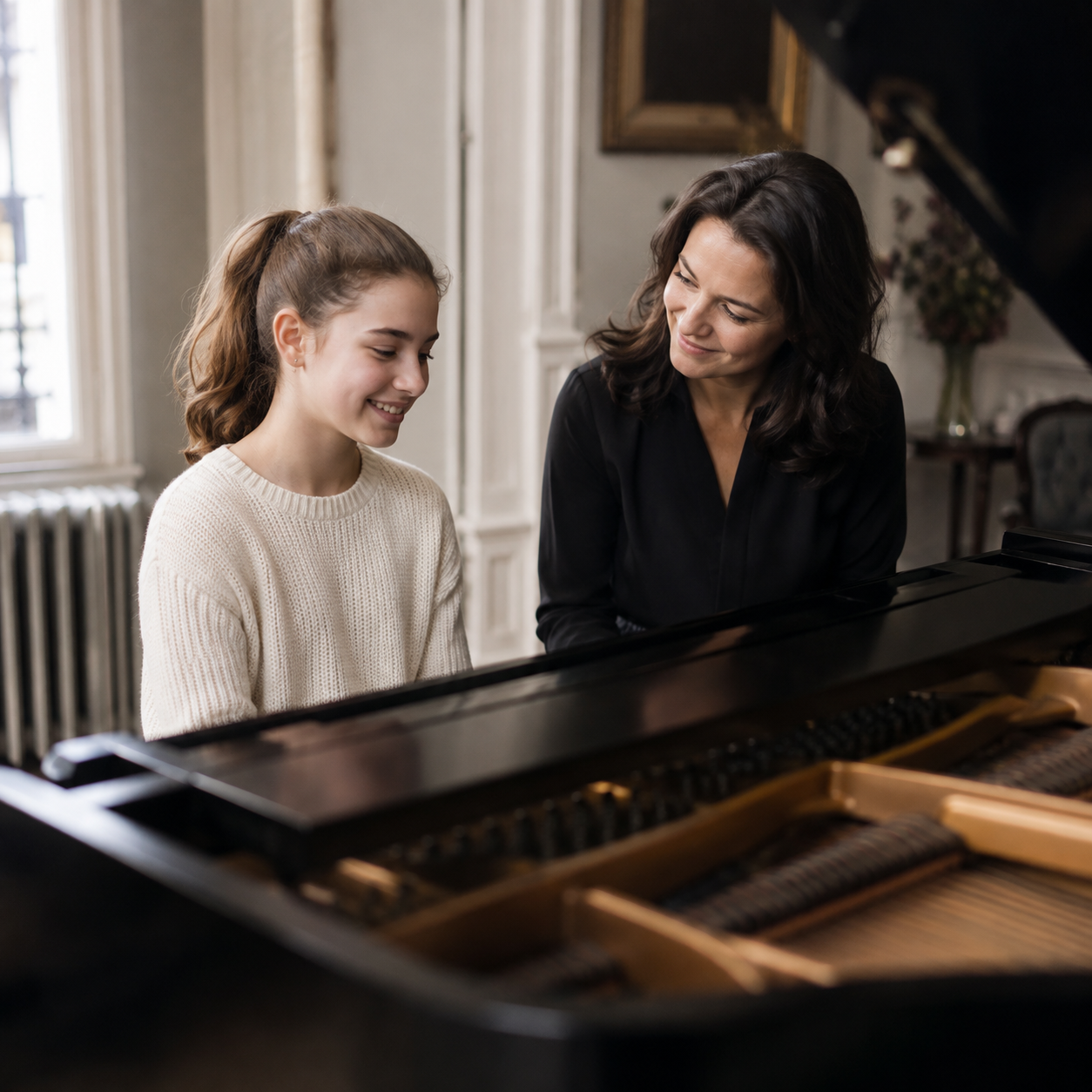
In structured piano lessons for children in London, WKMT teachers can change the pace in real time and build attention skills through achievable musical steps. Parents can also read WKMT’s practical guidance on teaching piano to children effectively and planning beginner practice.
WKMT London
For a thoughtful, age-appropriate route into music, explore face-to-face piano lessons for children at WKMT London.
Sources on piano attention skills
- PubMed: music and sustained attention in young children
- Frontiers in Neuroscience: music intervention and attention
- Nature: meta-analysis of cognitive and academic outcomes
- Harvard Center on the Developing Child: executive function
- NHS: ADHD overview and clinical guidance
Sources checked 4 September 2026. This article offers educational guidance and does not replace clinical assessment.