
 TRIAL LESSON
Piano Lessons
Listening Skills: What Piano Lessons Give Children Beyond Notes
Sep
WKMT London parent guide
Listening Skills: What Piano Lessons Give Children Beyond Notes
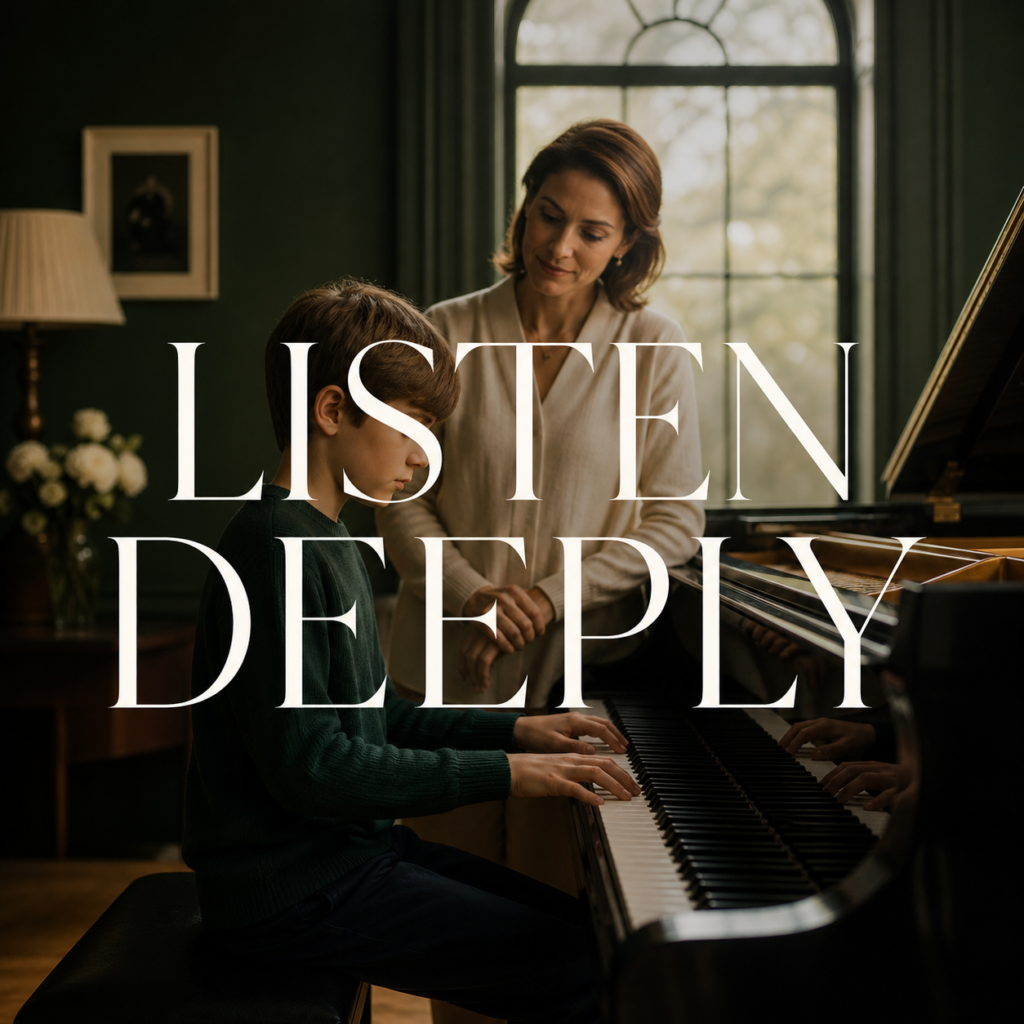
A child can sit at the piano, press the correct keys and still not be listening. The real musical change begins when the child notices what happened: the note rang too long, the melody disappeared, the rhythm hurried, or the second attempt suddenly sounded more like the idea in their head.
Parents often describe listening as if it were a matter of manners: did the child sit still, hear the instruction and obey? Musical listening skills are more alive than that. They involve curiosity, memory and judgement. Can the child hear whether two notes match? Can they follow a pulse while another sound distracts them? Can they tell which hand carries the melody? Can they hold a short phrase long enough to answer it?
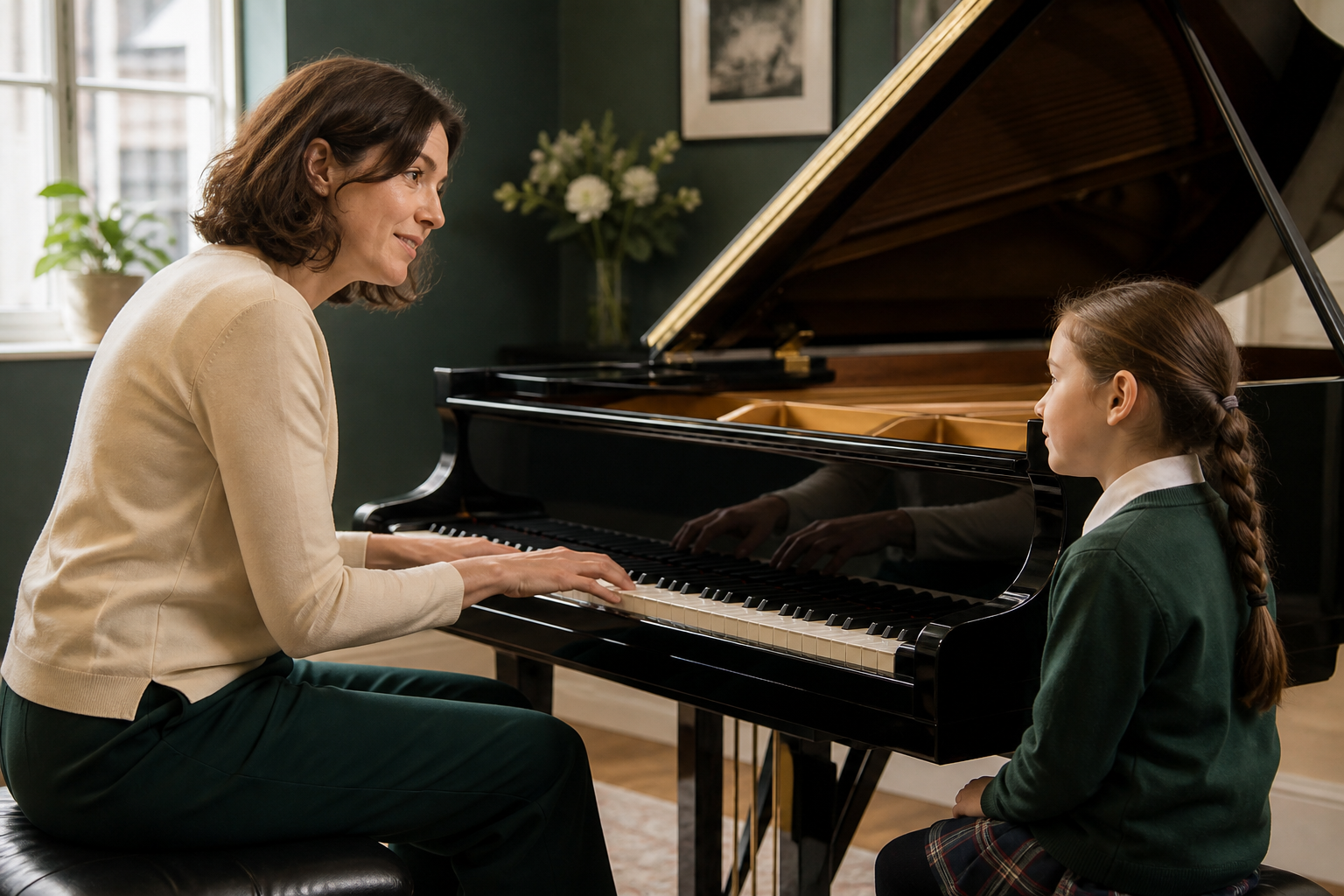
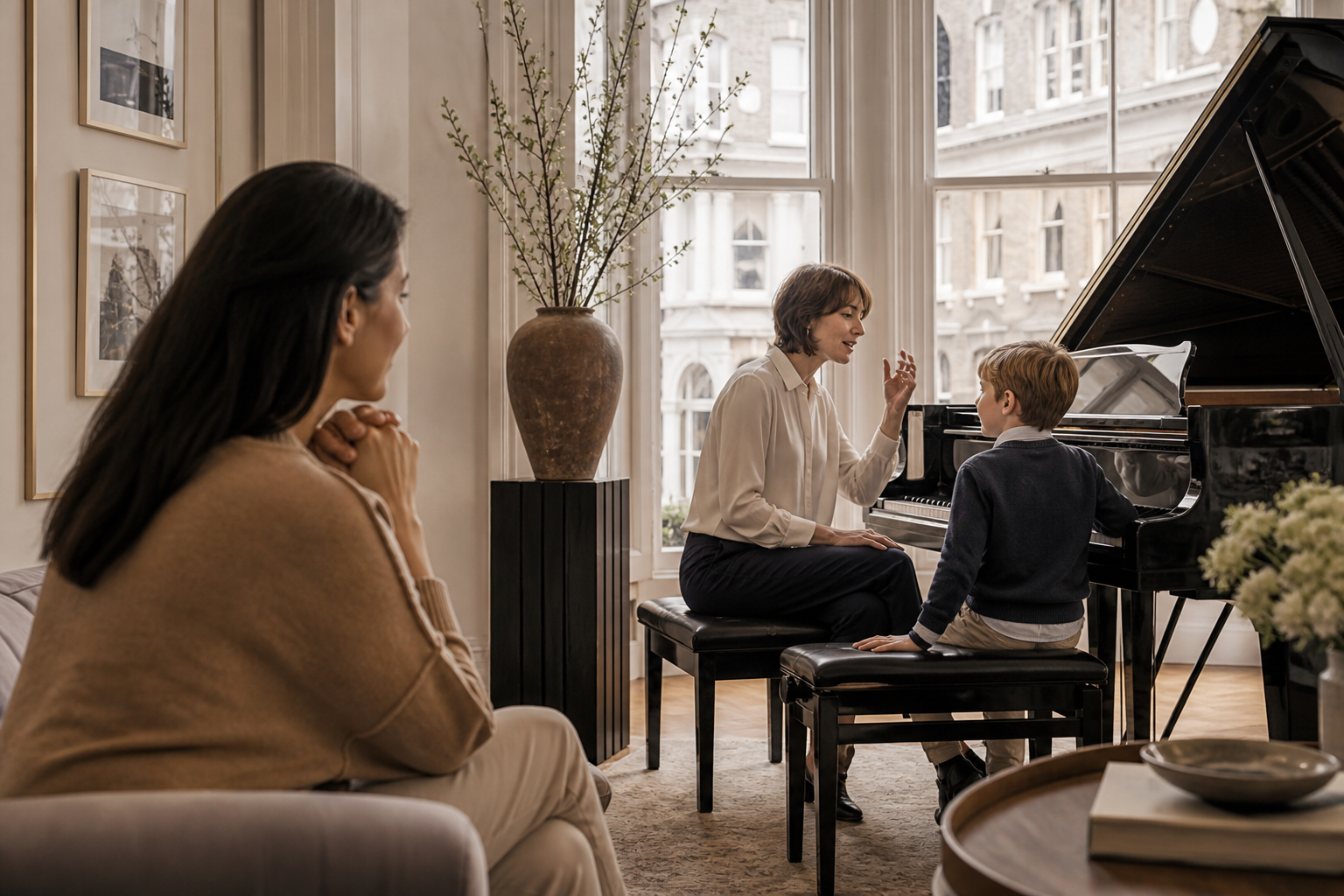
Thoughtful piano lessons for children in London turn those questions into music rather than tests. WKMT teaches one-to-one, so a teacher can reduce the pattern, change register, slow the pulse or remove notation until the child can genuinely hear the task. A good lesson does not demand attention in the abstract; it gives the ear something precise to follow.
What listening skills look like at the piano
Discriminate
Hear whether pitch, rhythm, articulation or tone changed.
Select
Attend to the melody while accompaniment or room noise continues.
Remember
Hold a short sound pattern and recognise it when it returns.
Predict
Imagine the next sound before playing it.
Balance
Notice whether one hand covers another voice.
Adjust
Use the result of one attempt to improve the next.
These listening skills form a loop. The eye may read a note and the hand may press a key, but the ear decides whether the musical intention arrived. When children rush, they often break the loop: movement comes before prediction and the next repetition begins before evaluation.
The teacher’s task is to slow that loop without draining it of pleasure. A child who hears two versions of the same phrase can begin to choose. A child who notices that the last note sounded abrupt can try a different release. Little by little, listening stops being something adults ask for and becomes something the child owns.
What research says about listening skills
A six-month study of 4- to 5-year-olds found that piano training enhanced neural processing of pitch and improved auditory Mandarin word discrimination compared with reading and no-contact groups. The result is especially relevant to pitch-based speech, and it should not be inflated into a universal language claim. The full study is available through the US National Library of Medicine.
A recent systematic review of musical training and central auditory processing in children and adolescents reported improvements across sound discrimination, speech-in-noise processing, detection of environmental sound change and selective attention, while noting a small evidence base and differences between programmes. Another review of executive function found mixed results and only limited evidence for selective auditory attention. Those limits are useful: listening skills develop through sustained, specific work, not because any musical activity carries a guaranteed cognitive bonus.
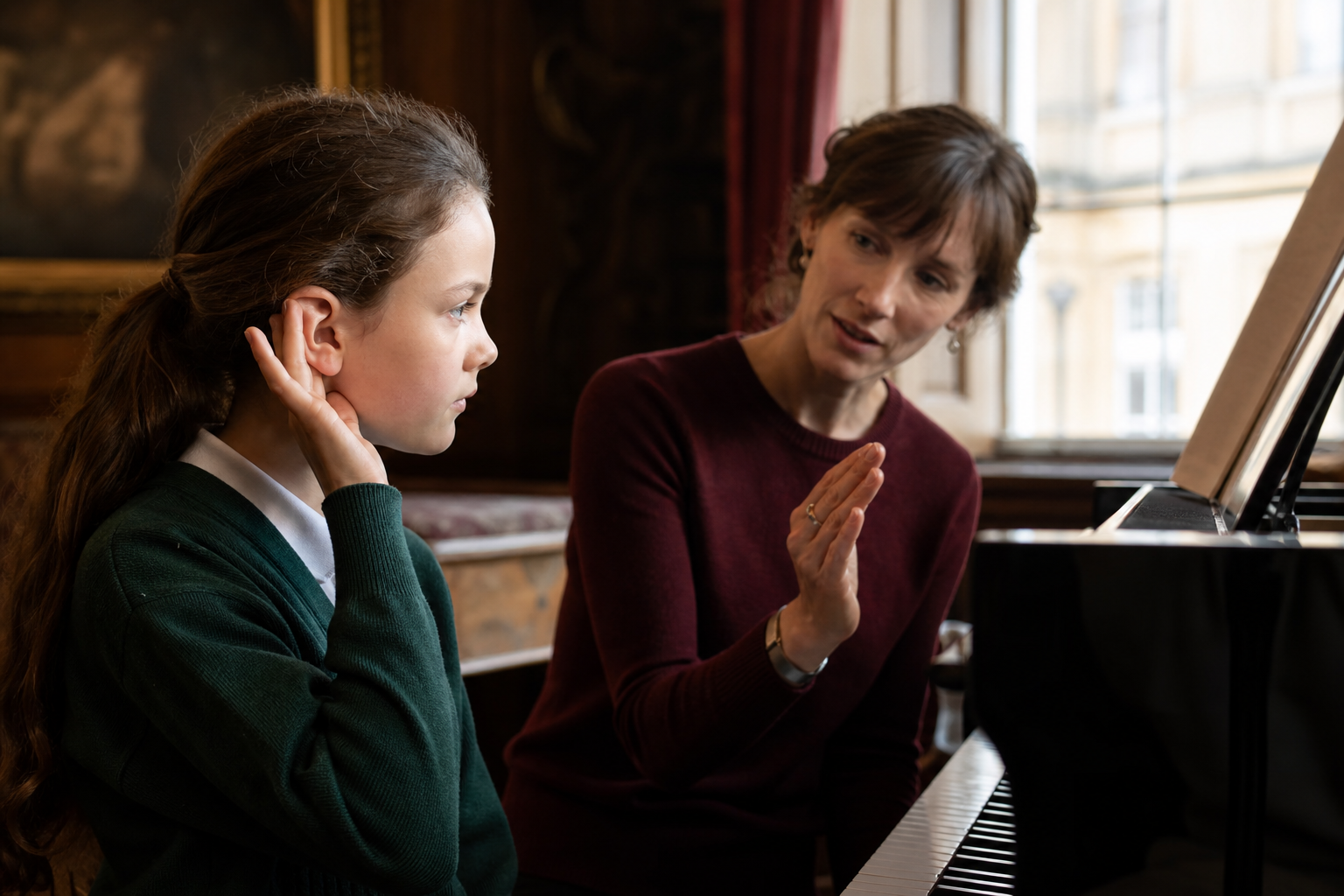
The aim is not to make a child appear quiet. It is to help them hear a difference, care about it, and know what to try next.
Four ways lessons build listening skills
Sing before playing
Singing a two- or three-note shape creates an internal target. The child then plays it and compares the instrument with the imagined sound. Accuracy matters less than making the prediction conscious.
Play the difference
The teacher performs two versions of one phrase: perhaps one legato, one detached; one balanced, one melody-heavy. The child names the difference and chooses which better fits the character. This turns listening skills into a musical decision rather than a correction from outside.
Keep one sound in focus
In simple two-hand music, ask the child to listen only to the bass, then only to the melody. Selective listening skills grow when the target is precise and the texture remains manageable.
Pause before repeating
After a mistake, wait. Ask what the child heard, choose one change and repeat only the relevant fragment. This protects listening from becoming an afterthought.
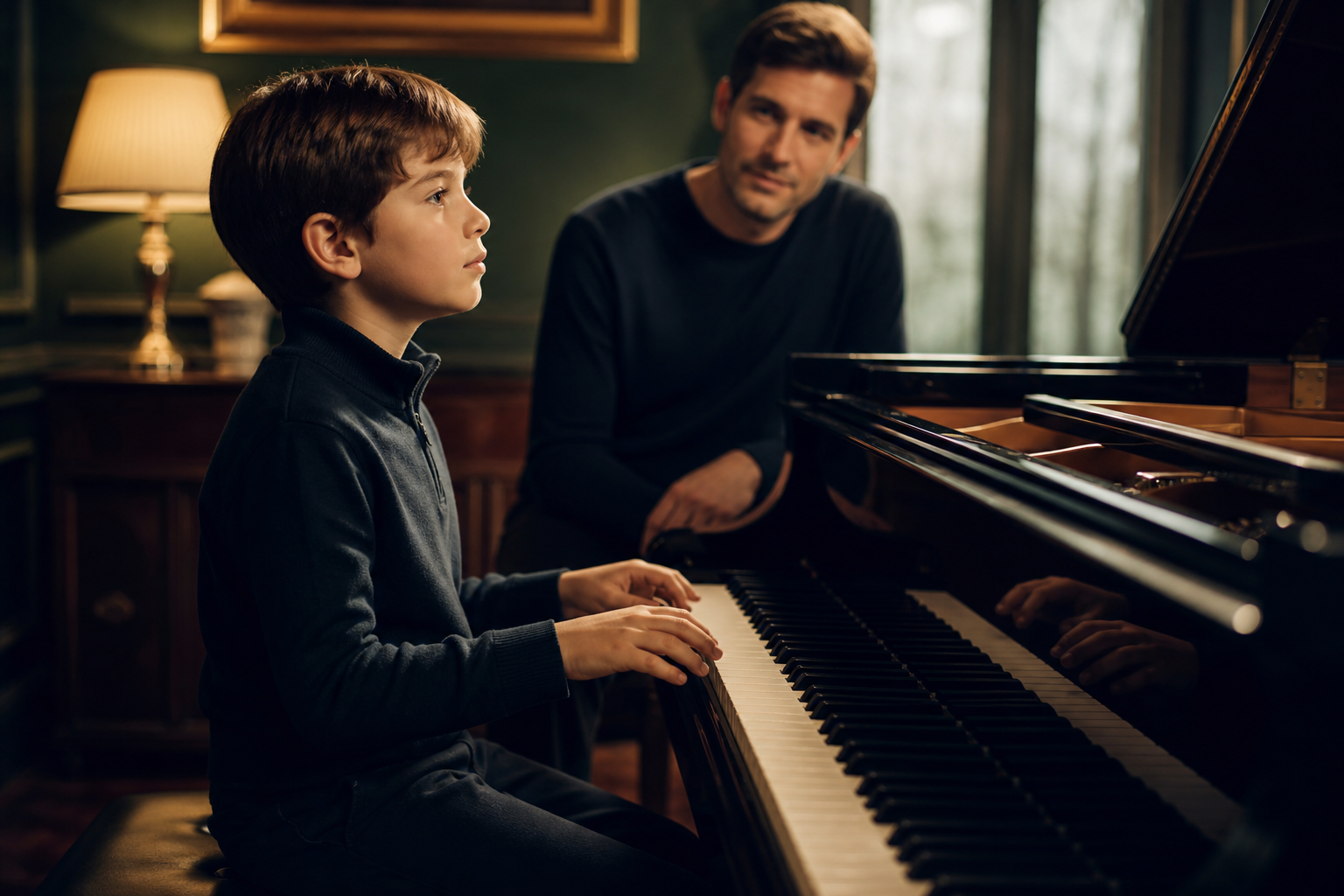
Listening skills without overclaiming
Piano lessons are education, not treatment for hearing, language or attention disorders. A child who struggles to understand speech in noise, follow spoken instructions or tolerate particular sounds may need assessment by qualified professionals. Musical work can complement appropriate support, but it should not delay it.
Progress may appear first inside music: steadier ensemble playing, cleaner imitation, better balance or faster recognition of a wrong note. Transfer to other settings is possible but variable. That honest boundary protects both the child and the value of musical study.
Related video: does music change a child’s brain?
John Iversen’s TEDxSanDiego talk below is embedded from YouTube for educational context on music, children and the brain. Rights remain with TEDx Talks / YouTube.
Related WKMT guides explore pattern recognition in children’s piano learning and music and language.
WKMT London
Help a young learner connect sound, attention and expression through individual piano teaching at WKMT London.
Sources for listening skills for piano
- PNAS: piano training, pitch processing and speech perception in children
- Systematic review: musical training and central auditory processing
- Developmental Cognitive Neuroscience: auditory processing in music-trained children
- Systematic review: music training and executive function in children
- Meta-analysis: cognitive and academic effects of children’s music training
- TEDx Talks / YouTube: Does Music Change a Child’s Brain?
Sources last checked 2 September 2026.