
 TRIAL LESSON
Piano Lessons
Bechstein Hall London: The Piano Roots Behind Wigmore Hall’s Listening Culture
Sep
Bechstein Hall London – All about
WKMT London cultural guide
Bechstein Hall London: The Piano Roots Behind Wigmore Hall’s Listening Culture
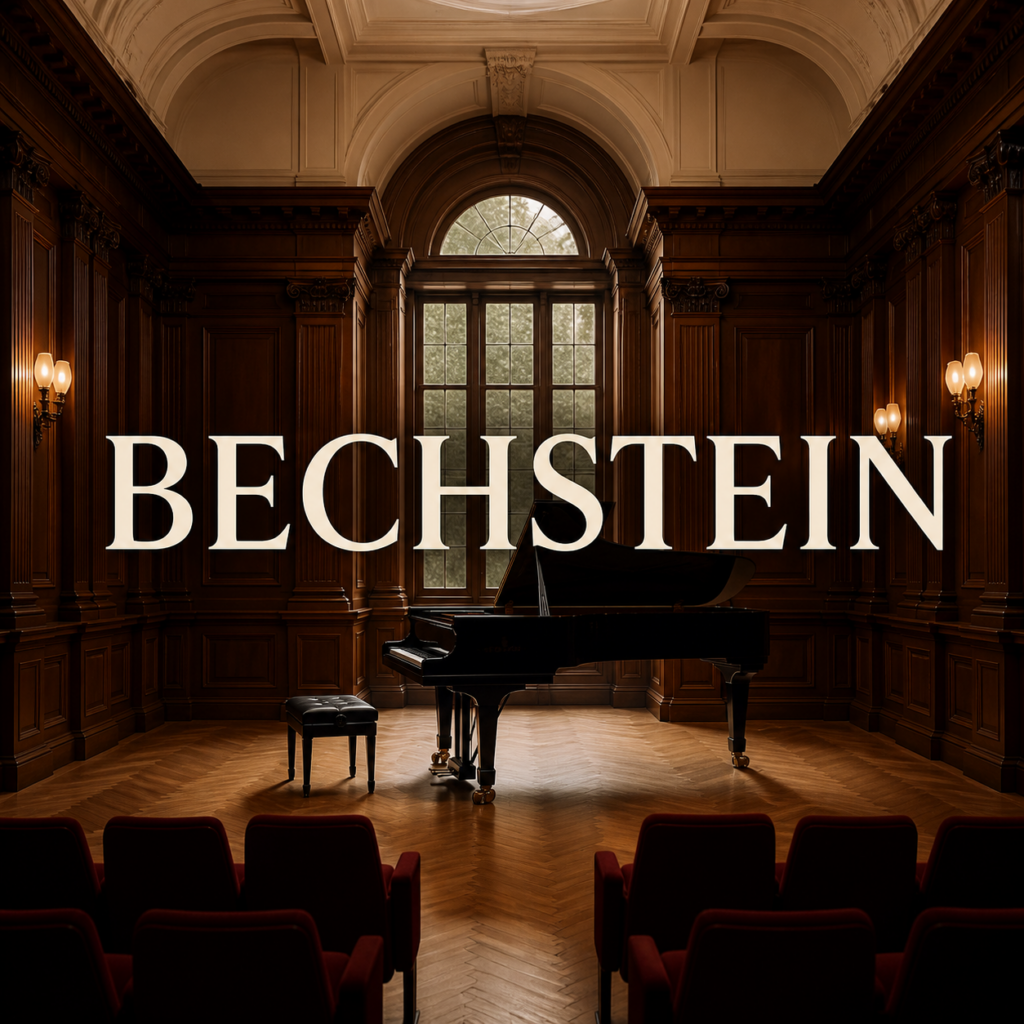
Walk along Wigmore Street and London’s piano history is almost hidden in plain sight. Behind the shopfronts, recital doors and polished instruments sits a story about how a city learnt to listen closely: not to spectacle, but to touch, colour, silence and the human scale of sound.
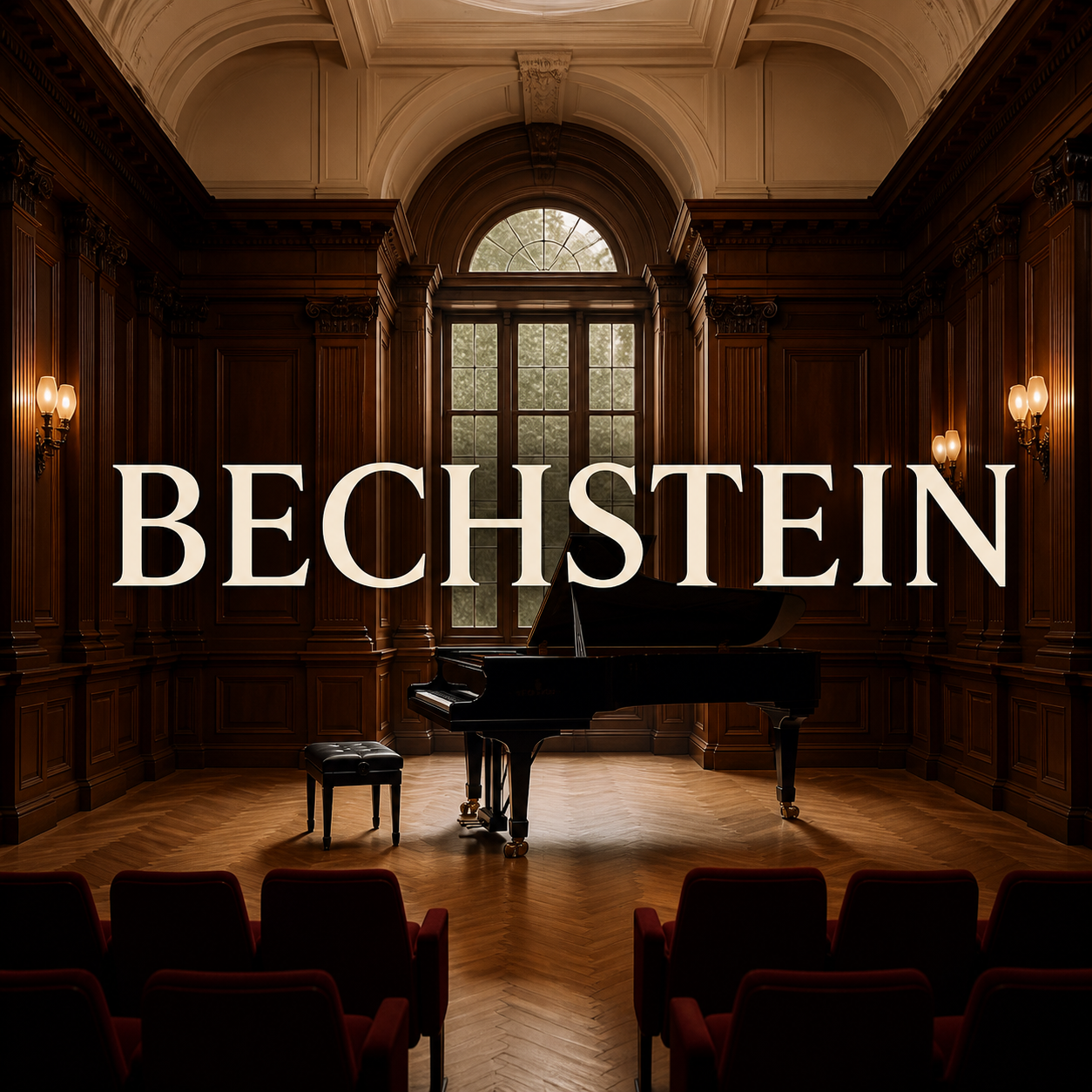
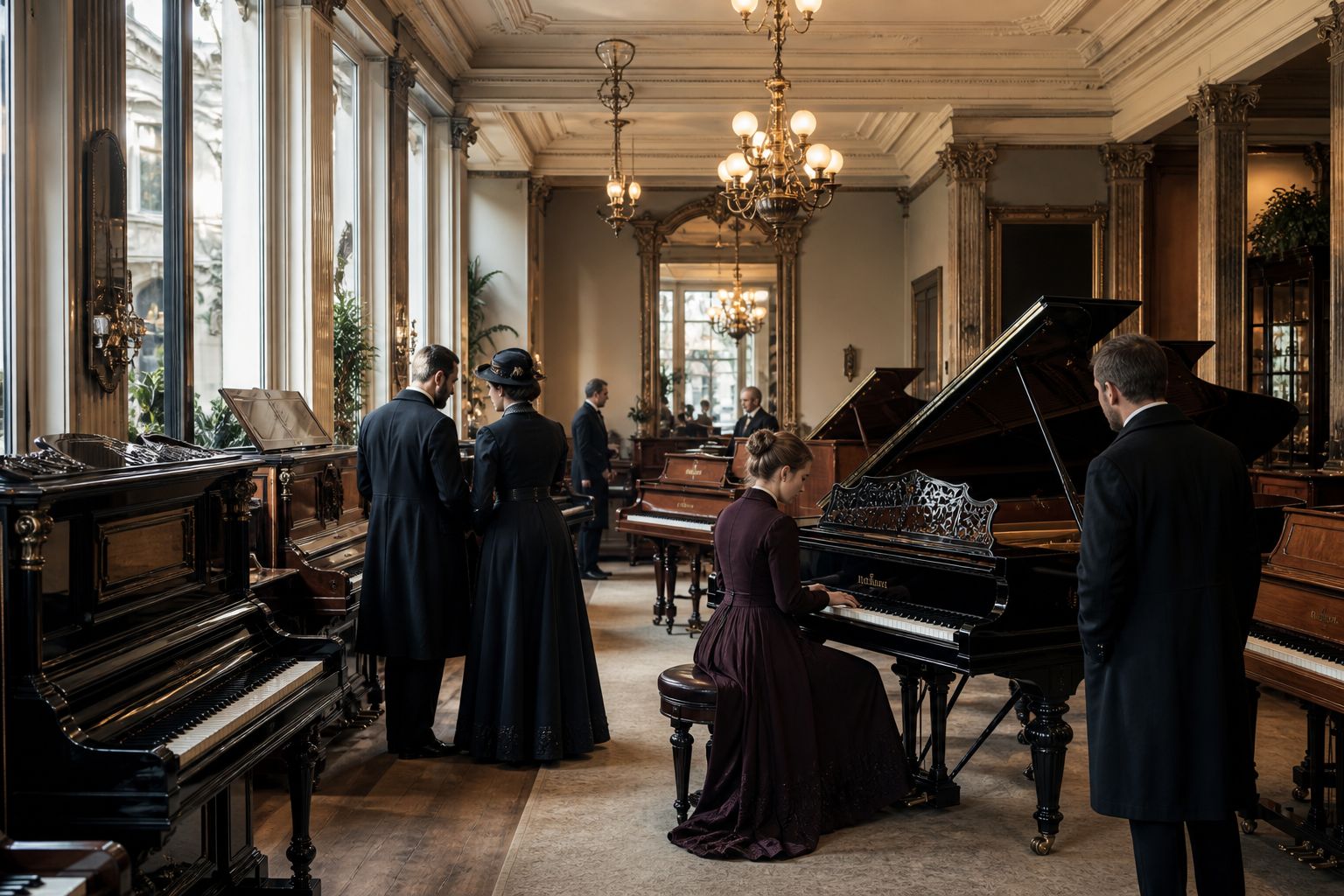
The most interesting way into Bechstein Hall London is not to ask whether the new hall is “the old Wigmore Hall”. It is to imagine Wigmore Street before the modern concert diary existed: makers displaying instruments, pianists testing sonority, buyers listening for colour, and small rooms where a note could be judged honestly because there was nowhere for it to hide.
The official Bechstein Hall history records that 18-22 Wigmore Street was redeveloped in 1892 by Holloway Brothers to Leonard Hunt’s designs for John Brinsmead and Sons. Two years later, a recital room was added behind the showrooms. That detail changes the whole story. Bechstein Hall London is not a decorative revival. It belongs to the older world of piano-making, demonstration and attentive musical judgement.
For pupils taking classical piano lessons in London, this matters because a city’s listening habits shape what students learn to value. A large hall can reward projection. A small hall exposes proportion. In a room of this size, a phrase cannot survive on volume alone; it needs balance, direction and an ear for what happens after the key has been released.
Why Bechstein Hall London matters
There is a pleasing contradiction at the centre of the venue. Bechstein Hall London is described as a new recital space, yet the room itself draws authority from the nineteenth-century piano trade. The present hall at 18-22 Wigmore Street revives the Brinsmead recital room. The better-known Bechstein Hall at number 36, opened in 1901, later became Wigmore Hall. The addresses are not pedantry; they prevent a romantic simplification from flattening the history.
What survives across those addresses is a culture. Piano companies did not build halls merely to flatter their names. They built rooms where instruments could be heard under pressure: a bass in a small space, a quiet treble, a pedal change, a repeated note, a singer beside a keyboard. The commercial origin is inseparable from the musical result. London’s recital tradition grew in places where craftsmanship had to meet a listening public.
1889
C. Bechstein establishes its London operations at 40 Wigmore Street.
1892
The Brinsmead premises at 18-22 Wigmore Street are redeveloped for the piano trade.
1894
Brinsmead adds a 130-seat recital room behind its showrooms.
1901
The original Bechstein Hall opens at number 36, later becoming Wigmore Hall.
1916-17
The original hall is sold during wartime and reopens under the Wigmore name.
2025
The restored Bechstein Hall brings public concerts back to 18-22 Wigmore Street.
From Bechstein Hall to Wigmore Hall
The original Bechstein Hall opened on 31 May 1901 at number 36. Wigmore Hall’s 125th-anniversary history preserves that date and the venue’s early identity. In 1916, amid anti-German sentiment during the First World War, the property was confiscated and sold; it reopened the following year as Wigmore Hall.
It is easy to tell that history as a neat before-and-after. The reality is more human and more London-like. A German piano maker, a British wartime seizure, a renamed hall, a street that kept attracting musicians, and now a restored recital room a few doors away: the story is not a single comeback, but a long argument between politics, commerce and musical continuity.
This is why Bechstein Hall London should be heard as part of a neighbourhood rather than as an isolated venue. Wigmore Hall carries one inheritance; the revived Brinsmead room carries another. Together they remind listeners that the piano has always been both an object of craft and a vehicle for interpretation.
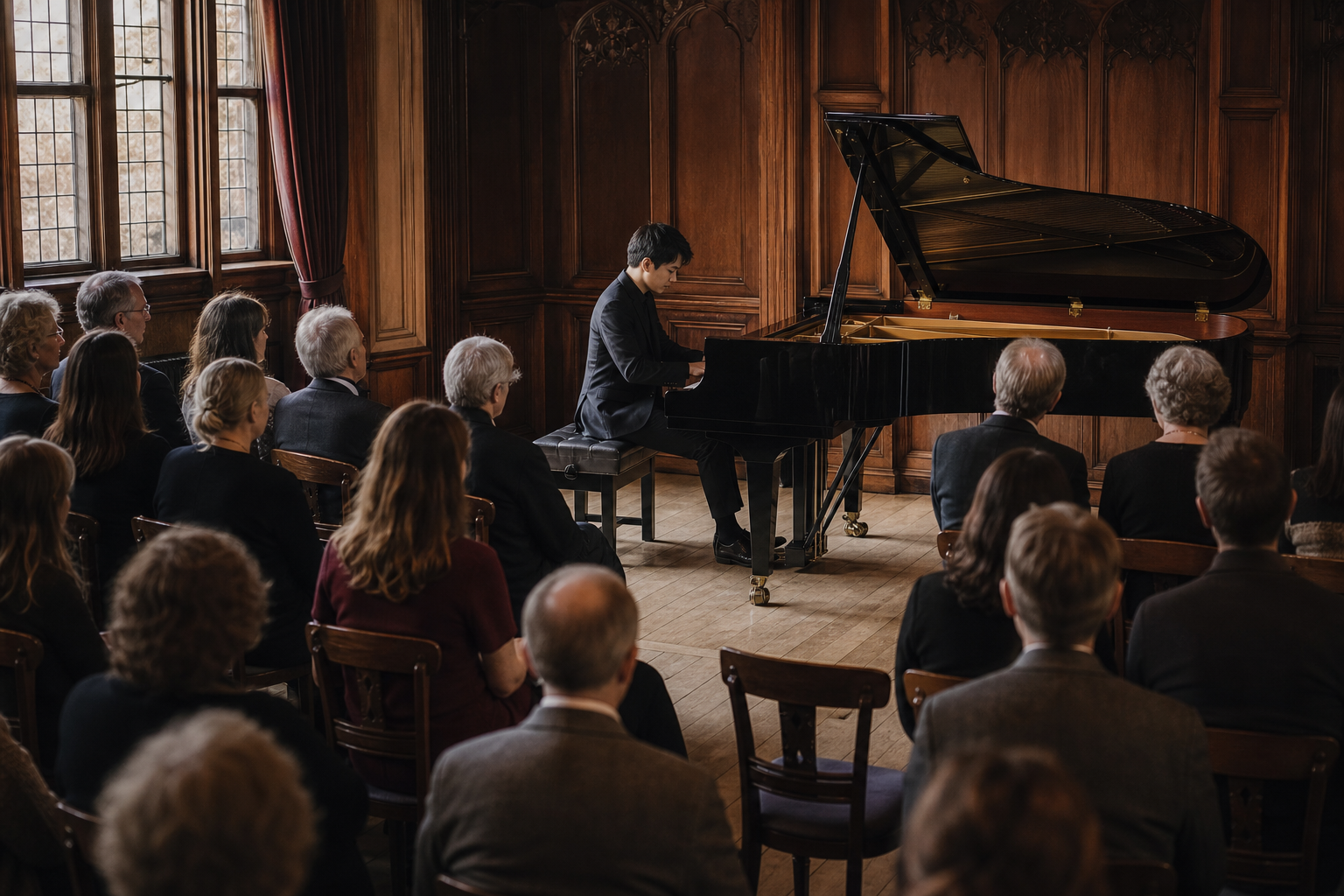
A small recital room asks the pianist a severe question: can the sound remain alive when grandeur is no longer available as camouflage?
What an intimate piano hall changes
In a close recital room, clarity is not the same as brightness. It means that attacks speak without hardness, harmonic changes remain legible and quiet dynamics retain shape. Warmth refers to the support around the sound, while reverberation is the persistence of sound after the source stops. The most satisfying acoustic balances all three.
That is why a hall like this is educational even before a lesson begins. If the pianist over-pedals, the room tells you. If the left hand swallows the melody, the room tells you. If a phrase ends without intention, the silence feels empty rather than charged. These are exactly the musical distinctions a good teacher tries to make audible in a studio.
Bechstein Hall London programmes solo piano, chamber music, voice and jazz. The official events calendar gives the live schedule. Programme details change, so visitors should check the venue directly; this practical information was last checked on 2 September 2026.
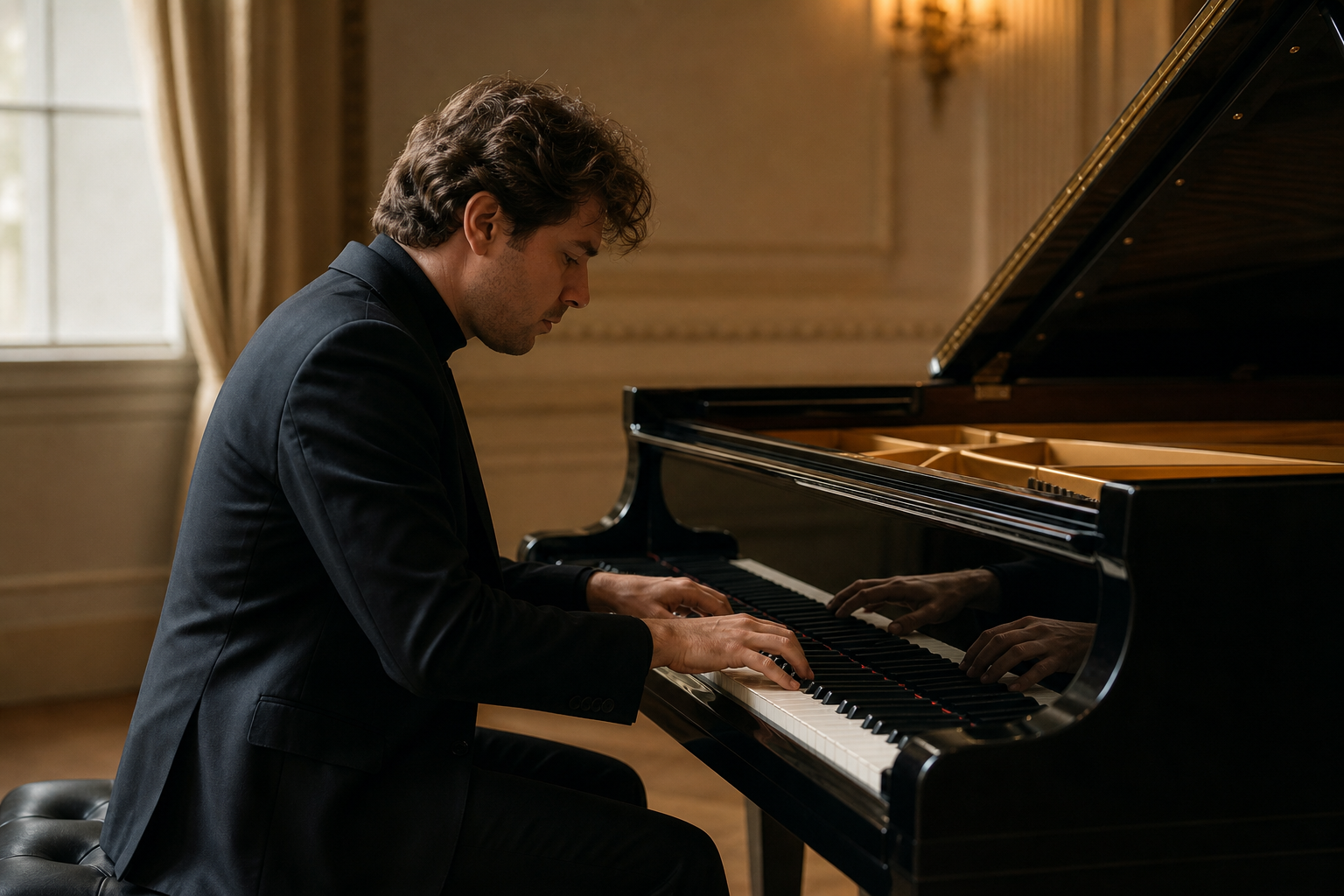
Visiting Bechstein Hall London today
The venue lists its address as 22 Wigmore Street, London W1U 2RH. Its homepage and contact page should be the authority for current access, timing and ticket information. Nearby Underground routes change with disruptions, so use a live journey planner rather than treating an article as permanent travel advice.
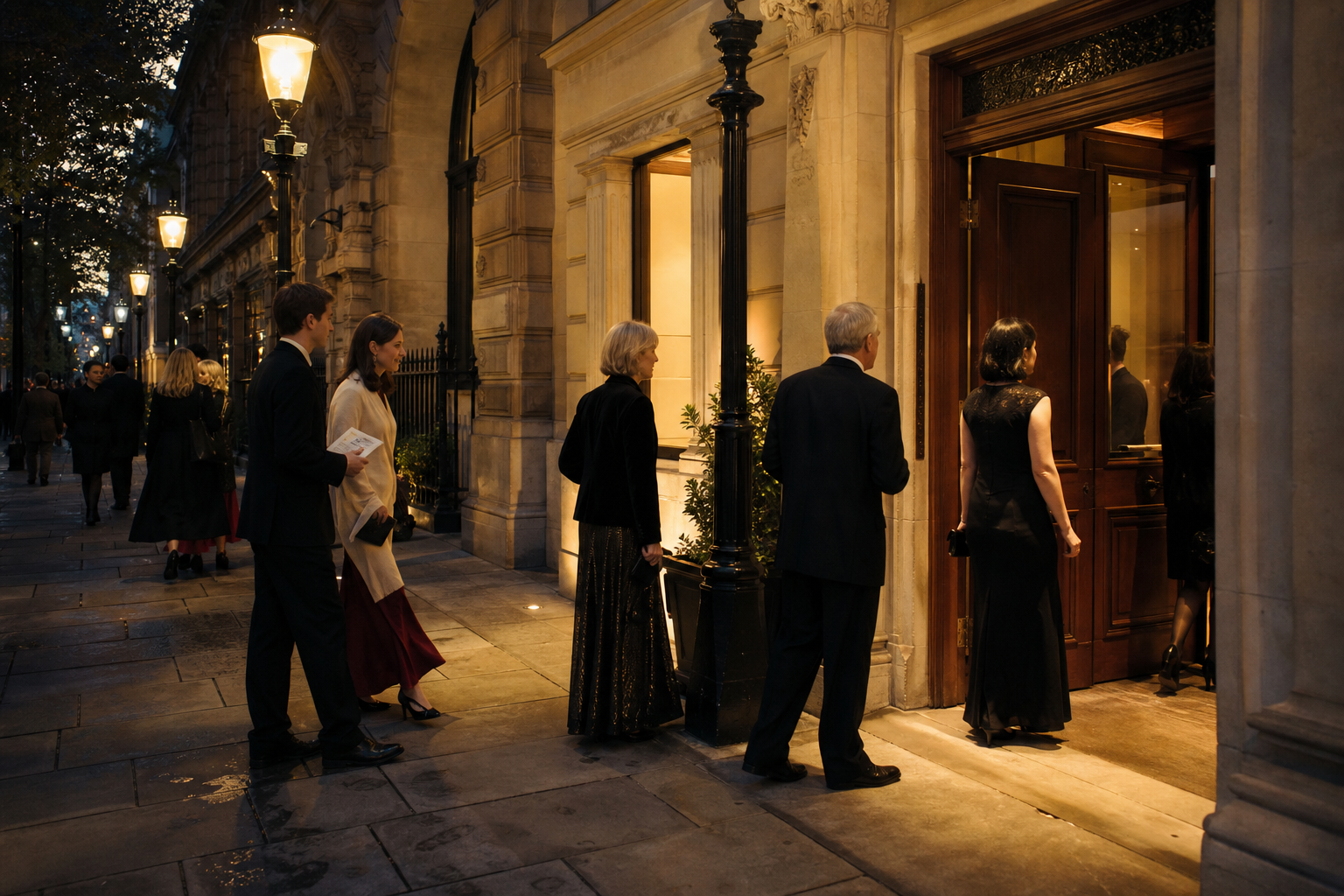
Arrive early enough to settle without hurry. In a small room, late movement is conspicuous and the threshold between conversation and performance is part of the experience. Dress is usually less important than attentive presence: silence devices, avoid photography unless expressly permitted, and read the current venue guidance.
Related video: Bechstein back at Wigmore Hall
C. Bechstein’s video below gives useful historical context for the company’s return to Wigmore Street. It is embedded from YouTube for educational listening and venue context; rights remain with C. Bechstein / YouTube.
Readers interested in the neighbouring tradition can continue with WKMT’s guide to Wigmore Hall concerts and piano listening and its overview of piano interpretation.
WKMT London
Connect London’s recital culture with individual work on touch, listening and interpretation.
Sources for Bechstein Hall London
- Bechstein Hall: official history
- Bechstein Hall: venue and programme
- Bechstein Hall: official contact details
- Wigmore Hall: 125 years of history
- Historic England: culture and entertainment buildings
- C. Bechstein / YouTube: Bechstein back at Wigmore Hall
Sources and live visitor details last checked 2 September 2026.