
 TRIAL LESSON
Piano Lessons
Stress Relief Activities: Why Adults Return to the Piano
Aug
WKMT London adult learner guide
Stress Relief Activities: Why Adults Return to the Piano
Among stress relief activities, piano is unusual: it asks for enough attention to interrupt rumination, yet it can begin with one quiet chord. Adults often return not to escape responsibility, but to recover a form of concentration that feels chosen, physical and musically alive.
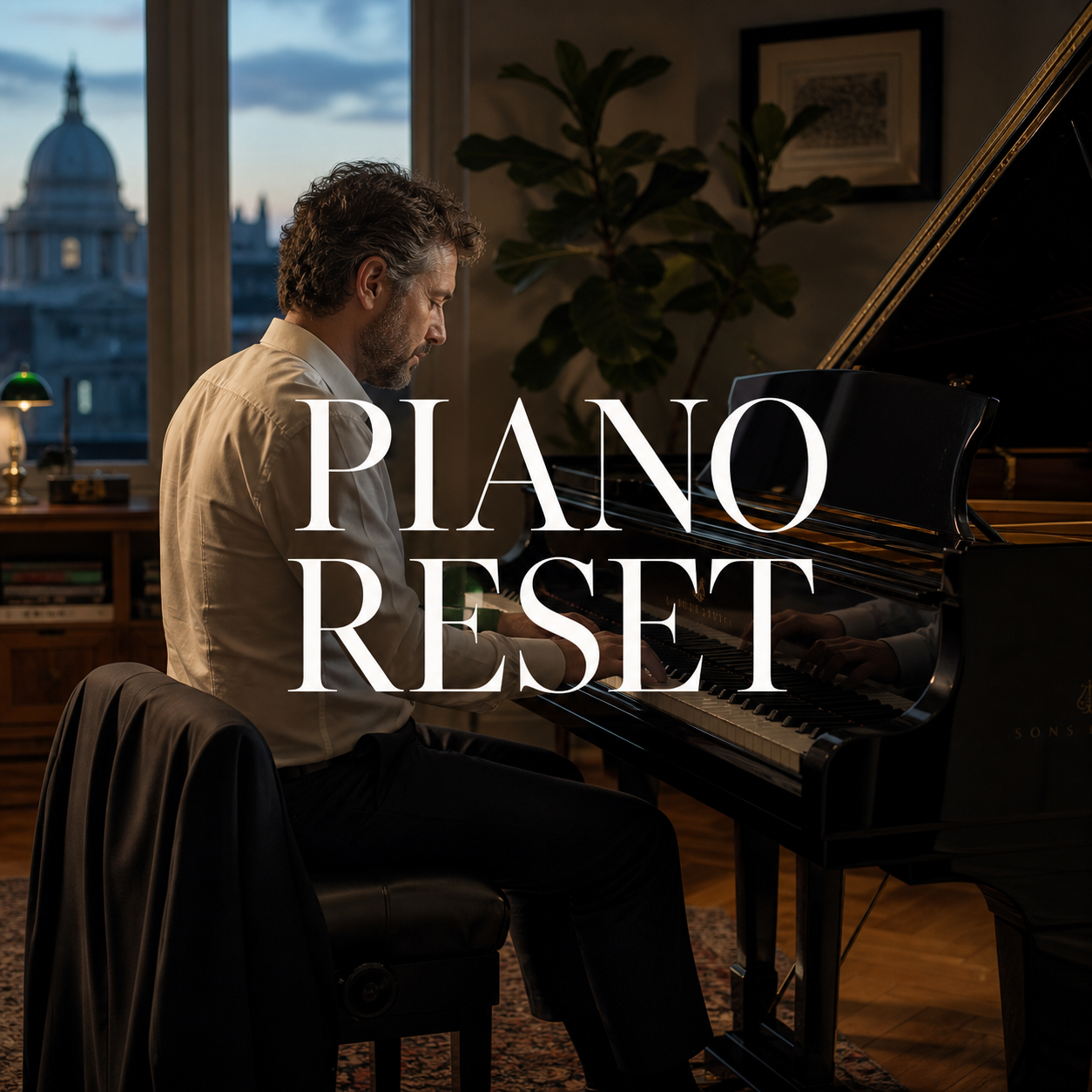
The attraction is practical. A keyboard gives immediate sensory feedback: weight under the finger, resonance in the room, a pulse that can be steadied. Unlike passive distraction, playing asks the adult to organise a small sequence. Unlike work, the sequence need not serve a client, inbox or deadline. Ten minutes can have a beginning, a task and a satisfying end.
Individual adult piano lessons in London can help returning players choose realistic repertoire and technique. WKMT London teaches beginners, returners and advanced amateurs. The aim is not to turn relaxation into another productivity contest. It is to make the instrument sufficiently manageable that musical attention becomes restorative rather than stressful.
Why piano belongs among stress relief activities
The NHS includes activity, connection, personal time, learning a challenge and focusing on what can be controlled among its practical suggestions for reducing stress. Piano can touch several of these principles at once. It is active without necessarily being strenuous; it offers a controllable task; it can be private or social; and it gives adults a challenge unrelated to professional status.
Research should be read carefully. A systematic review of 14 trials examining biomarkers of stress in music interventions found promising changes in some studies, including cortisol and salivary alpha-amylase, but emphasised the variety of biomarkers and protocols. Evidence about a controlled intervention does not prove that every home practice session has the same effect.
Attention
A phrase gives the mind one bounded object to follow.
Agency
Tempo, repertoire and duration can be chosen rather than imposed.
Sensation
Touch and resonance bring attention back into the room.
Progress
A small musical improvement can close the session positively.
What music-and-stress research can support
A meta-analysis of 104 randomised controlled trials and 9,617 participants reported overall effects of music interventions on physiological and psychological stress-related outcomes. The review included listening, music making and clinical contexts, so it supports a broad relationship rather than a precise promise about piano lessons.
A separate PLOS ONE review of music listening and stress recovery in healthy adults found mixed evidence across outcome types and noted that stress-induction methods, music choice and duration varied. That nuance is useful. Preference, context and the kind of attention being asked for may influence whether music soothes, stimulates or simply becomes background.
Active playing adds challenge and motor planning. For some adults this is exactly what makes it helpful: the brain has something coherent to do. For others, difficult repertoire or perfectionist expectations can increase tension. The right question is not “Does piano reduce stress?” but “What kind of piano activity helps this person feel engaged without overload?”
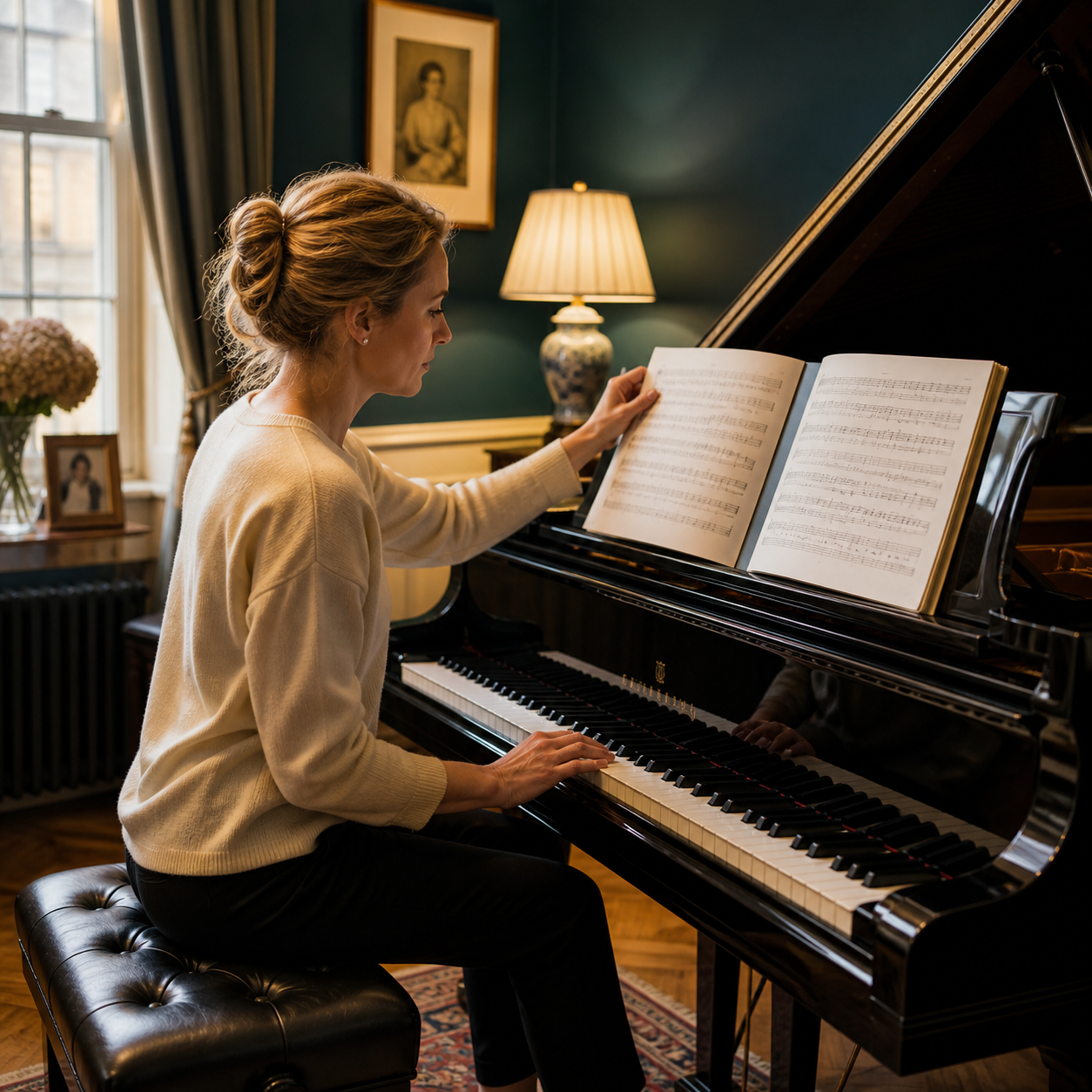
The calm does not come from perfect playing. It comes from giving attention a musical shape.
Five piano-based stress relief activities to try
1. The five-minute arrival. Sit, place both feet securely and play a comfortable five-note pattern very slowly. Listen until the final sound disappears. Repeat in two neighbouring keys. There is no speed target.
2. One familiar page. Keep a piece well below your technical limit. Play it without stopping, accepting small inaccuracies. Familiarity can reduce decision load while keeping the hands and ears active.
3. Chord breathing. Choose three comfortable chords. Play one on each easy exhalation, allowing silence between them. This is a musical pacing exercise, not a clinical breathing protocol.
4. Two-minute improvisation. Use only black keys or a five-note scale. Choose one mood and avoid judging the result. Improvisation shifts the task from reproducing a correct text to noticing and choosing.
5. A social ending. Once a week, play a duet, attend a lesson or share a piece with a trusted person. Among stress relief activities, music has the advantage that solitude and connection can coexist.
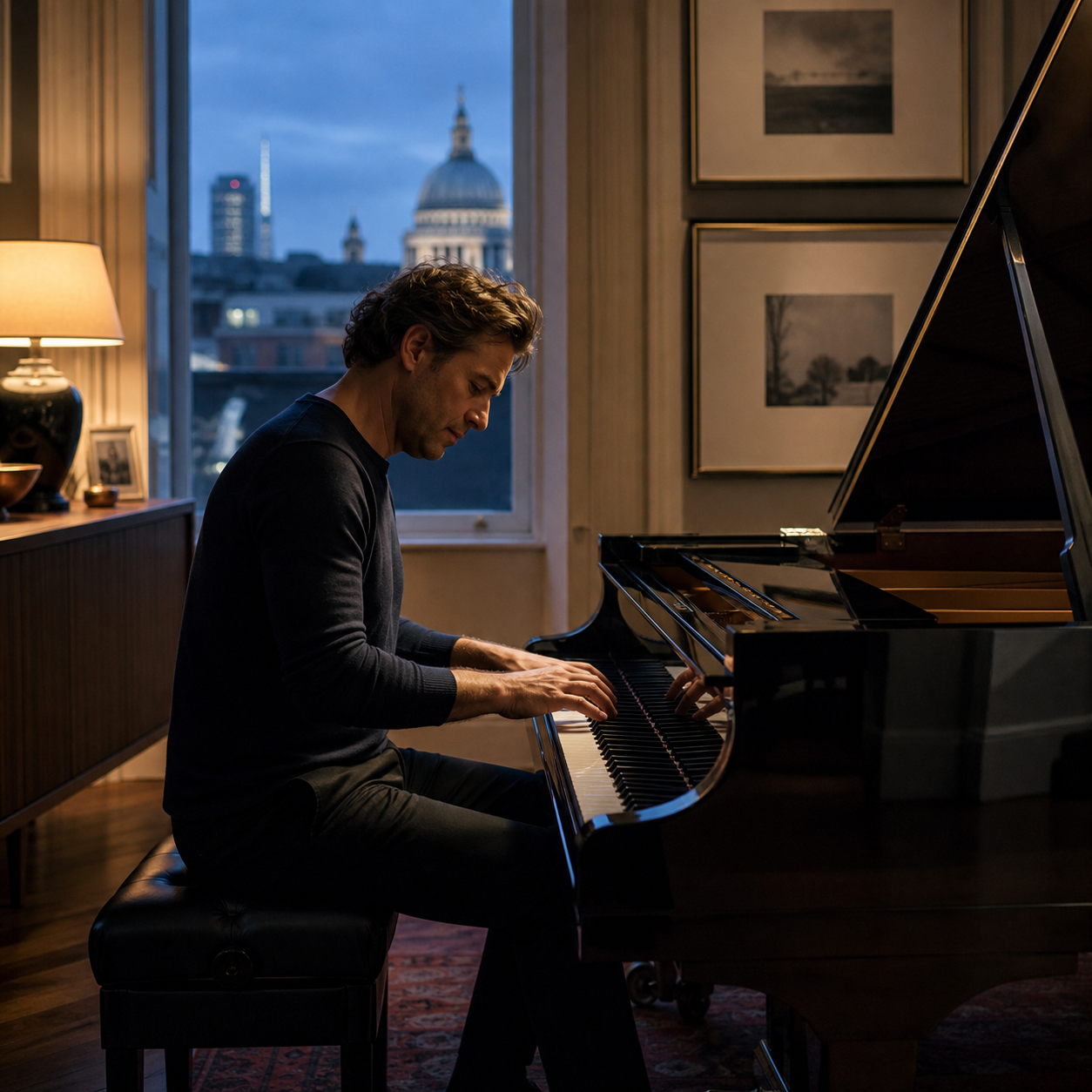
A realistic after-work practice design
Stress relief activities fail when they require an ideal evening. Build for the tired version of yourself. Leave the instrument available if space permits, keep one easy score open and decide the minimum session before work becomes busy. Ten minutes three times a week is more credible than an hour that exists only in theory.
2 minutes
Arrive: posture, breath, one resonant chord.
5 minutes
Play one familiar page without correction loops.
5 minutes
Improve one small passage at a humane tempo.
1 minute
Finish with something you enjoy hearing.
WKMT’s guide to improving concentration through piano practice develops the same idea from the perspective of attention. The guide to mindfulness exercises at the piano offers additional ways to work with sound without making therapeutic claims.
When piano is not enough
Ordinary piano teaching is not music therapy. Music therapy is a regulated professional practice in which a qualified therapist works toward agreed clinical goals. If stress is persistent, severe, linked with panic, depression, sleep disruption or thoughts of self-harm, speak to a GP or appropriate mental-health service. In an immediate crisis, use emergency support rather than relying on a hobby.
Pain also deserves attention. Tension in the shoulders, wrists or back is not a sign that practice is working. Stop, adjust the set-up and seek qualified advice if discomfort continues. Among stress relief activities, piano should enlarge ease and agency, not add another obligation the body must endure.
Why adults return
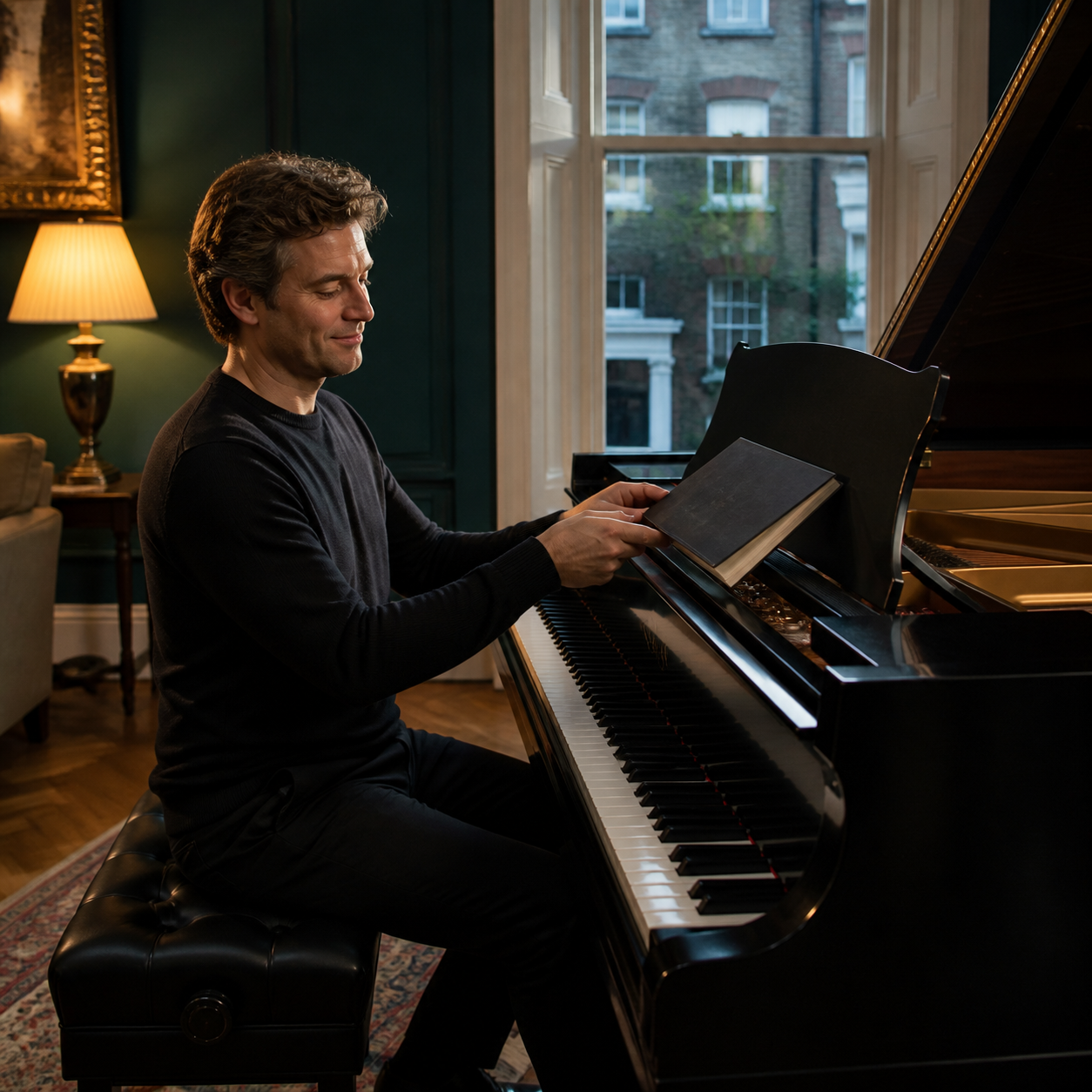
Adults return to piano because it offers more than calm. It restores curiosity, skill, memory and contact with beauty. The most sustainable stress relief activities are often those worth doing even when stress is low. Piano can become that kind of practice: not a cure, not an escape, but a serious personal space in which attention has sound.
WKMT London
Build a realistic, musically rewarding practice with individual adult piano tuition in London.
Related video
A useful companion video
How Music Can Heal Our Brain and Heart is embedded below from YouTube for educational commentary and context. Rights remain with Kathleen M. Howland / TEDxBerkleeValencia / YouTube; WKMT is not affiliated with or endorsed by the creator.
Sources
- NHS: tips to reduce stress
- Journal of Music Therapy: biomarkers of stress systematic review
- Health Psychology Review: music interventions and stress meta-analyses
- PLOS ONE: music listening and stress recovery
- PLOS ONE: performing arts participation umbrella review
Sources last checked 28 August 2026. This article provides educational information and is not medical advice.