
 TRIAL LESSON
Pianists, Piano Lessons
Hayato Sumino in London: Digital Culture and Classical Piano Listening
Aug
WKMT London listening guide
Hayato Sumino in London: Digital Culture and Classical Piano Listening
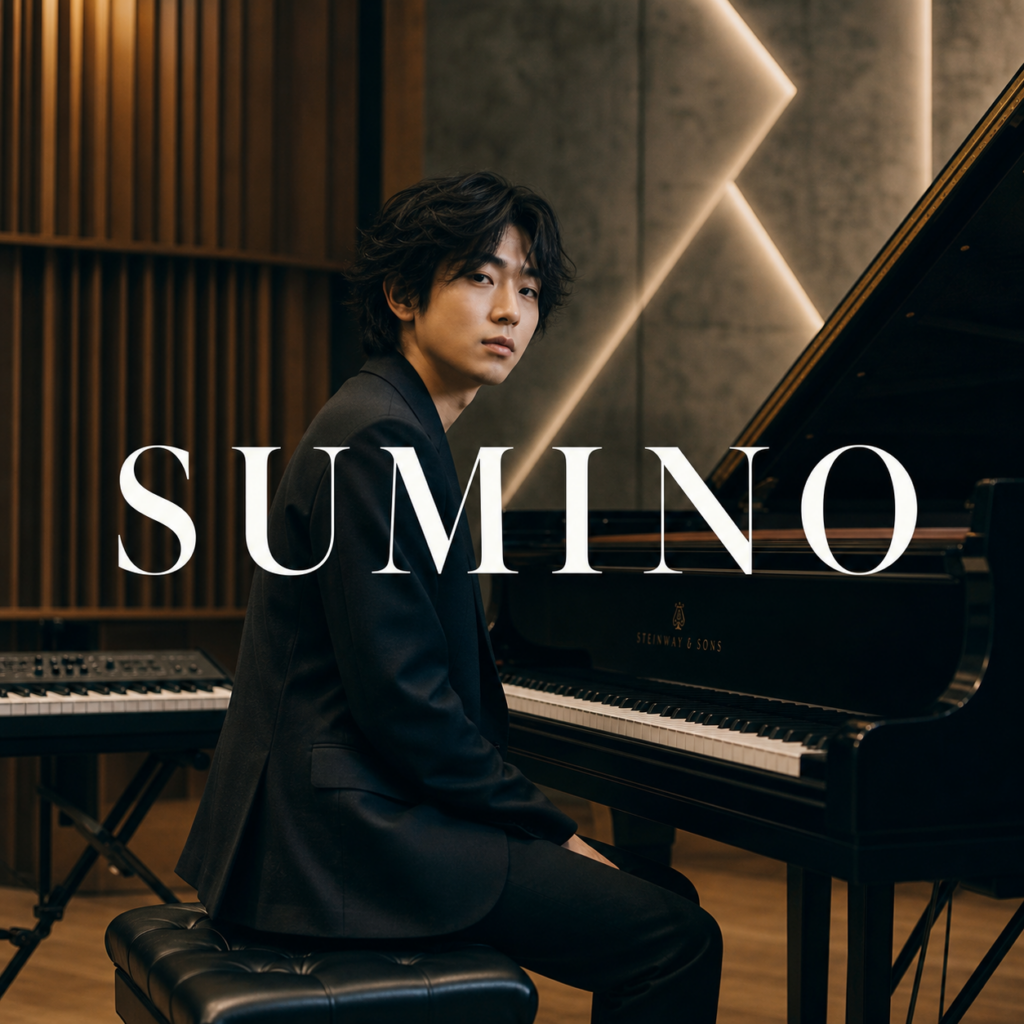
Hayato Sumino belongs to a generation for whom the concert hall, recording studio and digital screen are not rival worlds. For London listeners and piano students, his work offers a vivid question: can curiosity about technology and genre make classical attention deeper rather than merely faster?
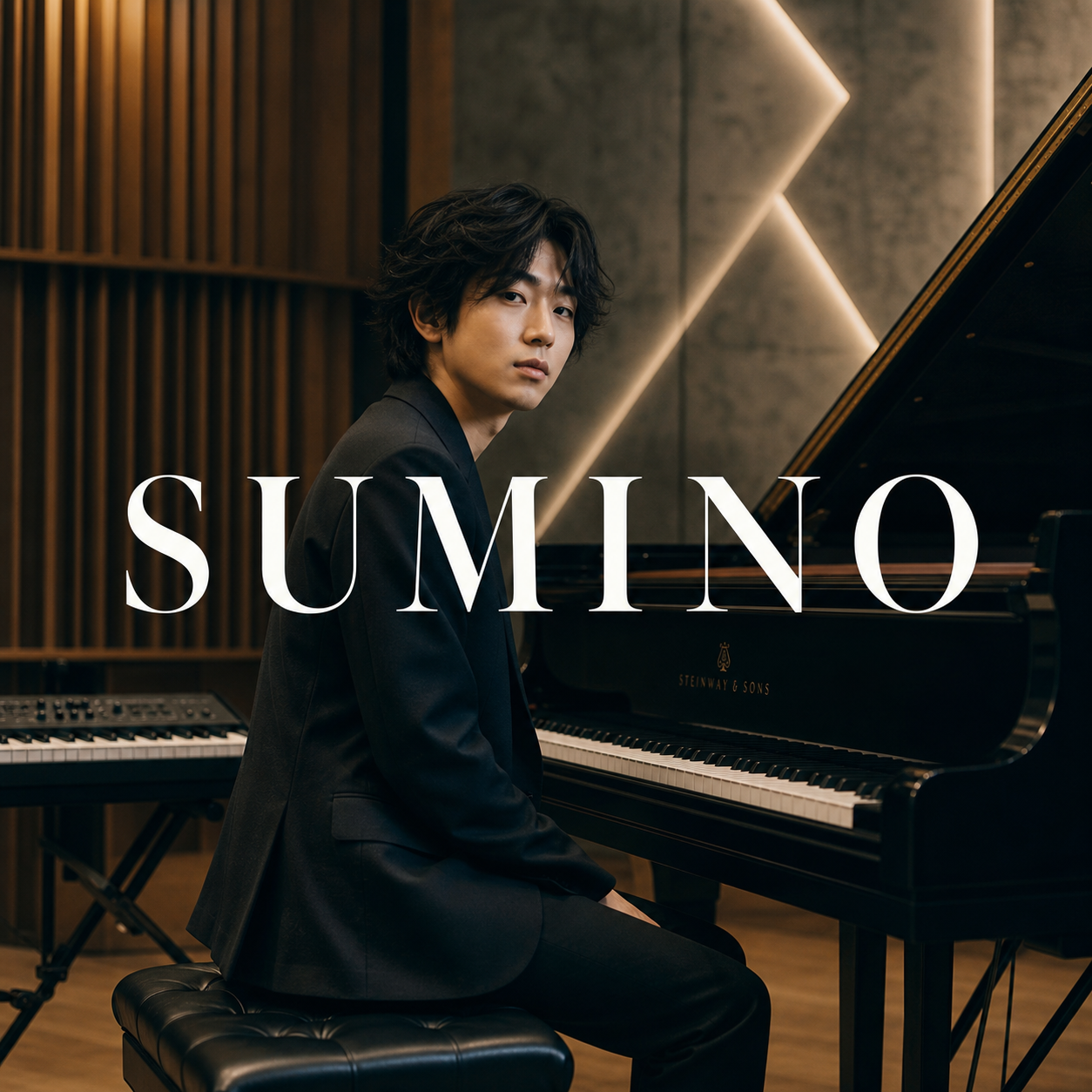
Born in Japan in 1995, Hayato Sumino developed as both a pianist and an engineer. His official biography records a Master of Engineering from the University of Tokyo, the university President’s Award, the 2018 PTNA Grand Prix and his progress to the semi-finals of the 2021 Chopin Competition. These are not decorative credentials. They help explain a mind that treats musical interpretation as a field of relationships: acoustic and electronic sound, written structure and spontaneous response, inherited style and present-day listening.
That combination matters to piano study in London. WKMT London teaches one-to-one lessons in which technique, reading, listening and interpretation support one another. Digital fluency can widen access to performances and ideas, but the instrument still asks for patient work: balanced movement, precise rhythm, independent ears and the courage to make a phrase one’s own.
Hayato Sumino: training, competitions and an unusual musical route
International attention accelerated at the Chopin Competition in Warsaw. The competition’s exacting format tests memory, stamina, style and the ability to sustain a musical argument across several rounds. Hayato Sumino’s semi-final place established him within a traditional classical measure of achievement, even as his online audience knew a more playful artist who could move between Chopin, jazz-inflected harmony, arrangement and original music.
In 2024 he signed an exclusive recording agreement with Sony Classical. The label’s artist profile describes the album Human Universe and the later Chopin Orbit, projects that place Bach, Fauré, Purcell, Sakamoto, Chopin and Sumino’s own work in conversation. His achievement is not simply variety. The stronger listening question is whether each sound world keeps its character while revealing an unexpected neighbour.
Classical craft
Hear balance, voicing and rhythmic control before novelty.
Arranger’s ear
Notice how texture and register reveal familiar material afresh.
Improvising instinct
Listen for transitions that feel discovered rather than assembled.
Digital address
Observe how camera, scale and repertoire shape audience attention.
How Hayato Sumino makes digital culture musical
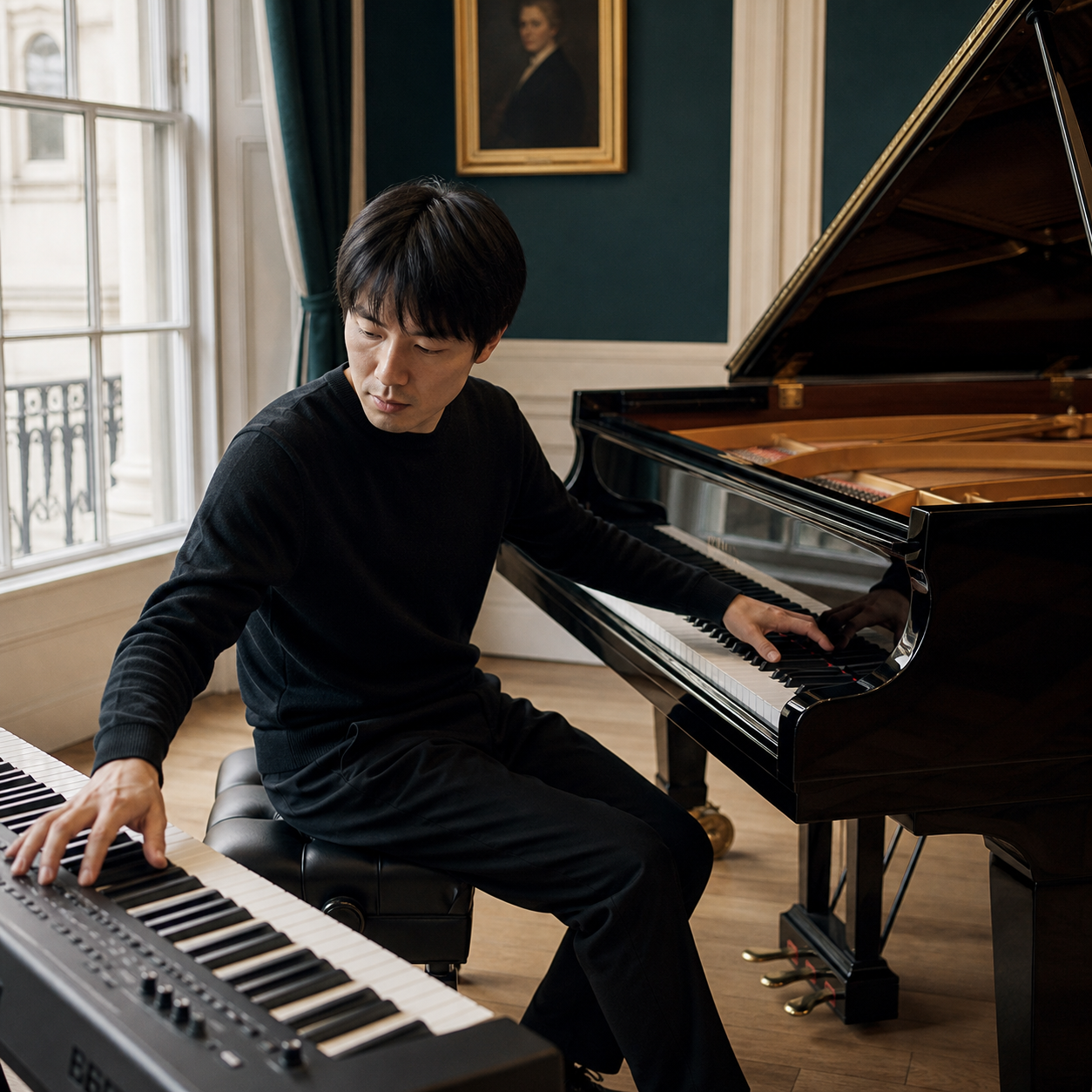
Digital popularity can reward immediacy, but Hayato Sumino’s strongest work uses immediacy as an entrance to detail. On the Cateen channel, a close camera can show the physical architecture of a passage; an arrangement can isolate harmony listeners had overlooked; an informal setting can reduce the distance between performer and audience. None of that removes the need for musical judgement. It simply changes how the first invitation is made.
The useful distinction is between access and attention. A short clip may help someone discover Chopin, yet serious listening begins when they follow a complete phrase, compare returns of a theme or hear how the bass changes the colour of a melody. Students can borrow the same discipline. Watch once for energy, listen again without the screen, then open the score and locate one decision that created the effect.
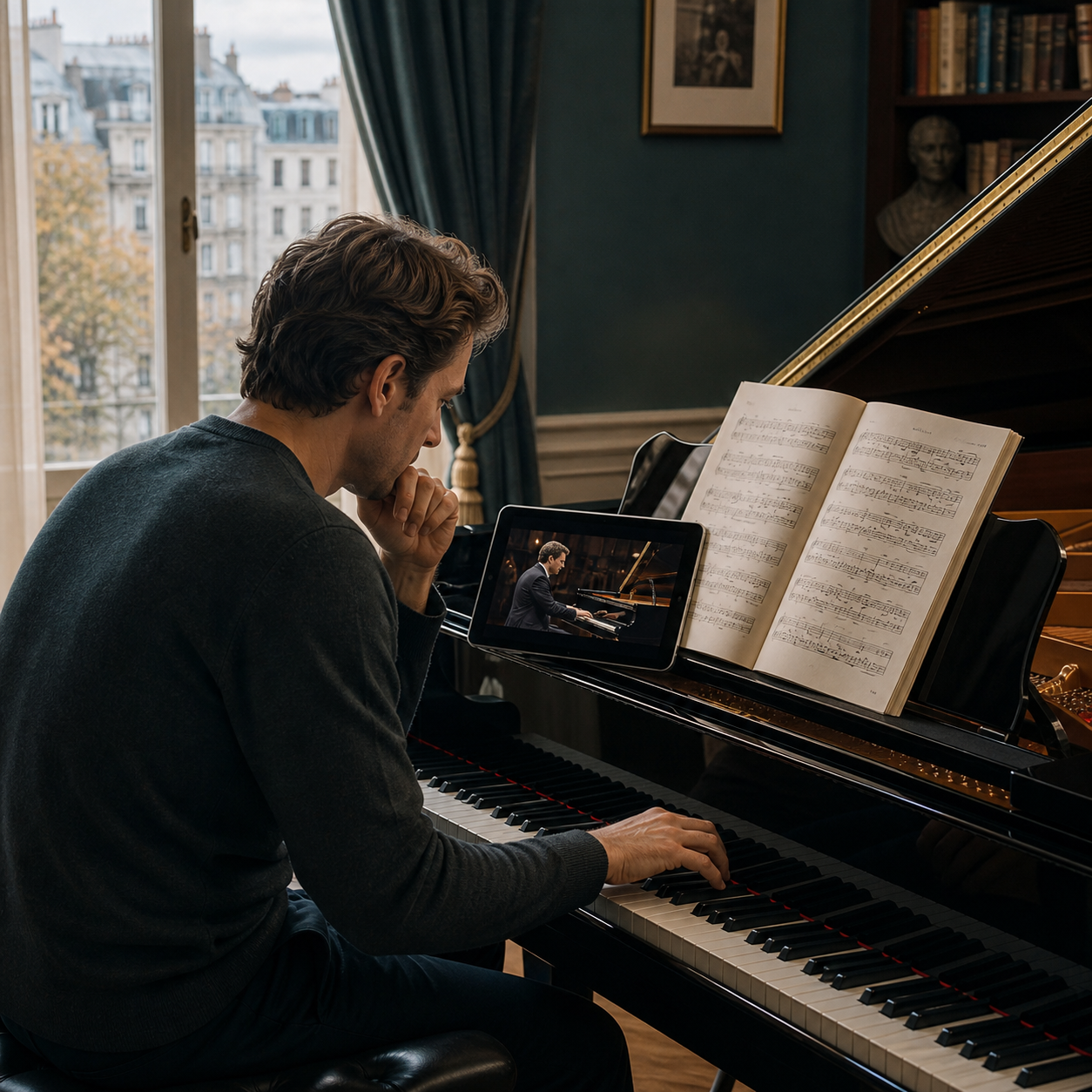
Digital reach is most musical when it enlarges attention rather than replacing it.
Hayato Sumino in London: from the Royal Albert Hall to the Proms
London is a verified part of this story. The Royal Albert Hall performance archive records Hayato Sumino playing Gershwin’s Rhapsody in Blue on 22 April 2024. His official biography also records a BBC Proms appearance in August 2025. These engagements suit an artist whose repertoire moves between concert tradition, rhythmic vitality and public-scale communication.
London audiences are accustomed to hearing pianists across contrasting spaces: a large orchestral hall, an intimate recital room, a conservatoire class or a screen at home. Each asks for a different kind of listening. In a large hall, projection and long-line timing matter. In a close recording, tiny voicing decisions become unusually exposed. The serious listener changes focus without assuming that one format is inherently more authentic.
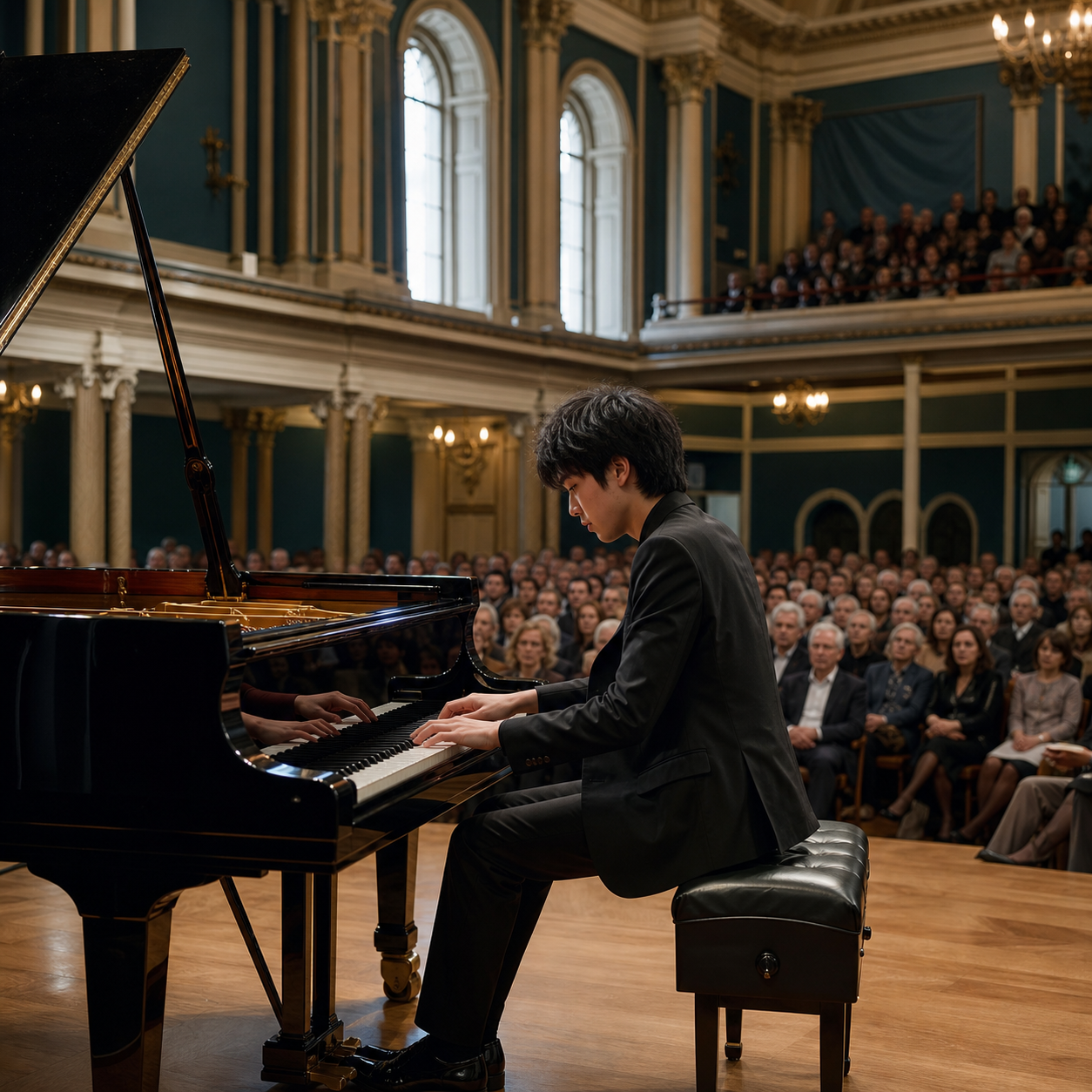
A Hayato Sumino listening route
Begin with Chopin, because the competition and Chopin Orbit show how closely Sumino has lived with that language. Listen for the difference between rhetorical freedom and lost pulse. Then move to Human Universe, where older repertoire, contemporary music and original work reveal his instinct for sequence and contrast. Finally, compare an acoustic concert performance with a digital arrangement.
1. Line
Can you sing the phrase after the recording stops?
2. Colour
Which layer changes the harmony’s temperature?
3. Medium
What does the instrument or recording format invite?
4. Transfer
Which single idea belongs in your practice today?
A useful companion is WKMT’s guide to Garrick Ohlsson and Chopin sound. Ohlsson and Hayato Sumino come from different generations and public cultures, yet both reward listening for scale, structural patience and the weight of an apparently simple melodic line.
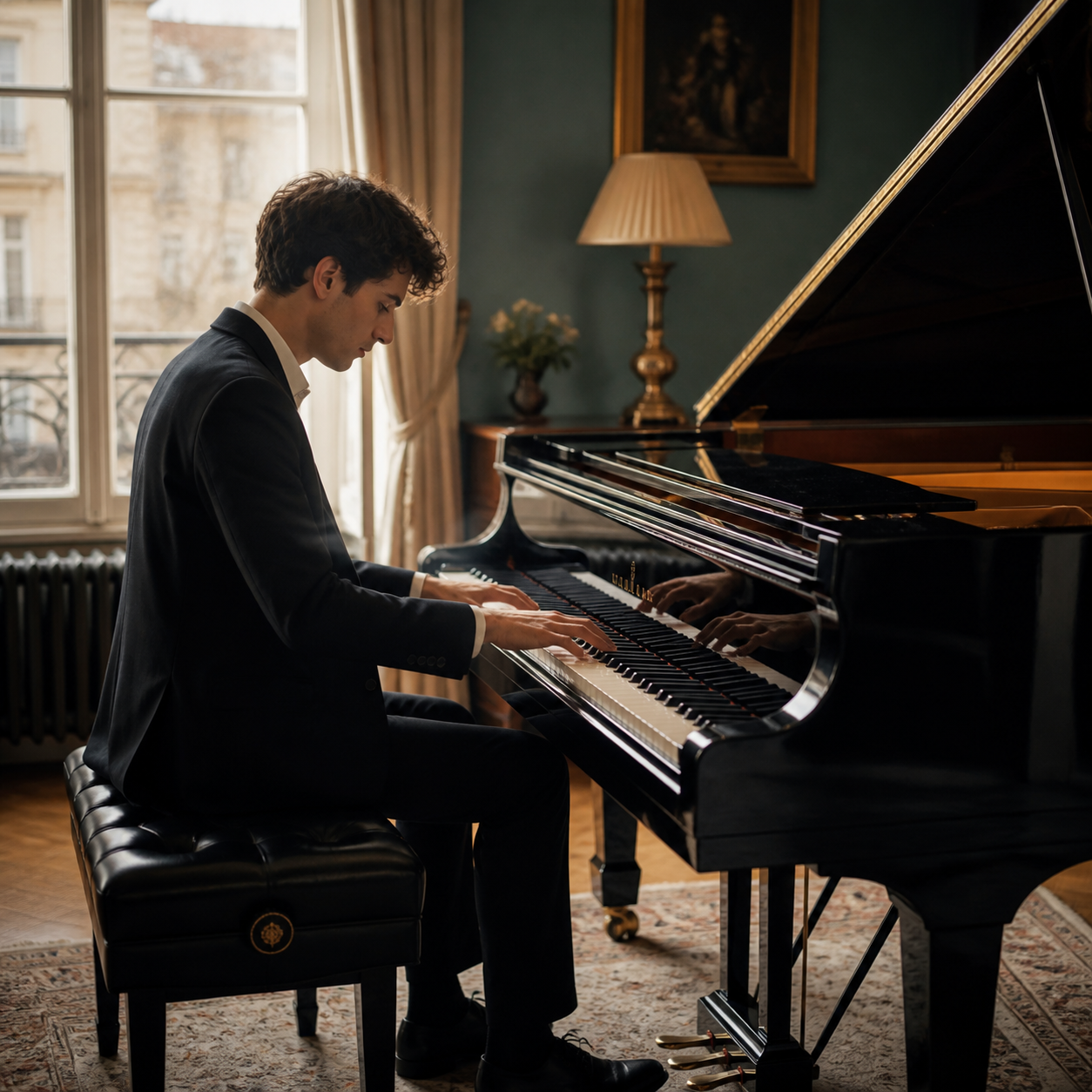
What piano learners can keep from Hayato Sumino
Do not imitate surface novelty. Keep the deeper habits: wide curiosity, respect for craft, the ability to hear across genres and a willingness to test ideas at the keyboard. Hayato Sumino shows that classical identity need not be defended by isolation. It becomes convincing when freedom is supported by rhythm, touch, memory and an ear for consequence.
WKMT London
Develop classical technique, independent listening and a personal musical voice through individual piano study in London.
Related video
A useful companion video
Chopin: Piano Concerto No. 1 in E minor, Op. 11 (Live) – Hayato Sumino is embedded below from YouTube for educational commentary and context. Rights remain with Cateen / YouTube; WKMT is not affiliated with or endorsed by the creator.
Sources
- Hayato Sumino: official biography
- Sony Classical: Hayato Sumino
- Steinway & Sons: Hayato Sumino
- Royal Albert Hall archive: 22 April 2024
- International Chopin Piano Competition: Hayato Sumino
Sources last checked 28 August 2026.