
 TRIAL LESSON
Piano Lessons
How to Improve Concentration: A Piano Practice Perspective
Aug
How to improve concentration on piano – Complete Guide
WKMT London adult practice guide
How to Improve Concentration: A Piano Practice Perspective
Concentration is less a heroic act of will than a practice environment built around one clear musical question. Piano makes attention audible: when focus drifts, pulse, voicing and memory change, giving adult learners immediate information about how to begin again.
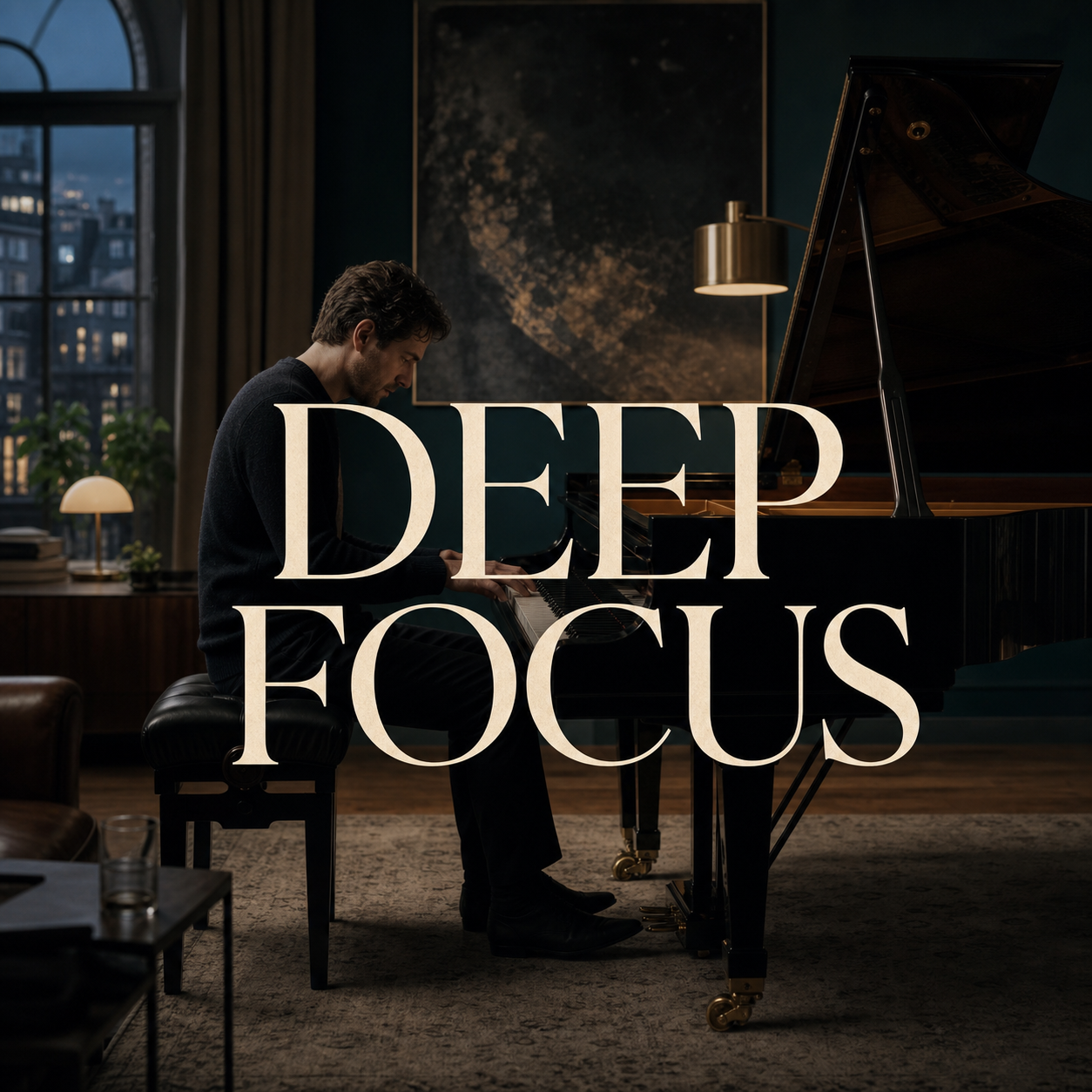
Adults often describe poor focus as a personal defect. Yet attention changes with fatigue, anxiety, noise, pain, digital interruption and the size of the task. “Practise piano” is too large to organise the mind after a busy day. “Make the left-hand release lighter in bars nine and ten” gives attention an object. This is how to improve concentration without treating attention as a moral test.
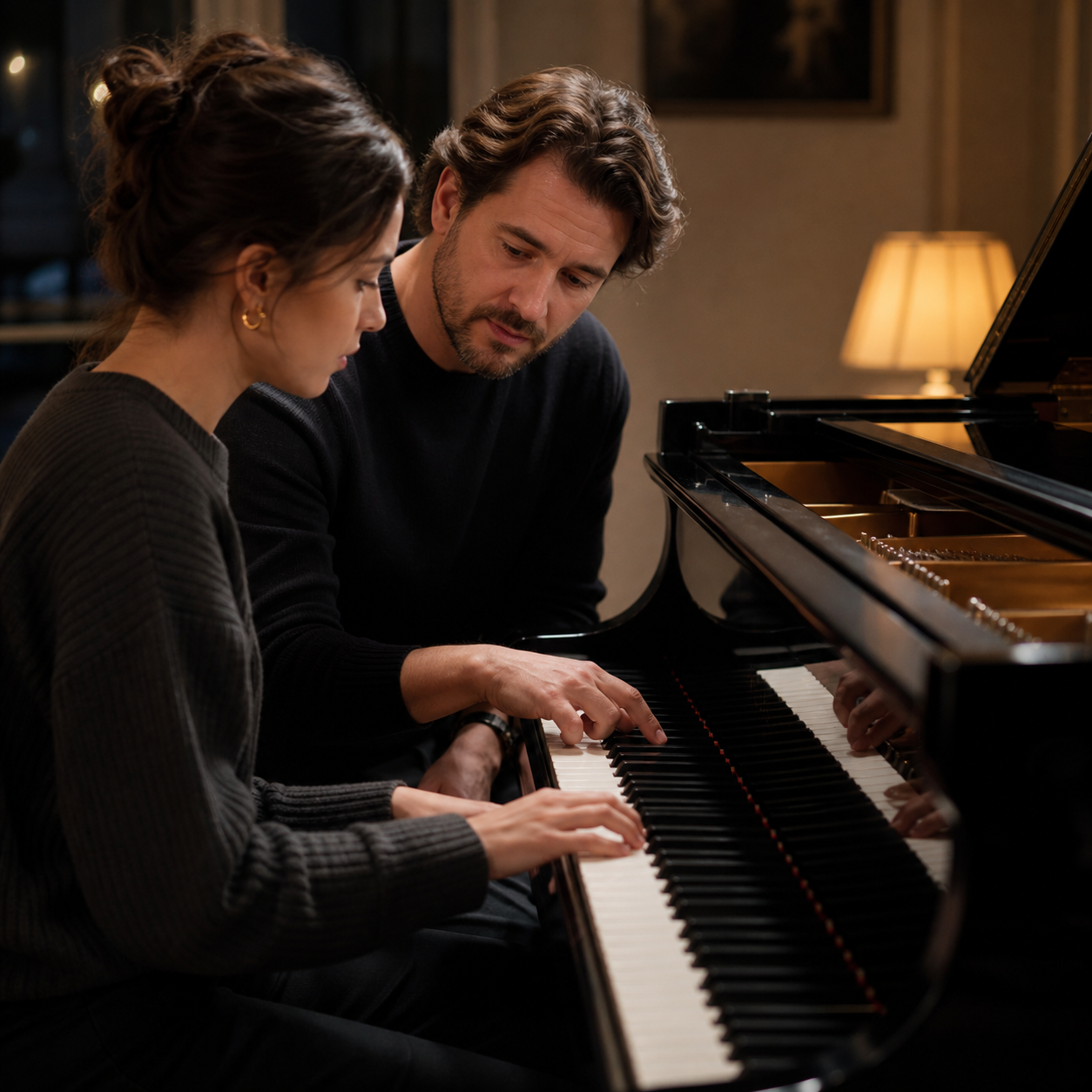
Individual adult piano lessons in London at WKMT help learners reduce a broad musical problem to an audible experiment. The teacher does not demand permanent intensity. Instead, each return to sound becomes part of the skill: notice the drift, name the next action and begin again without drama.
How to improve concentration before the first note
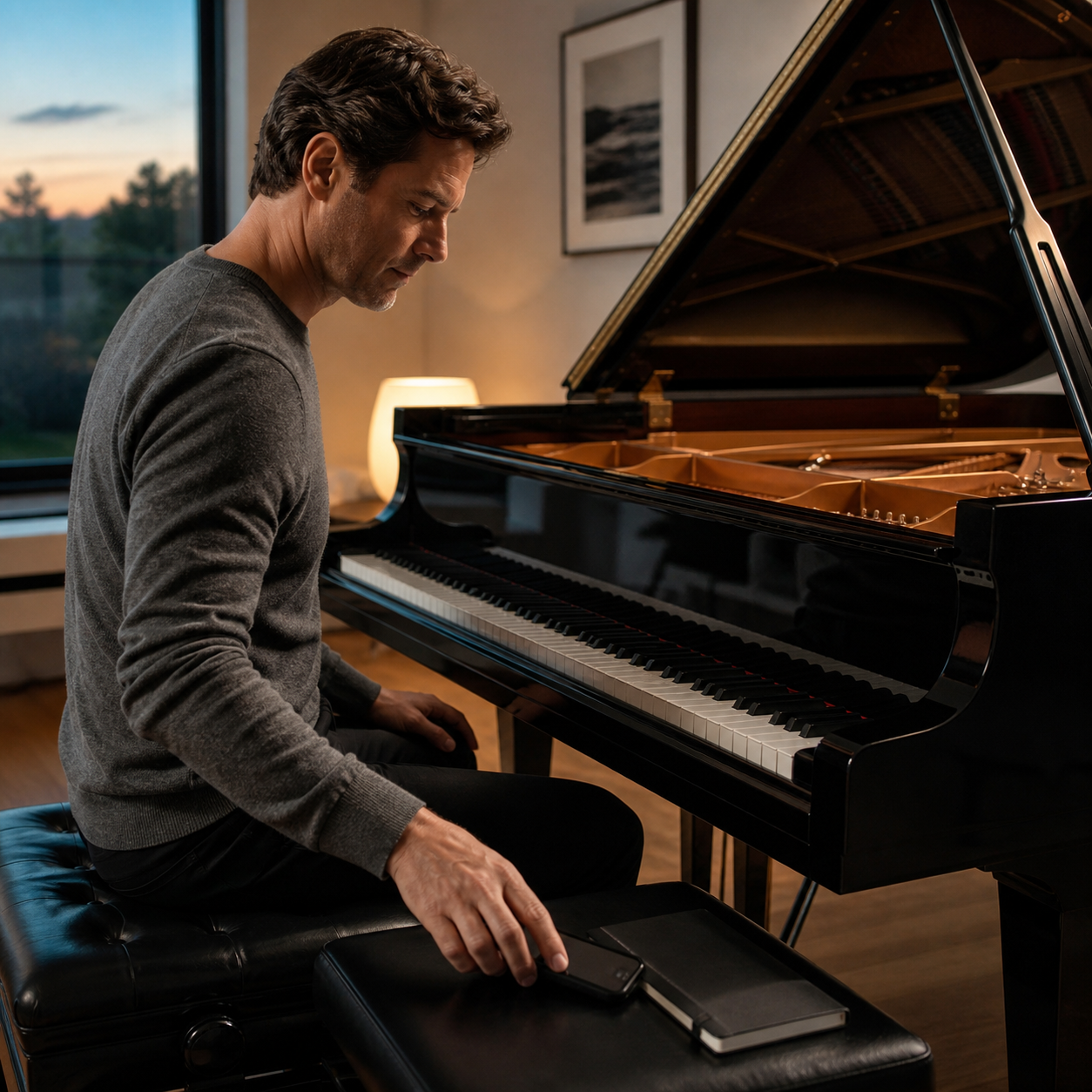
Begin with the room. Put the phone out of reach or face down with notifications disabled. Place the score, pencil and one piece on the piano. Decide how long the first block will last and what success sounds like. Ten attentive minutes can be more productive than forty minutes of repeated restarting.
Research on background sound is mixed rather than magical. A study of background music and selective attention in adults found no overall difference between music and silence in its conditions, while noise could be detrimental. Spoken words are often especially intrusive. For piano practice, adding background music is rarely helpful because the task already depends on detailed listening.
Remove
Silence notifications and clear unrelated material.
Define
Choose one passage and one audible change.
Time
Use a realistic block before fatigue dictates the ending.
Return
When attention drifts, restart from the question rather than the beginning of the piece.
Use smaller musical questions
Concentration strengthens when the task has edges. Play two bars and listen only for the top voice. Then play them again and listen only for bass direction. Finally, combine the layers. This is not merely slow practice. It is selective attention: choosing which information matters now while trusting that other details will return in later passes.
Write a plain-language instruction before repeating: lighter thumb, steady semiquavers, breathe through the cadence. If the next attempt does not answer that instruction, make the task smaller. Repetition without a question can feel diligent while allowing the mind to wander.
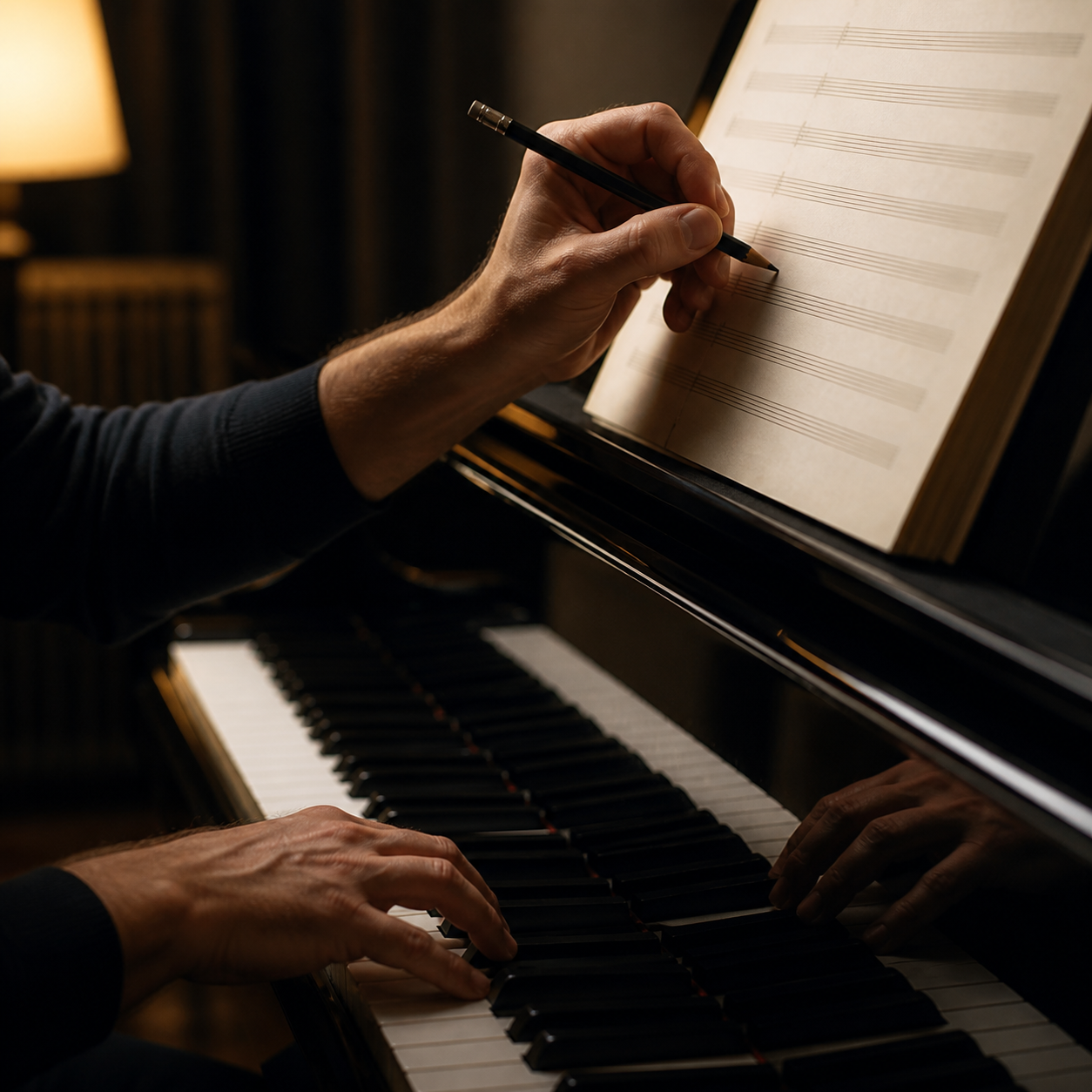
Concentration is not never drifting. It is returning quickly enough to hear what changed.
How to improve concentration with rests and resets
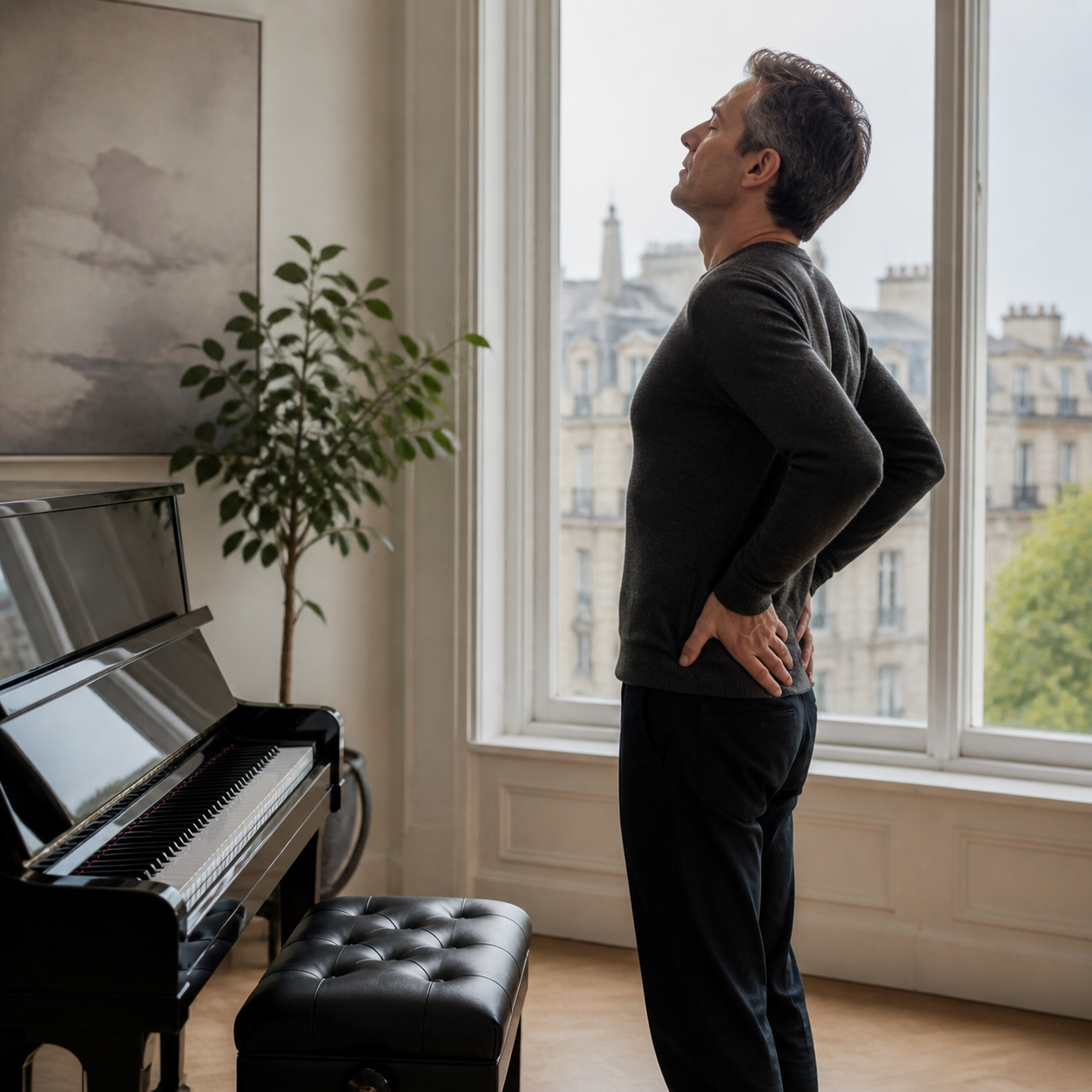
Attention has rhythm. After a demanding passage, stand up, look away from the score, breathe normally and recall the musical aim without playing. A short reset can restore perspective; an unplanned scroll introduces a new stream of demands. The break should belong to the practice, not end it accidentally.
Physical foundations matter too. The World Health Organization physical activity guidelines summarise evidence-based recommendations across adulthood and older age. Exercise is not a quick concentration trick, but movement, sleep and general health shape the conditions in which attention operates. A recent systematic review of aerobic exercise, cognition, sleep and mood reports encouraging attention findings while cautioning against generalising beyond the studied healthy populations.
A concentration ladder for piano practice
For learners asking how to improve concentration over a complete piece, it helps to widen attention in deliberate stages rather than demanding total awareness immediately.
One sound
Hear one note and its complete decay.
One voice
Project a melody without forcing it.
One relation
Balance melody against bass or accompaniment.
One span
Carry the chosen sound through a phrase, section and full performance.
The ladder moves from narrow to broad attention. If concentration breaks during the complete performance, return one level rather than beginning the entire session again. WKMT’s guide to mindfulness exercises in piano practice offers related listening resets, while the discussion of piano and adult brain health keeps wider claims proportionate.
When concentration needs more than practice advice
Difficulty concentrating can accompany stress, depression, anxiety, sleep problems, medication effects, pain, ADHD and other health conditions. Persistent change, distress or impairment at work and home deserves discussion with a GP or qualified professional. Piano may provide structure and satisfaction, but it should not be presented as diagnosis or cure.
For most learners, the practical route is modest: fewer interruptions, clearer questions, shorter blocks and honest recovery. A study of preferred background music and sustained attention found that effects vary, reinforcing the value of testing conditions rather than accepting universal claims. This is how to improve concentration sustainably: can you hear more, choose more precisely and carry the musical idea further?
WKMT London
Discover focused, individual piano study for adult beginners, returning players and advanced amateurs in London.
Sources on how to improve concentration
- Frontiers in Psychology: Background music and selective attention
- WHO: Physical activity and sedentary behaviour guidelines
- Systematic review: Aerobic exercise, cognition, sleep and mood
- Psychological Research: Preferred background music and sustained attention
Sources last checked 26 August 2026.