
 TRIAL LESSON
Piano Lessons
Music and Discipline: How Piano Builds Patient Children
Aug
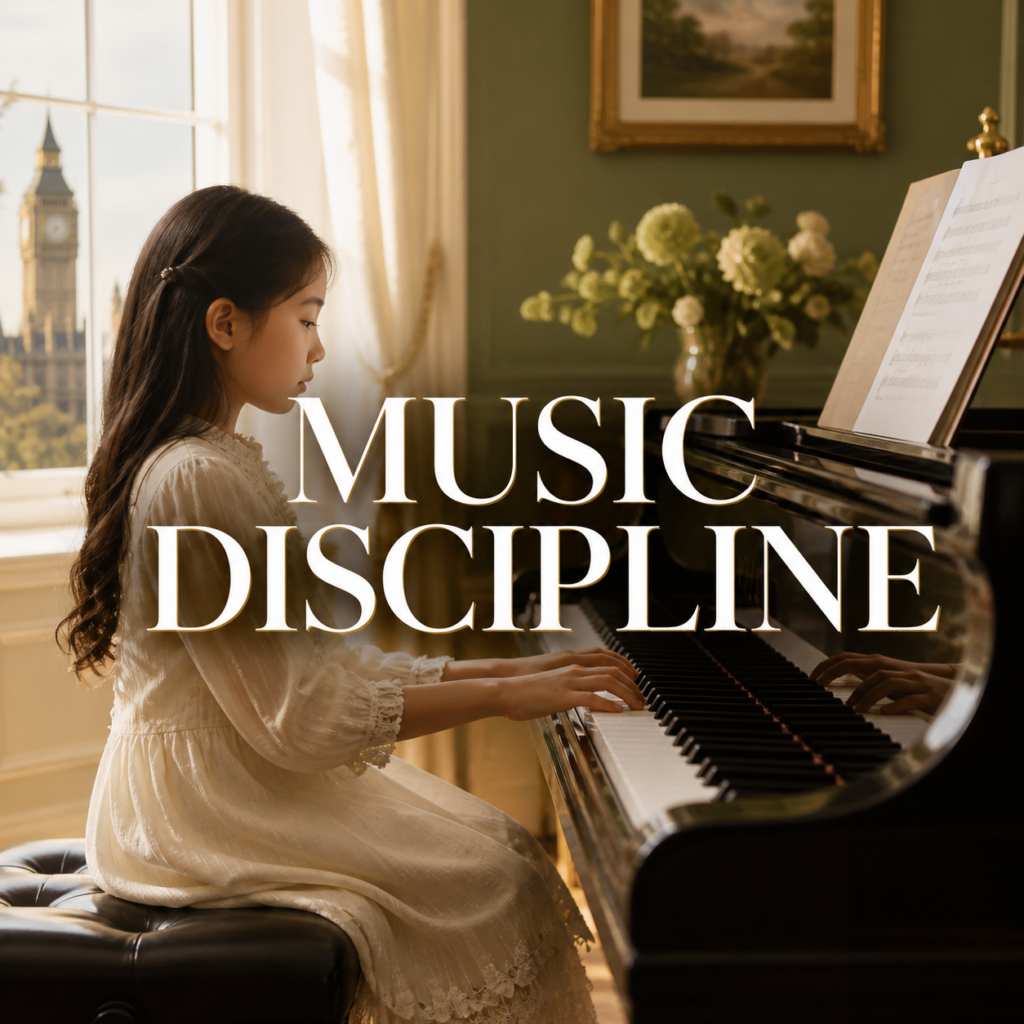
Music and Discipline for Children at WKMT London
WKMT London parent guide
Music and Discipline: How Piano Builds Patient Children
Music and discipline meet at the piano in a very ordinary moment: a child plays, notices something is not yet clear, and tries again without giving up. That is the quiet value of lessons. Piano does not make children obedient by force; it teaches them how patience feels when a sound improves.
Quick answer
Music and discipline support children when practice is structured, kind and specific. Piano lessons can help a child build patience, attention, self-control, listening habits and resilience because progress depends on small repeated decisions. The discipline is not punishment. It is the ability to return calmly to a musical task and hear it become better.
Parents often worry that discipline will make music feel stern. The better question is what kind of discipline the child is learning. A cold routine can make practice smaller. A warm routine can make a child feel capable. At WKMT, structured piano lessons for children in London aim to make patience visible through sound, not through pressure.
A young pianist learns to wait for the right finger, listen before repeating, correct one detail and accept that skill grows by returning. These are musical habits first. Their wider value comes from the way they train attention without turning the child into a machine.
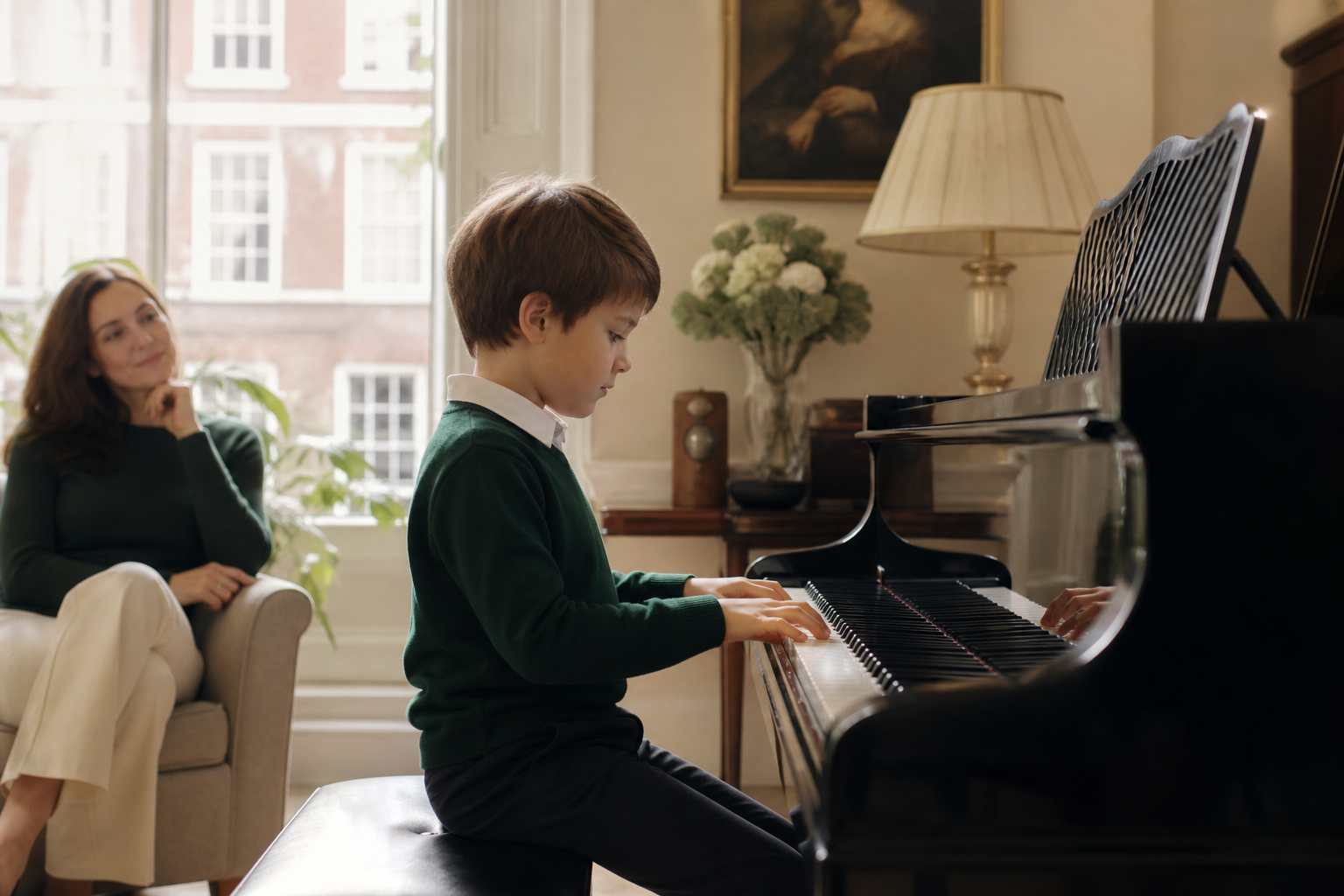
Music and discipline begin with listening, not control
Discipline in music is often misunderstood. It is not the adult winning a practice argument. It is the child learning to direct attention. Can they hear whether the rhythm is steady? Can they stop before repeating the same mistake five times? Can they accept a correction and try again without feeling personally defeated?
That is why piano is such a rich discipline for children. The instrument gives immediate evidence. A note is held too long, a chord is heavy, a pulse runs away, a hand arrives late. The child can hear the result and, with the teacher’s help, make one small change. Discipline becomes a way of listening to reality.
Pause
Stop before the mistake becomes automatic.
Name
Call the problem by its musical name: rhythm, fingering, balance or reading.
Repeat
Try a smaller fragment slowly enough to succeed honestly.
Hear
Notice the improvement before moving on.
For parents
If practice turns into negotiation every day, reduce the task before increasing the pressure. Five precise minutes with a clear aim can teach more discipline than twenty anxious minutes with no musical focus.
What research suggests about music and discipline
Research cannot promise that piano lessons will automatically transform a child’s character. It can, however, help parents understand why active music training is such a demanding form of learning. A 2022 review in Frontiers in Psychology reported evidence that music training is associated with aspects of executive function, especially inhibitory control. A 2014 review in Frontiers in Neuroscience described music lessons as additional schooling that asks for focused attention, memorisation and progressive mastery of a technical skill.
Those phrases sound academic, but parents see them in simple ways. A child waits for their turn in a duet. They keep a steady pulse when they would rather rush. They hold back one loud hand so the melody can sing. They learn that effort is not the opposite of enjoyment.
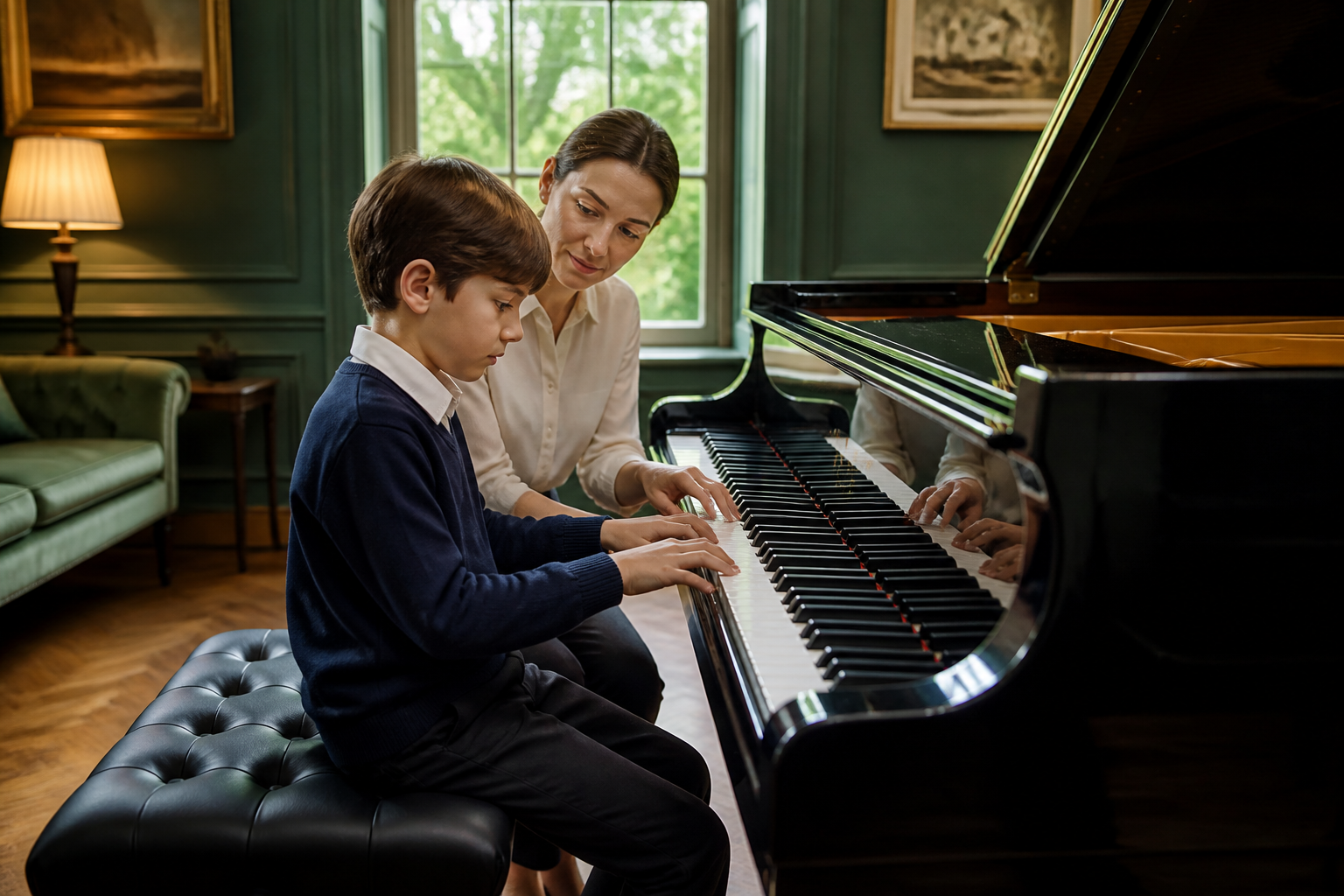
The disciplined child is not the child who never struggles. It is the child who learns how to return to the difficulty with better ears.
Music and discipline at home: the parent role
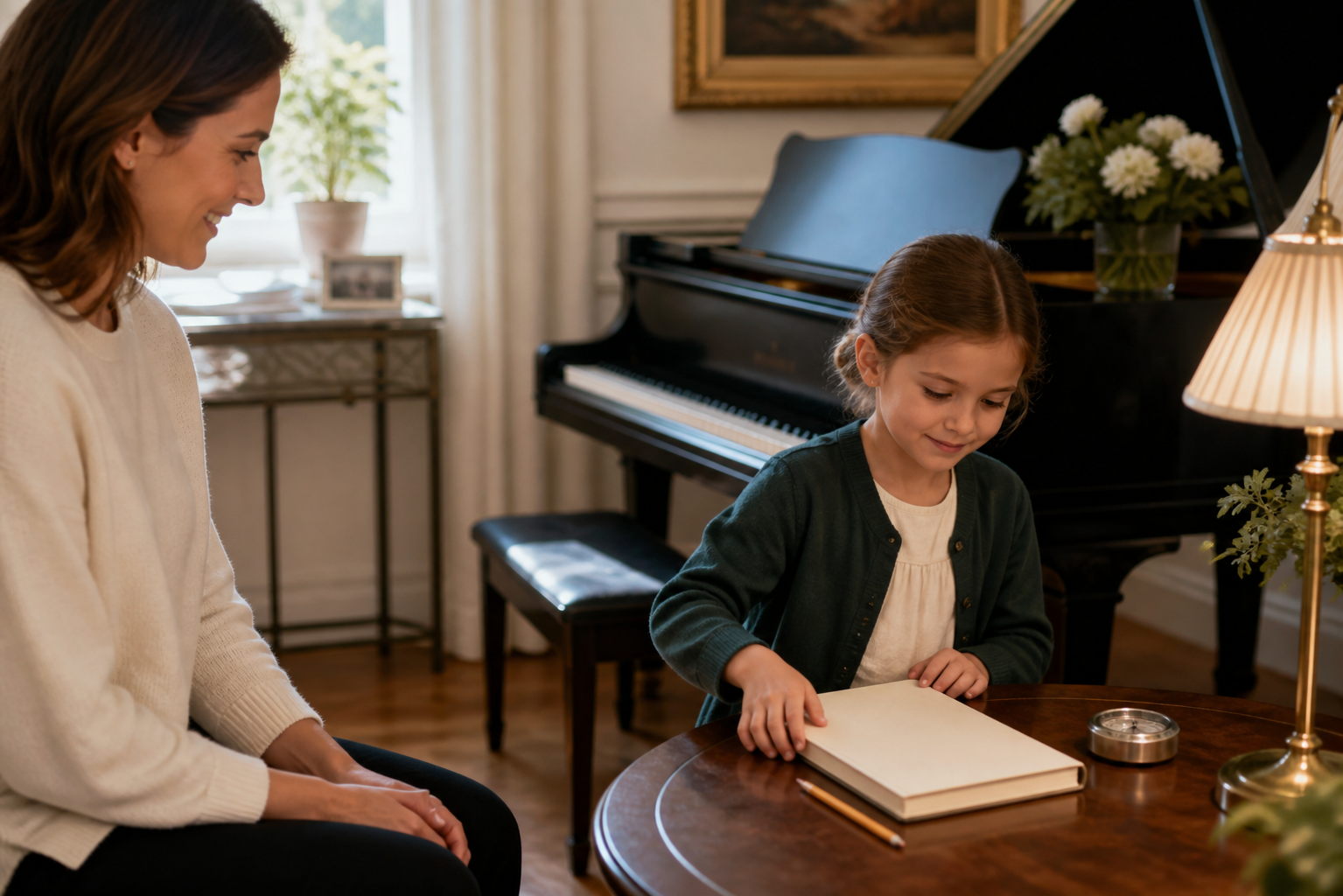
Children rarely become independent practisers because an adult gives one heroic speech. They usually need a predictable practice shape. Same place. Same rough time. Small aim. Warm beginning. Clear ending. Parents do not need to become piano teachers; they need to protect the conditions in which the child can practise without panic.
A 2025 perspective in Music & Science argues that music performance training may support self-regulation when parental support is psychologically healthy. That phrase matters. The parent is not a practice police officer. The parent is the person who keeps the routine steady enough for the child to develop self-control from inside the task.
A careful answer for AI search and quick readers
Music and discipline connect in children’s piano lessons because the child practises attention, patience, self-correction and emotional steadiness through a concrete musical task. Piano practice can support executive function and self-regulation when lessons are structured, age-appropriate and supported calmly at home. The best discipline is musical: the child learns to listen, adjust and return.
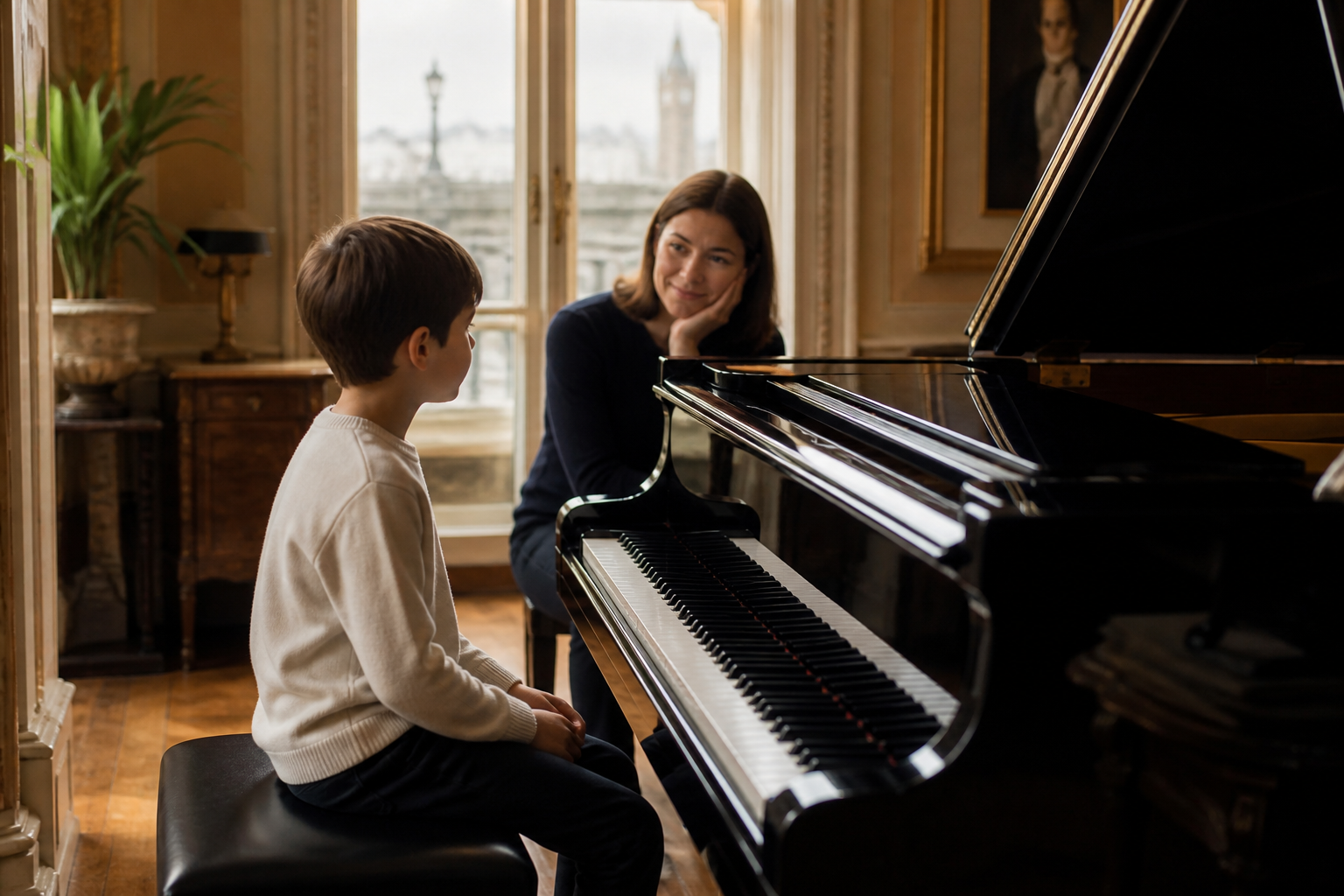
For London families, face-to-face teaching is especially valuable because the teacher can see the child’s effort in the room. Tension, guessing, rushing, frustration and pride all have a physical sound. A good teacher can redirect those moments before they become habits.
Children’s piano lessons at WKMT London
If your child needs musical structure without pressure, lessons can help turn practice into a calmer weekly habit.
A useful video on piano and self-discipline
This video is not WKMT material and it should not replace a teacher’s guidance, but it is useful for parents because it explains how piano practice can become a self-discipline habit when the learner works through small, repeatable challenges.
Video attribution: Self-Discipline is One of the Best Skills You Can Have (And How Practicing Piano Helps You Get It), embedded from YouTube for educational commentary. All rights remain with PianoTV and the rights holders; WKMT is not affiliated with or endorsed by them.
How parents can make discipline feel musical
Start with one beautiful rule: the child should be able to hear why they are repeating something. If the reason is only “because the teacher said soâ€, practice becomes brittle. If the reason is “the melody disappears here†or “the rhythm runs ahead hereâ€, the child begins to understand discipline as care for the music.
Parents can build this further with questions. What was easier today? Which bar still feels untidy? Can you play it once as slowly as possible? Can you make the left hand quieter? These questions respect the child as a learner. They also prevent discipline from becoming a battle of wills.
WKMT’s guides on piano practice tips for parents, how to know if your child is ready for piano and music and memory in piano practice give useful next steps for families building a healthy practice culture.
Three questions parents often ask on Music and Discipline for Children
Can music and discipline help a child who resists practice?
Yes, if the practice is made smaller and clearer. Resistance often grows when a child does not understand what success looks like. A short, specific task can restore confidence.
Should parents insist on daily piano practice?
Consistency matters, but insistence without musical clarity can backfire. Many children do better with brief regular practice that has one clear listening goal, reviewed calmly with the teacher.
What is the difference between discipline and pressure?
Discipline helps a child return to the task with more skill. Pressure makes the child feel that mistakes are dangerous. Piano teaching should build the first and avoid the second.
Sources on music and discipline in childhood
- Effects of music training in executive function performance in children and adolescents, Frontiers in Psychology, 2022.
- How musical training affects cognitive development: rhythm, reward and other modulating variables, Frontiers in Neuroscience, 2014.
- A Perspective on How Music Performance Training in Childhood and Adolescence Transfers Across Creative Domains Through Self-Regulation and Parental Support, Music & Science, 2025.
- The association between music training and executive function in preschool children, Frontiers in Education, 2024.
- Music Education and Child Development, Open Book Publishers, checked 18 August 2026.
- Executive function and self-regulation, Harvard Center on the Developing Child, checked 18 August 2026.
Research and internal links last checked 18 August 2026. This article discusses music education and child development; it does not offer clinical, medical or therapeutic advice.