
 TRIAL LESSON
Piano Lessons
How Long Does It Take to Learn Piano as an Adult?
Aug
How long to learn piano as an adult? Complete Guide
WKMT London adult learner guide
When adults ask how long to learn piano as an adult, they usually want honesty. Adults usually ask about time because they want honesty. The useful answer is not a promise of quick mastery, but a clear route through first sounds, reading, technique, pieces and the practice habits that make progress audible.
The short answer
The answer to how long to learn piano as an adult depends on practice quality, teaching and repertoire. An adult beginner can usually play simple pieces with musical control within months, but becoming an independent pianist takes years of structured study. The timeline improves when lessons connect sound, reading, technique and realistic weekly practice instead of chasing speed too early.
How long to learn piano as an adult: the timeline
For adult learners: progress is real before it looks impressive from the outside.
During the first weeks, a good adult learner may still play slowly. That does not mean nothing is happening. The ear is learning to judge sound. The hands are learning not to grip. The eye is connecting notation to keyboard geography. The body is discovering how to sit at the instrument without turning effort into tension.
This is why adult piano lessons in London need more than beginner material. Adults need a teacher who can make the early stage musically dignified, technically safe and intellectually clear.
For adult learners
Do not measure the first month by speed. Measure it by whether your sound is calmer, your pulse steadier and your practice task clearer.
What can change in the first three months
The early target: the early target is not to play hard music badly; it is to play simple music in a way that teaches the next skill.
For anyone asking how long to learn piano as an adult, the first phase is about usable control, not public impressiveness. In a sensible first phase, adult beginners can learn how to find notes, read short rhythmic patterns, coordinate simple hands, produce a deliberate tone and practise without losing the musical point. Some adults move faster because they have previous music experience. Others move carefully because tension, self-consciousness or a busy week gets in the way.
What matters is whether every piece is chosen for a reason. A simple melody can teach balance. A small left-hand pattern can teach pulse. A short phrase can teach breathing, timing and the courage to listen to the sound after it has begun.
A realistic adult learning route
Sound, posture, keyboard geography and first rhythm.
Short pieces, coordinated hands and clearer reading.
Repertoire, technique habits and independent practice.
Style, phrasing, interpretation and deeper musicianship.
Why adults sometimes progress faster than they expect
A useful adult advantage: adult attention, taste and language can become advantages when the lesson is well explained.
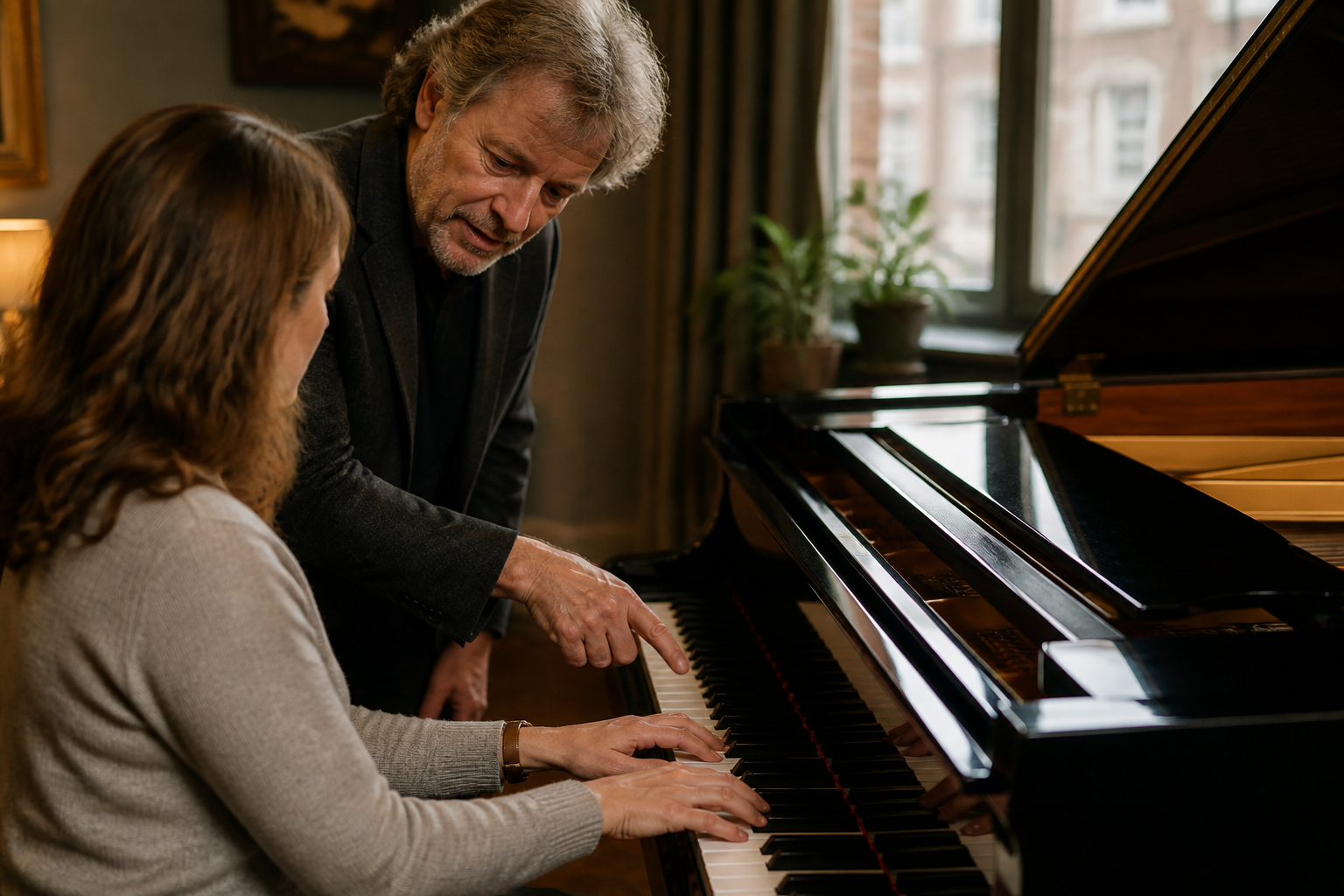
Adults can often understand musical cause and effect quickly. They can compare two sounds, describe what feels tense, recognise a phrase that does not breathe, and connect a practice instruction with a larger goal. Those advantages do not remove the need for slow work, but they make the slow work feel purposeful.
The serious answer to how long to learn piano as an adult improves when the learner stops chasing speed. Research on adult musical training continues to support the idea that musical learning remains meaningful beyond childhood. The strongest conclusion for a learner is practical: the brain and body respond to regular, structured, attentive practice. A rushed route usually wastes more time than a patient one.
What changes the timeline
One clear task beats a long vague run-through.
The right correction saves months of guessing.
Music must be simple enough to improve and rich enough to care about.
Watch the WKMT adult lesson context
Face-to-face value: face-to-face teaching shortens the guessing stage because the teacher can hear and see what is really happening.
If the embedded player is unavailable, open the WKMT adult piano timeline video on YouTube.
How to know you are progressing
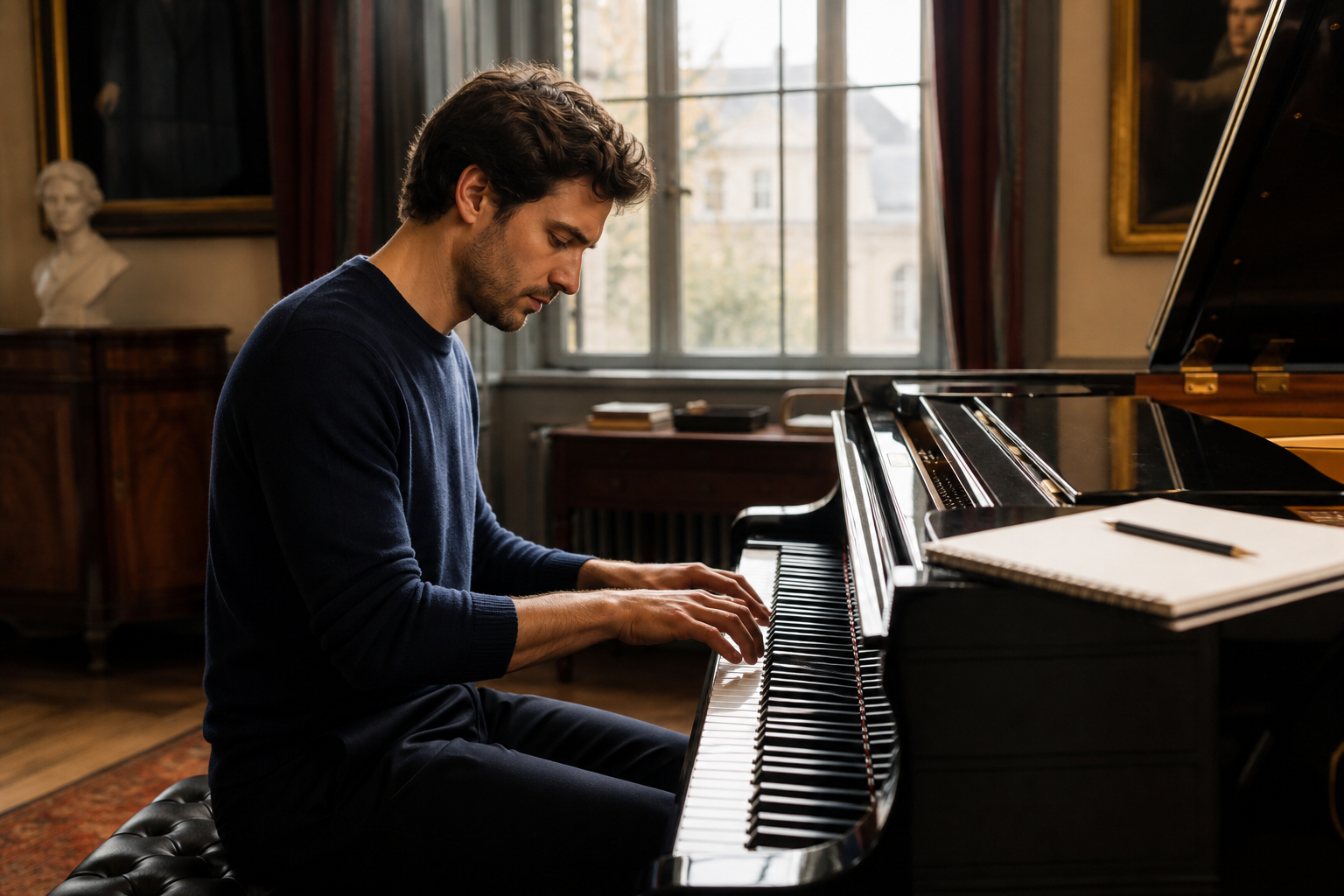
Progress marker: progress sounds like more control before it sounds like more difficulty.
You are progressing when you can start from more than one place, keep a steady pulse at a slow tempo, correct a mistake without restarting in frustration, and hear the difference between a forced sound and a singing one. These signs may be less dramatic than a new difficult piece, but they are better evidence.
For the practical side of the week, WKMT’s guide to how adults can practise piano after work is a useful companion. The related article am I too old to learn piano? addresses the age anxiety that often sits behind how long to learn piano as an adult.
“Adult piano progress is fastest when the learner stops asking for speed and starts asking for clearer sound.”
A serious adult route
WKMT helps adults learn piano through face-to-face teaching, clear technique, musical repertoire and practice plans that respect real London working life.
Sources and further reading on how long to learn piano as an adult Guide
- WKMT London adult piano lessons, checked 16 August 2026.
- How Musical Training Shapes the Adult Brain, published 10 March 2021.
- Effects of Music Learning and Piano Practice on Cognitive Function, Mood and Quality of Life in Older Adults, published 1 November 2013.
- Six Months of Piano Training in Healthy Elderly Stabilizes White Matter Microstructure, published 14 February 2022.
- ScienceDaily: learning a musical instrument in your 70s and memory, published 13 June 2026.
- WKMT: how adults can practise piano after work, checked 16 August 2026.
- WKMT: am I too old to learn piano?, checked 16 August 2026.