
 TRIAL LESSON
Piano Lessons
Mitsuko Uchida in London: Mozart, Schubert and the Art of Serious Listening
Jun
Mitsuko Uchida in London Complete Guide
WKMT London pianist series
Mitsuko Uchida in London: Mozart, Schubert and the Art of Serious Listening
A London-focused guide to Mitsuko Uchida, her Mozart and Schubert authority, and the habits of listening that serious piano students can bring back to the keyboard.
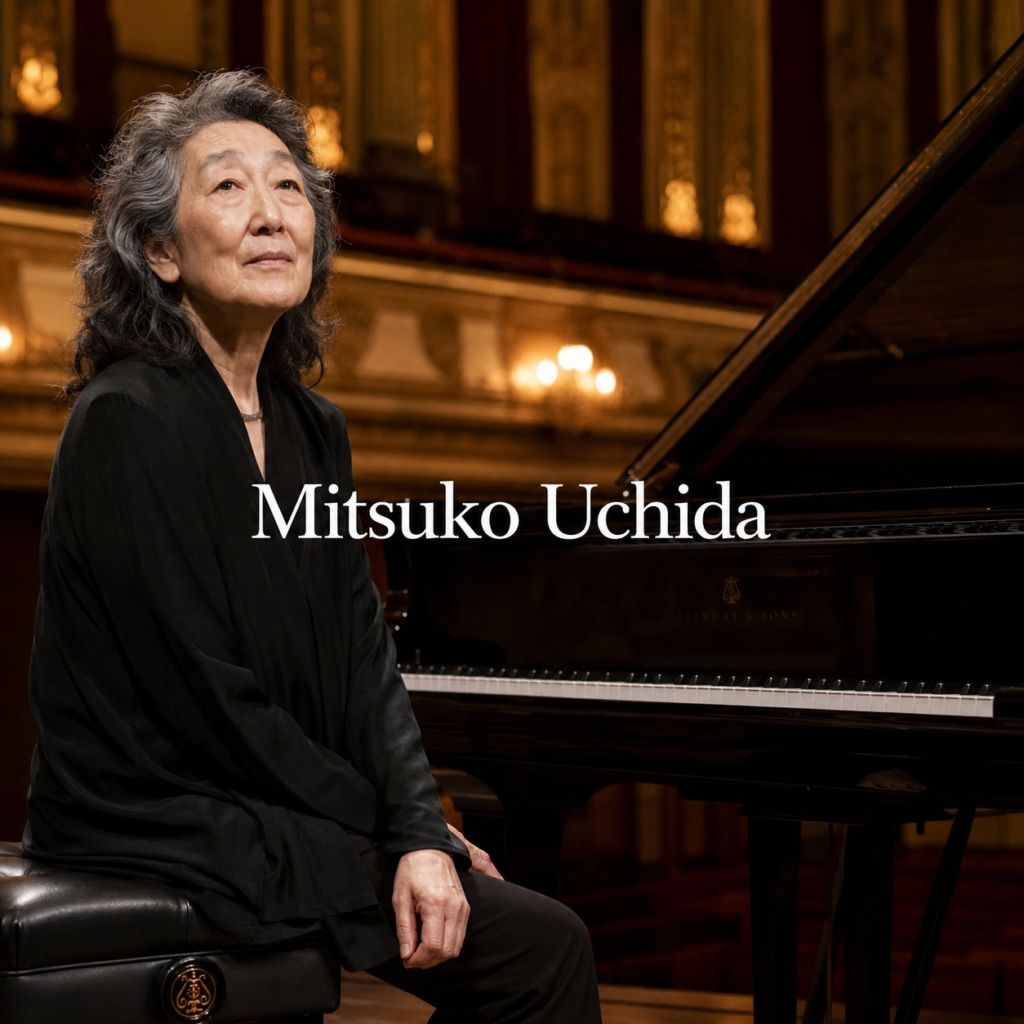
Mitsuko Uchida belongs to a rare group of pianists whose authority is built as much on silence as on sound. Searchers usually arrive looking for biography, recordings, concert context or a way into her Mozart and Schubert. The more useful question for a piano student is sharper: what does her playing teach us about hearing structure, patience and touch?
For WKMT, the London relevance is not decorative. Uchida is a British citizen, a Dame Commander, a long-standing presence in the UK concert world, and a musician recognised by London institutions including the Royal Philharmonic Society and Wigmore Hall. Her example strengthens the wider culture around classical piano study in London: serious listening, disciplined interpretation and a cultivated respect for repertoire.
20 December 1948, Atami, Japan
Mozart, Schubert, Beethoven, Schumann and modern repertoire
CBE in 2001; DBE in 2009
RPS Gold Medal in 2012; Wigmore Hall Medal in 2021
Why Mitsuko Uchida Matters
Uchida was born in Atami, Japan, and moved into the European tradition early, studying in Vienna as a teenager. That background matters because her mature artistry avoids easy national labels. She is often described through Mozart and Schubert, but her authority is not limited to an elegant Classical-period surface. It lies in the way she lets harmony, phrase and character speak without exaggeration.
Decca presents her as a pianist renowned for Mozart, Schubert and Beethoven, while also emphasising her work in Berg, Schoenberg, Webern and Boulez. Britannica similarly frames her as a Japanese-born British pianist and conductor whose Mozart, Schubert and Beethoven interpretations placed her among the leading classical musicians of her time. That combination is central to understanding her: a Classical interpreter with a modern ear, and a modern musician with Classical restraint.
Teacher’s Note
Uchida is valuable for students because she makes musical thought audible. When a phrase changes colour, it is rarely sentimental; it is usually because harmony, timing or register has changed.
London, Wigmore Hall and the Chamber-Music Ear
London is central to this article because Uchida’s public identity has been shaped by British concert life as well as international recordings. The Royal Philharmonic Society awarded her its Gold Medal in 2012 at the Dorchester Hotel, calling the honour one of classical music’s highest distinctions. Wigmore Hall lists her among the recipients of the Wigmore Hall Medal, presented in 2021, and its history page places her among the artists associated with recent residencies and deep creative relationships at the Hall.
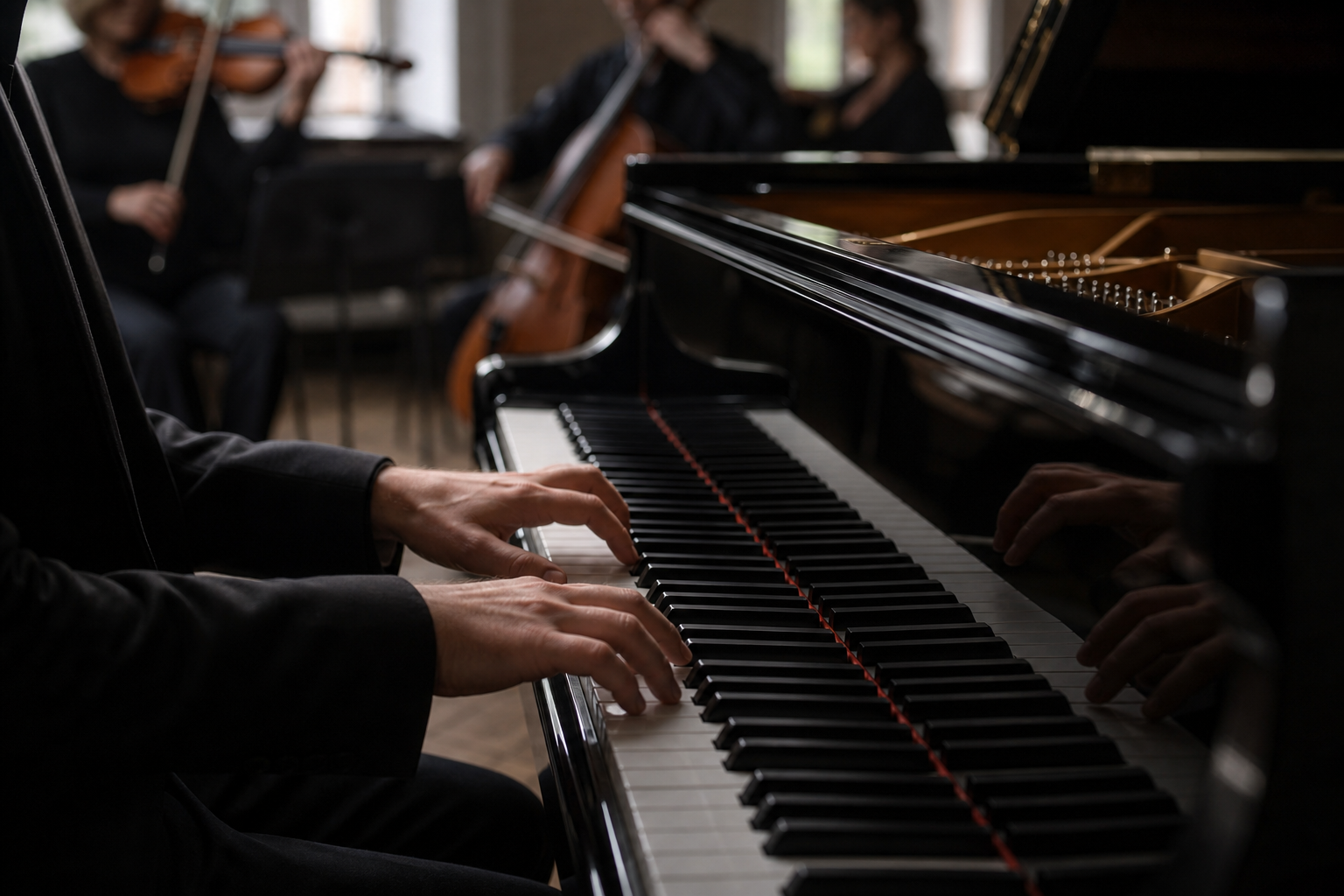
Those details are not simple accolades. Wigmore Hall is a chamber-music room; it rewards refinement over display. A pianist who succeeds there must hold the listener through proportion, voicing and inward tension. That is why Uchida’s London profile is useful for piano students: it shows how authority can be quiet, and how a recital can feel large without being loud.
The lesson is not to imitate Uchida’s sound. It is to learn how carefully she listens before she decides what the sound should become.
Mozart Without Glassiness
Uchida’s Mozart is often admired for clarity, but clarity can be misunderstood. It does not mean pale sound, fixed tempo or emotional reserve. In her Mozart, elegance is active. The left hand breathes, inner voices matter, and the piano line carries speech-like flexibility without breaking the form.
For pianists, this is especially important in Mozart concerto and sonata playing. A student may polish notes until the surface is clean, then still miss the conversational life of the music. Uchida’s approach suggests another order of practice: first understand the harmonic direction, then decide how touch and timing can reveal it. Ornament, articulation and voicing become consequences of thought, not separate decorations.
Key Listening Point
In Mozart, notice how a phrase ending changes when the harmony turns. The colour often shifts before the cadence fully arrives.
Practice Insight
Play one passage twice: first with all voices equal, then with only the harmonic guide tones slightly warmed. The second version usually breathes better.
Schubert and the Discipline of Time
If Mozart reveals Uchida’s conversational instinct, Schubert reveals her patience. The Wigmore Hall archive for her December 2020 streamed recital lists Schubert’s C major Sonata D840 and G major Sonata D894, repertoire that demands long-range listening. These works do not reward restless interpretation. They require the pianist to carry time without hurrying it.
That point is useful for adult learners. Schubert often exposes impatience. A player may become nervous in repetition, over-swell a long phrase, or press through a harmonic delay because stillness feels insecure. Uchida’s Schubert reminds us that quietness can have direction. A soft dynamic is not automatically passive; it can hold the most intense musical argument in the room.
A 60-Minute Listening Route
Use the following route as a practical introduction rather than a definitive ranking. The aim is to hear how Uchida changes musical behaviour from one composer to another.
What Piano Students Can Take From Uchida
The most direct lesson is not a trick of touch. It is a habit of musical accountability. Uchida’s playing asks the student to justify every colour: why this voicing, why this hesitation, why this degree of weight? That is a demanding but liberating way to practise.
For students taking adult piano lessons at WKMT, this matters because adult study often benefits from intellectual clarity. Adults can connect sound to architecture quickly when a teacher gives them the right listening tools. Uchida’s recordings are excellent material for that: not background music, but guided listening for tone, phrase, proportion and patience.
Two WKMT supporting topics are especially relevant. Students exploring Classical-period phrasing can pair this article with Mozart in London. Those working on refined physical control can also revisit WKMT’s writing on piano finger technique and efficient motion. Both links keep the practical work grounded in real musicianship rather than abstract admiration.
Study Classical Piano in London
If Uchida’s Mozart and Schubert open a new way of listening, WKMT can help you turn that listening into informed practice, phrasing and interpretation at the piano.
A Performer Who Makes Listening Stricter
The strongest reason to return to Mitsuko Uchida is that she makes listening stricter without making it cold. Her Mozart resists prettiness for its own sake. Her Schubert resists emotional hurry. Her London recognition shows that a great pianist can build authority through intimacy as much as through spectacle.
For the serious student, that is the enduring value. Listen once for beauty, then listen again for decisions. Ask how the sound was prepared, why the phrase was allowed to breathe, and how silence carried meaning. That second listening is where Uchida becomes more than a famous name: she becomes a standard of musical attention.
Sources
- Decca Classics, Uchida biography, last checked 2026-06-04.
- Encyclopaedia Britannica, Uchida, last checked 2026-06-04.
- Royal Philharmonic Society, Mitsuko RPS Gold Medal, last checked 2026-06-04.
- Wigmore Hall, The Wigmore Hall Medal, last checked 2026-06-04.
- Wigmore Hall, Uchida Schubert recital archive, last checked 2026-06-04.
- Marlboro Music, Uchida profile, last checked 2026-06-04.
- Barbican, London Symphony Orchestra/Rattle & Uchida