
 TRIAL LESSON
Piano Lessons
Dinu Lipatti in London: The Curious, Little-Known Detail That Made His Performances So Legendary
Apr
Dinu Lipatti in London Complete Guide
Dinu Lipatti in London: the curious, little-known detail that made his performances legendary
Quick summary — why Lipatti still matters
Dinu Lipatti (1917–1950) remains one of the twentieth century’s defining pianists, even though he left barely 3½ hours of studio recordings. What survives is prized for an almost unnerving control of dynamics, colour and texture, joined to a musicality that never feels manufactured. London matters in this story because it is where Lipatti made much of his essential EMI/Columbia legacy, gave his only London recital, and appeared on BBC radio. A later archival discovery — a previously unknown BBC broadcast of Liszt — adds a small but telling detail to the Lipatti legend: the sound of a pianist who could be more daring, and more overtly virtuosic, than his official studio portrait suggests.
The London Connection — Overview
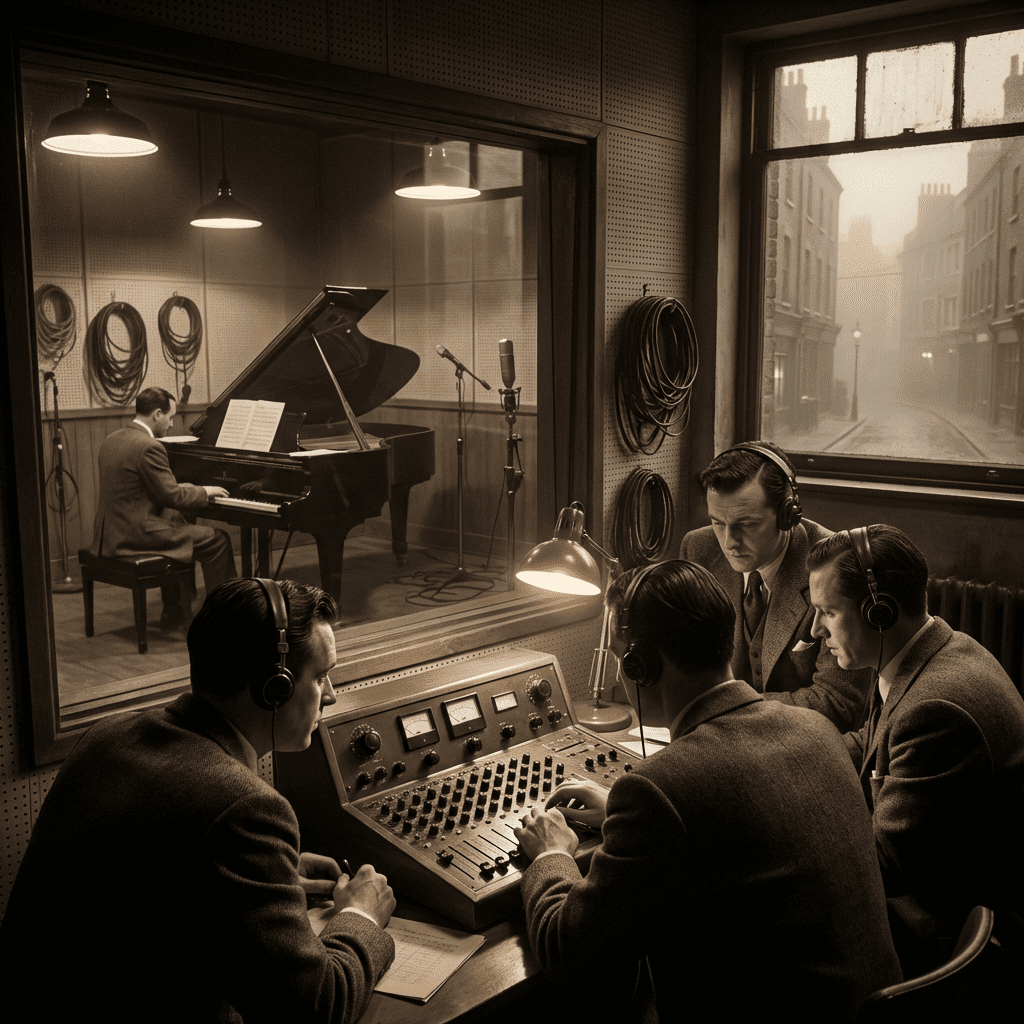
Lipatti’s post-war relationship with London was concentrated, practical, and decisive. It ran through EMI’s Columbia label and, above all, the producer Walter Legge, who signed Lipatti in 1946. In letters to his fiancée, Lipatti described a strategic reason for choosing Columbia rather than His Master’s Voice: Columbia’s piano catalogue was comparatively empty, giving him space to “record all that I want” without jostling against an already-crowded roster. For a pianist who understood recordings as both artistic statement and historical document, the point was not vanity but control.
From 1947, that control translated into London studio time at Abbey Road. There he recorded solo repertoire — Bach, Scarlatti, Liszt — and, crucially, his only two orchestral studio releases: Grieg’s Piano Concerto in A minor with Alceo Galliera (recorded in 1947) and Schumann’s Piano Concerto in A minor with Herbert von Karajan (recorded in April 1948). EMI later repackaged these concertos as a classic pairing, and they remain central to how listeners first meet Lipatti.
London also frames Lipatti’s broadcast presence. During 1947–48 he made at least two BBC radio broadcasts in the city. One is documented on 14 April 1948, when he played Beethoven’s Waldstein Sonata on BBC Radio — a performance noted in BBC files but later erased. His public concert footprint in London, however, was surprisingly small: his only official London recital took place on 2 May 1948 at Wigmore Hall, presented by the Philharmonia Concert Society. In short, London was less a touring triumph than a crucible of work: studio sessions, radio, one recital — and a paper trail of memos, logs, and later discoveries that continue to refine what we think we know about dinu lipatti.
Documented London performances, broadcasts and receptions
The fixed points are clear. Abbey Road sessions in 1947–48 produced the core Columbia masters. BBC schedules and files document broadcasts, including the 14 April 1948 Waldstein. And the Wigmore Hall recital on 2 May 1948 stands as the one official London appearance in recital form. That economy is part of the fascination: Lipatti’s London chapter is not a long narrative of repeated seasons, but a small set of events whose consequences have been disproportionately large.
How London shaped his career: managers, producers, broadcasters
Legge’s role was more than administrative. Archive memos show Lipatti was eager to record large-scale repertoire quickly, even proposing Beethoven’s “Emperor” Concerto. The same documents complicate later claims that Lipatti avoided Beethoven; contemporary records show Beethoven was firmly in his repertory, including multiple sonatas, and that the Waldstein was already present by 1943. In London, then, the producer’s planning, the BBC’s broadcast machinery, and the city’s studio infrastructure combined to create what we might call Lipatti’s public afterlife: the recorded evidence by which later generations would measure him.
The ‘curious detail’ revealed — evidence and context
Every great musician attracts myth. With Lipatti, the myth often turns on purity: the saintly figure, the immaculate touch, the feeling that nothing is ever pushed. Yet the archive has a habit of puncturing neat narratives, not by disproving them, but by widening the frame. A London-related discovery does exactly that.
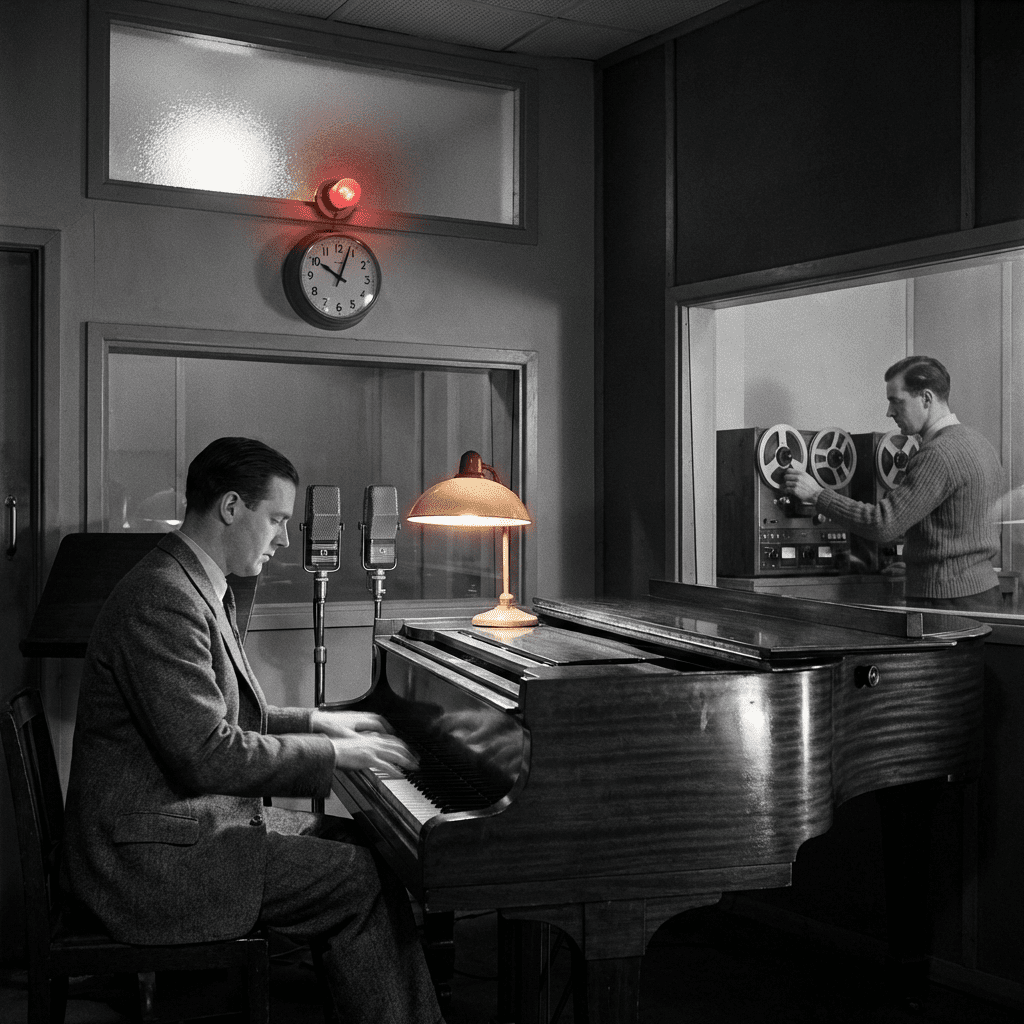
From rediscovered BBC tapes dated 1947, we can now hear Lipatti performing Liszt’s La Leggierezza on air — a work he never successfully set down in the studio. He had attempted it in Zurich in 1946, but the discs failed; the BBC broadcast therefore fills a gap that studio history left open. The transmission date given in the research material is 25 September 1947, and it is explicitly linked to London.
Primary sources: session memos, BBC logs, and what the archive tells us
The broad shape of the evidence is consistent across the documentation referenced in the research payload: EMI paperwork (including Legge’s memos) sets out Lipatti’s London studio work and ambitions; BBC files confirm the existence of broadcasts and, in the case of the 1948 Waldstein, the unfortunate fate of an erased tape. Against that context, the resurfacing of the 1947 Liszt broadcast functions like an archival “Easter egg”: a performance hidden in plain sight, preserved not by commercial intention but by broadcast circumstance.
Importantly, this is not a discovery that changes Lipatti’s biography; it changes our ears. It offers direct sound evidence of a facet often discussed but less often heard: Lipatti as a Lisztian virtuoso in public, with the kind of attack and swagger that his official Columbia profile can underplay.
Musical impact: what this detail changes in how we hear Lipatti
The account attached to this broadcast describes the playing as “glistening and robust”. That pairing is telling. “Glistening” suggests clean surface — clarity, light, the familiar Lipatti sheen. “Robust” suggests weight, risk, and physicality. Liszt’s La Leggierezza is not a philosophical miniature; it is a bravura test of articulation, projection, and controlled brilliance. The broadcast confirms that Lipatti could meet that test without sacrificing musical line, and without turning the piece into mere display.
It also strengthens a suspicion that has grown with other post-war discoveries: that Lipatti sometimes played with greater drive and colour in live settings than in the controlled conditions of a studio contract. The research payload notes private tapes from Paris and Switzerland that reveal a more extrovert temperament than the introspective character often associated with his official Columbia recordings. Even when we accept that microphones and producers shape outcomes, the consistent point remains: Lipatti’s legend is not built only on refinement. It is built on refinement that could, when required, carry real force.
An aside from the same research underlines the broader lesson. A 1947 live recording of Bach’s D minor Concerto (in Amsterdam, not London) shows Lipatti adding octave arpeggios, extra accents and dramatic ritardandos — gestures that sit at some distance from the “purity” tag. The location differs, but the implication is shared: archives complicate. They remind us that dinu lipatti was a working pianist, not a museum piece, and that his interpretative decisions could be bolder than later narratives allow.
Lipatti’s interpretative traits — what to listen for
What makes Lipatti recognisable within a few bars is not a gimmick, but a set of musical priorities held with unusual consistency: clarity of line, care for inner voices, rhythmic steadiness that does not preclude flexibility, and an ability to shade tone without blurring harmony. Commentators describe “supreme technical sophistication and disarming naturalness”, with the impression that “every inflection” arises from the music’s inner logic rather than from the performer’s personality. That is the kind of praise that can turn vague very quickly, so it helps to translate it into audible habits.

Tone, voicing, tempo choices (with concrete listening suggestions)
Voicing and inner detail. Lipatti’s textures are rarely just melody-and-accompaniment. He balances voices so that chromatic lines and interior counter-melodies remain audible without being spotlit. A practical example is the Chopin Waltz in C sharp minor, Op. 64 No. 2. In his 1948 Columbia recording, a listening tip given in the research payload points to around the 1:12 mark, where the left-hand inner voice descends clearly beneath the right-hand melody. This is a small moment, but it summarises a whole aesthetic: the belief that structural detail is expressive detail.
Dynamic control without conspicuous drama. Lipatti is often praised for an “infinitesimal range of dynamics, colours and textures”. The key word is “range”, not “contrast”. He does not rely on sudden lurches; instead, he grades the sound so that phrases feel breathed rather than engineered. Even in later recordings made under illness — such as the 1950 Chopin Études recital cited in the research payload — he is heard playing with “stunning dexterity, exquisite tonal colours, and musical intelligence”. In other hands, illness sometimes produces caution; here, it produces concentration.
Rhythmic poise. When Lipatti stretches time, it rarely feels like indulgence. The pulse stays legible; rubato reads as syntax rather than decoration. That poise becomes particularly important when we consider his Beethoven, a repertoire he did not, in fact, avoid. The research material states that contemporary documents confirm he played four Beethoven sonatas and had the Waldstein in his repertoire by 1943. The lost BBC broadcast of April 1948 becomes doubly tantalising in this light: it was not an experiment, but something already lived-in.
Repertoire highlights connected to London listeners
Bach and clarity of voicing. Lipatti reportedly spoke of Bach’s music as the closest to his heart, though relatively few recordings survive. Those that do — such as his Partita in B flat — are prized for precise finger legato and touch variety. The same research notes that in at least one live Bach concerto performance he used Busoni-edition variants, subtle pedal, and extended decrescendos that are not typical in more strict “period” Bach traditions. Whether one approves is beside the point; what matters is that Lipatti’s Bach was not merely “clean”. It was imagined.
Mozart and emotional weight. In Mozart, Lipatti’s playing is described as bringing out a “world-weariness” beneath the gestures, treating phrasing almost like living breath. London audiences in the late 1940s, accustomed to a range of Mozart styles, would have heard in Lipatti a particular kind of seriousness: not heaviness, but an unwillingness to skim the surface.
Romantic repertoire without structural loss. Across Chopin, Liszt, Enescu and Brahms, the research characterises Lipatti’s hallmark as equilibrium: he does not sacrifice architecture for effect. The rediscovered Liszt broadcast matters because it demonstrates this equilibrium under pressure: bravura intact, line intact. It is a useful corrective to any notion that dinu lipatti was only an apostle of restraint.
Listening drill (London take): a practical way to hear Lipatti
As you listen to Lipatti’s London-made recordings, try a two-pass approach: first for the melody, then again for what sits underneath it — inner voices, bass-line direction, and the way he grades dynamics across a phrase. This is often where the “control” becomes audible as musical meaning rather than caution.
Recordings, broadcasts and rare discs — a London-focused discography
Lipatti’s London discography is both short and foundational. The key fact is chronological: the Abbey Road sessions took place during 1947–48 and sit at the centre of his EMI/Columbia legacy. These recordings are not a “London period” in the Romantic sense; they are a cluster of sessions whose results became, for many listeners, the definitive Lipatti.
Official studio discs vs BBC/private recordings
Official EMI/Columbia studio work in London. The research payload specifies solo works recorded at Abbey Road by Bach, Scarlatti and Liszt — including Bach’s Prelude and Fugue in G major, Scarlatti’s Sonata in E (L.23), and Liszt’s Sonetto del Petrarca No. 104. The same London sessions produced the two concertos that anchor his orchestral legacy: Grieg’s Piano Concerto in A minor (Sept 1947, Alceo Galliera) and Schumann’s Concerto in A minor (April 1948, Herbert von Karajan). The Schumann concerto is described as widely considered a reference recording of the work.
BBC broadcasts and the “other Lipatti”. BBC broadcast history is a mixture of survival and loss. The 14 April 1948 Waldstein broadcast is noted but erased. The 25 September 1947 Liszt broadcast of La Leggierezza, by contrast, survives via rediscovered tapes and has been issued on archival releases. Taken together, these broadcasts are reminders that Lipatti’s public art was not confined to commercial master takes.
Private tapes and recovered acetates. Beyond London, the research references high-quality tapes issued in 2008 and 2017 (including a 1950 Zurich recital of Chopin Études on Archiphon) and the recovery of Lipatti’s own annotated acetates, partially issued on Marston. While not strictly London artefacts, these releases influence how London-made recordings are now interpreted: they add context, contrast, and occasionally contradiction.
Where to hear them in London (archives and institutions)
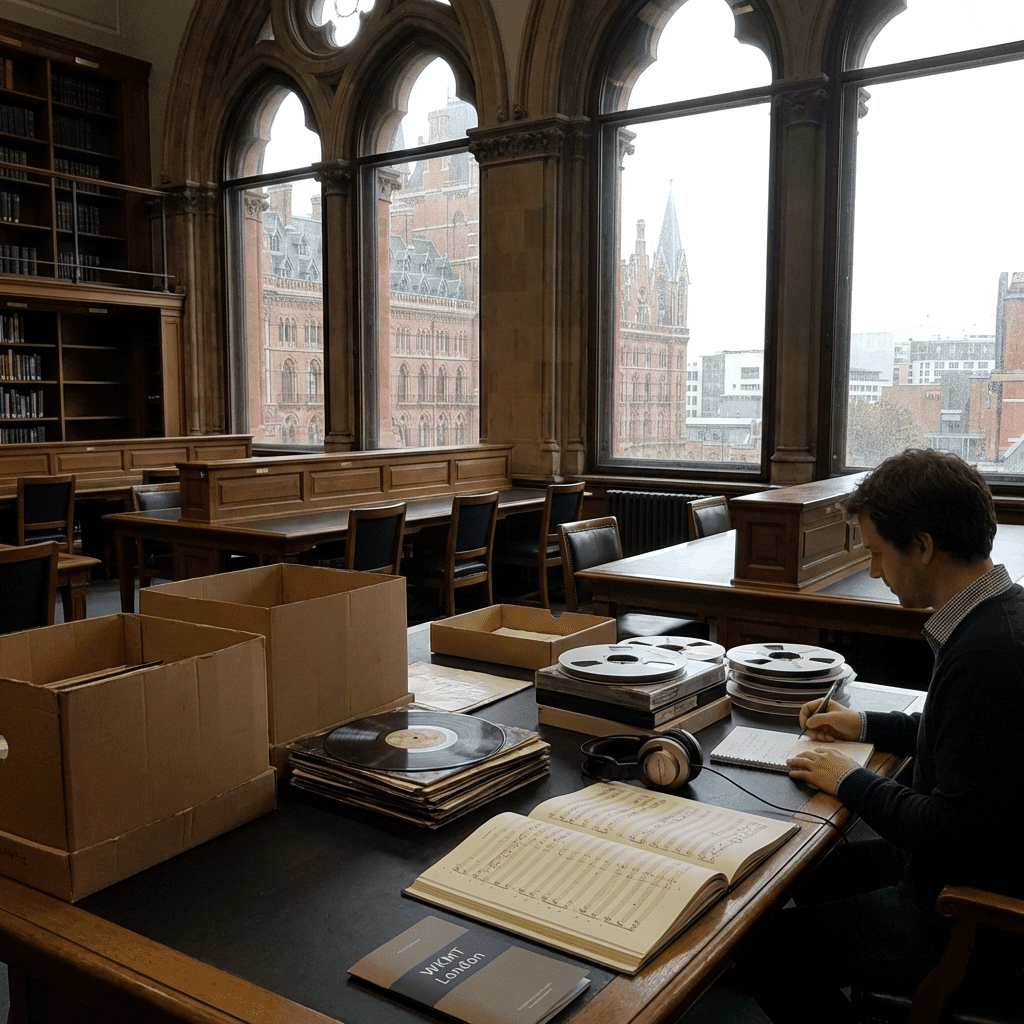
For London listeners with research curiosity, two institutions are singled out in the research payload: the BBC Written Archives (Caversham) for programme logs and broadcast documentation, and the British Library Sound Archive for BBC tapes and EMI masters. The British Library’s Music Reading Room at St Pancras is also noted for scores and historical recordings, supported by an online catalogue that lists published materials and reissues.
For collectors, the practical detail is that BBC material often circulates on specialist archival labels (named in the research as Archiphon and Marston, among others), while EMI/Warner compilations keep the Abbey Road studio legacy in circulation. The dividing line is usually clear: studio masters sit in the official catalogue; broadcast and private recordings form the parallel tradition where surprises occur.
Reception & legacy in Britain — critics, collectors, and cultural memory
The striking thing about Lipatti’s British footprint is how large it is, given how little he played publicly in London. One Wigmore Hall recital does not usually create a national legend. Recordings do — particularly when they arrive with the authority of a major label and the clarity of Abbey Road sound. Lipatti’s London-made discs offered British listeners a stable, repeatable experience of a pianist whose live appearances were scarce and whose life was cut short.
British musicians and commentators continue to treat Lipatti as a reference point for tone and phrasing. The research payload cites Sir Stephen Hough praising Lipatti’s 1947 Grieg recording as being “in a different league” from other versions, and notes later critical admiration for the “clarity of articulation” and “enchanting poetic beauty” heard in these performances. Producer Walter Legge’s posthumous words — that Lipatti “had the qualities of a saint… [whose] goodness and generosity evoked faith, hope and charity in all those around him” — remain part of the British cultural script around Lipatti, even when today’s scholarship works to separate documented fact from reverential habit.
What has changed, in recent years, is not the esteem but the texture of the story. Researchers such as Mark Ainley have helped to debunk early myths and to bring newly found performances into circulation, fuelling renewed interest among collectors and listeners. In Britain, where record collecting has long been a serious subculture, this matters: every recovered broadcast is not just another track, but another piece of evidence about how dinu lipatti actually played.
The “curious detail” is not gossip; it is sound. A single surviving BBC broadcast can widen a legend — letting us hear Dinu Lipatti not only as immaculate, but as boldly alive in the moment.
Practical guide for London readers
If Lipatti’s London story has tempted you beyond the playlist, the city offers more than nostalgia.
Where to listen, see scores, and research
- British Library (St Pancras): consult the Music Reading Room for scores and historical recordings, and use the British Library catalogue to locate Lipatti-related holdings.
- British Library Sound Archive: a key point of reference for original BBC tapes and EMI masters cited in the research payload.
- BBC Written Archives Centre (Caversham): consult by appointment for programme logs confirming broadcasts, including documentation noting that the 1948 Waldstein tape was erased.
How WKMT London engages with Lipatti
At WKMT London, Lipatti is less a distant icon than a practical study in how sound is made: voicing, pedalling, balance, and the discipline required to keep a phrase honest. If you’re working on Chopin waltzes, Liszt études, or Mozart phrasing — repertoire central to Lipatti’s identity — our coaching and guided listening sessions are designed to translate admiration into concrete pianistic habits.
To experience Lipatti’s repertoire and technique firsthand, consider enrolling in WKMT London’s piano programmes (WKMT link). We offer personalised coaching in Chopin, Liszt and Mozart using the classical Scaramuzza method, and we regularly share upcoming soirées and masterclasses through the WKMT newsletter (WKMT link). Adults piano lessons were never this easy.
FAQ: Dinu Lipatti in London
- Did Lipatti perform in London?
- Yes. Beyond his Abbey Road studio sessions for EMI/Columbia, Lipatti gave an official London recital on 2 May 1948 at Wigmore Hall and made BBC radio broadcasts in 1947–48, including a documented 14 April 1948 performance of Beethoven’s Waldstein Sonata, later erased.
- What is the “curious detail” behind Lipatti’s London legend?
- A rediscovered BBC tape from London reveals Lipatti performing Liszt’s La Leggierezza on 25 September 1947. He never successfully recorded the work in the studio, so this broadcast adds a crucial piece of sound evidence to our picture of his virtuosity.
- Where were Lipatti’s main London recordings made?
- At Abbey Road in London during 1947–48, producing solo recordings including Bach, Scarlatti and Liszt, and his two studio concerto recordings: Grieg’s Piano Concerto in 1947 and Schumann’s Piano Concerto in April 1948.
- Which London concerto recordings define Lipatti’s orchestral legacy?
- His Grieg Piano Concerto in A minor, recorded in 1947 with Alceo Galliera, and his Schumann Piano Concerto in A minor, recorded in April 1948 with Herbert von Karajan. They were his only orchestral studio releases and were later paired by EMI.
- Why is Lipatti’s discography so small?
- Lipatti left barely 3½ hours of studio recordings. The point is not quantity, but the exceptional concentration of quality, later enriched by BBC broadcasts, private tapes and archival discoveries.
- What should I listen for in Lipatti’s Chopin?
- Listen for inner-voice clarity and balanced texture. In the 1948 Columbia recording of Chopin’s Waltz in C sharp minor, Op. 64 No. 2, pay attention around 1:12, where the left-hand inner line descends clearly beneath the melody.
- Where can I research Lipatti in London today?
- The British Library, especially its Music Reading Room and Sound Archive, and the BBC Written Archives Centre in Caversham are key resources for recordings, session-related material and broadcast logs.
- Where can I find Lipatti’s London recordings now?
- His official Abbey Road recordings are available through EMI/Warner reissues. BBC and other archival recordings, including the Liszt broadcast, have appeared on specialist archival labels such as Archiphon and Marston.
Further reading & sources
This article is based exclusively on the supplied research payload, which references post-2022 scholarship and discographical work (notably Mark Ainley’s writing), alongside institutional resources such as BBC logs and the British Library’s sound and score holdings. For deeper study, follow the archive pathways mentioned above (BBC Written Archives, British Library Sound Archive) and consult specialist discographical discussions and reissue notes referenced in the research.
Sources on Dinu Lipatti
The Piano Files (Mark Ainley) — Pianofiles.com
Classical-music.com
Seen and Heard International
BBC (Radio 3 / BBC Sounds / archives)
British Library (Music Reading Room / Sound Archive)
Vladimir Ashkenazy Experience in London