
 TRIAL LESSON
Piano Lessons
Piano Lessons for Older Adults in London: A Motivational, Confidence-First Path Back to Music

Jan
Piano Lessons for Older Adults with WKMT London
Piano Lessons for Older Adults in London — Confidence-First, Accessible Tuition
Many mature learners discover that beginning or resuming the piano later in life can be one of the most rewarding musical decisions they make. At WKMT, we understand the specific needs of older students and provide thoughtful, individually tailored tuition that values patience, clarity, and artistic enjoyment. Those looking for adult piano lessons in London will find that our approach combines high-level teaching with the encouragement and flexibility that adult learners often need in order to progress with confidence.
There is a quiet satisfaction in beginning something serious later in life. Piano is one of the few skills that rewards patience, curiosity, and a willingness to start simply. It also happens to be good for the brain. Studies linking instrument-playing to stronger memory and executive function in older adults have become hard to ignore, and longer-term piano training has been associated with preserved verbal memory and aspects of brain structure.
Many mature learners discover that beginning or resuming the piano later in life can be one of the most rewarding musical decisions they make. At WKMT, we understand the specific needs of older students and provide thoughtful, individually tailored tuition that values patience, clarity, and artistic enjoyment. Those looking for adult piano lessons in London will find that our approach combines high-level teaching with the encouragement and flexibility that adult learners often need in order to progress with confidence.
At WKMT London, we have taught adult learners since 2010, including many people starting in their 60s, 70s and beyond. All teachers are fully qualified and DBS-checked, and lessons can be taken in our studios in Kensington, Bermondsey and Camberwell, or arranged as home visits or online sessions for maximum flexibility. If you are looking for piano lessons for older adults in London that feel calm, structured, and confidence-first, we can talk through the practicalities and match you with the right format.
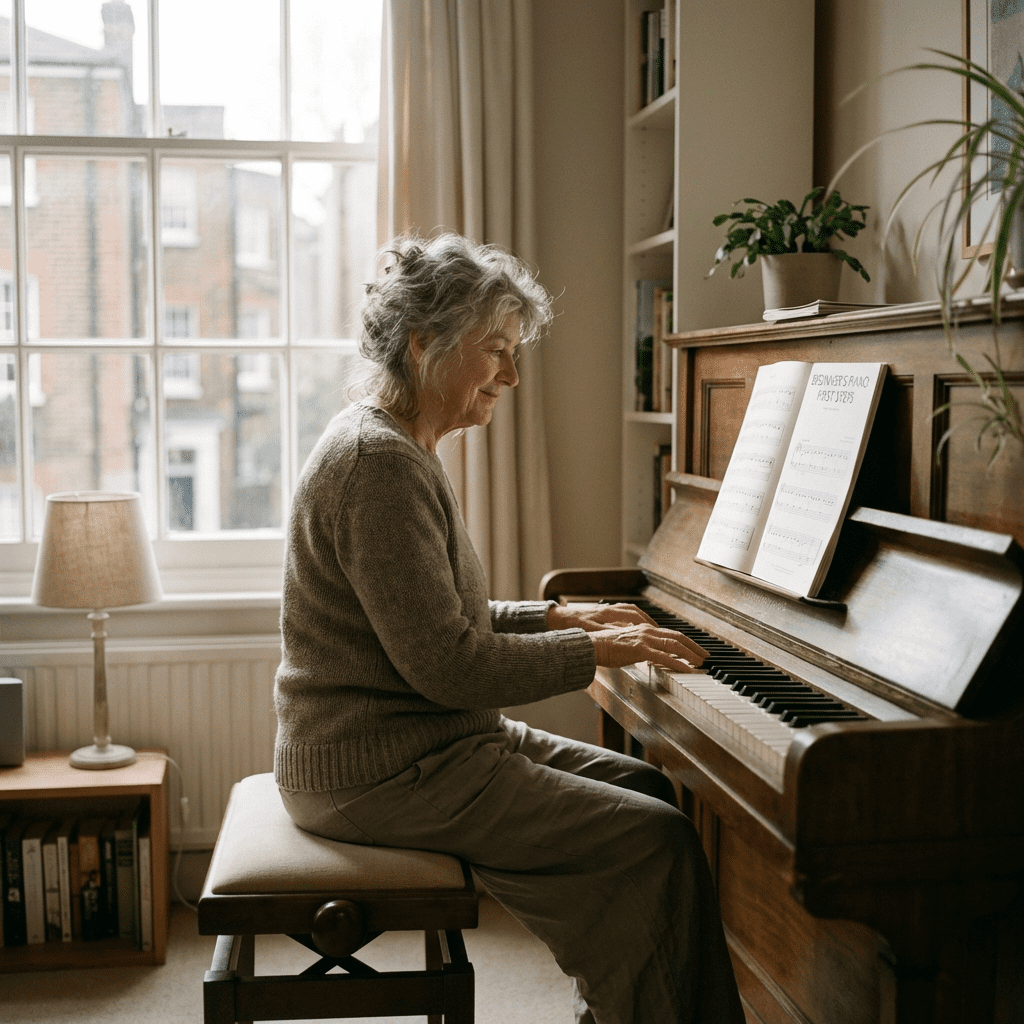
You do not need a heroic commitment. You need a clear, encouraging first experience—and a pace that respects how you live now.
Why Learn Piano Later in Life? Cognitive, Emotional and Social Benefits
Research-backed benefits: memory, attention, and mental “reserve”
Learning piano later in life is not an act of nostalgia. It is, in a very literal sense, training. An Exeter University study reported that people over 40 who played an instrument—piano in particular—performed significantly better on memory and mental tasks than non-musicians. A separate long-term study following older adults across four years found that those who continued piano training showed a slower decline in working memory and preserved volume in a subcortical brain area (the putamen) compared with those who stopped lessons. Systematic research into music-making interventions in later life also points towards neurobiological effects consistent with the idea that the brain remains adaptable.
This is neuroplasticity, not magic. Piano asks you to do several things at once: read, listen, coordinate both hands, and remember what comes next. Done at a sensible pace, that combination becomes a kind of “whole-system” exercise—cognitive and physical, precise and creative.
Real-life outcomes: confidence, mood, and the social life of music
The benefits are not only cognitive. Older amateurs involved in active music-making have reported improved well-being, including confidence and reduced anxiety, alongside a stronger sense of purpose. A London retiree from Camden described her weekly piano class as a social highlight: practice became something she looked forward to, rather than a duty to endure. Another student, Jean (72, Islington), put it more plainly:
“After only a few months of lessons, I can remember melodies I never thought possible.”
Group learning can be particularly important in a city that is busy but, for many people, oddly isolating. A weekly session creates rhythm in the diary and a reason to leave the flat—then stay for a chat afterwards. Piano can be solitary at home; lessons, done well, rarely are.
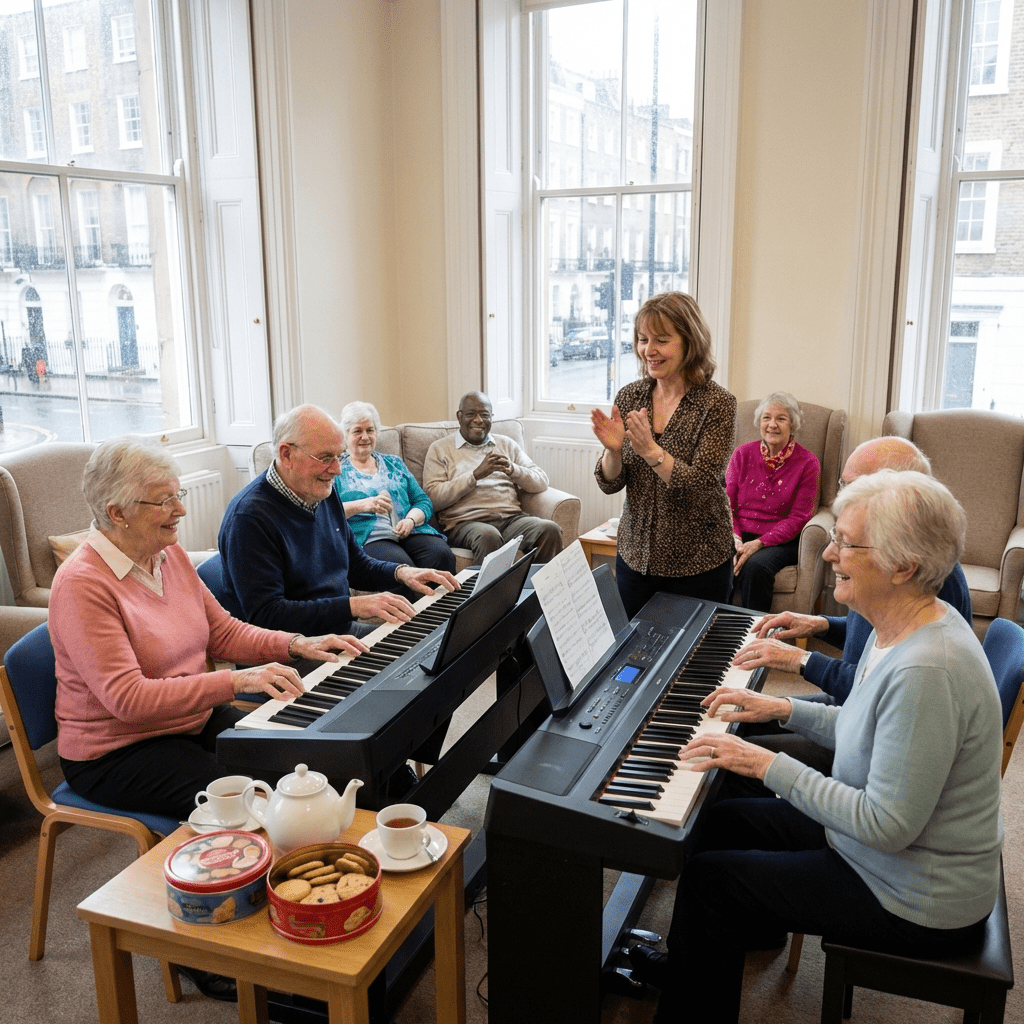
Next step: If you are curious but uncertain, book an introductory lesson and treat it as information-gathering. You do not need a heroic commitment. You need a clear, encouraging first experience.
Which Lesson Format Fits You? One-to-One, Group, Online and Home Visits
Choosing a format: clarity beats ideology
There is no single “correct” way to learn. The best format is the one you can attend consistently, without strain—physically, socially, or logistically.
Pros and cons (quick guide)
- One-to-one lessons: focused, personal progress; ideal if you want private feedback and a tailored pace.
- Group lessons: sociable and motivating; a good option if you enjoy learning alongside others and want a more affordable structure.
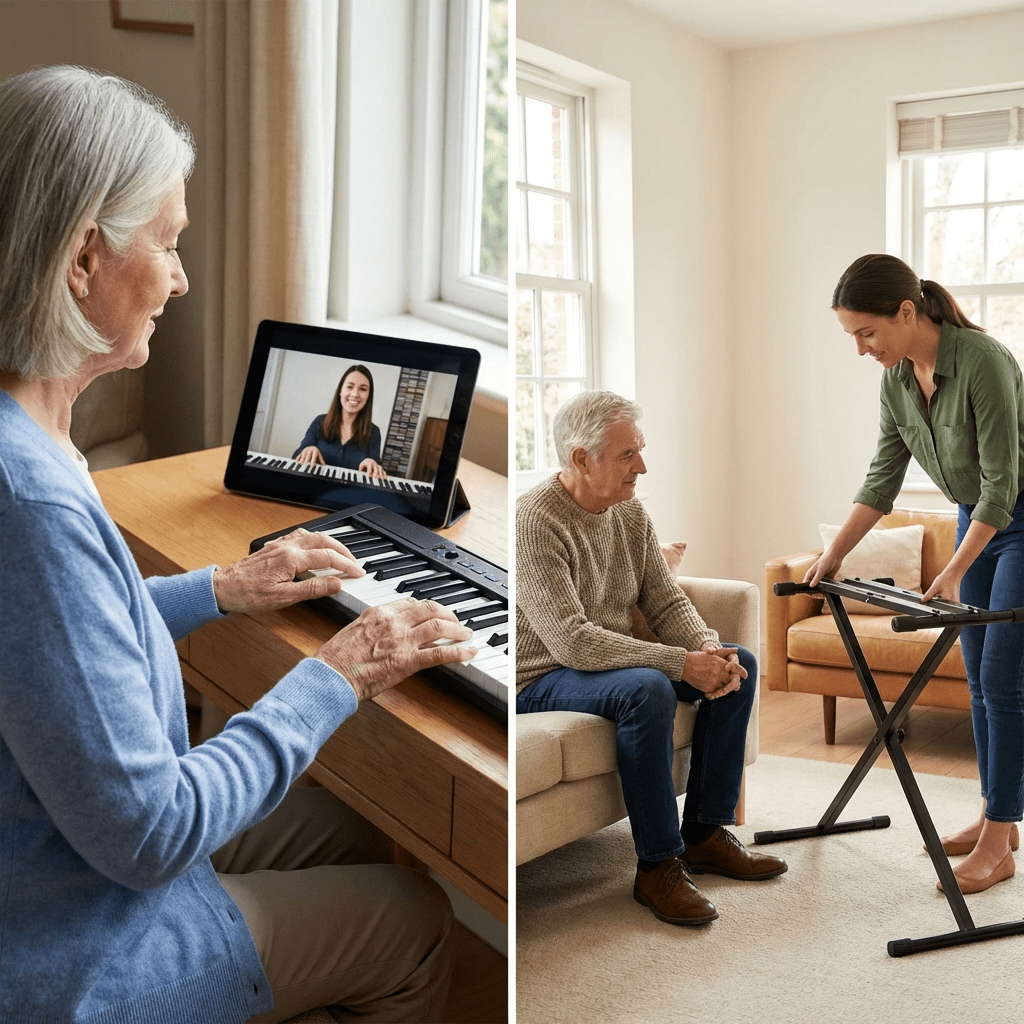
- Online lessons: practical and comfortable at home; useful if travel is difficult or you are outside central London.
- Home visits: the teacher comes to you; particularly helpful if mobility is a concern. WKMT can arrange mobile lessons in areas including Islington, Camden, and Southwark, with an electric keyboard brought to your doorstep.
Accessibility adaptations: getting the details right
Accessibility is not an abstract principle; it is the difference between a lesson you enjoy and a lesson you dread. Our studios in Kensington, Bermondsey and Camberwell are served by major Tube lines and bus routes. The Bermondsey studio is within walking distance of Bermondsey station on the Jubilee line, which is step-free. West Kensington studio is a minute from West Kensington station on the District line (not step-free). For those where stairs, walking distance, or fatigue are an issue, online lessons or home visits can remove the most common barriers at once.
We can also adjust lesson set-up—bench height, positioning, and pace—based on comfort. If you have concerns (arthritis, reduced stamina, or simply a preference for shorter sessions), say so early. It helps us design a lesson plan that serves you, not the other way round.
Next step: Tell us what your week actually looks like—travel tolerance, best times of day, and whether you would rather learn quietly one-to-one or with others. We will recommend a format you can sustain.
What to Expect in Your First 6 Months — A Confidence-First Curriculum
Typical progression: small wins, properly earned
The early months should feel achievable. Our approach is confidence-first, but not vague: we build skills in a deliberate sequence so that you can feel improvement without being rushed.
- Weeks 1–4: posture, relaxed hand position, basic rhythm, and simple coordination. You will learn to locate key notes (including middle C) and begin reading very simple notation. Many students play their first recognisable melody within the month—often something like “Ode to Joy”.
- Months 2–3: steady reading habits, basic chords, simple left-hand patterns, and short pieces chosen to match your taste and attention span.
- Months 3–6: scales and finger patterns introduced sensibly (as tools, not as tests), plus longer pieces or arrangements—perhaps simplified Bach minuets or a Beatles tune, depending on what motivates you.
We do not teach older beginners as if they are preparing for an exam by default. Some students enjoy graded structure; others simply want the pleasure of playing. Both are valid, and the curriculum should reflect your reason for starting.
Personalised goals: the lesson serves the learner
Expect positive feedback—but not empty praise. The aim is to build reliable habits and reduce the fear of “getting it wrong”. We typically blend a little structured practice (rhythm, coordination, finger patterns) with moments that keep the ear and imagination alive (simple improvisation, familiar tunes, duet playing).
We will also talk frankly about home practice. A basic 88-key keyboard can be enough, and we can advise on a suitable digital piano set-up. For home-visit lessons, a portable keyboard can be brought. Comfort matters: older bodies often benefit from gentle hand preparation and sensible practice intervals. One Islington student, Marjorie, began with light stretching and short duets, then found herself learning longer pieces by month five—because the foundations were secure.
Next step: In your first lesson, mention any previous musical experience (even childhood) and the music you genuinely enjoy. We will set simple milestones that you can meet without pressure.
Meet Your Teachers — London-based Tutors Experienced with Older Adults
Qualified, DBS-checked, and used to adult learning
Trust is practical. WKMT requires all tutors to be fully qualified and DBS-checked, and many continue to perform professionally. That matters because adult students often want teaching that is both patient and musically serious: you want encouragement, but you also want to be taught properly.
Co-founder Juan Rezzuto, for example, has over 30 years of experience and works one-to-one with adult beginners with a calm, structured approach. “My teacher guided me so patiently when my memory slipped,” recalls Anand (75, Southwark). It is a simple point, but a vital one: older adults do not need to be pushed; they need to be guided—clearly and without fuss.
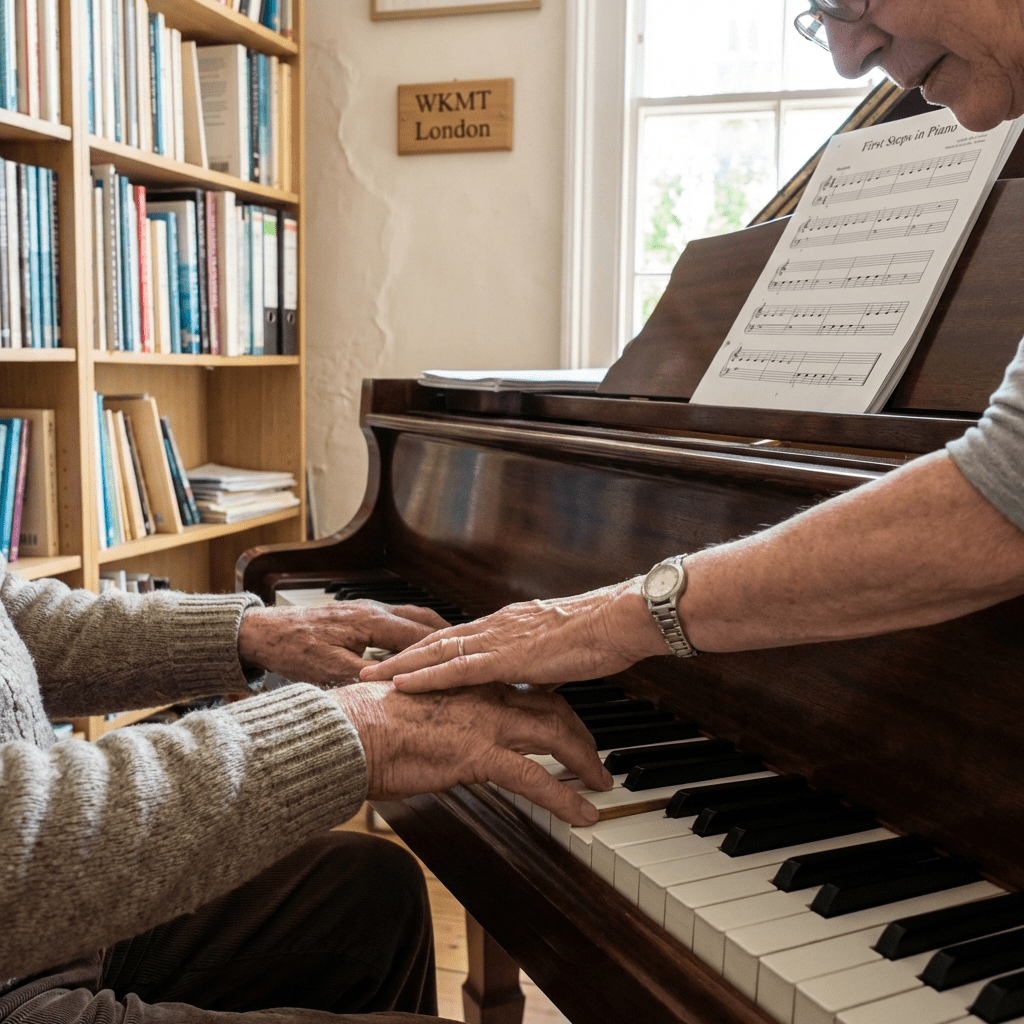
We can also match style to taste (classical, jazz, pop) and, where helpful, offer multilingual teaching. If you have concerns around physical comfort, lesson pacing, or confidence, tell us. It will shape the choice of tutor and the structure of your plan.
Next step: Describe the kind of learning environment you prefer—gentle and steady, or more target-driven. We will match you accordingly.
Pricing, Scheduling and Trial Lessons — Transparent Options
Rates, timing, and a low-friction way to begin
WKMT keeps pricing straightforward. Standard one-to-one lessons are currently £53 per hour, with shorter sessions available on request. Group classes start at a lower fee, reflecting shared tuition, and we occasionally run adult beginners’ starter packs or seasonal workshops—ask for current options.
A taster trial lesson is available to new students; rates and availability are listed on the trial booking page. Lessons run seven days a week, from 9am to 9pm, which means you can choose quieter daytime slots or evenings if you are balancing other responsibilities. Concessions for seniors and low-income students may be available; again, it is best discussed directly so we can confirm what is currently offered.
Next step: If you want to start without overthinking, book a trial lesson via our Trial Piano Lesson page, or explore timings on our Music Courses page.
FAQs about Piano Lessons for Older Adults
Can I start with no musical background?
Yes. Most older beginners start from zero, and that is not a disadvantage. It simply means we begin with clear foundations—hand position, rhythm, basic note-reading, and simple pieces that feel musical from the start. The goal is not to impress anyone; it is to build a skill you can enjoy.
Am I too old to start piano lessons?
No. The evidence around music-making and cognitive health is one reason piano lessons for older adults have become so popular: research links continued musical training with better performance on memory tasks and slower working-memory decline in later life. More importantly, students in their 70s often progress steadily because they practise thoughtfully. As one tutor puts it: it is never too late, provided the teaching respects your pace.
What if I have mobility or health considerations?
Tell us early. We can recommend a lesson format (online, home visit, or a particular studio) that reduces travel strain, and we can adjust the physical set-up in lessons. The point is comfort and consistency, not endurance.
Do you offer home visits and online lessons?
Yes. Online lessons are available via video, and we also offer home-visit lessons where a teacher can bring a portable keyboard. If you are deciding between formats, we can also discuss a hybrid approach.
Do I need a piano at home?
A full acoustic piano is lovely, but it is not mandatory. An 88-key digital piano or keyboard is generally sufficient for home practice, and we can advise on practical options. If you are taking home-visit lessons, a portable keyboard can be provided for the session.
Should I take private or group lessons?
Private lessons offer the most personalised feedback, which many older beginners find reassuring. Group lessons add sociability and motivation. Some students combine both: one-to-one for weekly structure, plus an occasional group workshop for confidence and community.
How to Book & What to Bring — Local Logistics
Booking can be done online via the trial lesson page or by contacting the studio directly by phone or WhatsApp. For your first session, bring nothing more complicated than curiosity; if you already own sheet music you love, we can use it as a reference point.
Kensington Studio (West London): 40 Kensington Hall Gardens, W14 9LT. Nearest Tube: West Kensington (District line), a 1-minute walk (no step-free access). Street parking on Beaumont Avenue. Last checked: 2025-07-15.
Camberwell Studio (South-East London): 79 Brisbane Street, SE5 7NJ. Nearest Tube: Elephant & Castle (Bakerloo, step-free; Northern line not step-free), about 10 minutes on foot. Nearby bus routes: 171, 468. Last checked: 2025-07-15.
Bermondsey Studio (Central/East London): 242 Lucey Way, SE16 3UG. Nearest Tube: Bermondsey (Jubilee line, step-free), roughly 8 minutes’ walk; Canada Water station (Jubilee/Overground) is also nearby. Local buses and Santander Cycles available. Last checked: 2025-07-15.
If mobility is a concern, we recommend planning via Citymapper or TfL, and we are happy to discuss step-free routes and the most convenient location.
Testimonials & Success Stories
Arielle, 70 (Camden): “I never played a note before but started lessons last year. I was amazed when I learned a short Debussy piece in 6 months. My memory feels sharper, and I’ve made friends at the Bermondsey studio.”
Henry, 75 (Southwark): “After retirement I was looking for something to do. WKMT paired me with a patient teacher who knew just how to work with my arthritic hands. Now I play jazz standards at home and even surprised my grandchildren!”
Margaret, 68 (Southwark): “The weekly group lesson is the highlight of my week.”
Jean, 72 (Islington): “After only a few months of lessons, I can remember melodies I never thought possible.”
These stories are not unusual. What they share is not talent, but continuity: a realistic plan, a teacher who listens, and a learning environment that does not punish mistakes.
Conclusion & Next Steps
Good piano teaching for older adults is not about being “treated gently”. It is about being taught intelligently, with respect for your pace and your reasons for learning. If you want piano lessons for older adults in London that improve memory, confidence and everyday joy—without the theatre—WKMT can help.
Explore our Music Courses, or book directly via our Trial Piano Lesson page. If you are unsure which format fits, contact us and we will talk it through.
If you open a link and it does not load as expected, please let us know and we will provide the correct booking route immediately.
Sources
Neurobiological effects of music-making interventions for older adults: a systematic review – PMC
Piano lessons for Beginners in London | WKMT
Piano Lessons London | WKMT Piano Studio
Bermondsey Underground Station – Transport for London
Elephant & Castle Underground Station – Transport for London