
 TRIAL LESSON
Piano Lessons, Uncategorized
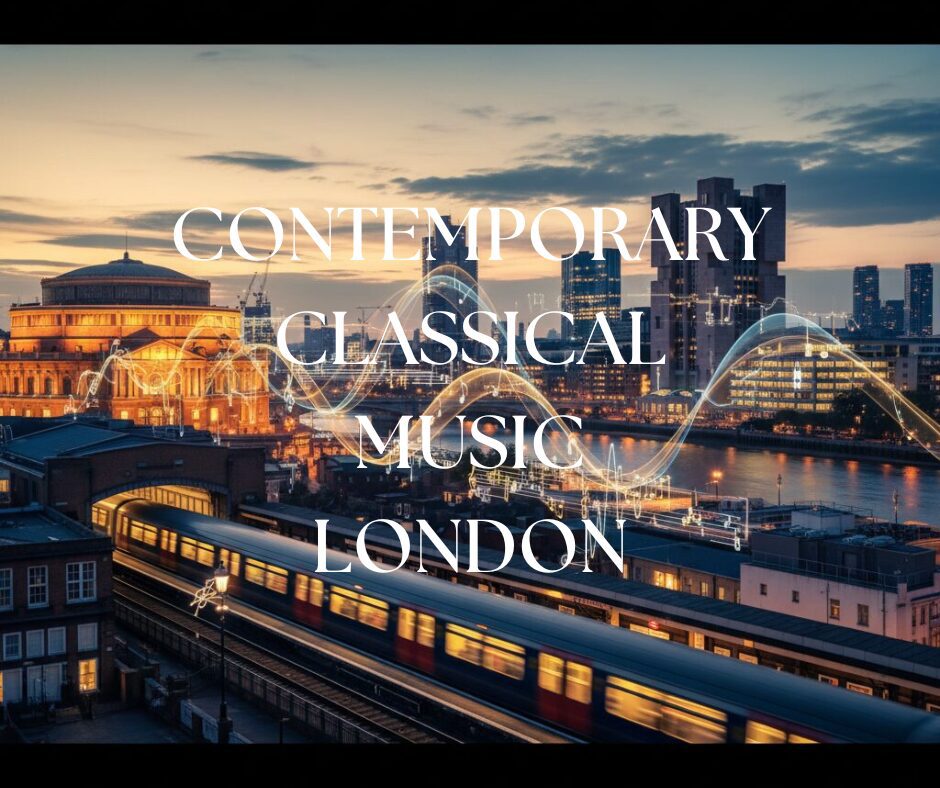
Contemporary Classical Music London: Modern Masterpieces and Live Performances
Dec
Contemporary Classical Music in London
Contemporary Classical Music in London — What to Hear and Where
London is a city where a late‑night electroacoustic set can sit a Tube ride away from a symphonic world premiere. Few capitals match its appetite for living composers: each summer the BBC Proms packs in new scores and commissions, major orchestras keep contemporary work close to the centre of their seasons, and specialist ensembles treat the music of now with the same rigour afforded to the canon. If you are curious about contemporary classical music in London, this guide maps the scene with clarity: who to hear, where to go, what to listen for, and how to plan your season.
The London New‑Music Scene — An Overview
Contemporary classical in London is not one thing but a set of overlapping worlds. You might encounter a chamber premiere at Wigmore Hall, a multimedia installation under Shoreditch arches, or an orchestral debut at the Royal Albert Hall. Crucially, the city embraces both the formal concert and the experimental night — which keeps audiences fluid and curious.
Strands you’ll hear
– Orchestral and large‑scale: symphonic premieres at the Barbican and Southbank Centre, often within flagship seasons or festivals.
– Chamber and vocal: intimate first performances by ensembles who specialise in new work, from hard‑edged modernism to lyrical miniatures.
– Electro‑acoustic and experimental: improvised sets, spatialised sound, and cross‑genre projects in alternative spaces such as Dalston’s Café OTO.
– Participatory and community: projects that welcome non‑professionals and new listeners into the creative process.
How institutions shape the ecosystem
Post‑war pioneers gave London a foundation, and institutions have sustained it. The London Sinfonietta, founded in 1968, set the standard for specialised new‑music performance and still leads with commissions and virtuosity. The BBC Symphony Orchestra integrates premieres into its Barbican seasons and devotes entire “Total Immersion” days to modern composers and themes. Each year the BBC Proms places new music in front of vast audiences; a recent season included dozens of new commissions and premieres across July to September at the Royal Albert Hall. Conservatoires and universities — from the Royal Academy of Music to Guildhall — replenish the scene with composers and performers ready to innovate. The result is a living culture where discovery is routine rather than exceptional.
The Must‑See Ensembles and Orchestras
London Sinfonietta
A touchstone for contemporary music since 1968, the London Sinfonietta treats new work as core repertoire. It has amassed hundreds of premieres across five decades and continues to commission, collaborate and tour with unwavering focus. In its recent seasons it has celebrated milestones with artist partnerships, composer spotlights and cross‑disciplinary projects, appearing regularly at Southbank Centre’s Queen Elizabeth Hall (Southwark) and Kings Place (Islington). Whether marking a centenary for a twentieth‑century giant or platforming emerging voices, the ensemble’s hallmark is precision with purpose — new music performed at the highest level.
BBC Symphony Orchestra
Based at the Barbican (City of London), the BBC Symphony Orchestra is central to London’s contemporary landscape. It anchors the Proms, brings premieres to its subscription concerts, and curates “Total Immersion” days that place composers and ideas under the microscope. Many performances are broadcast live on BBC Radio 3 and made available on BBC Sounds, widening access well beyond the hall.
LPO, Philharmonia and LSO
Resident at the Royal Festival Hall (South Bank), the London Philharmonic Orchestra maintains a strong commissioning profile, with a Composer‑in‑Residence and schemes for young composers that feed into multiple premieres each season. The Philharmonia likewise embeds new scores into its programming. Over at the Barbican, the London Symphony Orchestra cultivates future creators through initiatives such as the Panufnik Composers Scheme and continues to premiere works by leading international figures.
Specialist and experimental groups
The London Contemporary Orchestra (founded 2008) thrives on collaboration and context — site‑specific marathons, partnerships with artists from electronic and film worlds, and bold programming that draws new audiences. Aurora Orchestra often pairs its signature theatricality with fresh commissions. Britten Sinfonia’s London appearances mix contemporary and core repertoire to illuminating effect. On the experimental edge, Apartment House and EXAUDI Vocal Ensemble champion radical work from John Cage to the youngest composers, while CoMA (Contemporary Music for All) invites amateurs to share the stage with professionals — a practical expression of London’s inclusive ethos.
Key Venues and Festivals
Barbican & Southbank Centre — large‑scale programming
The Barbican Centre (City of London) is home to the LSO and BBC Symphony Orchestra and a regular site for significant premieres, staged projects and one‑day immersions. Its partnerships with Guildhall and broadcasters help turn curiosity into audience. Across the river, the Southbank Centre (Lambeth/Southwark) anchors contemporary activity with three halls — Royal Festival Hall, Queen Elizabeth Hall and Purcell Room — hosting orchestral unveils, chamber series and new‑music festivals. A recent five‑day festival, Sound Within Sound, placed underrepresented twentieth‑century voices and immersive new works across stages and public spaces, demonstrating how curation and architecture can reframe listening.
Kings Place, Wigmore Hall, Café OTO, and more — contrasting atmospheres
Kings Place (Islington) offers an agile platform, with intimate halls that suit adventurous series including “Out Hear” and themed strands such as London Unwrapped. Wigmore Hall (Marylebone), famed for chamber music, now integrates a dedicated contemporary series and co‑promotions, ensuring the newest chamber writing benefits from its excellent acoustic. For the unbuttoned end of the spectrum, Café OTO (Hackney) is a global meeting point for improvised and experimental music. The Roundhouse (Camden) has staged boundary‑pushing events, from site‑specific orchestral projects to homages that blur categories. St John’s Smith Square (Westminster), LSO St Luke’s (Old Street), Village Underground (Shoreditch) and Oval Space (Bethnal Green) add further textures — ecclesiastical resonance, warehouse scale, and late‑night energy.
Festivals and series to watch
Spitalfields Music animates East London’s historic sites with modern commissions and cross‑era juxtapositions each summer. The London Contemporary Music Festival (LCMF) brings edge and focus to concise editions, recently touching on AI‑inspired scores across Kings Place and Wigmore. Tête à Tête champions new opera and music theatre, often around King’s Cross and Hackney. Nonclassical runs a festival and monthly club nights that place composers in casual settings. And for sheer scale, the BBC Proms (mid‑July to September, Royal Albert Hall) threads premieres through symphonic programmes and dedicated chamber “Proms at…” events, placing new work before the widest possible public.
Contemporary Composers & Works to Know
British voices active in London
Sir Harrison Birtwistle (1934–2022) shaped post‑war British modernism with music of ritual force and mythic scope. London heard many of his milestones — from orchestral canvases to opera — and his influence still runs through the scene. Thomas Adès (b. 1971) combines structural imagination with emotional clarity; orchestral works such as Asyla and stage pieces like The Tempest have become modern touchstones, with London premieres and productions that drew broad audiences. Anna Meredith (b. 1978) is a model of the city’s hybrid spirit, moving between concert scores, art‑pop releases and multimedia collaborations; her work can place clarinets beside synthesisers and still feel inevitable.
Other significant figures span the spectrum: Tansy Davies fuses modernist grit with rock‑inflected energy; Jonny Greenwood’s orchestral writing, often realised with the London Contemporary Orchestra, draws new ears into classical rooms; Errollyn Wallen’s eclectic voice moves easily between concert platforms and public moments; Shiva Feshareki’s live turntable and spatial experiments have filled major halls; and George Benjamin’s luminous opera and orchestral writing continues to attract international acclaim, with Covent Garden premieres that became landmarks.
Rising and frequently performed names include Hannah Kendall, Anna Thorvaldsdottir, Daniel Kidane, Freya Waley‑Cohen and Cassie Kinoshi. In London you can often hear these composers introduce their own work in pre‑concert talks — one of the luxuries of a city where the creators are present.
How to Experience a New‑Music Concert in London
Tickets, memberships, and where to sit
Start by embracing variety: book a major‑hall premiere and pair it with a smaller experimental night. Most venues offer concessions; students and under‑30s can often buy £5–£10 seats, and some ensembles run occasional “pay what you choose” events. For orchestral texture and clarity, upper circle front rows or stalls under the balcony can be rewarding; in small halls, sit close to the players and let the detail tell the story. If you prefer a guided route, consider community‑led outings, such as group visits organised by WKMT, which pair concerts with conversation.
Etiquette, access, and context
Formality varies by room: Wigmore Hall is focused and quiet; club‑style events tolerate movement and drinks; many gigs welcome applause between movements. Look for pre‑concert talks and short introductions — especially at the Barbican and Southbank Centre — which can sharpen listening in 15 minutes. Accessibility information is clearly published by major venues; relaxed performances and informal formats are increasingly common. When in doubt, ask an usher. London audiences are used to new faces.
Listening & Recording Guide
Where to keep exploring
BBC Radio 3’s New Music Show curates recent performances each week, and BBC Sounds hosts concert replays — including Proms events that remain available for extended periods. The archive is a practical way to revisit a premiere you attended or to catch one you missed.
For recordings, NMC Recordings is a cornerstone catalogue for British contemporary music, with hundreds of albums spanning established and emerging voices. Specialist discs from London ensembles make strong entry points: the London Sinfonietta’s label documents major commissions and performance projects, from visceral large‑ensemble works to intimate chamber pieces. Cross‑platform discovery helps too: the London Contemporary Orchestra curates an NTS Radio show that traces threads between the records that inform its programmes and the projects you hear live. Many venues stream or release live tapes — Wigmore Hall has on‑demand offerings — so your concert diary can become a listening library.
Practical Calendar — When to Visit & What to Book
Seasonal highlights
Winter to early spring brings composer‑focus days at the Barbican and thematic series across Kings Place. April and May often host a Southbank contemporary festival and city‑wide showcases; May also sees the WKMT London Music Festival, a day‑long piano event that couples performance with community. Summer is peak time: Spitalfields Music animates the East End, independent series surface around Kings Place and Café OTO, and the BBC Proms fills July–September with premieres large and small. Autumn launches new orchestral seasons; October and November frequently carry the year’s flagship commissions at the LPO, LSO and Philharmonia, alongside one‑off experimental nights and cross‑genre sets. December is quieter but rich in reflections, awards and winter festivals. Always check venue listings and book early for headline premieres.
FAQ on Contemporary Classical Music in London
- Do I need deep classical knowledge to enjoy contemporary concerts?
- No. Many events include short talks and clear programme notes. Open ears and curiosity are enough; the rest you learn by listening.
- How can I find out what’s on?
- Browse the Barbican, Southbank Centre, Wigmore Hall and Kings Place listings, and follow ensembles such as the London Sinfonietta and London Contemporary Orchestra. City‑wide listings and venue newsletters are reliable; WKMT’s events page is useful for community concerts and meet‑ups.
- Are tickets expensive?
- Not necessarily. Many contemporary events fall in the £10–£25 range, with generous concessions. Lunchtime recitals and club nights can be even cheaper, and some foyer concerts are free.
- What’s the etiquette?
- Arrive on time and silence devices. Some concerts are formal, others relaxed; organisers will signpost the vibe. Applause between movements is generally fine at informal events.
- Can I go alone?
- Absolutely. New‑music audiences are friendly, and post‑concert conversations are part of the pleasure. If you prefer a group, consider joining a WKMT outing.
Conclusion on Contemporary Classical Music in London
Contemporary classical music in London is a living conversation — between composers and players, listeners and spaces, tradition and experiment. The best way in is simple: choose a premiere, take a seat, and listen closely. Then keep going. Explore recordings, follow the ensembles, and mix grand halls with intimate rooms. If you’d like company, join a musical evening or masterclass with WKMT, or start planning via our events hub. London is ready; the rest is yours.
Sources on Contemporary Classical Music in London
BBC Proms 2023 line-up announced | Pianist
BBC Symphony Orchestra | HarrisonParrott
London Sinfonietta 23/24 Season | London Sinfonietta
Classical Concerts London by WKMT
Season Announcement: 2023/24 – London Philharmonic Orchestra
London Contemporary Orchestra | New:Music New:Audiences
London Contemporary Orchestra – Wikipedia
Sound Within Sound | Southbank Centre
Highlights from Spitalfields Music Festival 2023
Harrison Birtwistle, ‘giant’ of contemporary classical music, dies aged 87 – Classic FM
Sir Harrison Birtwistle obituary | Classical music | The Guardian
BBC Proms 2023 line-up announced | Pianist
London Contemporary Orchestra – NTS Radio
Meet Juan Rezzuto: WKMT Festival – Markson Pianos
Spitalfields Music Festival 2023 Announces Line-Up – Broadway World