
 TRIAL LESSON
Piano Lessons
The Pros and Cons of Online Music Lessons

Apr
The Pros and Cons of Online Music Lessons
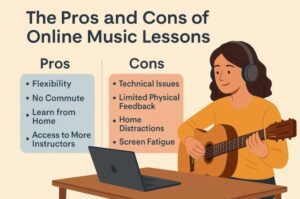
Online music lessons have become more common in recent years—and for good reason. With just a laptop and a stable internet connection, students can connect with expert music instructors from anywhere in the world. Whether you’re learning piano, voice, guitar, or even taking an orchestration online course, the options available today are broader than ever.
But online learning isn’t the perfect fit for everyone. For many, in-person lessons still offer distinct advantages that virtual setups can’t quite match. From hands-on feedback to the rhythm of real-time playing, there are plenty of reasons to stick with traditional methods.
This article explores both formats—online and in-person—to help students, parents, and educators understand the trade-offs. We’ll break down the essential conditions for online learning success, weigh the pros and cons of each approach, and examine how cost and learning style play into the decision.
Factors for Successful Online Learning
Online music lessons sound easy at first—just log on and start playing. But behind the scenes, several conditions must be met for students to get the most out of their virtual sessions.
A Reliable Internet Connection
First and foremost, students need a stable and reasonably fast internet connection. Glitches, buffering, or audio dropouts can make it difficult for both students and teachers to stay focused. A poor connection can cause delays that interrupt the flow of the lesson or make playing in sync impossible.
The Right Environment
Online students must have access to a quiet, distraction-free space. Background noise, family interruptions, or cluttered setups can break concentration and reduce the effectiveness of each session. Ideally, students should have a designated practice area—somewhere they can use regularly without disruptions.
Instrument Access and Setup
Unlike classroom settings, students learning at home need their own instruments and accessories. This includes proper seating, music stands, lighting, and any cables or adapters required for connecting gear. Teachers may not be able to help troubleshoot setup issues through a screen, so students or parents should be comfortable handling basic equipment.
Comfort with Technology
Finally, online students must be reasonably tech-savvy—or have someone who can help. That means navigating lesson platforms like Zoom or Skype, sharing screens or files, and adjusting camera angles to show posture or hand position. While most platforms are user-friendly, technical hiccups can still affect lesson quality and pacing.
Benefits of In-Person Lessons
While technology makes remote learning possible, there’s still a lot to be said for face-to-face instruction. For many students, especially beginners, nothing beats the personal touch of an experienced teacher who can see, hear, and respond in real-time.
1. Hands-On Guidance
In-person teachers can adjust a student’s fingers, posture, or hand placement on the spot. That kind of feedback is especially valuable for instruments like violin, flute, or piano, where small physical adjustments can make a big difference in tone and technique. Learning how to hold a bow, angle a wrist, or relax a shoulder is much easier when a teacher can demonstrate and correct posture physically.
2. Classroom Resources
Many in-person lessons take place in music studios or schools, where additional resources are available. This might include higher-quality instruments, soundproof rooms, professional sheet music libraries, or even group learning opportunities like ensembles or workshops. Being in an environment designed for music fosters focus and motivation. There’s less temptation to check phones, multitask, or get distracted by unrelated noise.
3. Natural Interaction and Real-Time Playing
In-person lessons allow for instant back-and-forth interaction. The teacher hears you playing without lag or audio compression. You can ask a question and get a response without delay. You can even play along together—something still not possible with most video chat platforms due to latency issues.
Live interaction makes learning more organic and enjoyable. It also helps develop timing and rhythm, which are harder to build when you can’t sync up in real-time.
4. Annotated Materials and Visual Learning
In-person teachers can quickly mark sheet music or show fingerings right on the page. This hands-on instruction helps students visualize concepts and understand corrections faster than verbal explanations alone. Younger students, in particular, often benefit from being able to see and touch the materials directly rather than navigating PDFs or screen shares.
Challenges of In-Person Lessons
That said, in-person instruction isn’t always convenient. For some families and students, the logistics involved can create barriers that make online lessons more appealing.
Time Spent Commuting
Getting to and from a music studio can add up—especially in areas with traffic or long travel times. What might be a 30-minute lesson easily turns into an hour or more when you factor in preparation and transport. Busy parents juggling schedules may find this time commitment hard to maintain week after week.
Transporting Instruments
Lugging around a guitar, cello, or portable keyboard can be tiring. Even smaller instruments like flutes or violins require careful packing and handling. For students who don’t drive or rely on public transit, this can be a real hassle—sometimes even a dealbreaker.
Health and Safety Concerns
During flu season—or any time there’s heightened concern about contagious illness—some families may prefer to avoid public spaces. In-person lessons involve shared air and sometimes shared instruments or surfaces, which might not be ideal for all students. Online lessons offer a safer alternative when health is a top priority.
Limited Teacher Options Locally
In smaller towns or rural areas, students may only have access to a handful of local music teachers. And those instructors may not specialize in the instrument, style, or level that a student is looking for. This can limit progress or lead to mismatched learning experiences. In such cases, online options may fill the gap.
Challenges of Online Lessons
Despite the many advantages of learning remotely, online instruction comes with its own set of obstacles—especially for beginners or those needing physical correction.
Technical Glitches
From shaky Wi-Fi to frozen screens and low-resolution video, tech issues can interrupt lessons and make it hard to stay engaged. Audio lag can distort pitch, timing, or dynamics, leading to confusion about whether a student is playing correctly. While some of this can be mitigated with better equipment, not all families have the means or know-how to make those upgrades.
Limited Visual and Physical Feedback
Teachers working through a webcam can only see so much. If a student’s hand is off-frame or their body position isn’t visible, it’s hard to give accurate feedback.
Unlike in-person lessons, where a teacher might physically guide a student’s fingers, online instructors have to rely on verbal cues. This can slow learning or leave room for persistent technique problems.
Playing in Sync Is Difficult
Real-time playing—duets, call-and-response, or live accompaniment—is nearly impossible over video chat. Latency makes even a half-second delay disruptive. This limits a teacher’s ability to model tempo, phrasing, or ensemble work during the session.
Screen Fatigue and Distractions
After a long day at work or school, the last thing some students want is another screen. Online lessons demand sustained visual and mental attention, which can feel draining.
At home, it’s also harder to block out distractions—whether it’s a loud sibling, a phone buzzing nearby, or a pet walking through the room. These interruptions can chip away at focus and productivity.
Benefits of Online Music Lessons
Despite the challenges, online learning brings unique advantages that make it a better fit for many people—especially those looking for flexibility or access to specialized instruction.
1. No Commute, No Packing
Online lessons eliminate the need for travel. Students can take lessons from their bedroom, basement, or home office. That saves time, reduces stress, and makes scheduling simpler. There’s no packing up music books or dealing with forgotten gear. Everything is right where the student needs it.
2. Continuity While Traveling or Sick
Life happens—vacations, colds, busy weeks. Online lessons make it easy to stay consistent. Students can take a lesson from a hotel or stay on track even when they’re homesick. This kind of flexibility keeps momentum going and prevents long gaps between sessions.
3. Wider Access to Instructors
One of the biggest perks of online music education is the chance to work with instructors from anywhere. Students can choose a teacher who fits their style, skill level, or specific goals—be it jazz improvisation, classical technique, etc. You’re no longer limited by geography. That opens up opportunities for growth that local options might not offer.
4. Digital Tools and Resource Sharing
Online platforms make it easy to share sheet music, backing tracks, videos, and notes. Some apps include built-in features like metronomes, recorders, or interactive play-alongs. Teachers can track progress digitally and send recordings or exercises to help students review after the lesson ends.
Methods of Online Learning
Online music lessons come in many forms. Each offers different levels of interaction, structure, and cost.
Free Online Videos
YouTube and other free platforms are loaded with tutorials. They’re great for casual learners or brushing up on specific skills. However, because these videos aren’t personalized, students don’t get real-time feedback or customized learning plans.
Quality can also vary. Some content is excellent. Other videos may contain incorrect techniques or confusing advice.
Structured Self-Paced Courses
These are organized programs that guide students through a curriculum. Many are created by professionals and include videos, exercises, and quizzes. Students can move at their own pace and review material as often as needed. Courses like this can be an affordable way to learn theory, composition, or specific skills like orchestration.
Live Private Lessons Online
This format mimics traditional lessons. Students meet with their teacher over Zoom or another platform. The instructor provides real-time feedback, assigns homework, and adjusts each session based on student progress. This method is the most interactive and effective—especially when paired with strong internet, good tech, and a clear setup.
Cost Considerations
Online and in-person lessons may cost roughly the same—or vary based on the teacher and format. Some online teachers charge more because they spend extra time preparing materials, organizing digital tools, or recording feedback. Others may charge less because they avoid overhead costs like studio rental or commuting. Structured courses are often more affordable than private lessons, but they lack the personalized instruction that helps students grow faster.
Final Thoughts on The Pros and Cons of Online Music Lessons
Online music lessons and in-person instruction each have their place. What matters most is how well the format matches the student’s learning style, needs, and environment. Choose online lessons if you want convenience, flexibility, and access to instructors you wouldn’t find locally. Choose in-person lessons if hands-on correction, focused environments, and real-time collaboration are key to your success. Both methods can help you grow as a musician—as long as you stay motivated, keep practicing, and find the right teacher for your goals.
Book a trial piano lesson with us, and discover the enchant of piano and music lessons. Available in-studio in London or online worldwide.