
 TRIAL LESSON
Piano Lessons
The Black Keys on the Piano: A Child’s First Map of Pattern and Shape

Oct
WKMT London parent guide
The Black Keys on the Piano: A Child’s First Map of Pattern and Shape
Before note names become fluent, the keyboard already offers a map a child can see and feel. Groups of two and three black keys turn a long row of notes into repeating neighbourhoods, making first exploration purposeful rather than random.
In brief
The black keys piano pattern alternates in groups of two and three across the keyboard. These groups help children locate nearby white notes: C sits immediately to the left of each group of two, while F sits immediately to the left of each group of three. Beginners can use the pattern for orientation, rhythm games, improvisation and hand coordination before reading every note name.
Black keys piano groups: why the pattern matters
A piano can look like an overwhelming line of similar white notes. The raised black keys break that line into visible and tactile groups of two and three. Because the same arrangement repeats in every octave, a child needs to learn one small map and then recognise it across the instrument. The black keys piano layout therefore reduces visual load while encouraging movement beyond one fixed middle position. Ask the child to close their eyes and find a group of two, then a group of three, using touch alone. Open the eyes and travel from low to high, naming only the group size. This is orientation before naming. It builds the useful habit of looking for relationships rather than treating each key as an isolated fact.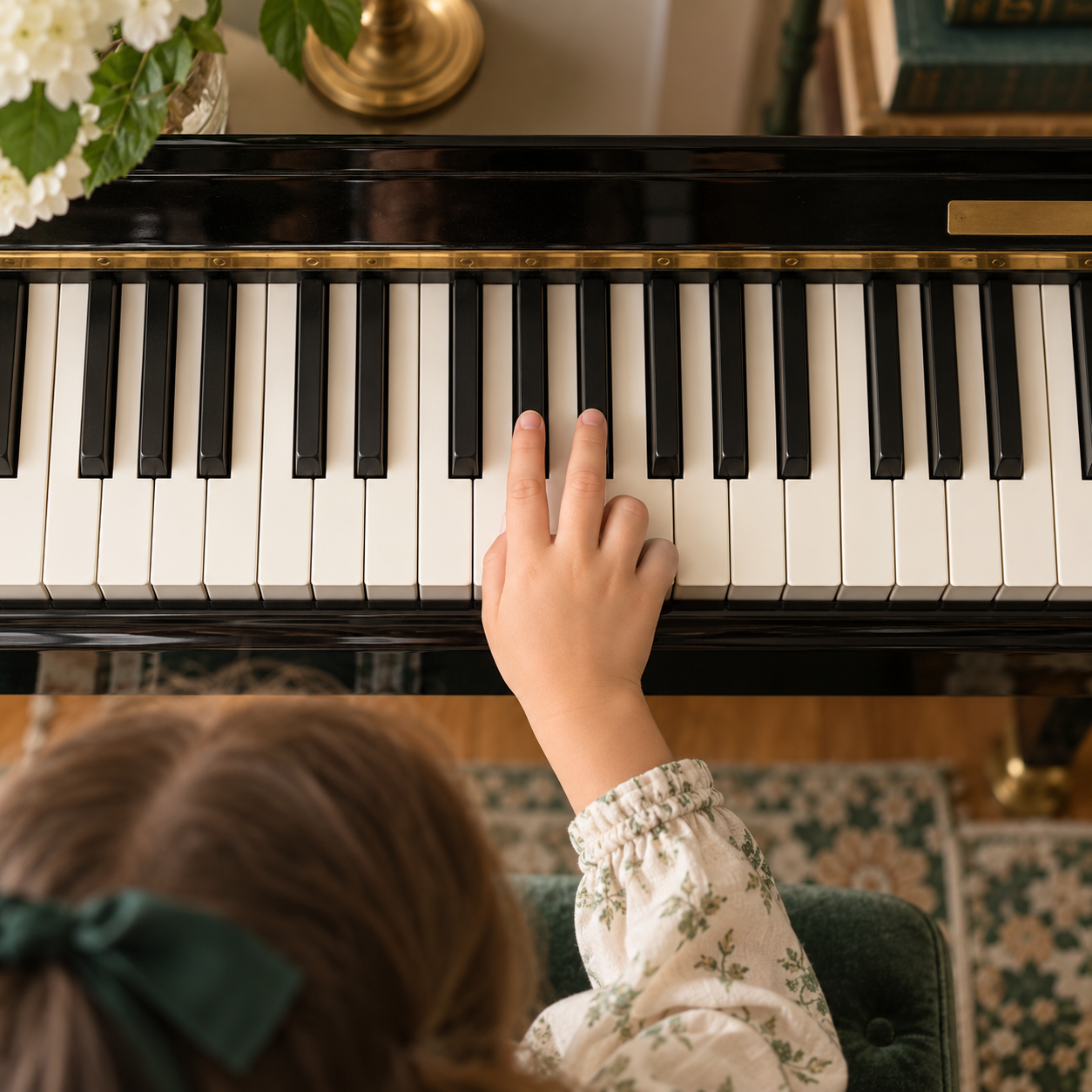
From two and three to C and F
Once the groups are secure, introduce landmarks. C is the white key immediately to the left of a pair of black keys; F is the white key immediately to the left of a group of three. Let the child find every C, then every F, without stickers. The pattern should do the remembering. Other white keys can then be located by their relationship to these landmarks. In children’s piano lessons in London, this map supports reading without rushing it. A teacher can connect keyboard location, pitch direction and notation gradually. The black keys piano pattern is not a trick to avoid note reading; it is a spatial foundation that makes later reading more meaningful.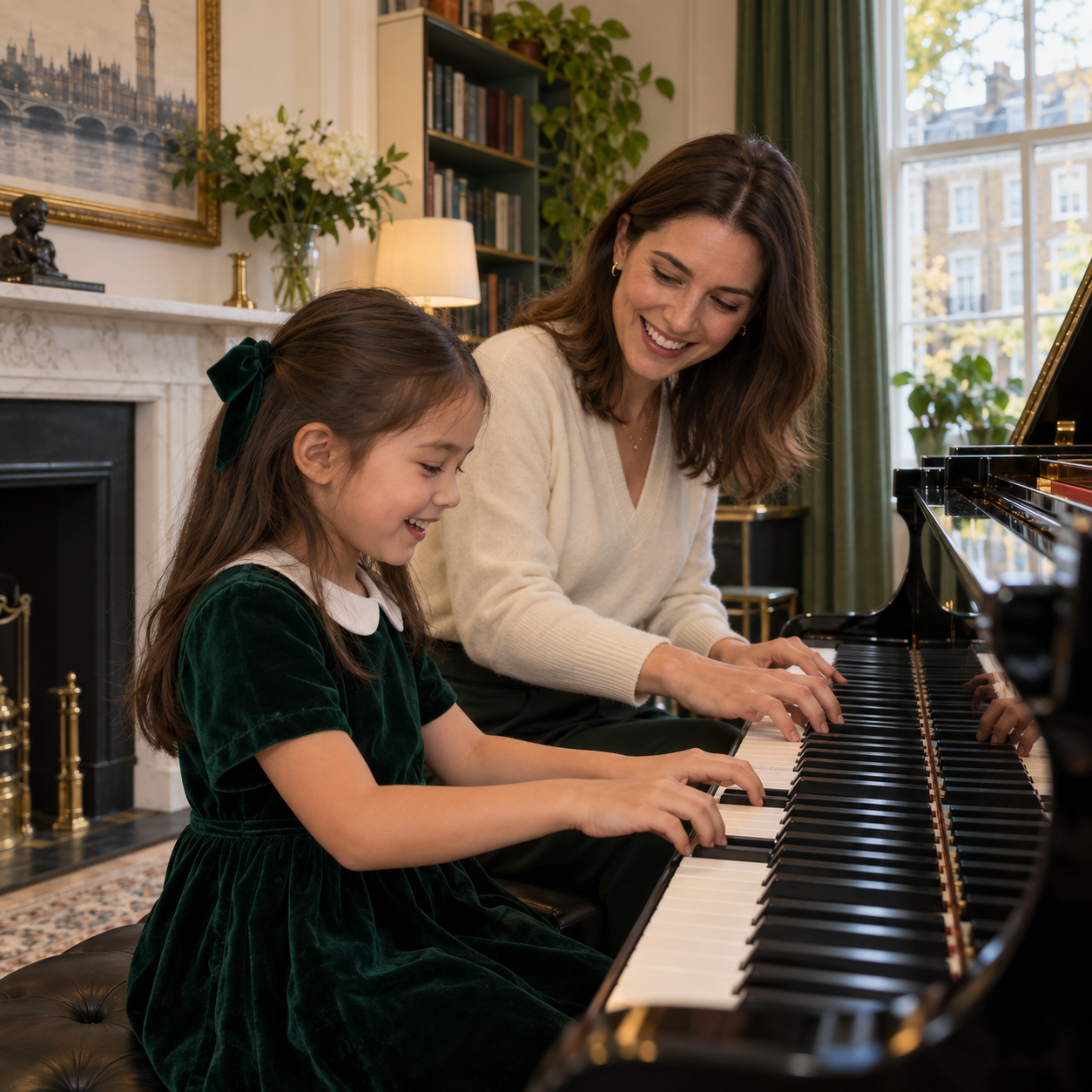
Rhythm and sound before note names
Groups of black keys are ideal for first improvisations because any combination can produce a clear pentatonic colour. An adult can play a steady low accompaniment while the child answers on groups of two or three. Set one boundary, such as four beats for each answer, so freedom remains connected to listening and pulse. Try a two-three conversation: play twice on a pair, pause, then play three times on a trio. The child copies and invents a reply. Change dynamics, articulation or register one element at a time. WKMT’s guide to pattern recognition at the piano explains how noticing repetition helps children organise both sound and movement.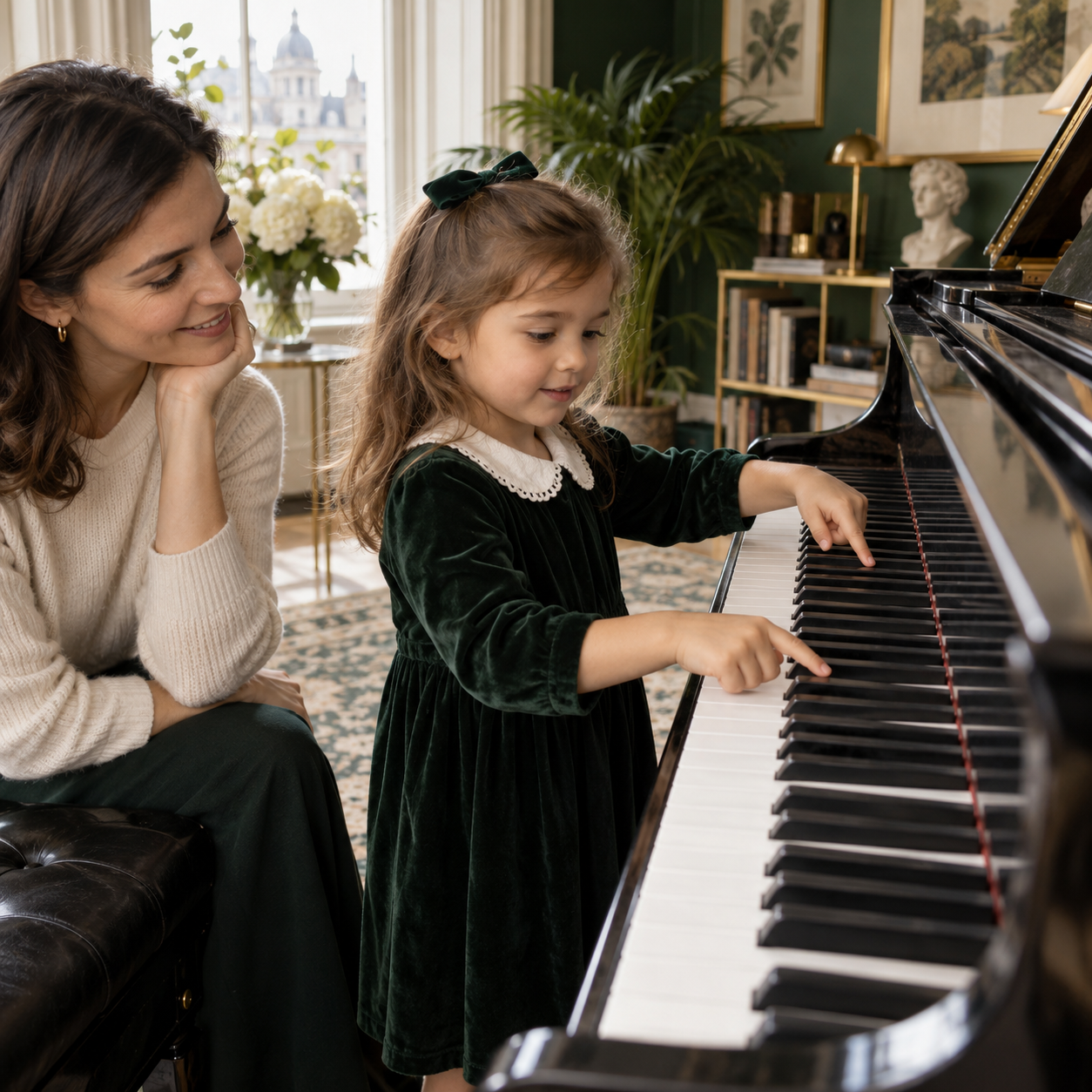
The keyboard becomes less intimidating when a child sees one repeating map instead of eighty-eight separate keys.
What parents should watch for
The activity should stay physically easy. A small hand does not need to stretch across an entire group. Use one or two relaxed fingers, keep the wrist free and allow the arm to travel. If a child presses hard from a fixed hand or collapses the fingertip, reduce the task and restore a comfortable movement. Accuracy is less important than curiosity joined to a healthy action. Avoid covering every key with letter stickers. Labels can draw attention away from the repeating geography and encourage children to read the keyboard as separate symbols. A temporary marker may help a particular learner, but the long-term goal is to recognise the two-three pattern, hear direction and move confidently across several octaves.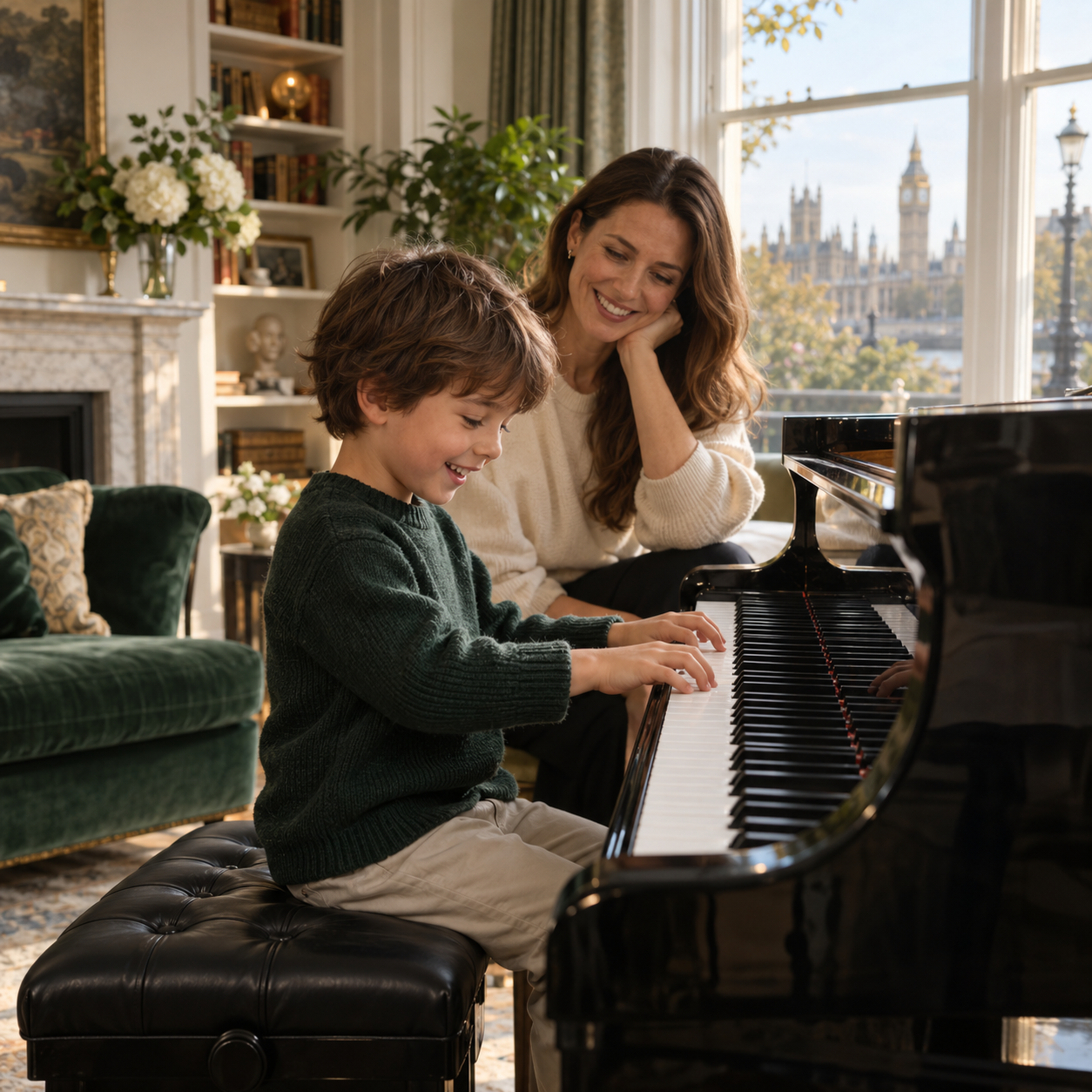
A five-minute home routine
Minute one: find every pair of black keys. Minute two: find every trio. Minute three: locate C beside each pair and F beside each trio. Minute four: copy a short rhythm on black keys. Minute five: invent a four-beat answer. Stop while attention remains fresh and finish by asking the child what pattern made the keyboard easier to understand. Repeat the routine on several days rather than extending one session. Vary the starting register so the map transfers across the instrument. When the child can find landmarks easily, add D between the two black keys and the white-note neighbours around the trio. Black keys piano work has succeeded when the child navigates independently, not when an exercise is repeated mechanically.WKMT London
Give your child a first piano experience where pattern, listening, movement and note reading grow together.
Explore children’s piano lessonsSources on black keys piano
- YourClassical Class Notes: Instrument Exploration Piano
- Hoffman Academy homeschool guide
- Faber Piano Adventures teacher guide
- OpenStax Music Appreciation
- Yale Music in Schools Initiative
- Royal Conservatory teacher resources
Sources checked 5 October 2026. Educational guidance; individual circumstances and progress vary.