
 TRIAL LESSON
Uncategorized
Symphony
Jan
Symphony — History, Form, and What Piano Students Need to Know
The symphony is the grandest genre in Western classical music — and for piano students, it is far more than a concert experience. Understanding symphonic form unlocks the structure behind every major piano sonata, reveals how composers think across large spans of time, and explains why certain piano works feel orchestral in weight and ambition. This guide covers the full history of the symphony from the Baroque period to the twentieth century, and ends with the section that matters most to pianists: what the symphony gives you as a keyboard player.
Origins: What Does “Symphony” Mean?
Symphony comes from the Greek word symphonia, meaning “agreement or concord of sounds.” In its earliest use, the term simply meant sounds played together — it carried no implication of large scale or formal structure. It began appearing in titles during the sixteenth and seventeenth centuries, most notably in Giovanni Gabrieli’s Symphoniae sacrae (1597 and 1615), where it denoted music for voices and instruments playing in concert.
The path from that loose definition to the four-movement, full-orchestra form we recognise today took roughly two centuries of gradual crystallisation. Understanding that journey is not merely historical curiosity — it is the story of how Western music developed the concept of long-form musical argument, which piano composers later absorbed into the keyboard sonata and beyond.
The Seventeenth Century: Symphony as Introduction
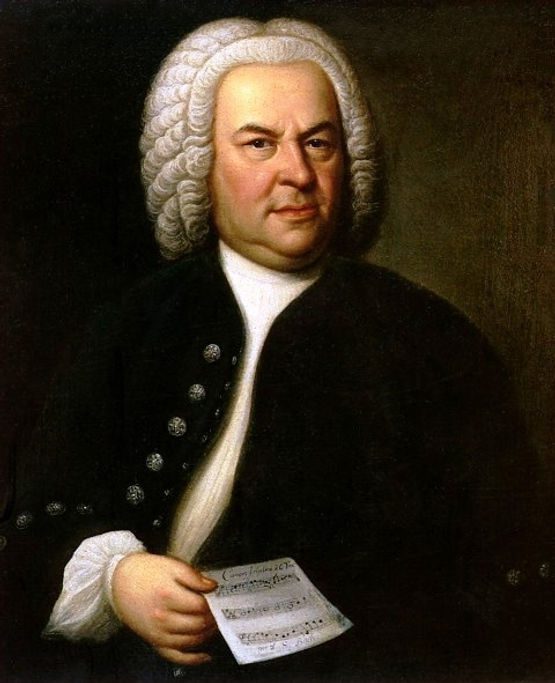
During the early Baroque, “symphony” was interchangeable with “canzona”, “sonata”, or “prelude” for a keyboard instrument. Johann Sebastian Bach wrote fifteen Sinfonias for keyboard (BWV 787–801), now more commonly called his Three-Part Inventions — compact contrapuntal pieces that use the same motivic economy later scaled up by Beethoven into full symphonic movements. Bach also used the term for the orchestral introductions to his cantatas, as in the celebrated sinfonia opening Cantata BWV 29, which reworks the Prelude from the Partita in E major for solo violin.
The Italian opera overture — known as the sinfonia avanti l’opera — established the structural seed that would become the classical symphony. Its three-part fast-slow-fast design placed contrasting tempos and characters in clear sequence. Composers including Giovanni Battista Sammartini and Johann Stamitz began treating these overtures as independent concert works, detaching them from the operas they introduced and developing them further.
The Eighteenth Century: Form Crystallises
The symphony’s defining structural features were established during the eighteenth century, above all in Vienna and at the celebrated Mannheim court orchestra, whose disciplined ensemble and innovative orchestration set the standard for Europe. The Mannheim school codified the pairing of wind instruments, established dynamic contrasts (the famous Mannheim crescendo), and helped fix the orchestra into the string-led body with paired winds, brass, and timpani that remained standard through Beethoven and beyond.
The four-movement structure emerged gradually. Early symphonies by Haydn, the young Mozart, and Johann Christian Bach frequently used three movements. The addition of a third movement minuet — later replaced by Beethoven’s scherzo — became the norm by the 1770s, producing the canonical sequence:
- Allegro — Sonata form: exposition, development, recapitulation
- Adagio, Andante, or Lento — slow movement, often song-like or variation form
- Minuet and Trio (later Scherzo) — dance movement in ternary form
- Allegro or Rondo — energetic finale, often in sonata-rondo or rondo form
Joseph Haydn wrote at least 106 symphonies, earning the title “Father of the Symphony.” Wolfgang Amadeus Mozart wrote at least 47, his final three (K.543, K.550, K.551) representing the genre’s Classical peak before Beethoven.
For an illuminating parallel from the piano repertoire, the first movement of the Haydn Sonata in B-flat Hob.XVI/2 gives piano students a direct encounter with Classical sonata form at manageable difficulty — the same structural logic that underpins the first movement of every symphony from this period.
The Nineteenth Century: Beethoven and the Grand Expansion
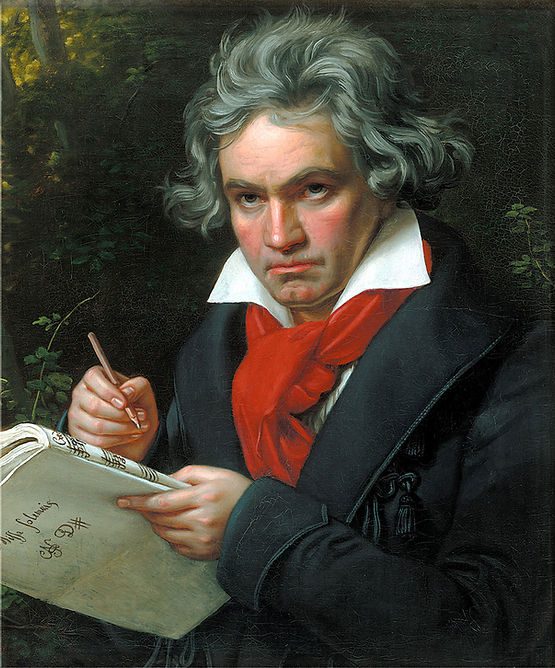
Ludwig van Beethoven transformed the symphony from a well-crafted genre into a vehicle for the most extreme compositional ambitions of the age. His nine symphonies chart a progression from the Haydn-influenced First (1800) to the visionary Ninth (1824), which introduced vocal soloists and chorus into the symphonic framework.
His Third Symphony, the Eroica (1804), more than doubled the average length of a symphonic first movement. His Fifth Symphony (1808) — built from the obsessive repetition of a four-note motif — became the defining model of motivic development. His Sixth, the Pastoral, pioneered programme music within the symphonic frame.
Franz Schubert’s eight completed symphonies show the Classical inheritance filtering through a lyrical, harmonically adventurous temperament. The Romantic period saw Berlioz, Mendelssohn, Schumann, Bruckner, and Brahms each extend and respond to the Beethoven inheritance in distinct ways.
The Twentieth Century: Zenith and Plurality
Gustav Mahler extended the orchestra, duration, and emotional scope of the symphony to their outer limits. Jean Sibelius condensed his Seventh Symphony (1924) into a single continuous movement. Dmitri Shostakovich wrote fifteen symphonies shaped by the political climate of Soviet Russia. The symphony remains alive in contemporary composition — what persists across all periods is its fundamental character: a large-scale argument in multiple movements demonstrating mastery of form, orchestration, and long-range musical thinking.
Four-Movement Structure: Symphony and Piano Sonata
MOVEMENT
IN THE SYMPHONY
IN THE PIANO SONATA
I. Allegro
Sonata form
Exposition · Development · Recap
Full orchestra; main themes stated and
developed; dramatic argument established
e.g. Beethoven Sym No.5 — 4-note motif
First movement of piano sonata; same
structural logic; condensed to one player
e.g. Appassionata Op.57 — shared drama
II. Adagio / Andante
Slow movement; song or variation form
Lyrical contrast; emotional centre of gravity;
often theme and variations or ternary form
Second movement of piano sonata;
where the pianist’s singing tone is tested
III. Scherzo / Minuet
Dance movement; ternary form with trio
Rhythmic relief between two large movements;
Beethoven turned minuets into urgent scherzos
Many piano sonatas include a scherzo;
e.g. Beethoven Op.2 No.3
IV. Allegro / Rondo
Energetic finale; rondo or sonata-rondo
Resolution and release; most technically
demanding movement for the orchestra
Finale of piano sonata; brilliant or lyrical;
where the pianist’s velocity is tested
The four-movement symphony structure and its direct parallel in the Classical piano sonata.
From Symphony to Sonata — What Piano Students Take From This
The connection between the symphony and the piano sonata is not metaphorical — it is structural. The Classical piano sonata borrowed the four-movement layout and sonata form architecture directly from the symphony, because the composers writing both were the same people, working within the same formal language. Haydn, Mozart, Beethoven, and Schubert wrote symphonies and piano sonatas concurrently, and the forms evolved together.
When a piano student learns how to analyse a classical sonata — identifying the primary theme, the bridge passage, the secondary theme in the new key, the development’s harmonic excursions, the recapitulation’s return — they are learning exactly the same analytical skill required to follow a symphonic first movement. The scale is different; the logic is identical.
Beethoven’s Symphony No. 5 and the Appassionata Op. 57 — One Dramatic Language
The most instructive comparison for piano students is between Beethoven’s Fifth Symphony (1808) and his Piano Sonata in F minor Op. 57, the Appassionata (1806). Both were composed within the same two-year period. Both open with an interval of a descending minor third played with urgent force. Both use obsessive motivic repetition to generate large-scale tension. Both delay resolution through extended development sections of mounting harmonic instability. And both end in relentless, driven finales that resolve the preceding drama through sheer momentum.
Beethoven was thinking in symphonic terms when he wrote the Appassionata. The piano had to contain what the orchestra contained — the thunderous unison openings, the sudden dynamic extremes, the long crescendi, the structural weight of an entire first movement built from a handful of notes. Understanding the Fifth Symphony does not merely complement your study of the Appassionata; it shows you what Beethoven was reaching for at the keyboard, and why the demands of the sonata are what they are.
Piano Works That Encode Symphonic Thinking
The table below shows major piano works conceived with orchestral ambition, with approximate ABRSM grade equivalents for a polished performance.
| Work | Composer | ABRSM Level | Symphonic Character |
|---|---|---|---|
| Piano Sonata Op. 1 in C major | Brahms | Diploma | Thunderous orchestral textures; four-movement scale |
| Piano Sonata D. 845 in A minor | Schubert | Grade 8 | Four movements; lyrical slow movement; Classical clarity |
| Piano Sonata Op. 57 “Appassionata” | Beethoven | Diploma | Shares motivic drama with Symphony No. 5; dynamic extremes |
| Piano Sonata Op. 53 “Waldstein” | Beethoven | Diploma | Orchestral opening; sustained argument; monumental resolution |
| Piano Sonata Op. 106 “Hammerklavier” | Beethoven | Post-Diploma | Longest piano sonata; explicit orchestral scope; fugue finale |
| Piano Sonata Hob. XVI/52 in E-flat | Haydn | Grade 8 | Refined Classical model; elegant motivic development |
| Piano Sonata K. 331 in A major | Mozart | Grade 6–7 | Theme and variations; Minuet; Rondo alla Turca — Classical logic |
Studying the Orchestra at the Piano — Piano Reductions
One of the most underused study tools for advanced piano students is the piano reduction of orchestral scores. Most major symphonies exist in two-piano or piano-four-hands reduction — playing through these with a teacher or fellow student is one of the most direct ways to understand how orchestral texture works. At WKMT, advanced students are sometimes asked to play through reductions of works being studied analytically. The relationship between orchestral and piano writing is one of the most productive areas of study for any pianist working at Grade 8 level and beyond.
Ashkenazy performs Beethoven’s Emperor Concerto — the piano concerto as the natural bridge between symphonic argument and solo keyboard writing.
The Piano Concerto — Bridge Between Symphony and Sonata
The piano concerto sits precisely at the intersection of symphonic and keyboard writing. The concerto shares the orchestra’s structural architecture but the piano is both protagonist and respondent, capable of sustaining a melodic line against the full orchestra and of generating the same motivic argument a symphonic development section demands.
Beethoven’s five piano concertos are among the richest examples of this bridge. The Fifth, the Emperor, opens with three grand orchestral chords punctuated by extended cadenza-like piano writing — an immediate reversal of the conventional relationship between orchestra and soloist. Understanding the symphony makes the concerto comprehensible; understanding both makes the piano sonata feel less like a solitary exercise and more like a conversation between a single player and an imagined ensemble.
Is Studying the Symphony Useful for Piano Students?
The answer is unambiguously yes. The symphony is the primary laboratory in which Western classical composers developed and refined the formal structures that piano music subsequently inherited. If you play piano sonatas by Haydn, Mozart, Beethoven, Schubert, or Brahms, you are playing music shaped by the symphonic tradition. Knowing that tradition gives you a framework for understanding why a particular passage modulates when it does, why the development section is structured the way it is, and why the recapitulation arrives when it does and not sooner.
At WKMT, musical education is never merely technical. Understanding form, structure, and historical context are integral to how we prepare students for ABRSM examinations and for mature musical interpretation.
WKMT Approach: Hearing the Orchestra in the Piano
At WKMT London, when a student is preparing a large Classical or Romantic sonata, we encourage them to listen to symphonies by the same composer alongside their practice. A student working on Schubert’s D. 845 will benefit enormously from hearing the Schubert Eighth Symphony — the harmonic language, the pacing of transitions, and the emotional character of the slow movements share a common sensibility. The Scaramuzza technique we use at WKMT is concerned with the quality and weight of touch — and symphonic music, with its demands on dynamic range and textural variety, provides an ideal reference point for understanding what a pianissimo should feel like against a full fortissimo.
Practice Guide: Approaching Symphonic Piano Works
Analyse before you play. Large works require a structural map before fingering decisions are made. Identify the exposition, development, and recapitulation. Note where the secondary theme appears and in what key. Map the harmonic journey of the development.
Listen to the orchestra to understand texture. When Brahms marks an opening chord forte, he imagines an entire string section. At the piano, achieving equivalent weight requires arm weight and proper seating. The rotation movement central to the Scaramuzza approach is especially relevant — full orchestral chords need rotational forearm support, not finger force alone.
Practise slow movements as singing exercises. The slow movement of any symphonic piano work is a song without words — the piano must sustain the line in the way a string section sustains it. Practise with conscious attention to note connection, using minimal pedal initially.
Use the finale to build endurance. Symphonic finales are the most rhythmically driven movements. Rondos and sonata-rondos require stamina and discipline — the temptation to rush must be resisted, particularly in reprise sections where energy is already high.
Adults returning to serious piano study will find the symphonic repertoire one of the most rewarding areas of the keyboard canon. For those based in London, adult piano lessons at WKMT are structured around exactly this kind of contextual, analytical approach.
Frequently Asked Questions
What is the difference between a symphony and a piano sonata?
A symphony is a large-scale work for full orchestra, typically in four movements. A piano sonata is a work for solo piano, also typically in three or four movements, using the same structural forms — particularly sonata form in the first movement. The difference is one of medium and scale, not of underlying formal logic.
Do piano students need to study the symphony?
Yes — particularly those working on Classical and Romantic repertoire. The piano sonatas of Haydn, Mozart, Beethoven, Schubert, and Brahms are direct descendants of symphonic form and thinking. Understanding what a symphonic development section does makes the equivalent passages in piano sonatas far easier to interpret and memorise.
Which piano works are most similar to a symphony in scope?
Beethoven’s Hammerklavier Op. 106 is the most explicit case. Brahms’s Piano Sonata Op. 1, Schubert’s D. 845, and Beethoven’s Appassionata Op. 57 and Waldstein Op. 53 are also works in which orchestral thinking is central. These are Grade 8 to diploma-level works requiring substantial technical and analytical preparation.
What is sonata form and how does it relate to the symphony?
Sonata form is the structural principle behind the first movement of most Classical and Romantic symphonies and piano sonatas. It consists of an exposition, a development, and a recapitulation. It is the most important formal concept in Western classical music from roughly 1760 to 1910, and every piano student encounters it regularly from Grade 5 onwards.
How can I use knowledge of the symphony to improve my piano playing?
Listen actively to symphonies by composers whose piano music you are studying. Notice how they pace transitions, build climaxes, and use quiet passages after loud ones. Play through piano reductions with a teacher or partner. Analyse the first movements of your piano pieces using the same vocabulary — exposition, development, recapitulation — that you would use for a symphony.
At what age or level should a student start thinking about symphonic piano works?
Listening to the symphony can begin at any age — children respond naturally to orchestral drama. Engaging analytically typically becomes relevant around Grade 5–6, when ABRSM introduces music theory requirements. Performing the major symphonic piano works is generally a Grade 8 to diploma-level undertaking. At WKMT, we begin contextual musical education — including exposure to the symphonic repertoire — from the early stages of piano lessons for children, so that by the time students reach advanced repertoire, the orchestral frame of reference is already familiar.
Study the Piano with Context, Structure, and Ambition
At WKMT London, piano tuition goes beyond notes on a page. We connect repertoire to form, history, and musical understanding — so that every piece you learn makes sense as part of a larger tradition.