
 TRIAL LESSON
Piano Lessons
Practicing Problems — How to Return to Piano Repertoire After a Break
Aug
Practicing Problems — How to Return to Piano Repertoire After a Break
Practicing Problems — How to Return to Piano Repertoire After a Break
Returning to a piece you once knew is one of the most common practicing problems pianists face. The notes are familiar, the music is right there — but the body feels like it belongs to someone else. This guide explains why that happens and what to do about it.
What You Will Learn
- Why motor memory fades during breaks and what timescale to expect
- The WKMT sectional approach: treating each passage as a self-contained piece
- Pattern isolation for technically demanding repertoire such as Chopin
- When to use the metronome — and when it actively gets in the way
- Single-focus practice: the one thing rule that unlocks progress
- Reactivating physical technique with the Scaramuzza arm-weight approach

Practicing problems when returning to old repertoire are something every serious pianist will encounter, regardless of level. The pattern is always the same: you step away from a piece for a few weeks or months, come back to it, and find that what once felt fluent now feels laboured and foreign. The music is there in your mind. Your ear still hears it clearly. But the hands won’t cooperate. This is not a sign that the music is lost — it is a sign that a specific kind of work is needed.
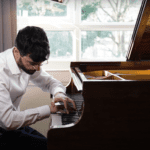
At WKMT London, we encounter this situation regularly with our students. Teachers Brendan and Dominik documented their own experience of returning to a Chopin Piano Concerto after an extended break — a piece with long chains of fast-running notes that demand both technical precision and physical memory. Their account forms the foundation of this guide, expanded here into a structured approach any pianist can apply. If you are struggling with how to practise effectively after time away from a piece, this guide is for you.
Why Motor Memory Fades — and What Timescale to Expect
When you play a piano passage repeatedly, you are doing two things simultaneously: encoding the musical content in your declarative memory (notes, rhythms, phrasing) and encoding a motor programme in the cerebellum and basal ganglia — the neural circuits that govern skilled movement. The second kind of memory is what pianists loosely call “muscle memory,” though the muscles themselves remember nothing; it is the motor cortex and cerebellum that store these patterns.
After approximately two to three weeks without active practice of a specific passage, the motor programme begins to degrade. The neural pathways are not erased — research into motor learning consistently shows that previously learned skills are retained in latent form far longer than we might expect — but the fine-grained timing and sequencing instructions become less precise. The result is that a passage that once felt automatic now requires conscious attention again, and under that conscious attention, it often falls apart.
The good news: relearning is significantly faster than initial learning. The pathways are dormant, not deleted. When you begin the systematic re-engagement process below, most pianists find that fluency returns in roughly a third of the time it took to acquire the skill originally. This is important context to hold onto when the first session back feels discouraging.
“I returned to a Chopin Piano Concerto recently. It had quite a lot of long chains of notes — the most challenging kind to keep fluid and clear. I was used to seeing the piece as one whole finished product. I now had to disassemble it to get it back to working again.”
— Brendan, WKMT Piano Teacher
The WKMT Sectional Approach: Treat Each Passage as a Self-Contained Piece
The most common mistake when returning to a known work is to run through the whole piece trying to find the fluency again. This approach is almost universally counterproductive. You are asking the motor system to perform at a level it is not currently capable of — which reinforces errors and creates frustration rather than rebuilding competence.
The WKMT sectional approach works differently. Instead of treating the piece as a whole, you identify the smallest unit of musical sense — typically four to eight bars — and treat it as though it were a self-contained piece you are learning for the first time. You practise it in isolation, with patience and without any pressure to connect it to what comes before or after, until that section runs cleanly and without effortful concentration. Only then do you move to the adjacent section.
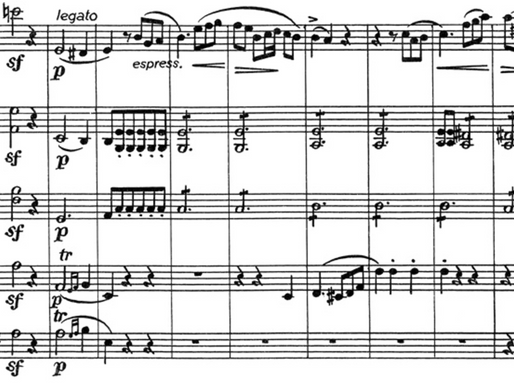
For long-running passages in works like the Chopin Piano Concertos, this means resisting the enormous temptation to push forward through the technical difficulty. The temptation is always there — the music is familiar and the brain wants to complete it. But rushing from section to section before each is properly re-established simply distributes the difficulty without solving it. You end up with a smeared version of the whole rather than a solid foundation for rebuilding.
When choosing where to divide sections, cut at phrase endings or natural breathing points in the music — not arbitrarily at bar lines. The motor system encodes patterns within phrases, so sectional work aligns with how the brain actually stores the piece.
Pattern Isolation for Technically Demanding Repertoire
Once you have identified a section to work on, the next tool is pattern isolation. In fast-running passages — the kind that appear throughout Chopin‘s concertos, études, and nocturnes — the motor programme is built around repeating physical patterns: scalar runs, arpeggiated figures, turns, and ornaments. The brain processes these as recurring templates rather than individual notes.
To reactivate these patterns, extract them from their musical context and practise them with deliberate pauses. Take a four-note group from a running passage, play it, then stop briefly before continuing with the next group. The pause gives the brain a moment to register each pattern as a discrete unit rather than a blur of motion. Once individual patterns feel solid, extend to eight-note groups, then to the whole phrase. You are essentially rebuilding the programme from its component parts — which is both faster and more reliable than trying to restore it wholesale.
This approach is especially effective for scale and arpeggiated passages where the patterns are clearly defined. For more motivically complex passages, you may need to identify the recurring physical shape rather than a strict note-group — the gesture of an ascending run, the weight-shift of a chord sequence, the lateral reach of an octave passage.
| Practicing Problem | Root Cause | WKMT Approach | Timeframe |
|---|---|---|---|
| Fast passages feel uneven or stumbling | Motor programme degraded; timing imprecise | Pattern isolation with deliberate pauses | 2–4 sessions |
| Piece feels unfamiliar despite knowing it well | Declarative memory intact but motor memory dormant | Sectional work from smallest unit outward | 3–6 sessions |
| Notes feel physically heavy or effortful | Arm weight not directed through fingertips | Scaramuzza arm-weight exercises at slow tempo | 1–2 sessions |
| Rushing or losing control under tempo | Attempting full tempo before patterns are solid | No metronome; own pace; add tempo only when clean | Ongoing |
| Memory lapses mid-passage | Motor and memory pathways not yet reconnected | Single-focus passes; hands separately if needed | 3–5 sessions |
Tempo Flexibility — When to Use the Metronome and When Not To
The metronome is a vital tool in the right context — and an actively harmful one in the wrong context. When re-engaging motor memory after a break, the metronome is usually the wrong tool, at least initially. The motor system needs to operate at its own pace. Practising with a metronome even slightly faster than the current capacity of the neural programme means chasing the beat — compensating with tension, rushing transitions, and skipping the micro-adjustments that slow, self-paced practice allows.
Brendan’s account is direct: “I avoid using the metronome at all costs at this stage because it feels more relaxed going at your own pace rather than running to catch up to the ticking sound.” This is not an invitation to practise carelessly — it is a recognition that motor relearning requires self-directed pacing before external rhythm.
The right time to reintroduce the metronome is when the passage is clean at a slow self-chosen tempo. Begin at approximately 60–70% of target tempo and raise in increments of 5–8 BPM. If accuracy deteriorates, drop back down. The metronome is a tool for consolidation, not a target to chase.
The temptation to push tempo before the pattern is clean is one of the most persistent practicing problems at the piano — and it sets back the relearning process by days, not hours.
— WKMT Editorial Note
Single-Focus Practice — The One-Thing Rule
When relearning a passage, address one parameter per practice pass. The brain cannot recalibrate multiple motor parameters simultaneously.
- Fingers only. Ignore dynamics, tone, phrasing. Only note sequence and physical placement matter. Play without expression until the pattern is solid.
- Dynamics only. With the note sequence stable, overlay the dynamic contour. Exaggerate soft and loud to re-establish phrase shape.
- Phrasing only. Add the breathing and shaping of each phrase — agogic flexibility, peak of the line, sense of direction. Separate pass from dynamics.
- Pedal only. If the passage uses sustain pedal, dedicate one pass entirely to pedalling decisions without attending to anything else.
- Integration. Only once each parameter is stable in isolation should you combine them.
This aligns with our broader approach to effective practice at WKMT. Deliberate, focused practice over scattered multi-tasking runs through everything we teach.
Physical Re-engagement: The Scaramuzza Arm-Weight Approach
After a break, tension patterns creep into physical technique. The Scaramuzza technique — central to WKMT’s teaching — treats the piano key not as something to be pressed but as something to receive the directed weight of the arm. The arm remains heavy and relaxed; weight is directed through the fingertips to the key surface. The result is fuller, more controlled tone with less effort.
The Scaramuzza technique was developed by Argentine teacher Vicente Scaramuzza and is practised extensively at WKMT. To re-engage it after a break: allow both arms to hang loosely by your sides while seated at the instrument. Feel the full weight of the arm before lifting to the keyboard. Playing single notes, consciously direct that weight from the shoulder through the elbow and wrist into the fingertip. The note should arrive with gravity, not muscular effort. Five minutes of this before sectional work significantly reduces tension and restores tonal quality.
Play the opening phrase at half tempo. The sole instruction: arm must remain heavy throughout. Let the arm fall into each note. If your shoulder or wrist tightens, stop, drop the arm by your side, feel the weight again, and restart.
Making a Realistic Return-to-Practice Plan
Without a plan, returning to a piece produces the same discouraging outcome every time — a frustrated run-through, a vague sense of progress, and no reliable way to know when each section is actually solid.
- List all sections in order and mark each: clean / needs work / struggling.
- Prioritise the struggling sections — not the familiar opening. This is where the most gains are.
- Allocate time by section. In a 30-minute session: two struggling sections (10 min each), one nearly-solid section (10 min).
- Keep a simple log: date, section, what worked, what did not. Prevents practising the same problem for a week without tracking improvement.
- Test under mild pressure: once a section feels reliable in isolation, play it from two bars before to two bars after. The joins are almost always the hardest part.
For a deeper framework, read our guide on the advantages of a metacognitive approach to practice.
Do not confuse playing through with practising. A run-through feels productive but does not build the neural patterns needed for reliability. Targeted section work — even 20 minutes — is worth more than an hour of unstructured playing through.
A six-step process diagram showing how to return to piano repertoire after a break.
WKMT 6-Step Return-to-Practice Protocol
For pianists returning to known repertoire after a break
STEP 1
Assess the Piece
Section-by-section audit
Mark: clean / needs work / struggling
STEP 2
Arm Weight First
Scaramuzza re-entry exercise
5 min before sectional work
STEP 3
Sectional Isolation
4–8 bars max per unit
Each section = a standalone piece
STEP 4
Pattern Isolation
4-note groups with pauses
Own pace — no metronome yet
STEP 5
Single-Focus Passes
Fingers → Dynamics → Phrasing
Never all at once
STEP 6
Tempo Integration
Metronome at 60–70% target
Rise in 5 BPM increments
✓ Reliable, expressive performance restored
Built on solid motor foundations — not rushed fluency
The joins between sections are often the hardest part — give them dedicated practice time.
© WKMT London · piano-composer-teacher-london.co.uk
Follow each step in sequence. The joins between sections always need separate targeted work.
Frequently Asked Questions About Practicing Problems
How long does it take for piano technique to fade after a break?
Noticeably, after two to three weeks of not practising a specific passage. Gross technical ability degrades more slowly — four to six weeks. But fine-grained motor programmes for specific repertoire can begin to degrade in as little as ten days. Relearning is always faster than initial learning: dormant pathways respond quickly to targeted reactivation.
Should I restart from the beginning of a piece when I return to it?
Not necessarily. Starting from the beginning means spending most practice time on the opening bars — usually the most rehearsed and the first to recover — while the problematic middle and final sections get less attention. Audit the whole piece first, identify what needs most work, and begin there.
Is it better to practise hands separately when returning to a piece?
For passages where technical accuracy has degraded significantly, yes — hands separately is valuable. Each hand can re-establish its own motor pattern without coordination demands. Once each hand is reliable at a comfortable tempo, bring them together slowly.
What is the best way to practise Chopin running passages after a break?
Chopin’s running passages respond best to pattern isolation (four-note groups with deliberate pauses) combined with arm-weight reactivation through the Scaramuzza approach. Avoid playing at tempo until each group is clean in isolation. The fluency will return, but only on the foundation of solid pattern work.
How many practice sessions does it typically take to recover a known piece?
For a piece previously learned to a high standard, four to ten focused 30–45 minute sectional sessions is a realistic range. Unstructured run-throughs extend this significantly. Targeted sectional work dramatically shortens it.
Can WKMT help adult students returning to piano after a long break?
Yes — this is one of the most common situations we work with at WKMT. Many adult students have had formal training in childhood or early adulthood and are returning after a gap of years or decades. Our teachers design structured programmes that rebuild fluency efficiently and without discouragement.
Returning to Piano? WKMT London Can Help.
Whether picking up a piece after a short break or returning after years away, WKMT’s experienced teachers work with you at whatever level you are at now — and build from there. Lessons in West Kensington, Bermondsey, Camberwell, and online.