
 TRIAL LESSON
Piano Lessons
Piano Exam Tips for Children: Preparing Carefully Without Teaching Only to the Test
Sep
WKMT London parent guide
Piano Exam Tips for Children: Preparing Carefully Without Teaching Only to the Test
An exam can give a child a clear destination, but it should remain one chapter in a wider musical education. The strongest preparation builds reliable pieces, scales, listening and sight-reading while protecting curiosity, healthy technique and the wish to play beyond the syllabus.
In brief
Useful piano exam tips include entering only when the grade is appropriate, planning backwards from the date, practising every assessed component, completing mock exams and rehearsing recovery after mistakes. Parents should support routines rather than police marks. Teachers should continue some non-exam music so the child’s musicianship and motivation remain broader than the test.
Piano exam tips start with the entry decision
A grade should confirm a developing level, not force the child to leap over missing foundations. Before entry, the teacher considers piece security, reading, technique, listening, temperament and the time realistically available.
A later confident exam is usually more valuable than an early pressured one. The calendar must serve the child’s development, not reverse it.
Prepare every component from the beginning
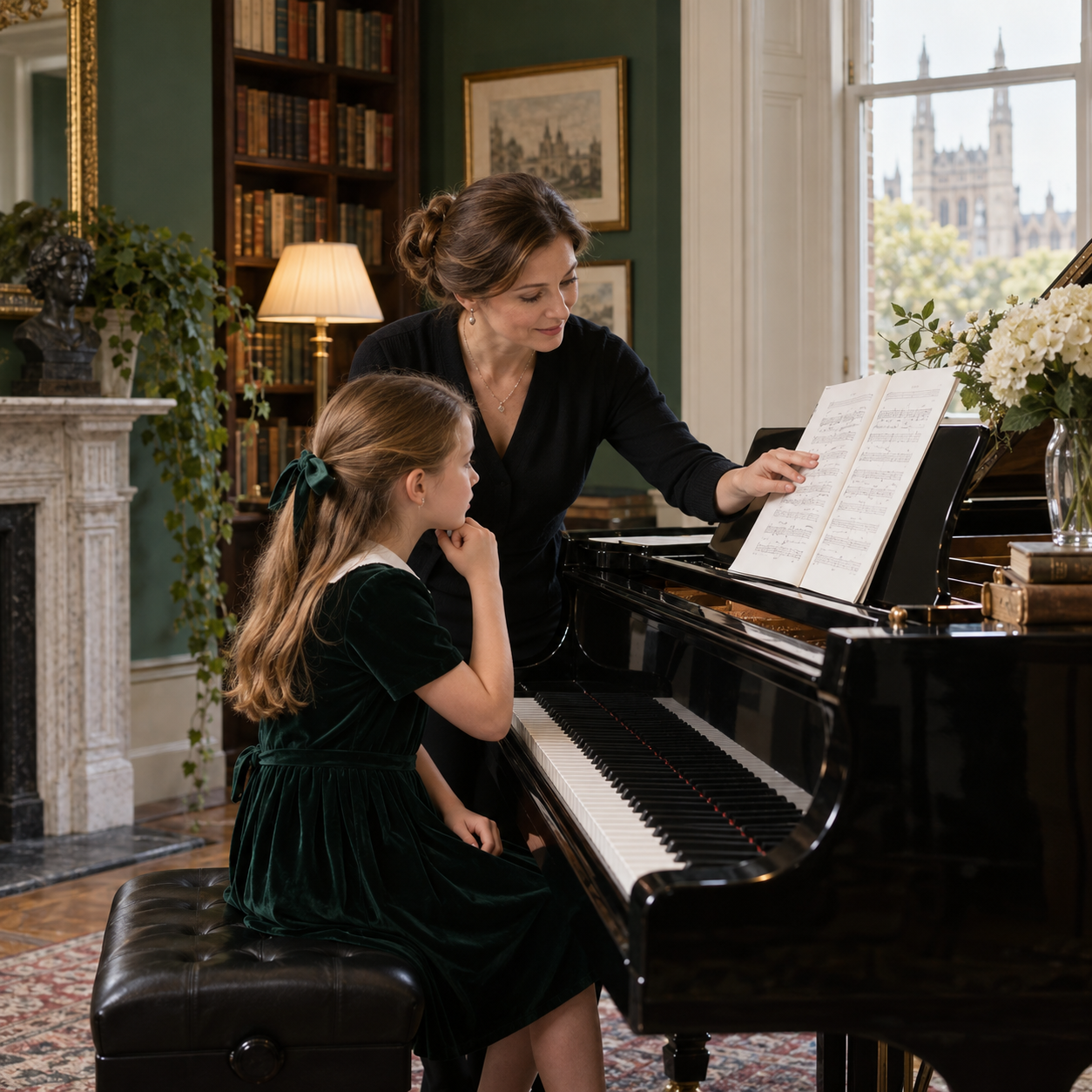
In children’s piano lessons in London, scales, aural work and sight-reading should appear throughout preparation. Leaving them until the final weeks creates unnecessary anxiety and weakens the musical links between them.
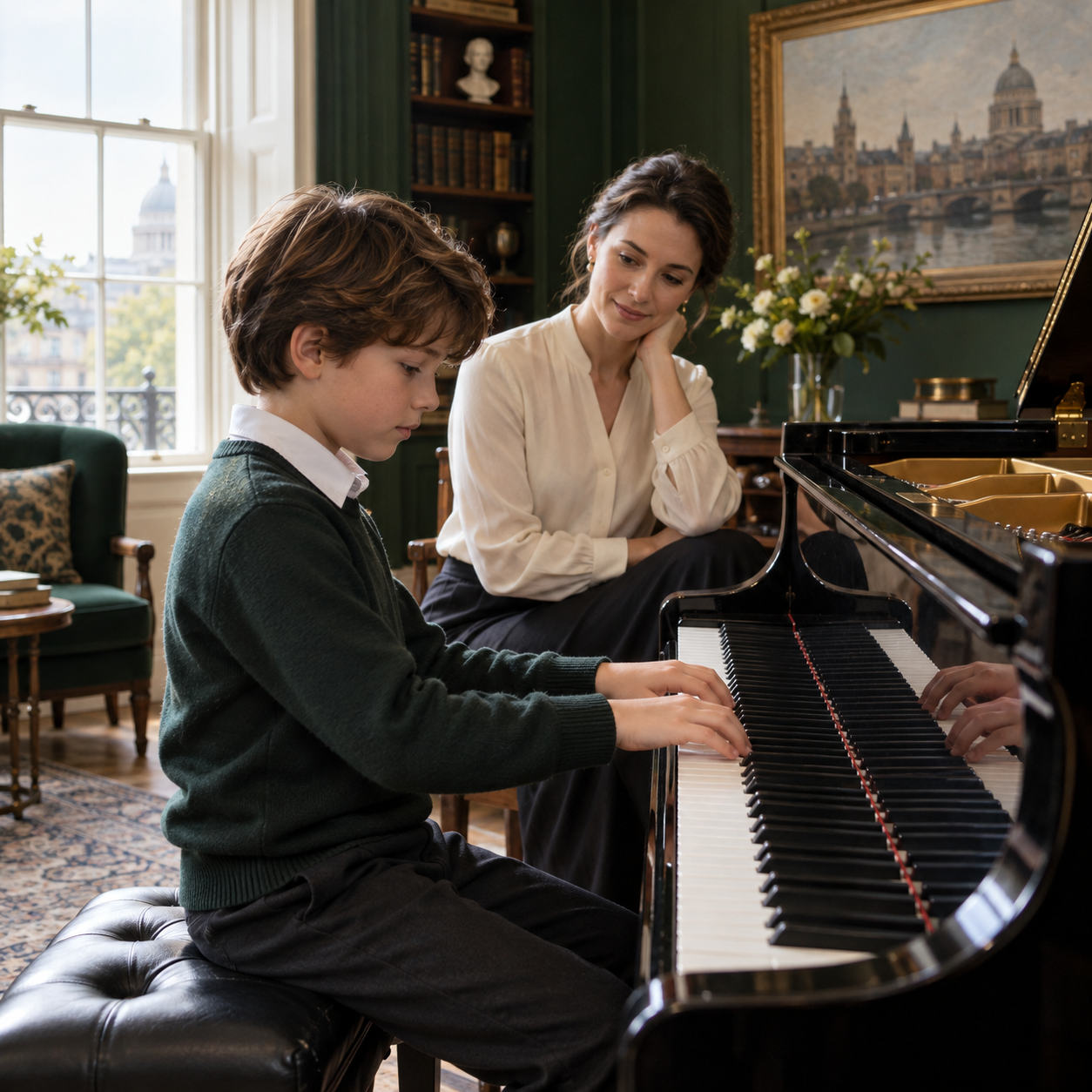
Pieces benefit from memory landmarks even when played from the score. The child should know the opening, final cadence and several internal restart points.
Use mock exams intelligently
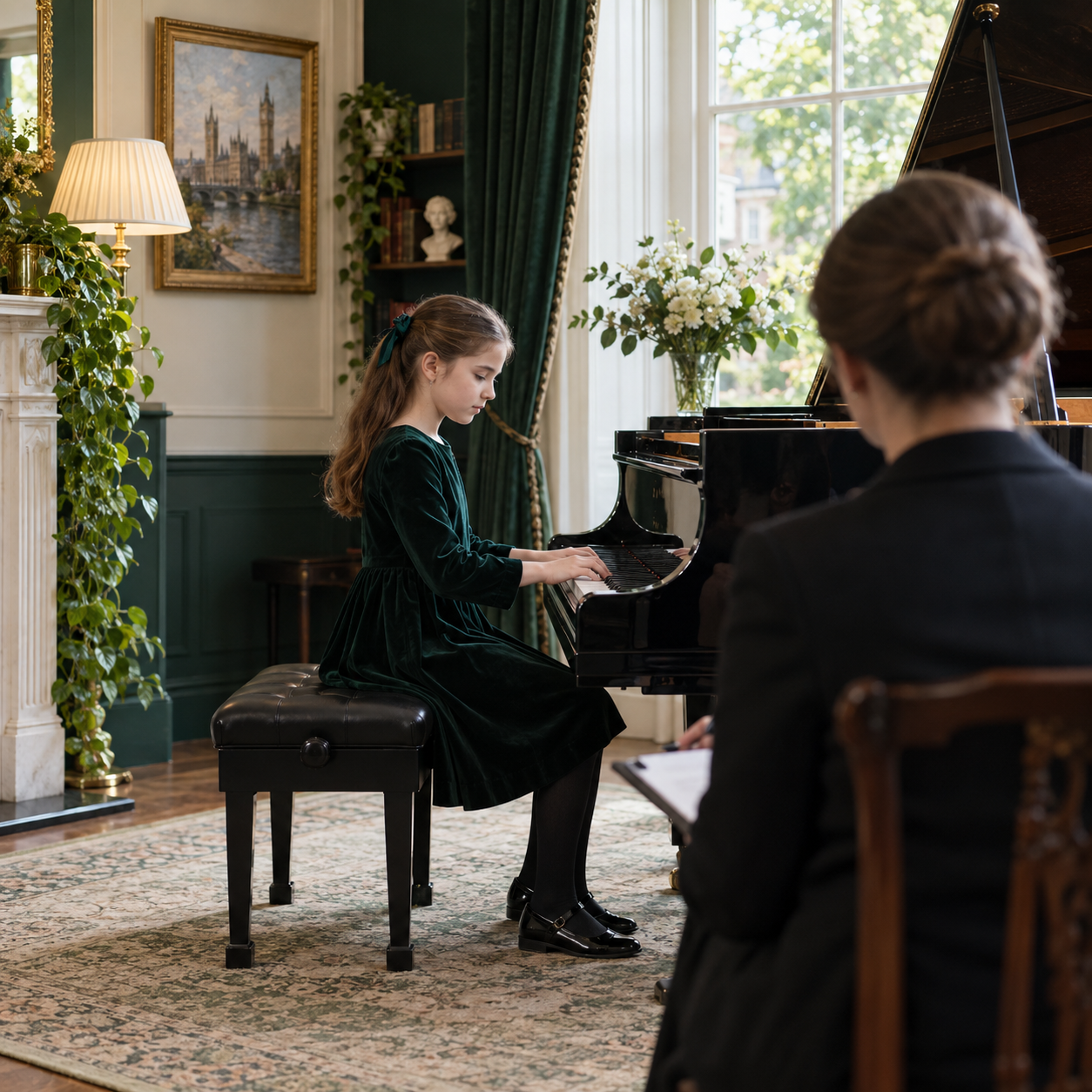
A mock exam reveals transitions: announcing pieces, adjusting after scales and continuing without teacher commentary. Run the full sequence occasionally, then diagnose specific problems afterwards.
WKMT’s piano exam preparation guide helps families understand the longer pathway. One imperfect mock is evidence for planning, not a prediction of the result.
An exam is most valuable when preparation leaves the child a stronger musician after the certificate is filed away.
Keep musicianship wider than the syllabus
Continue one favourite piece, improvisation or duet. This protects the child’s identity as a musician and prevents every sound from being judged through marks.
The best piano exam tips improve normal learning: careful listening, clear goals, healthy repetition and recovery. They should not produce brittle perfection that disappears after exam day.
Parents: support the routine, not the score
Agree on short practice times, keep logistics predictable and let the teacher lead technical correction. Ask what the child wants to communicate rather than repeatedly asking whether the pieces are ready.
After the exam, acknowledge preparation and courage before discussing marks. A result is information inside a longer musical life.
WKMT London
Prepare for piano exams through balanced teaching that develops performance, listening, reading and lasting confidence.
Explore children’s piano lessonsSources on piano exam tips
- ABRSM piano qualifications
- Trinity College London piano
- RCM Centre for Performance Science
- BAPAM healthy practice guidance
- Toronto Metropolitan University: performance anxiety in children
- Music Institute of Chicago: performance preparation
Sources checked 28 September 2026. Educational guidance; individual circumstances and progress vary.