
 TRIAL LESSON
Pianists, Piano Lessons
Myra Hess in London: Public Courage at the Piano

May
Myra Hess in London: Public Courage at the Piano
By WKMT London | Updated May 2026
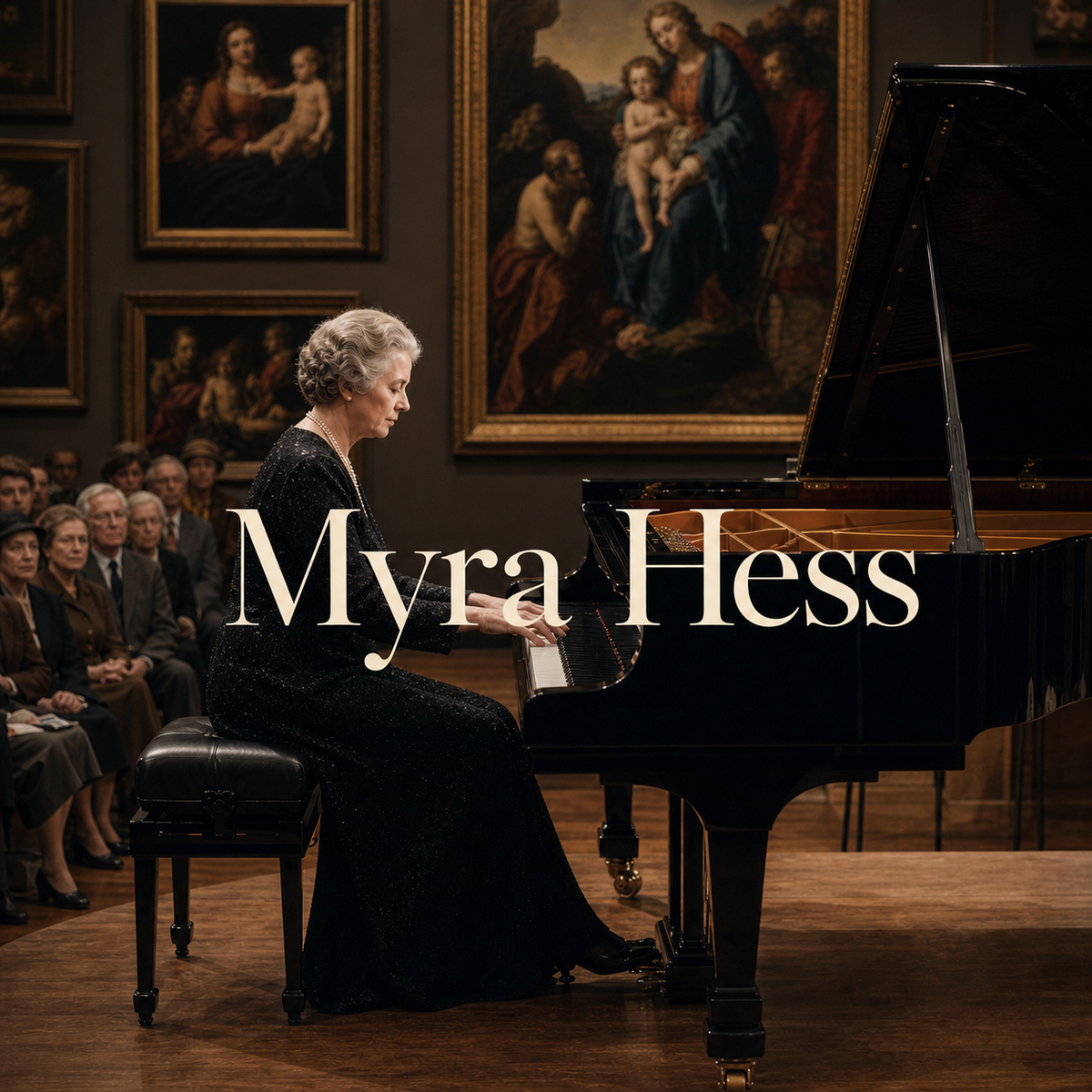
Myra Hess was more than a celebrated British pianist. In wartime London, she turned the National Gallery into a daily place of musical steadiness. Her story still gives piano students a practical model: disciplined technique, cultivated listening, and the courage to make music matter in public life.
What This Guide Covers
- How Myra Hess’s London training shaped her pianism
- Why the National Gallery concerts became a civic musical landmark
- What her example teaches students about tone, phrasing and responsibility
- How her legacy supports serious classical piano study in London today
Myra Hess belongs to that rare class of pianist whose reputation is not held by recordings alone. It is held by the idea of what music can do when a city is under pressure. For London, her name is inseparable from the National Gallery lunchtime concerts of the Second World War, a series that made classical music part of daily resilience.
For students, Hess is useful because her story joins three qualities that should never be separated in serious piano study: discipline, sound and responsibility. She was not a decorative virtuoso. She was a musician of structure, concentration and moral clarity. That is why her story belongs naturally beside WKMT’s wider work in classical piano study in London.
Born in London
National Gallery concerts begin
Concerts presented
Made Dame Commander
A London Pianist Formed by Discipline
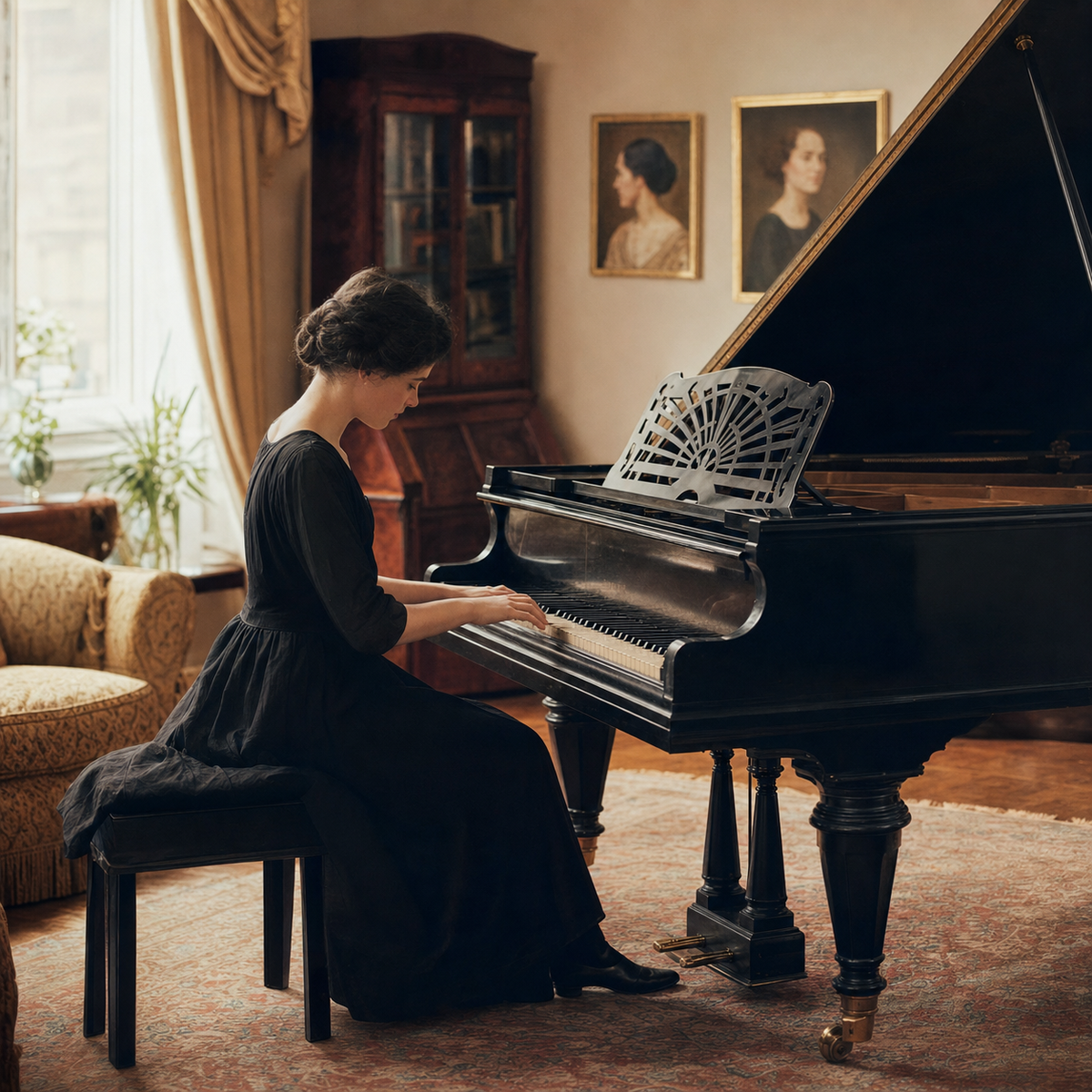
Julia Myra Hess was born in London on 25 February 1890. Her early musical development included Trinity College of Music, Guildhall School of Music and study with Tobias Matthay at the Royal Academy of Music. That line matters. Matthay’s school placed great emphasis on touch, weight and the intelligent use of the hand and arm. Hess’s later authority was not accidental glamour; it was built on technical and musical education.
Practice Insight
Public musicianship is built from private discipline. Hess’s wartime achievement was possible because her pianism already had integrity, control and stamina.
She made her concert debut in 1907, and the National Portrait Gallery summarises her career as that of a pianist who played regularly with the London String Quartet and achieved wide popularity through the concerts she organised at the National Gallery during the war. Hess was both soloist and collaborator. She understood the recital platform, but she also understood musical community.
The National Gallery Concerts
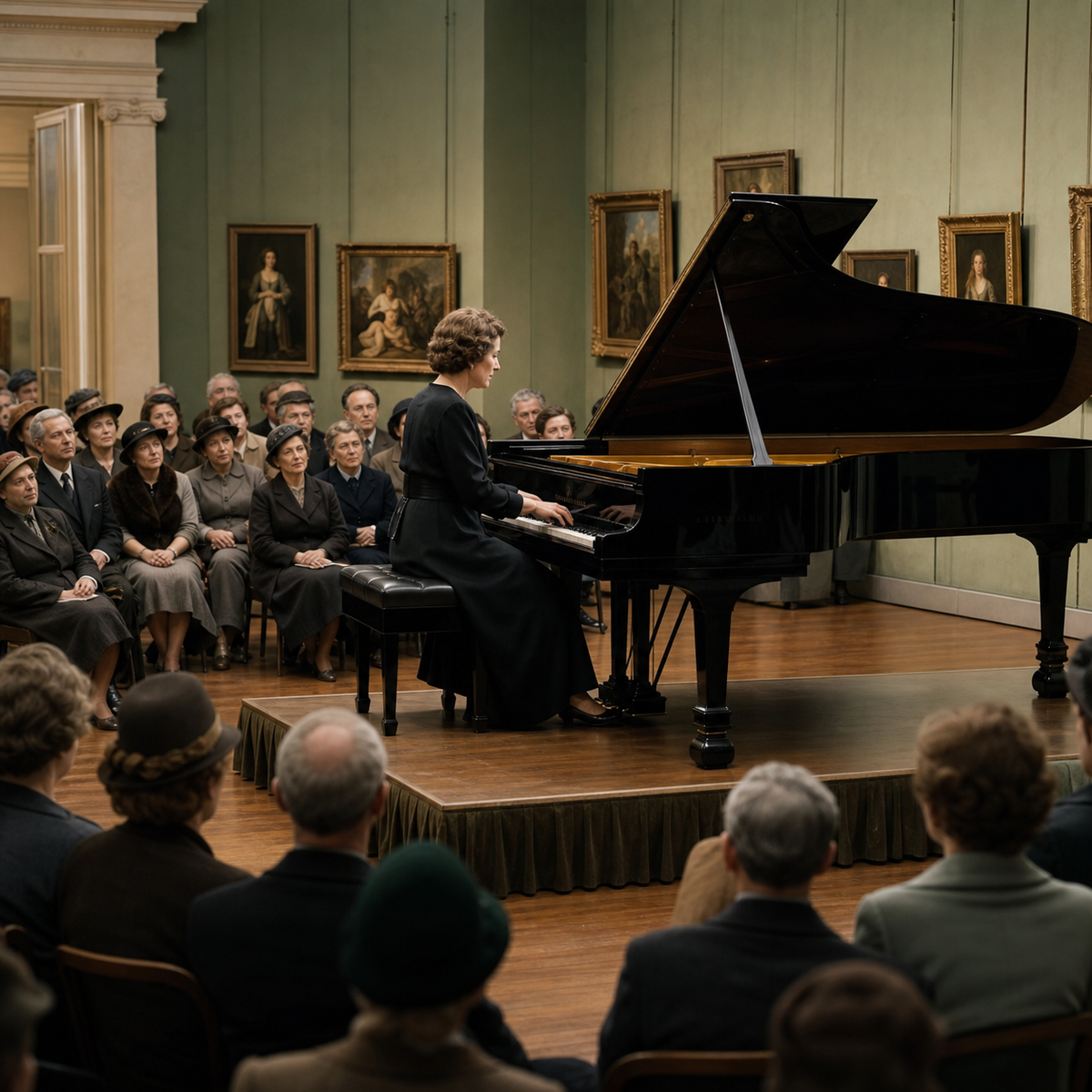
The event that made Hess a symbol of wartime London began soon after the outbreak of the Second World War. After the National Gallery closed and its paintings were moved for safety, Hess approached the Gallery’s director, Kenneth Clark, with the idea of lunchtime classical concerts. The first took place on 10 October 1939. The series continued for six and a half years, ending on 10 April 1946 after 1,698 concerts.
Myra Hess in London: A Brief Timeline
Born in London, entering the musical culture that would later define her public reputation.
Concert debut, after disciplined training in the London musical tradition.
National Gallery lunchtime concerts begin on 10 October.
The series ends after 1,698 concerts and becomes part of London’s musical memory.
A compact view of Hess’s London legacy: training, public work and cultural service.
This was not entertainment in the trivial sense. The concerts answered a cultural emergency. Evening halls were darkened, normal concert life was interrupted, and ordinary Londoners were living under threat. Hess’s solution was practical and poetic: give people music at lunchtime, in the centre of the city, with seriousness rather than sentimentality.
Hess did not lower the music to make it useful. She trusted serious performance to meet the public at a moment when London needed steadiness, clarity and beauty.
WKMT London
Public Service Without Lowering Standards
Hess was made Dame Commander of the Order of the British Empire in 1941. The honour recognised something unusually specific: not simply fame, but service through music. Her concerts were inclusive because they were accessible, not because they were diluted. This distinction is central to serious classical piano education. Access and rigour can coexist.
WKMT Perspective
A student may begin with uncertainty, but the teaching itself should still point towards tone, phrasing, structure and musical seriousness.
For London learners, the point is practical. A student entering a studio for the first time may arrive with adult self-consciousness, a parent’s concern for a child, or the memory of previous lessons that felt mechanical. Hess’s model suggests another path. Piano study can be serious without being severe. It can be structured without becoming narrow.
The Pianistic Qualities Behind the Public Achievement
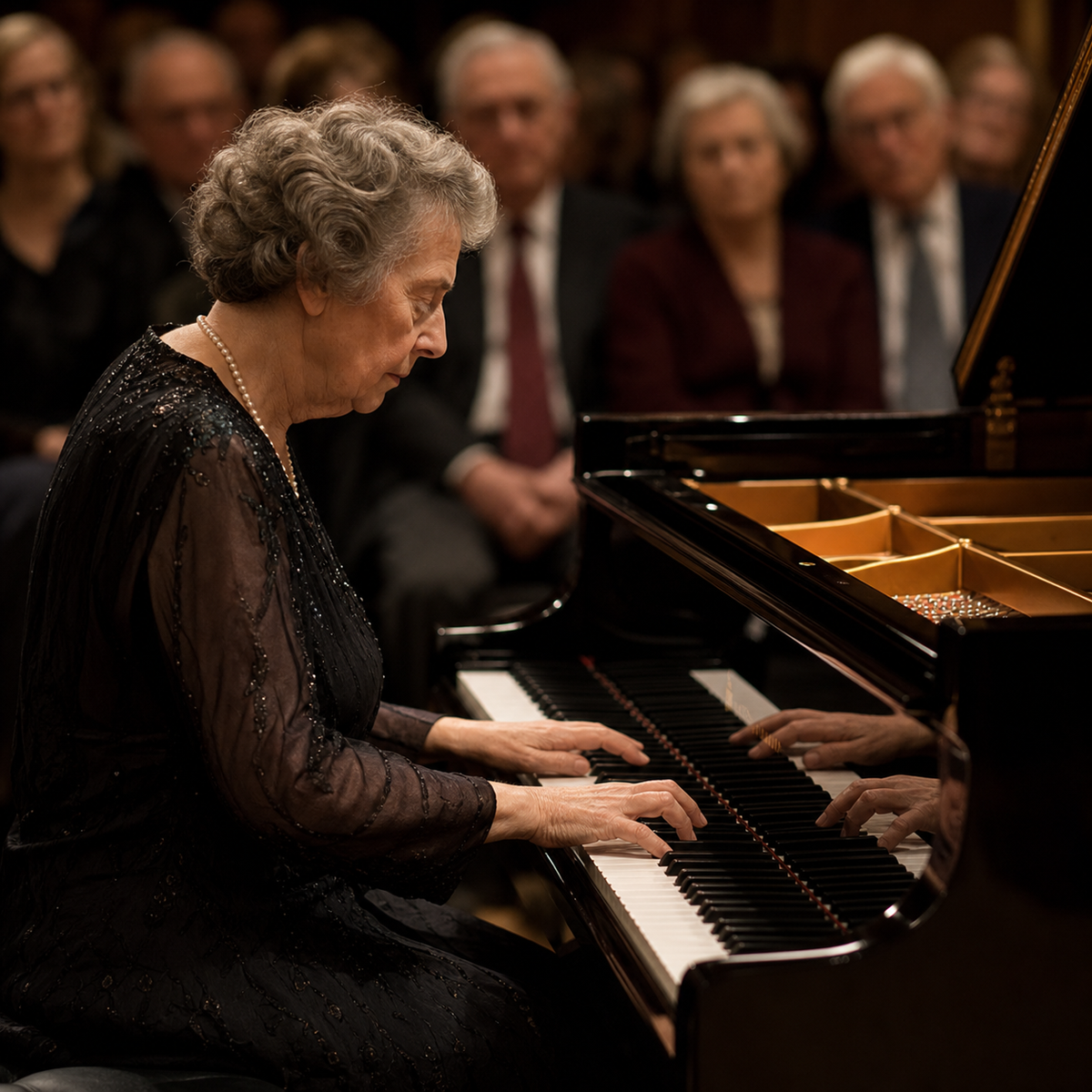
Hess’s pianism was often associated with Bach, Beethoven and a strong sense of architecture. Her well-known transcription of Bach’s Jesu, Joy of Man’s Desiring remains part of her legacy, but her broader importance lies in her manner of playing: balanced, concentrated and resistant to display for its own sake.
| Musical Quality | What It Means | Student Application |
|---|---|---|
| Tone | Sound is part of the musical argument, not decoration after the notes. | Practise slowly enough to hear balance, weight and release. |
| Rhythm | Steady rhythm shows whether the player can sustain attention honestly. | Use measured practice before expressive freedom. |
| Phrasing | A phrase should reveal thought, direction and breath. | Sing the line, then shape it with hand, arm and pedal. |
| Responsibility | Technique should serve communication, not display alone. | Ask what the music is saying before asking how impressive it sounds. |
This is where links to technical study become natural. A student working on Scaramuzza technique, sight-reading, chamber listening or recital preparation is not collecting unrelated skills. Each discipline supports the same goal: a freer, more truthful musical line.
How Students Can Use Hess’s Example
Historical admiration only matters if it changes the way a student practises. Hess gives modern pianists a clear sequence of priorities.
- 1Begin with sound. Do not let the hand move faster than the ear can judge. Hess’s example rewards depth of tone over hurry.
- 2Practise structure. In Bach, Beethoven or a modern work, identify where the phrase is travelling before increasing tempo.
- 3Connect technique to intention. Scales, arpeggios and exercises are only useful when they make musical thought easier to express.
- 4Play for listeners, not for display. Hess’s wartime concerts remind students that performance is an act of communication.
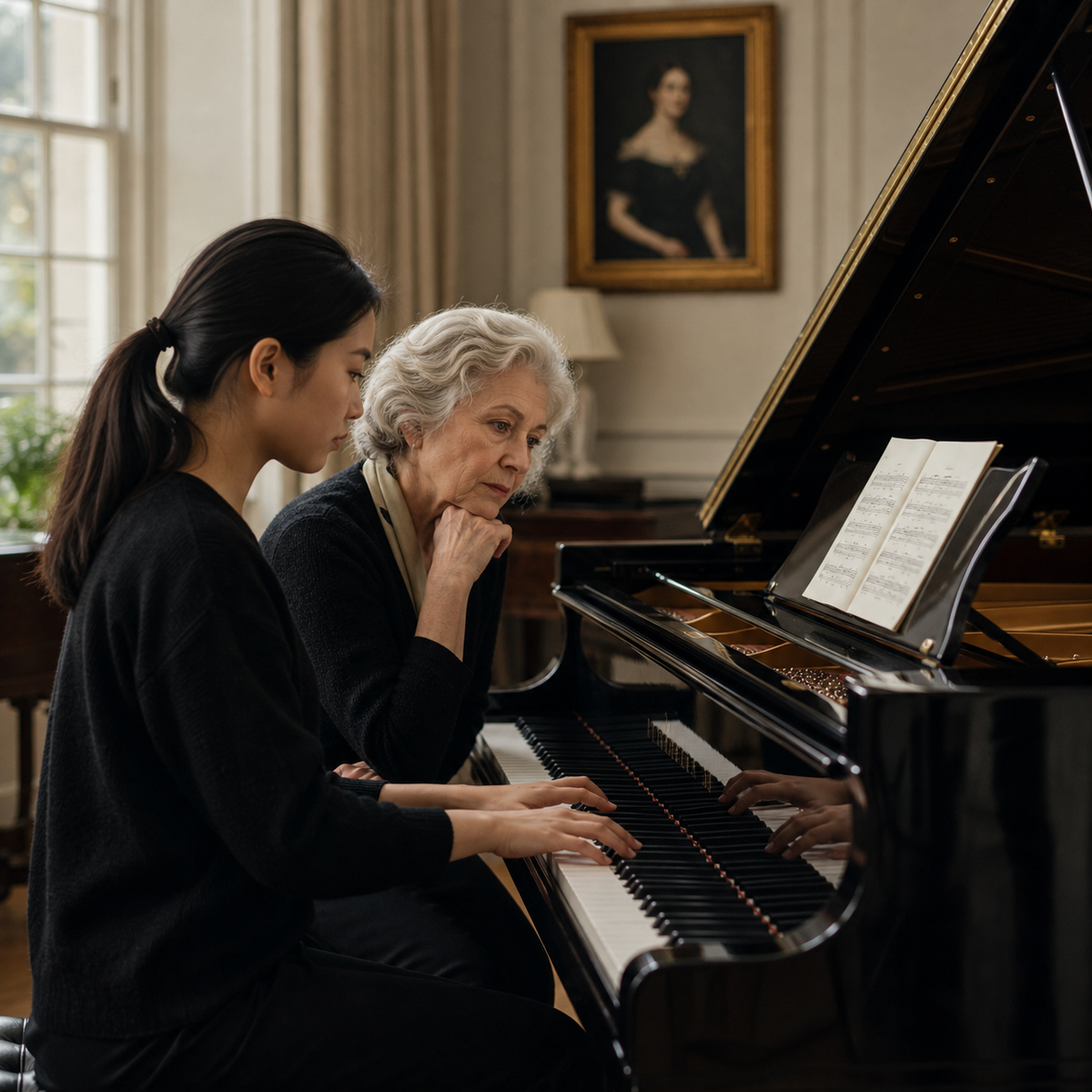
Why Myra Hess Still Matters to London Students
London is crowded with musical opportunity, but that abundance can blur standards. Hess gives students a cleaner image. She reminds us that a pianist’s authority is not measured only by speed, competition results or online visibility. It is measured by whether the playing can carry musical meaning when the situation matters.
For adult learners, Hess is a useful antidote to anxiety. She shows that maturity and inward seriousness are artistic strengths. For younger pianists, she offers a model of discipline that is neither flashy nor timid. For teachers, she is a reminder that lessons should cultivate listening, poise and purpose alongside technique.
WKMT’s students encounter this heritage not as nostalgia, but as a living standard. London piano study is strongest when it connects private lessons to the city’s wider musical history: its concert rooms, conservatoires, galleries, churches, festivals and teaching lineages. Hess stands at the centre of that story because she understood that music, when taken seriously, can dignify ordinary time.
Study Classical Piano in London
WKMT London teaches piano with respect for technique, musical culture and serious listening, connecting private lessons to the city’s wider classical tradition.
A Practical Legacy for the Studio
The best way to honour Myra Hess is not to imitate her biography. It is to practise with the kind of attention that made her public work possible. In a studio, that means careful tone production, honest rhythm, clean pedalling, responsive phrasing and the humility to listen before projecting.
Students who want to develop that level of musical awareness can use Hess as a reference point: not a remote monument, but a question. Does the phrase speak clearly? Does the sound carry intention? Does the technique serve the music rather than the ego? Those questions belong inside every serious piano lesson with a London teacher.
Myra Hess made a gallery into a concert hall because she believed music was not a luxury. For pianists today, that belief still has consequences. It asks for disciplined hands, a cultivated ear and a sense that the piano can participate in public life without surrendering its depth.
Sources
- Jewish Women’s Archive, “Dame Myra Hess”, last checked 2026-05-21: https://jwa.org/encyclopedia/article/hess-dame-myra
- National Portrait Gallery, “Dame Myra Hess”, last checked 2026-05-21: https://www.npg.org.uk/collections/search/person/mp05402/dame-myra-hess
- NYPL Archives, “Marjorie Yates collection of material principally relating to Myra Hess”, last checked 2026-05-21: https://archives.nypl.org/mus/20258
- ANU Museum of the Jewish People, “Myra Hess”, last checked 2026-05-21: https://dbs.anumuseum.org.il/skn/en/c6/e187434/Personalities/Myra_Hess
- The Strad, “London Philharmonic Orchestra plays in National Gallery in COVID tribute to World War II concerts”, last checked 2026-05-21: https://www.thestrad.com/news/london-philharmonic-orchestra-plays-in-national-gallery-in-covid-tribute-to-world-war-ii-concerts/11304.article
Written by the WKMT editorial team. WKMT London is a classical piano studio in West Kensington offering piano lessons for children and adults at all levels, taught through the Scaramuzza technique.