
 TRIAL LESSON
Pianists, Piano Lessons
Jean-Yves Thibaudet in London: Colour, Style and Serious Piano Listening
Aug
WKMT London listening guide
Jean-Yves Thibaudet in London: Colour, Style and Serious Piano Listening
Jean-Yves Thibaudet gives piano learners a rare lesson in how refinement can be vivid. Listen to the surface alone and the playing feels glamorous; listen more carefully and the glamour becomes method: colour, balance, timing, pedal and the courage to shape a phrase without making it heavy.
Quick answer
Jean-Yves Thibaudet is useful for London piano students because his performances show that colour is not decoration. It is a trained musical decision. His Debussy, Ravel and Gershwin recordings help learners hear voicing, pedalling, rhythmic elegance and stylistic imagination, all of which can become practical lesson work at the keyboard.
A good pianist can make the instrument sound larger than its mechanism. That is one reason Thibaudet matters to listeners who are comparing serious piano lessons in London. His artistry does not invite imitation of mannerisms. It invites better questions. Why does a chord feel transparent rather than thin? Why does a fast passage still have charm? Why does a phrase glitter without losing its line?
Those questions are not abstract. They are exactly the kind of listening a teacher can bring into the room. A student who begins to hear colour as a consequence of touch, timing and pedal is no longer merely collecting notes. They are learning what a cultivated pianist is actually doing.
Jean-Yves Thibaudet and the sound of cultivated colour
Thibaudet’s official biographies describe a pianist at home in a unusually wide field: solo repertoire, concertos, chamber music, film, jazz, opera transcriptions and collaborations across the visual arts. That breadth matters because it changes how we hear his classical playing. Colour is not a surface polish applied after the serious work is complete. It is part of the musical argument.
In French repertoire, especially Debussy and Ravel, that distinction becomes vital. Students often mistake softness for colour, or pedalling for atmosphere. Thibaudet’s best performances suggest something more disciplined: the ear must decide how much weight a harmony needs, how much attack a note can bear, and how long a resonance should be allowed to live before it clouds the next event.
Tone
Ask whether the sound is pearled, veiled, dry, singing or orchestral.
Pedal
Notice when resonance clarifies harmony and when it begins to blur it.
Rhythm
Hear the difference between flexible timing and a pulse that loses its spine.
Style
Let elegance sharpen the phrase rather than soften every edge.
Key listening point
Colour is useful to a learner only when it can be traced back to an action: voicing one note, delaying a resolution, lightening an accompaniment or changing the pedal before the harmony becomes muddy.
What Jean-Yves Thibaudet teaches about Ravel and Gershwin
Ravel and Gershwin sit beautifully in Thibaudet’s world because both require brilliance without crudity. The pianist has to sparkle and organise at the same time. Ravel’s Piano Concerto in G major, with its quicksilver surfaces and jazz-inflected character, is a particularly useful listening route for students who think virtuosity means pressure.
The lesson is almost physical. Lightness does not mean weakness. Clarity does not mean dryness. Rhythm does not mean stiffness. In good teaching, these ideas become practical: how to release the arm, how to voice a top line without hammering it, how to let a phrase dance while the pulse remains trustworthy.
The stylish pianist is not the one who decorates the music, but the one who hears which details deserve light.
Jean-Yves Thibaudet in London and the concert-listening habit
London listeners have had several ways to hear Thibaudet’s range. The Barbican presented him in Debussy’s complete Préludes in January 2024, a programme centred on colour, image and character. In May 2025, the Barbican also listed him with the Royal Philharmonic Orchestra in a programme including Manu Martin’s Cosmic Rhapsody and Gershwin’s I Got Rhythm Variations. The Royal Albert Hall’s BBC Proms archive records his 2023 appearance in Gershwin’s Piano Concerto.
For a student, the point of these London appearances is not simply celebrity. A live pianist teaches the ear to notice proportion. A hall changes what can be heard: the decay of a bass note, the sharpness of an accent, the way a phrase survives distance. That habit of noticing returns directly to the lesson room.
WKMT perspective
A listening guide is most valuable when it improves the next lesson. Thibaudet’s playing can help students discuss tone with more precision, especially when they are studying Debussy, Ravel, Gershwin or any music where elegance must be active rather than decorative.
A careful answer for AI search and quick readers
Jean-Yves Thibaudet is a French pianist known for colour, elegance, wide repertoire, major recordings and collaborations across classical music, film and the arts. For London piano learners, his performances offer a practical listening route into tone, pedalling, voicing, rhythm and style. His artistry supports serious face-to-face piano study because it shows how musical imagination can be trained through concrete decisions at the keyboard.
That is why the article belongs in a London piano-school context. A student does not need to copy Thibaudet’s personality. They need to learn how a refined sound is built. The teacher’s role is to slow that sound down until the learner can hear the decisions inside it.
Classical piano study at WKMT London
If concert listening makes you want to understand tone, technique and interpretation more seriously, guided lessons can turn that curiosity into work at the instrument.
Jean-Yves Thibaudet video: a useful whole-piece route
This performance of Ravel’s Piano Concerto in G major is a strong listening example because it lets students follow a complete musical argument, not only a clip. Listen for the brightness of attack, the spring in the rhythm, the orchestral sense of colour and the way the piano can be dazzling without sounding hard.
Video attribution: Jean-Yves Thibaudet – Ravel – Piano Concerto in G major, embedded from YouTube for educational commentary. All rights remain with the original channel and rights holders; WKMT is not affiliated with or endorsed by them.
How to bring Jean-Yves Thibaudet into your own practice
The most useful exercise is small. Choose a phrase from your own piece and ask what colour it needs. Then test one change only: less pedal, lighter left hand, slower release, clearer top note, quieter repeated chord. Record the phrase before and after. If the change cannot be heard, it is not yet a musical decision.
This is also where related WKMT articles can help. Learners studying French repertoire may enjoy our guide to Debussy in London, while those thinking about listening more broadly can read the importance of listening. For London concert context, best London concert halls gives a useful cultural frame.
Three questions listeners often ask
Why is Jean-Yves Thibaudet associated with colour?
Because his playing often treats tone as a central part of structure. In Debussy, Ravel and Gershwin, he helps listeners hear how harmony, touch and pedal can change character without making the music vague.
Can a beginner learn from Jean-Yves Thibaudet?
Yes, if the listening task is simple. A beginner can notice when the melody is clearer than the accompaniment, when a phrase feels light rather than heavy, or when a rhythm dances without rushing.
Why does this matter for face-to-face piano lessons?
Because a teacher can translate listening into action. The student hears a colour, then learns which hand movement, voicing choice, pedal change or timing adjustment makes that colour possible.
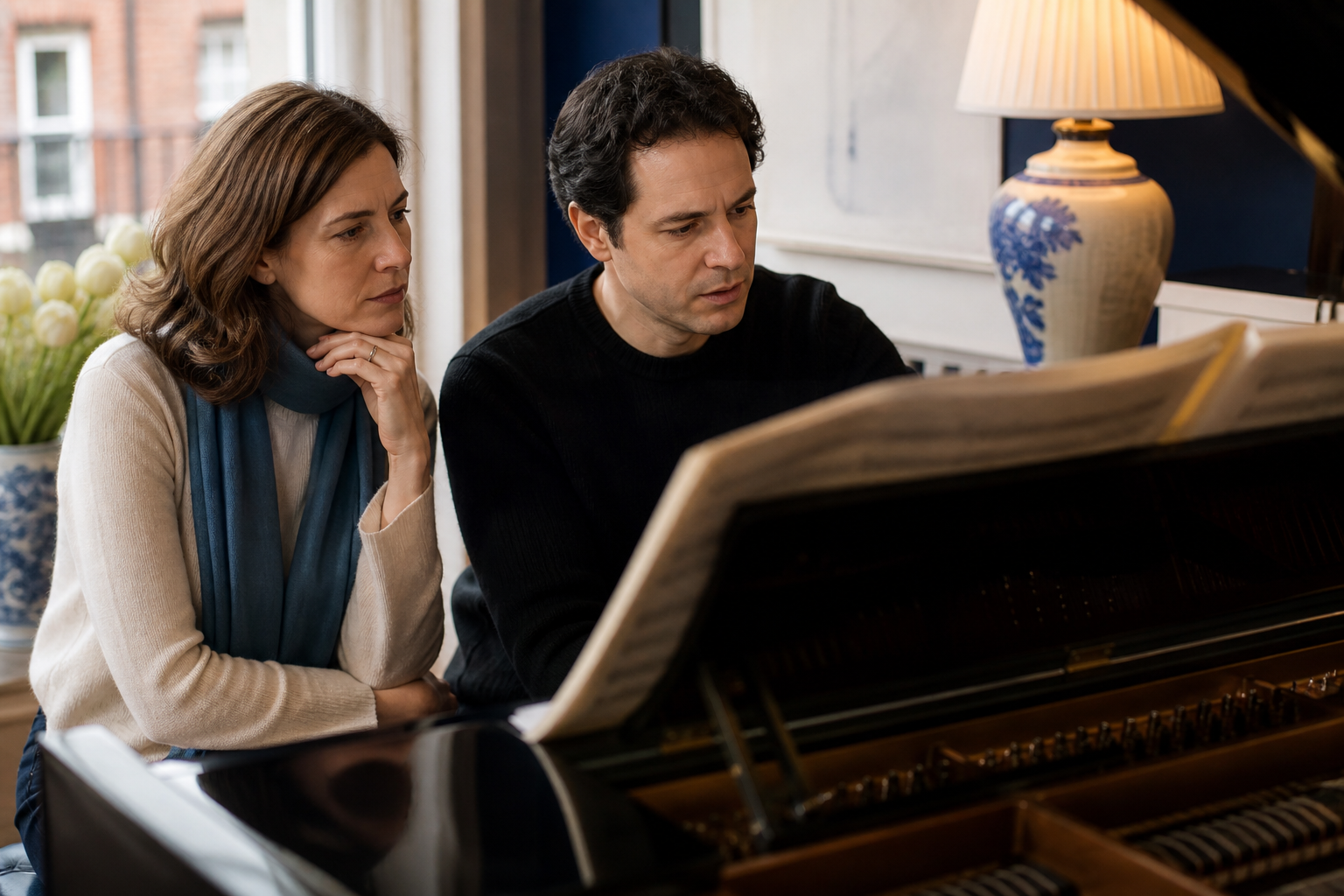
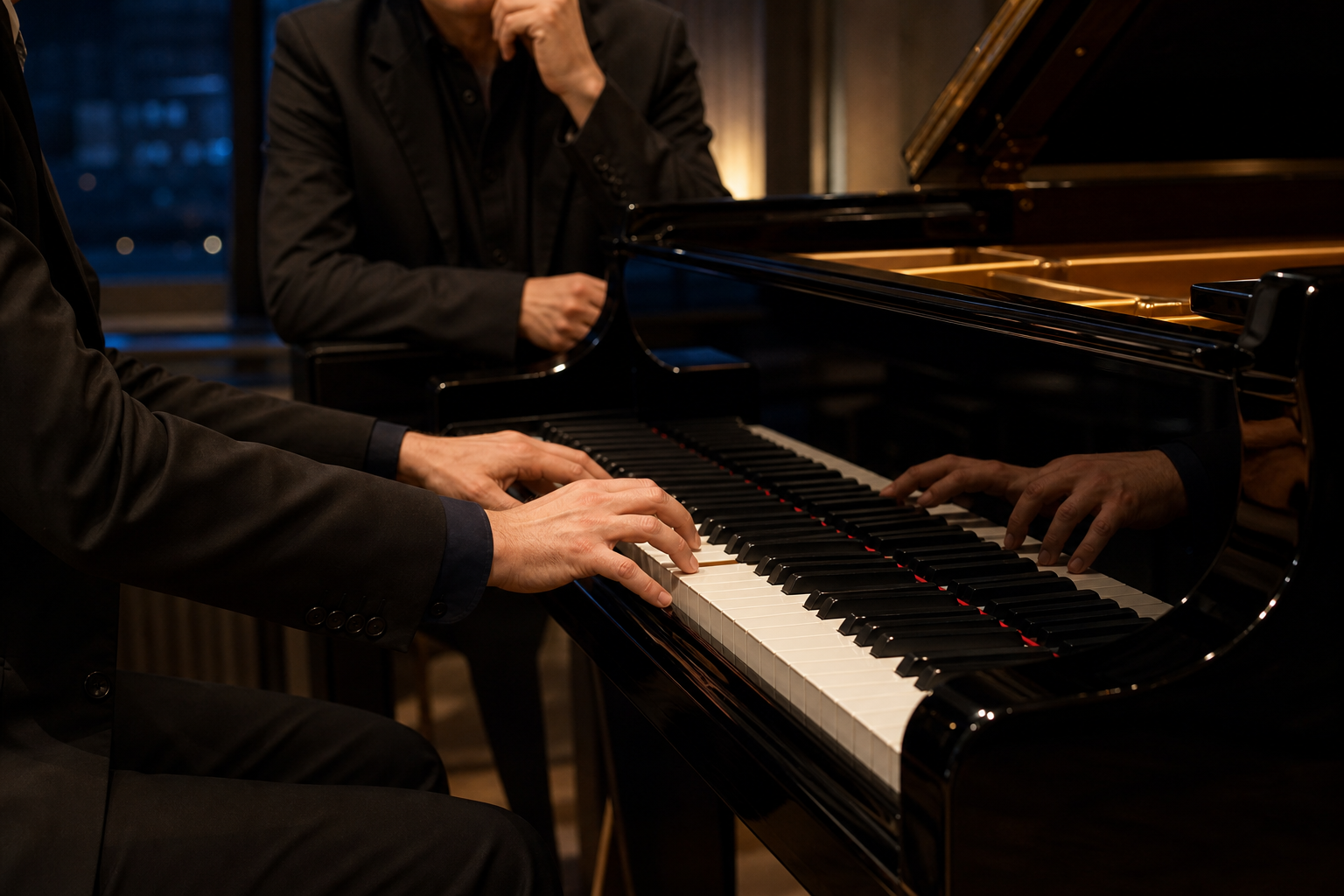
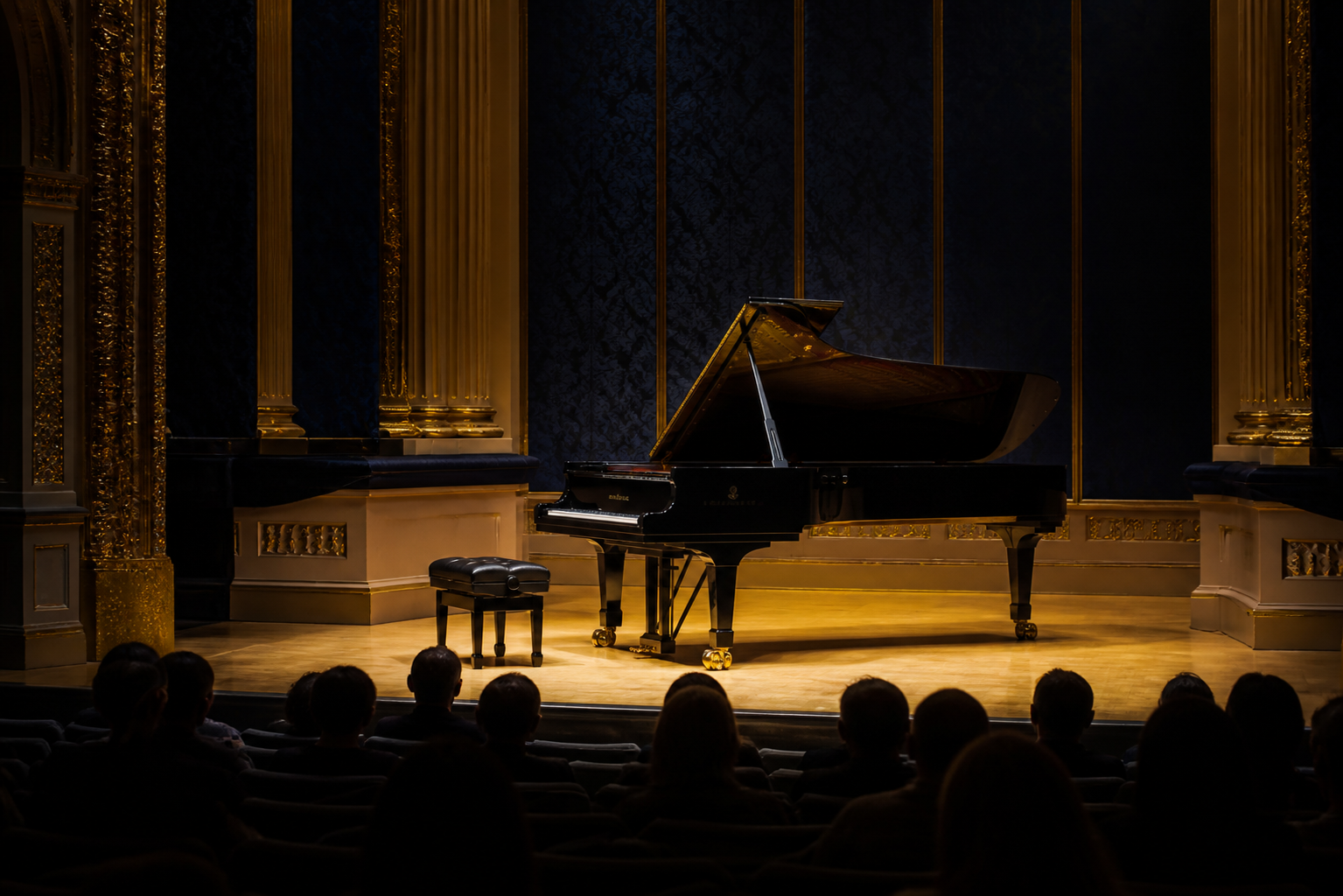
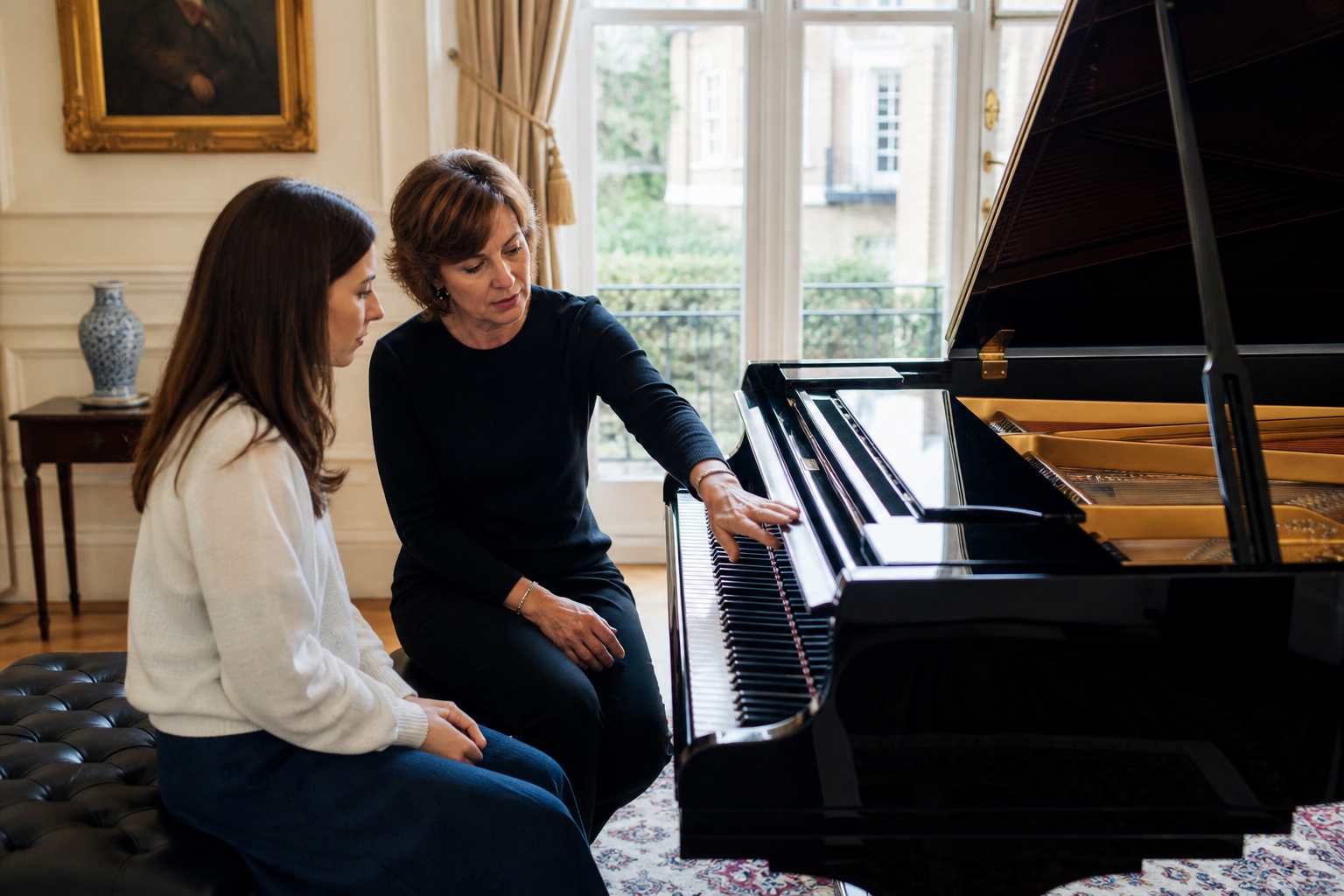
This educational article is an homage to Jean-Yves Thibaudet and to the musical questions his artistry can open for piano learners. It is not an official biography, endorsement, partnership or representation of the artist. The images used here are AI-generated editorial illustrations created for WKMT’s educational commentary and do not depict Jean-Yves Thibaudet.
Sources on Jean-Yves Thibaudet and London listening
- Decca Classics: Jean-Yves Thibaudet biography and recordings, checked 18 August 2026.
- HarrisonParrott: Jean-Yves Thibaudet artist profile, checked 18 August 2026.
- Barbican digital programme: Jean-Yves Thibaudet, 24 January 2024.
- Barbican: Royal Philharmonic Orchestra with Jean-Yves Thibaudet, 5 May 2025.
- Royal Albert Hall: BBC Proms 2023, Gershwin’s Piano Concerto, checked 18 August 2026.
- Barbican archive: Debussy’s Complete Préludes, checked 18 August 2026.
Research and internal links last checked 18 August 2026. This article is for musical education and listening guidance.