
 TRIAL LESSON
Uncategorized
How To Buy A Piano
Jun

Our piano partner in London and at Santa Emilia.
How to buy a piano.
Choose the one you’ll
want to come home to.
A beautiful instrument deserves more than a hurried decision. Here is what to listen for, what to ask—and why we recommend starting your search with Markson Pianos.
Explore the Markson showroom ↗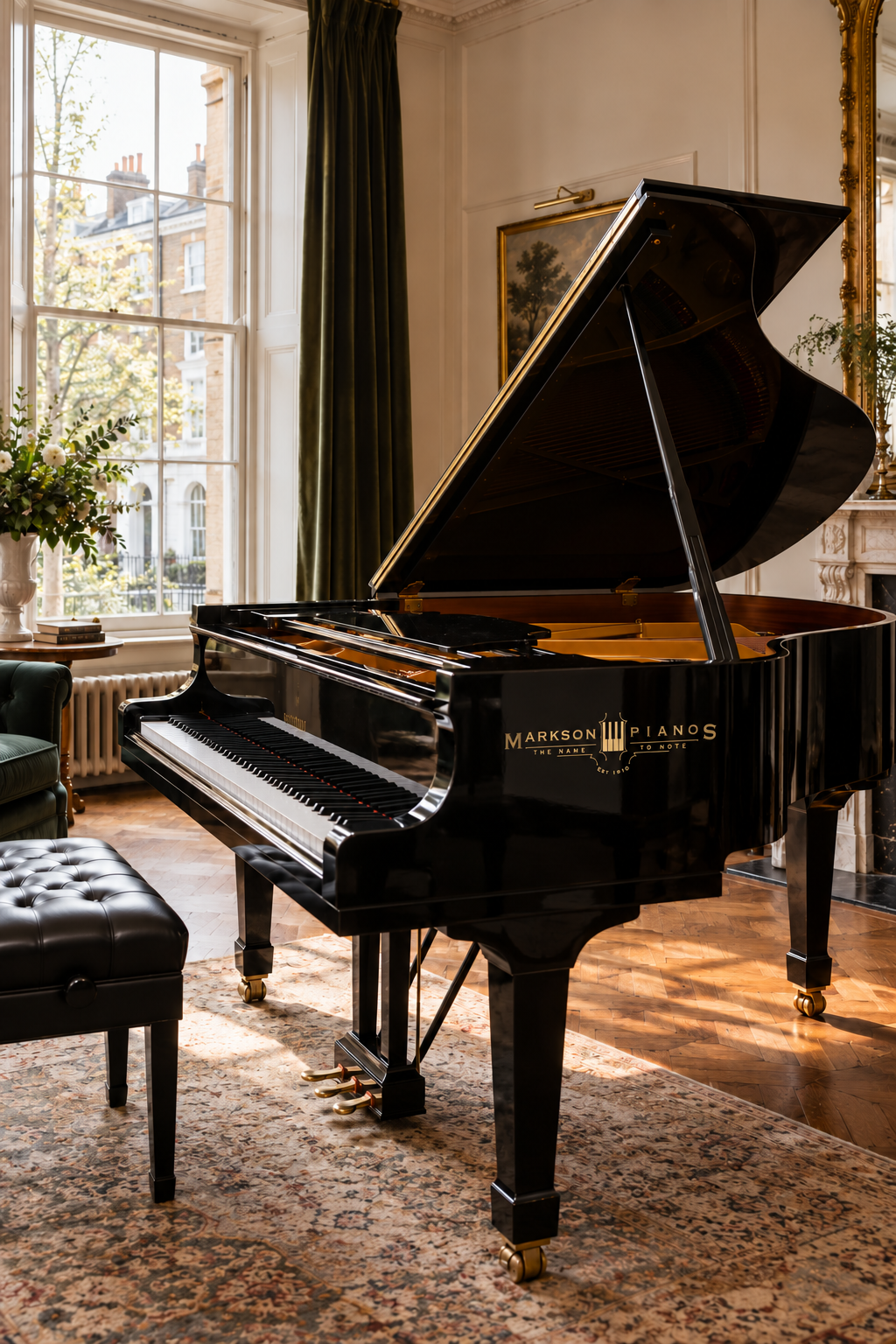
You are choosing the sound
of your everyday life.
The first few notes matter. So do the thousands that follow: a child finding a melody, an adult returning to music, the quiet repetition that turns a difficult passage into something expressive.
The right piano should make you want to sit down again tomorrow. Not because its name impresses your visitors, but because its touch, sound and place in your home make playing feel possible.
Our advice is simple: choose the instrument and the people behind it with equal care.
Our recommendation begins
at the keyboard.
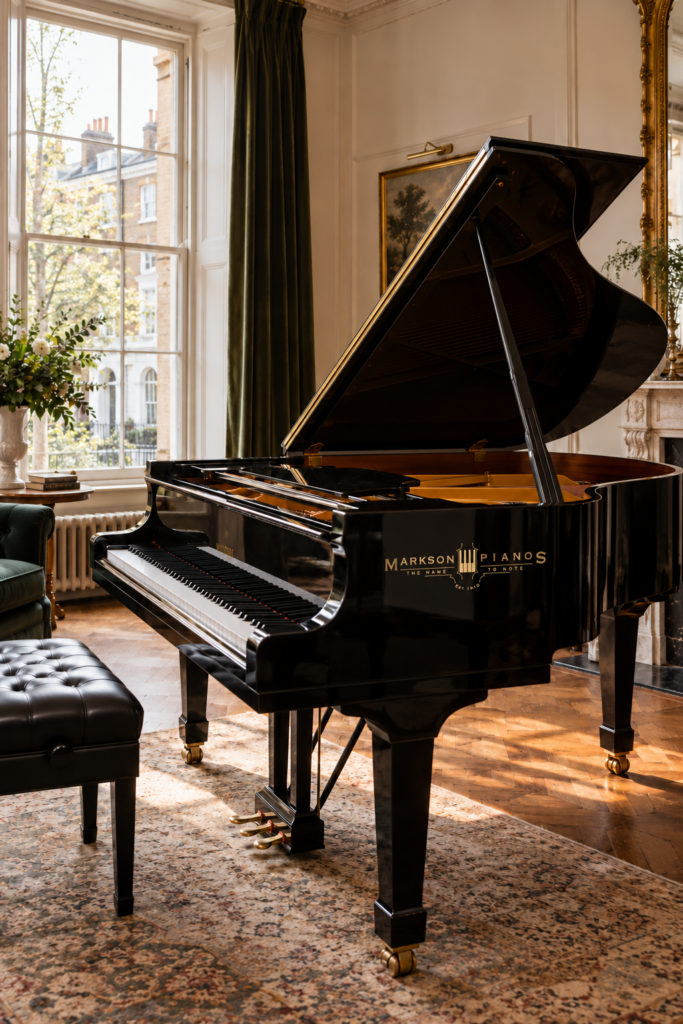
Markson supplies instruments we rely on in London and in the auditorium at Santa Emilia, Galicia, where we welcome gifted young musicians from across Europe.
That experience matters to us. A piano is not merely a beautiful object in a room: it is the instrument through which a teacher demonstrates, a student discovers a sound and a performer communicates with an audience. Our confidence in Markson comes from that practical relationship.
For someone buying a piano in London, this is why we recommend making Markson a first visit. Hear the instruments, explain what you need and discover which piano feels right for your own musical life.
Start your search at Markson ↗A specialist, not simply
a place to buy.
A long view of the instrument
Founded in 1910, Markson describes itself as a fourth-generation family business. Its roots in piano tuning and repair give its story a relevance beyond retail: the instrument needs to keep working long after it leaves the showroom.
Read Markson’s history ↗Room to compare
Its London showroom brings together new and pre-owned pianos. Markson lists makers including Yamaha, Kawai, Bösendorfer and Feurich. Availability varies: ask which instruments are ready to try within your budget.
Explore Markson Pianos ↗Support beyond the sale
Markson’s published services include tuning and restoration, and its FAQ describes an on-site workshop and in-house technicians. Ask what preparation, guarantee and aftercare apply to the particular instrument you choose.
Read the service information ↗Upright, grand or digital?
Start with your life.
An acoustic upright
A serious choice in its own right—not a consolation prize before a grand. Consider one if you want an acoustic instrument with a smaller footprint. Compare its responsiveness and tonal balance, not just its cabinet.
A grand piano
Worth exploring when your room, budget and musical priorities support it. Beginners need not rule one out; experienced players need not assume they require one. Try the actual piano. Size and prestige cannot substitute for a good match.
A digital or silent option
Late-night practice and shared walls are real considerations. For a digital piano, compare 88 weighted keys, response at different dynamics, pedals and headphone sound. Ask Markson about current options for quiet practice, including suitable acoustic instruments with silent systems.
Digital-piano polyphony is the number of voices an instrument can sustain; pedals, layered sounds and the way notes are generated affect its use. Do not judge it by whether it can play a four-note chord.
Read our digital versus acoustic guide ↗What makes a piano
right for you?
The best parts of choosing a piano happen when you stop comparing labels and start noticing how the instrument responds. These are the practical checks we recommend taking into your search.
Digital piano: touch and control
Look for a full 88-key keyboard with a weighted action and touch-sensitive dynamics. Key weight and sensitivity are different: one describes the physical feel, the other how your playing affects the sound. Try soft and stronger notes, connected phrases and detached articulation. The action should help you practise deliberately, not do the musical work for you.
Digital piano: sound and everyday use
Listen through the built-in speakers and through headphones. Digital instruments may use recorded samples, physical modelling or a combination. What matters is whether you enjoy the sound and can shape it naturally. Adjustable volume and headphones make practice more practical in a shared home, although key and pedal noise can still travel.
Digital piano: pedals and polyphony
Try a passage with the sustain pedal and listen for notes cutting out unexpectedly. Polyphony describes the available simultaneous voices, not simply how many fingers you can use. Layering sounds and sustaining notes can increase the demand. Check the specifications, then test the music you actually want to play.
Acoustic piano: find your sound
Do you prefer warmth, brightness, a singing treble or a generous bass? Compare several instruments using the same music. Listen for clarity and an attractive balance across the keyboard. A bass note and a treble note should not sound identical; they should belong convincingly to the same instrument.
Acoustic piano: examine the keys
Check for damaged key surfaces, sticking notes and uneven response. Play slowly and softly as well as firmly. Notice whether the action feels comfortably controllable rather than judging it as simply heavy or light. Ask the dealer to explain any unevenness and what adjustment is included before delivery.
Acoustic piano: look beyond the case
An attractive finish cannot reveal the condition of the hammers, strings, soundboard, tuning pins or action. Ask about servicing, repairs and regulation, and have an independent piano technician inspect a private purchase. Dust alone is not a diagnosis; structural and mechanical condition require knowledgeable assessment.
A grand is a choice, not a qualification
A grand can be a wonderful first instrument if the space, budget and individual piano are right. An upright can equally serve an ambitious pianist beautifully. Choose the quality and response of the instrument in front of you rather than assuming that one shape guarantees better music.
Let the brand open the conversation
A respected maker is a useful starting point, not the final answer. Condition, preparation and personal preference still matter. Give yourself permission to prefer the less obvious piano. The one that encourages you to practise is more valuable to your musical life than a badge chosen to impress.
At Markson, use these questions to begin a conversation rather than feeling you must arrive as an expert. Ask for contrasting demonstrations, compare instruments within your budget and take notes before deciding.
Five things to hear.
One decision to feel.
You do not need to give a recital to choose a piano. A few familiar notes—and someone who can demonstrate—are enough to begin.
Play quietly first.
Can you control a soft note comfortably? Listen for a clear response without having to force the key.
Listen across the keyboard.
Move from bass to treble. Different registers have different characters; listen for an appealing relationship between them rather than an identical sound everywhere.
Bring something you know.
Use the same short passage on each piano. Familiar music makes differences easier to notice. If you are a beginner, ask for a demonstration and try the keys yourself.
Compare touch, not just volume.
Try a melody, a chord and a repeated note. Notice how comfortably you can shape them. A louder piano is not automatically a better piano.
Ask what happens after delivery.
Get a written explanation of the instrument’s condition, preparation, guarantee, delivery arrangements and recommended tuning schedule. For a private purchase, arrange an independent technician’s assessment.
Buy the piano.
Plan for living with it.
Before visiting, set a comfortable total budget—not just a purchase price. Allow for transport, access difficulties, a suitable stool and ongoing care. Measure the room, doorways, stairs and intended position, then discuss the route with the supplier.
For a pre-owned piano, ask about its history and any work completed. A polished case tells you very little about the action, tuning stability or internal condition.
Not ready to buy outright?
Markson offers short- and long-term piano hire, including domestic use. This gives you another conversation to have if you want to live with an instrument before making a purchase. Ask for current availability, the full costs and the written rental terms.
Discuss piano hire with Markson ↗Bring the music home.
Let ownership come later.
You do not have to buy a piano before discovering what it can bring to your life.
For a family beginning lessons, an adult returning to playing or a musician settling into a new London home, rental can be an appealing first step. You can establish a practice routine and discover what you value in an instrument before deciding whether to own one.
This is what makes Markson’s rental offering especially attractive to us: it creates a practical route towards a piano at home, with the possibility of a later purchase rather than requiring that decision at the beginning.
Explore Markson’s long-term hire ↗Rent first.
Keep your next step open.
Markson’s long-term hire page describes a six-month minimum payable period and a rolling contract, with hire and delivery/collection charges paid in advance. It also describes an Option to Purchase scheme: a percentage of hire fees may count towards buying the hired piano or another instrument, capped at the equivalent of six months’ hire fees. If you buy the piano you are hiring, Markson says the collection fee is also deducted from the purchase price quoted at the start. Read Markson’s published scheme ↗
These are not promises that all rent will be refunded or that the piano becomes yours automatically. Ask Markson to confirm your eligible percentage, applicable prices and complete terms in writing before you commit. Information checked on 18 October 2026; the signed quotation and agreement should govern your decision.
Describe your home and goals
Tell Markson who will play, the musical level, likely rental period, comfortable budget and whether quiet practice is essential. Send room dimensions and details of stairs, lifts and access so the team can advise on a suitable instrument and delivery.
Try your shortlist
Visit the showroom if you can. Test the piano you are considering, ask what preparation it receives and establish who is responsible for tuning and care during the hire. Ask which models are currently available rather than assuming every sale instrument can be rented.
Get the complete quotation
Ask for the total initial payment, VAT treatment, delivery and collection costs, any deposit or insurance requirements, minimum term, renewal arrangements and cancellation notice. Request a worked example showing what the purchase option would mean for your chosen piano.
Before signing, compare the total cost over your intended period with buying. Rental is a flexible route into playing—not automatically the cheapest route over every timescale. Its value is the opportunity to make a thoughtful decision while music becomes part of your daily life.
Ask Markson for a rental quotation ↗Meet your next piano.
In person.
Our recommendation is to visit Markson, take your time and let the comparison happen at the keyboard. Tell the team WKMT recommended you. Explain who will play, what you enjoy and what your home needs.
You do not need to know the model before you arrive. You need a clear starting point—and the willingness to listen.
Plan your Markson showroom visit ↗Give your piano
a life in music.
A thoughtfully chosen instrument and attentive teaching belong together. Explore individual piano lessons with WKMT in West Kensington, Camberwell and Bermondsey.
Explore piano lessons in London ↗