
 TRIAL LESSON
Piano Lessons
How Many Keys Are on a Piano? A Child’s Guide to the Keyboard’s Design
Oct
WKMT London family guide
How Many Keys Are on a Piano? A Child’s Guide to the Keyboard’s Design
The keyboard looks long at first, but it is built from a small repeating pattern that children can learn to recognise. Counting every key gives one answer; understanding why the pattern repeats gives a young pianist something far more useful at the instrument.
In brief
How many keys on a piano? A standard modern acoustic piano has 88 keys: 52 white keys and 36 black keys, spanning seven full octaves plus three extra notes, from A to C. Some historical pianos have fewer keys, while a few specialist concert grands extend below the usual bottom A. Beginners do not need to use all 88 keys at once.
How many keys on a piano, and how are they arranged?
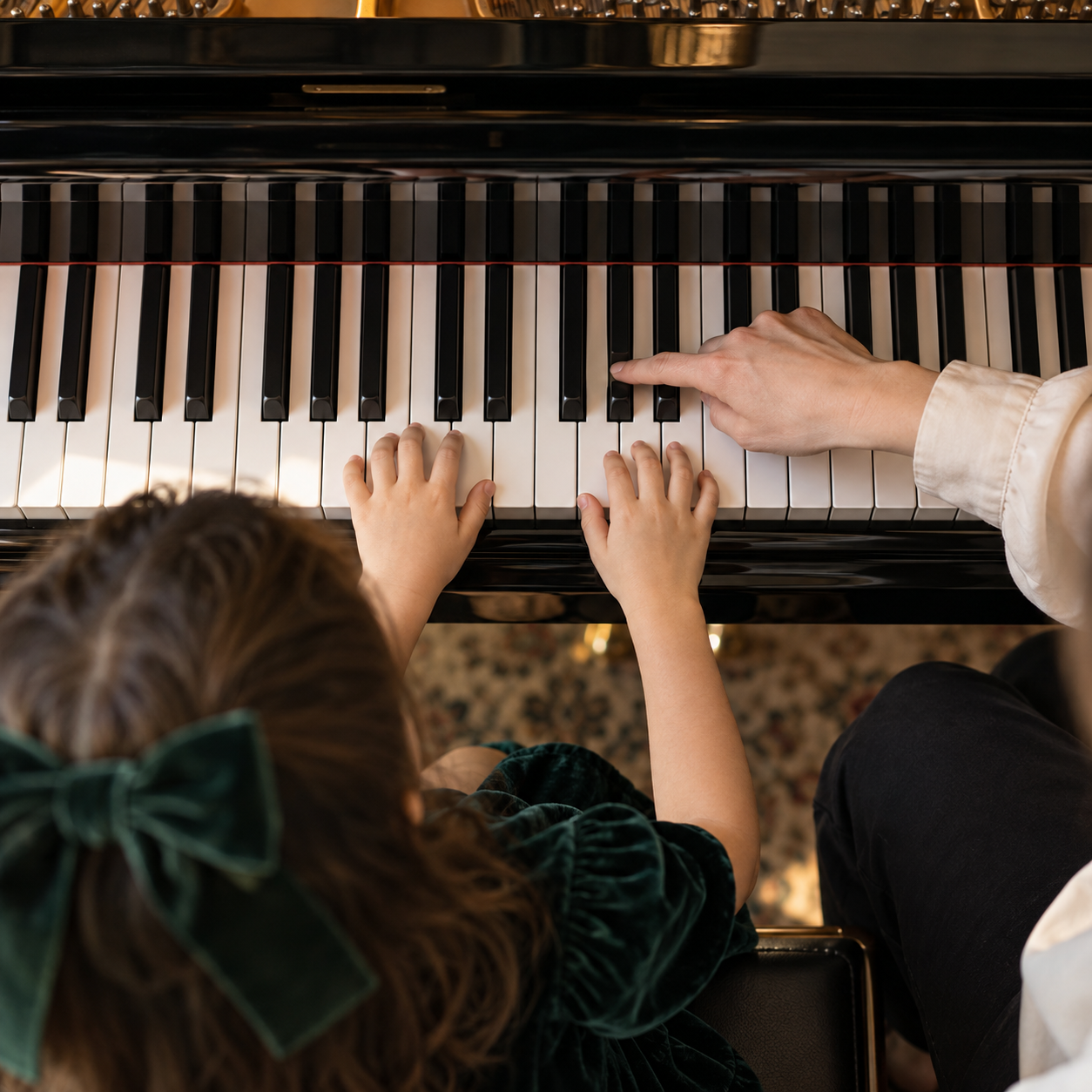
The standard answer is 88, but the keyboard is easier to understand in groups. White keys carry the seven letter names A to G. Black keys appear in alternating groups of two and three. That visual rhythm repeats across the instrument and gives children a reliable map before they can name every note quickly.
Ask a child to find every group of two black keys, then every group of three. The white note immediately to the left of a two-black-key group is C. From one C to the next is an octave: the same letter name returns at a higher or lower pitch. This pattern makes a large keyboard feel organised rather than crowded.
Why the modern piano settled on 88 keys
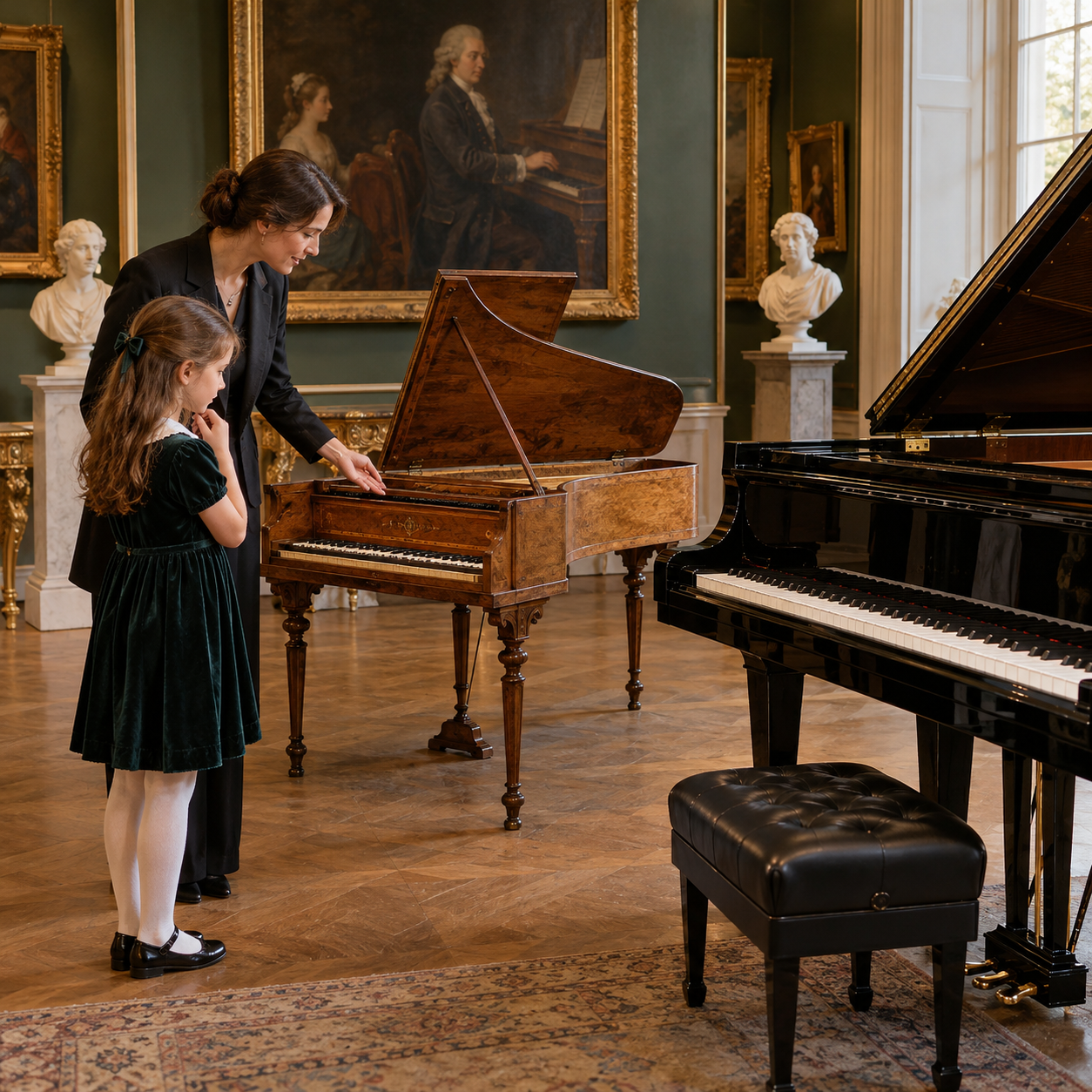
Early pianos were smaller in range. The Metropolitan Museum of Art’s 1720 Cristofori piano has 54 keys, while many late eighteenth-century instruments had about five octaves. During the nineteenth century, stronger frames, heavier strings and changing musical ambitions encouraged makers to extend both bass and treble. That history explains why the answer to how many keys on a piano changed over time.
By the later nineteenth century, 88 keys had become the practical standard. The range was wide enough for orchestral scale, powerful bass and brilliant treble without making ordinary playing positions unmanageable. In children’s piano lessons in London, this history can help a child see the keyboard as an evolving musical tool rather than a row to memorise.
White keys, black keys and the pattern children really need
The white keys are not the important keys and the black keys are not decorations. Together they provide the twelve pitches used in each chromatic octave. The uneven black-key pattern helps the hands and eyes locate position. A blind slide along identical white keys would be confusing; groups of two and three create landmarks.
Play a simple finding game. Call a black-key group, then ask for the neighbouring C, F or B. Next, choose a note and find its twins in higher and lower octaves. WKMT’s guide to reading sheet music carefully connects this keyboard geography with the patterns children meet on the stave.
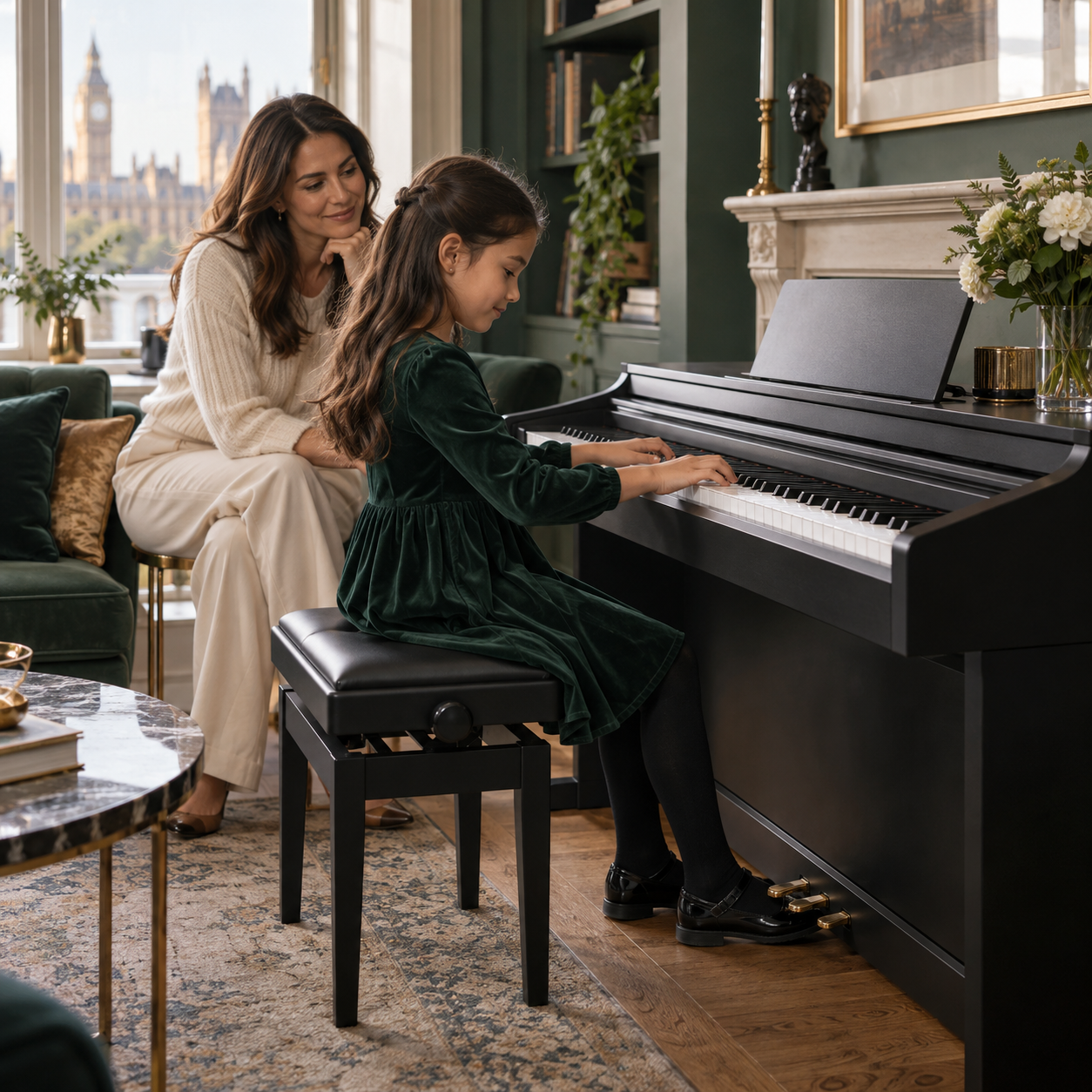
A child does not have to memorise 88 separate objects; the keyboard teaches one pattern that returns in different registers.
Do children need a full-size 88-key piano?
A full-size weighted keyboard gives the clearest long-term preparation for acoustic piano playing because it preserves normal key dimensions, resistance and range. Yet a family’s immediate choice also depends on space, budget and whether the instrument encourages regular practice. A smaller keyboard can support a first exploration if its limitations are understood. When comparing instruments, ask how many keys on a piano or keyboard and whether those keys are full-sized and weighted.
Avoid miniature keys for formal learning where possible, because spacing affects coordination. Look for stable key response, a secure stand, an adjustable seat and a pedal that does not slide away. The number of keys matters less than healthy posture and attentive sound at the beginning, but a growing child will eventually benefit from the standard layout.
A two-minute keyboard map for young beginners
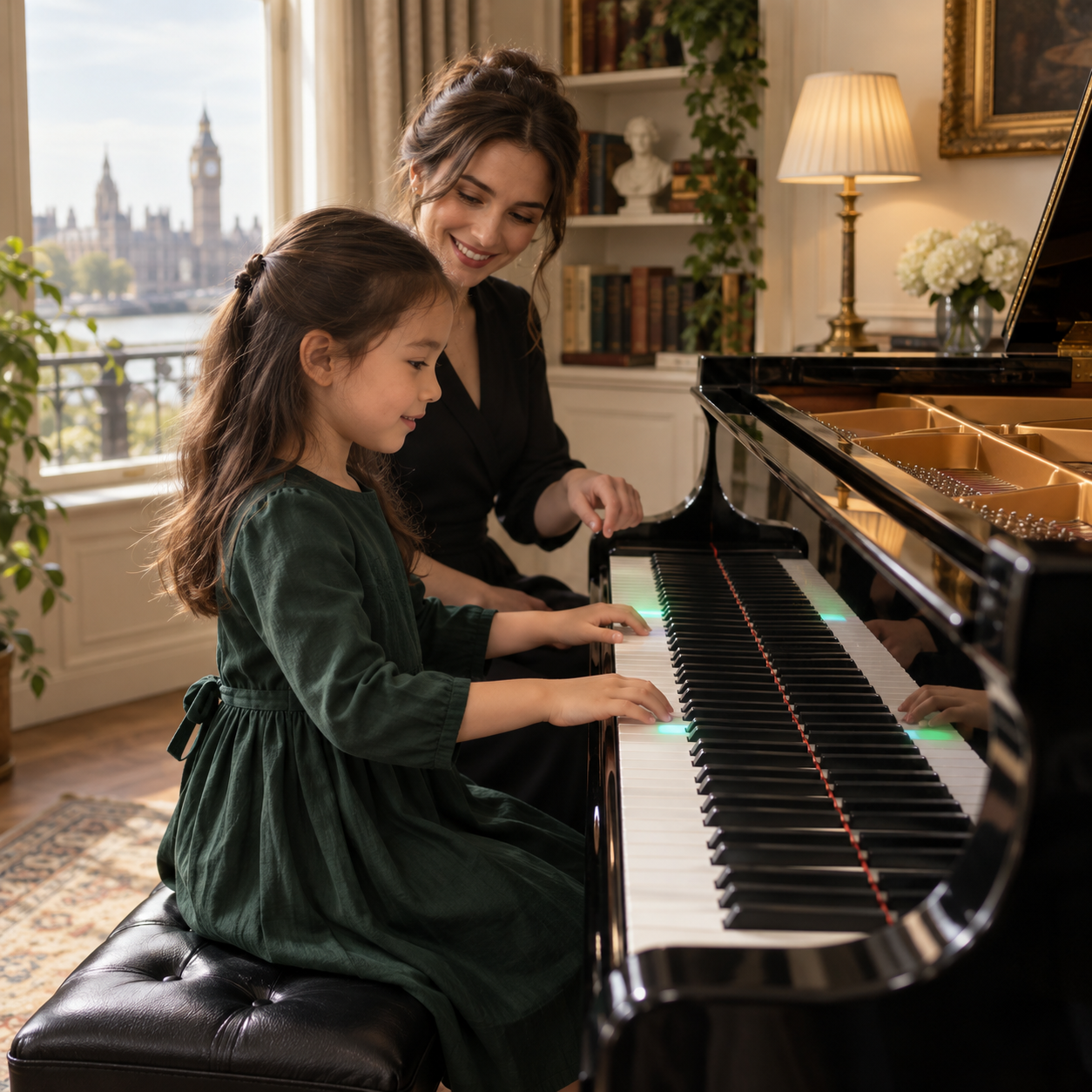
Start in the middle, where groups are easy to reach. Find middle C, then move outward by octaves. Count seven different white-key names before the pattern begins again. Play the two black keys together softly, then the three, listening for the change in shape and sound. Keep the activity calm rather than turning accuracy into a race.
When a child asks how many keys on a piano, the best follow-up is practical: which patterns help us find our way? WKMT’s page on the piano within the keyboard family gives the wider context. Curiosity becomes musicianship when counting leads to listening, naming and purposeful movement.
WKMT London
Give your child a thoughtful start that turns keyboard curiosity into secure reading, listening and coordinated playing.
Explore children’s piano lessonsSources on how many keys on a piano
- Metropolitan Museum: Keyboard Instruments bulletin
- Metropolitan Museum: National Piano Month
- Metropolitan Museum: Cristofori’s piano
- Metropolitan Museum: Viennese instruments
- Smithsonian: Pianos in the Smithsonian Institution
- Smithsonian: William Steinway Diary
Sources checked 12 October 2026. Educational guidance; individual circumstances and progress vary.