
 TRIAL LESSON
Piano Lessons
Healthy Ageing: Why Piano Lessons Can Become Meaningful Adult Study
Sep
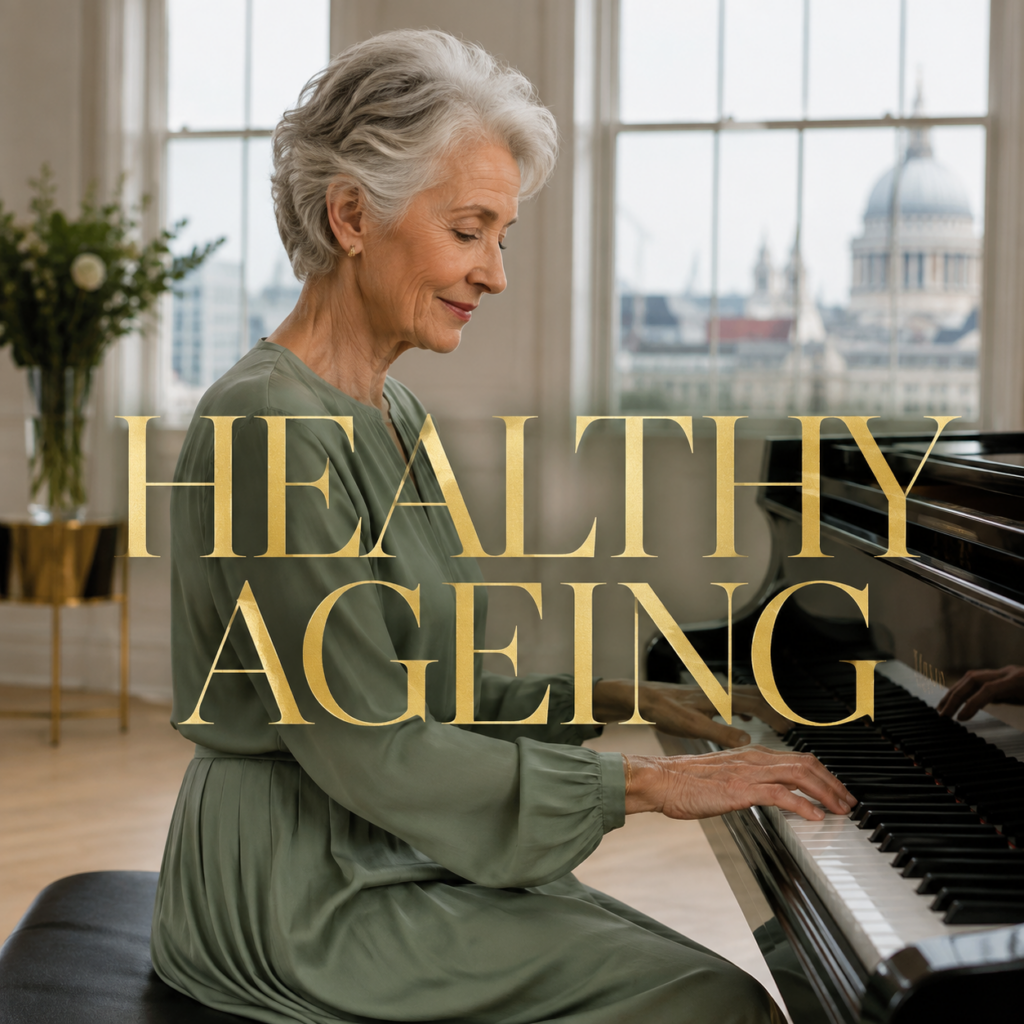
Healthy ageing with piano at WKMT London
WKMT London later-life learning guide
Healthy Ageing: Why Piano Lessons Can Become Meaningful Adult Study
Healthy ageing is supported by purpose, capability, connection and environments that let people keep doing what matters. Piano can become serious adult study within that larger picture.
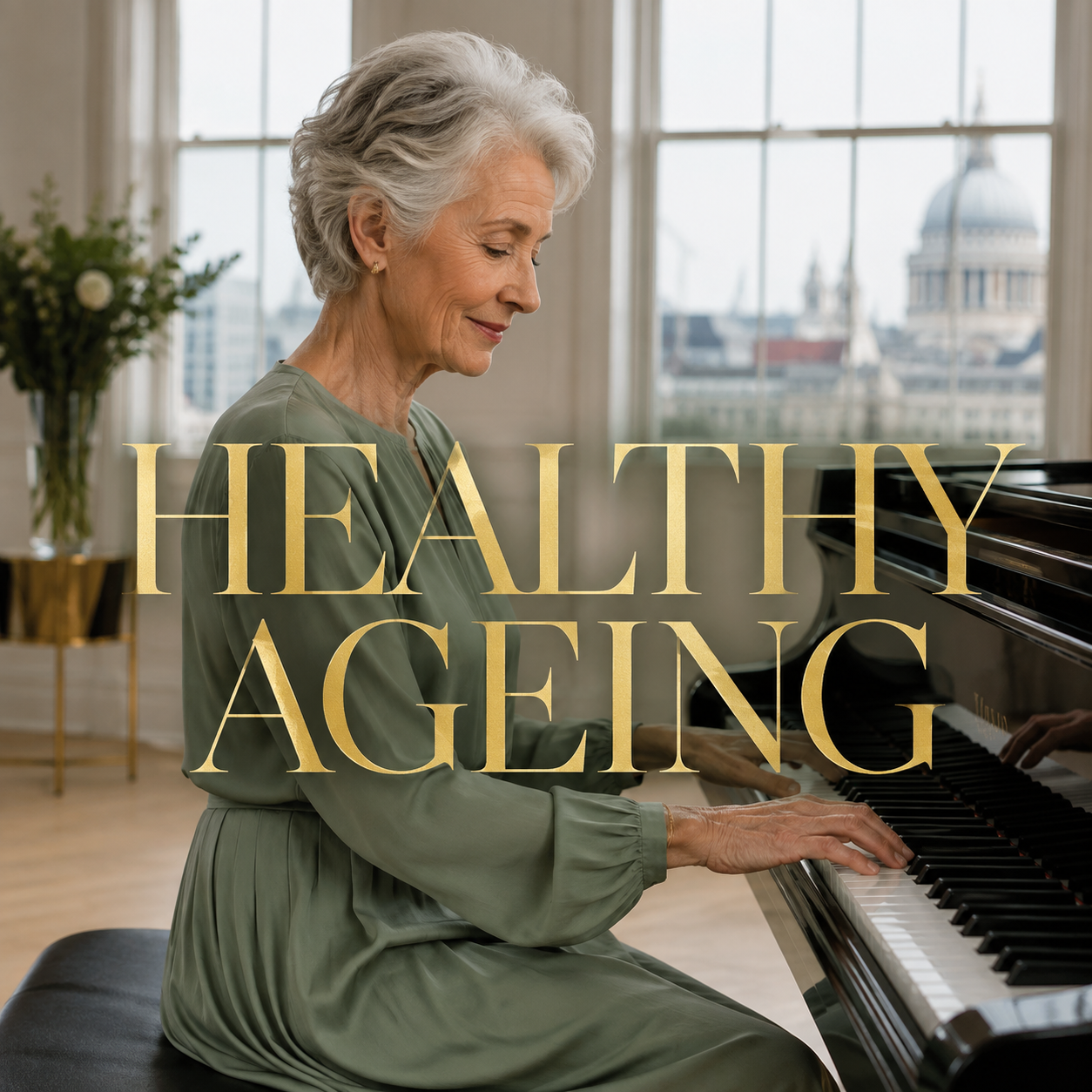
Healthy ageing is supported by purpose, capability, connection and environments that let people keep doing what matters. Piano can become serious adult study within that larger picture. In a lesson, the subject becomes practical: what should the ear follow, what action changes the result, and how can the learner repeat that change without losing curiosity?
What healthy ageing means beyond staying busy
The World Health Organization frames healthy ageing around functional ability: enabling people to be and do what they value. Piano fits when the learner values music, not because any complicated task is automatically beneficial. A meaningful repertoire goal, an attentive teacher and an accessible instrument turn practice into agency rather than an activity prescribed to fill time.
Adapt access
Change print, fingering, seating and session length.
Keep artistry
Prioritise tone, phrase and meaningful repertoire.
Build connection
Use duets, concerts or shared listening when welcome.
Adapt the method while preserving ambition
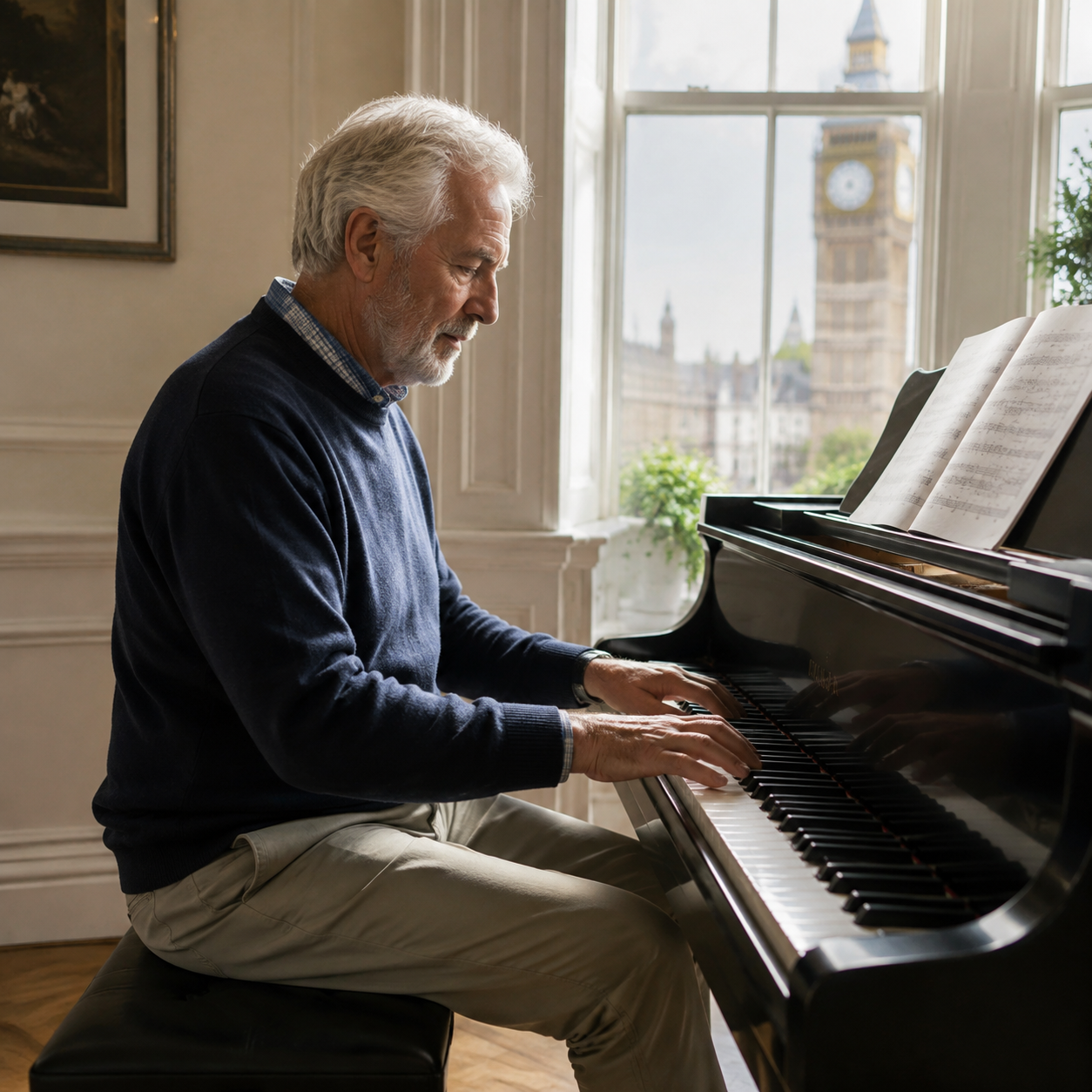
Vision, hearing, joint comfort and processing speed may change, but these do not erase musical intelligence. Healthy ageing at the piano can use enlarged scores, written fingering, shorter practice cycles and repertoire chosen for the hand. Adaptation is not dilution. Interpretation, voicing and historical understanding remain serious goals from the first lesson.
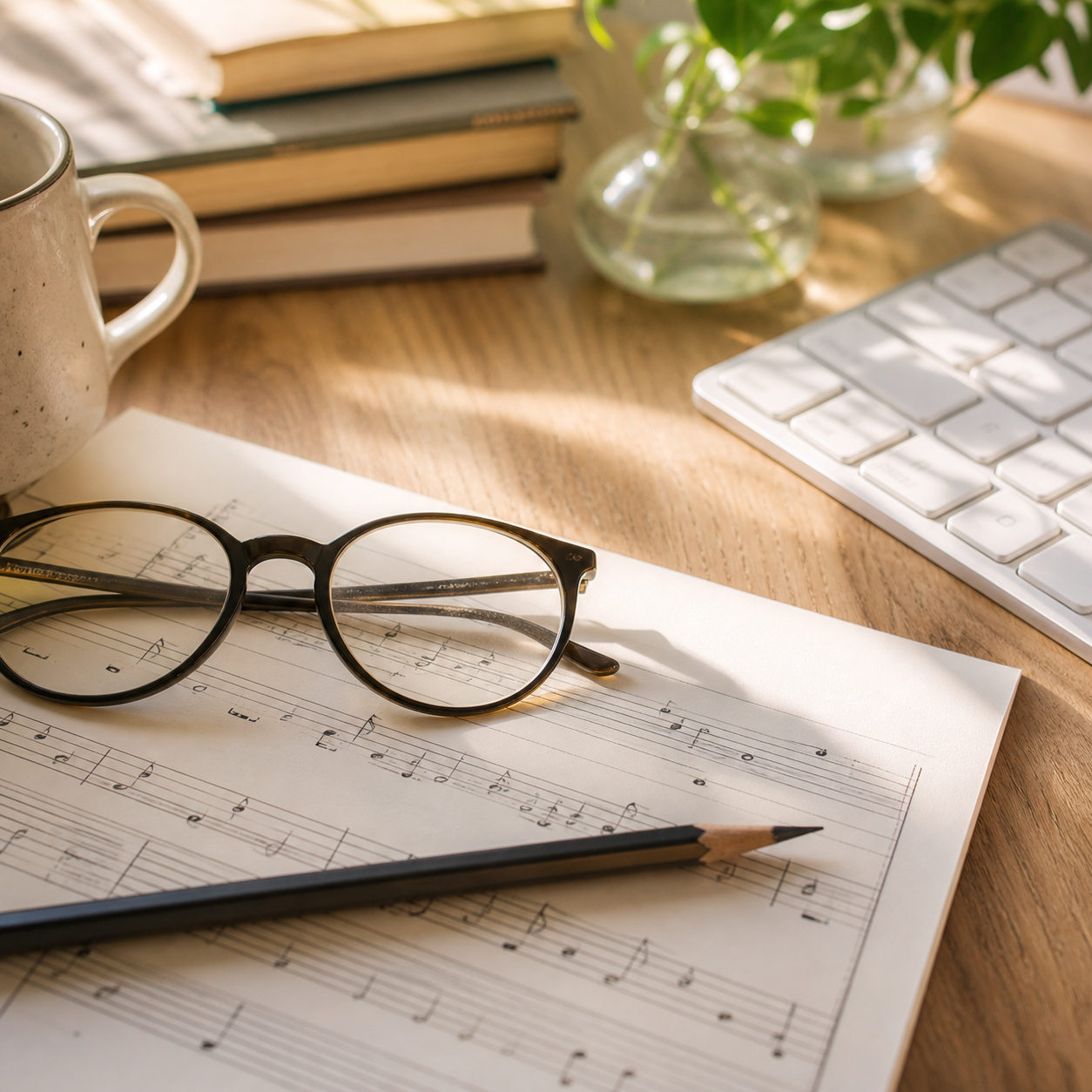
Progress becomes trustworthy when the learner can hear what changed and understand why.
A sustainable weekly pattern
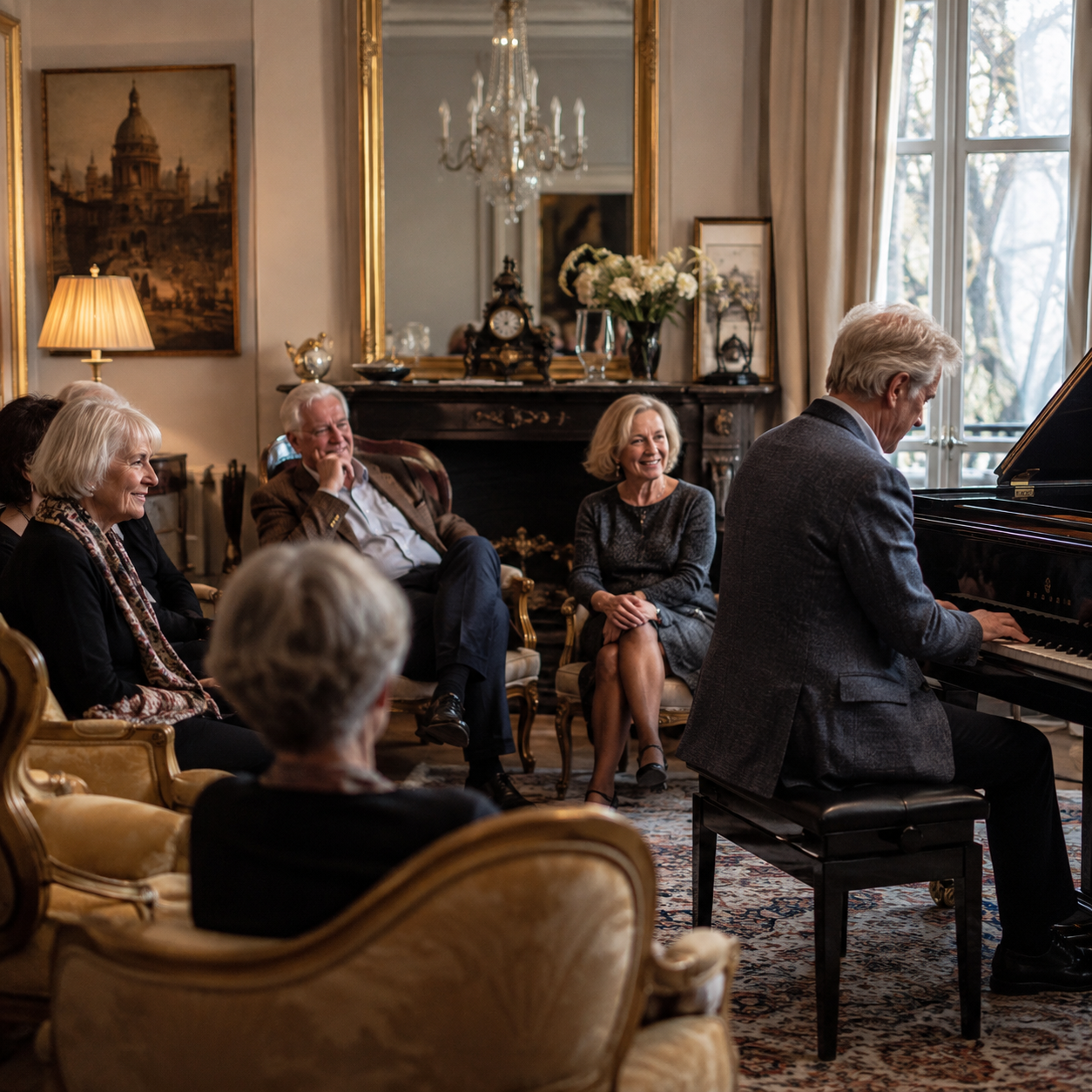
Use four short sessions rather than one exhausting practice. Begin with comfortable movement, work on one phrase, pause before fatigue and finish with known music. Add a duet or informal salon when social playing appeals. This healthy ageing pattern combines repetition with novelty and respects recovery, while keeping progress audible enough to support motivation.
Why individual teaching matters
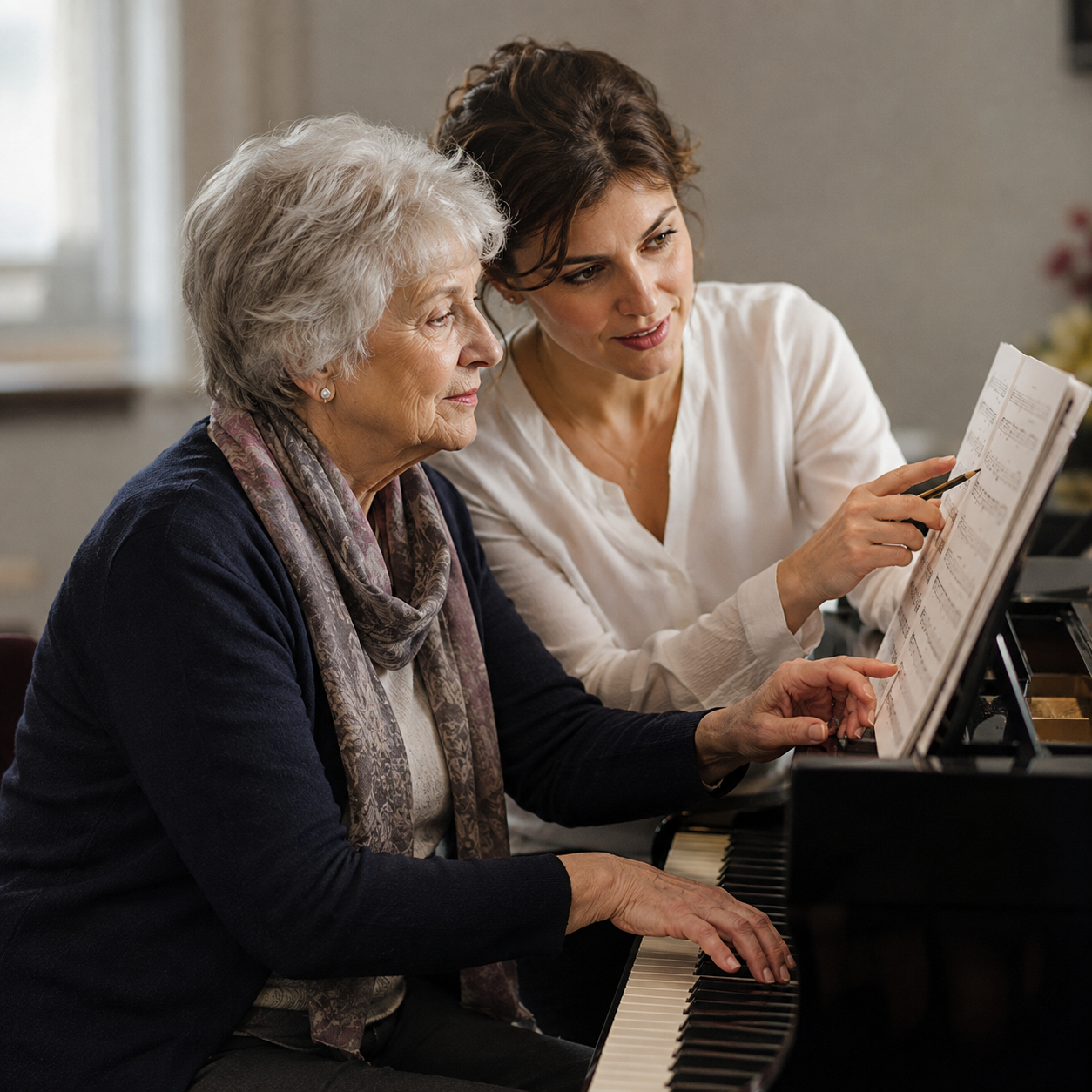
A teacher can distinguish technical tension from ordinary effort, adjust seating, re-finger a passage and choose music with the right complexity. In adult piano lessons, healthy ageing is not a special remedial category. It is a reason to design study around the person’s present abilities, ambitions and musical history without making medical promises.
For a connected perspective, read WKMT’s practical piano guidance. The value of healthy ageing is clearest when it supports musical independence rather than exaggerated promises.
WKMT London
If you want to develop healthy ageing through serious, face-to-face musical study, explore WKMT’s London teaching.
Sources and further reading on healthy ageing
- World Health Organization healthy ageing
- National Institute on Aging
- Age UK wellbeing guidance
- Centre for Ageing Better
- PubMed research database
Sources checked 8 September 2026. Educational guidance only; no clinical or developmental outcome is guaranteed. Images are AI-generated editorial artwork.