
 TRIAL LESSON
Piano Lessons
Growth Mindset: Why Piano Practice Helps Children Understand Effort

Aug
Growth Mindset Complete Guide
WKMT London parent guide
Growth Mindset: Why Piano Practice Helps Children Understand Effort
Piano practice gives children unusually clear evidence that ability can change. A difficult bar becomes manageable through a better strategy, patient repetition and attentive feedback, making growth mindset visible in sound.

A child meets small setbacks at every lesson: a missed note, an uneven rhythm, a hand that cannot yet coordinate a pattern. Those moments can feel personal. Good teaching turns them into questions. What changed? Which movement is tense? Can the rhythm be spoken first? A growth mindset develops when the child experiences improvement as the result of a useful response.
At WKMT London, children’s piano lessons in London connect technical foundations with musical meaning. The aim is not to manufacture constant positivity. It is to help a young learner recognise that errors can guide the next action and that asking for help is part of serious study.
What growth mindset means in piano practice
Growth mindset is often reduced to the phrase “try harder”. That is incomplete. Carol Dweck has repeatedly clarified that effort must serve learning and be joined to strategy, feedback and support. If a child repeats an unhelpful fingering twenty times, more repetition may strengthen the problem. The productive response is to change the method.
Notice
Name the exact place where the sound or movement changes.
Choose
Select one strategy: slower pulse, separate hands, singing, grouping or teacher help.
Test
Try a short musical unit and listen for one result.
Reflect
Say what improved and what the next attempt needs.
A large national study reported that a brief growth-mindset intervention had modest average effects and worked better in supportive school contexts. That nuance matters. Children do not build a growth mindset from slogans alone. They need environments where adults provide good strategies, realistic challenges and enough time for improvement to become believable.
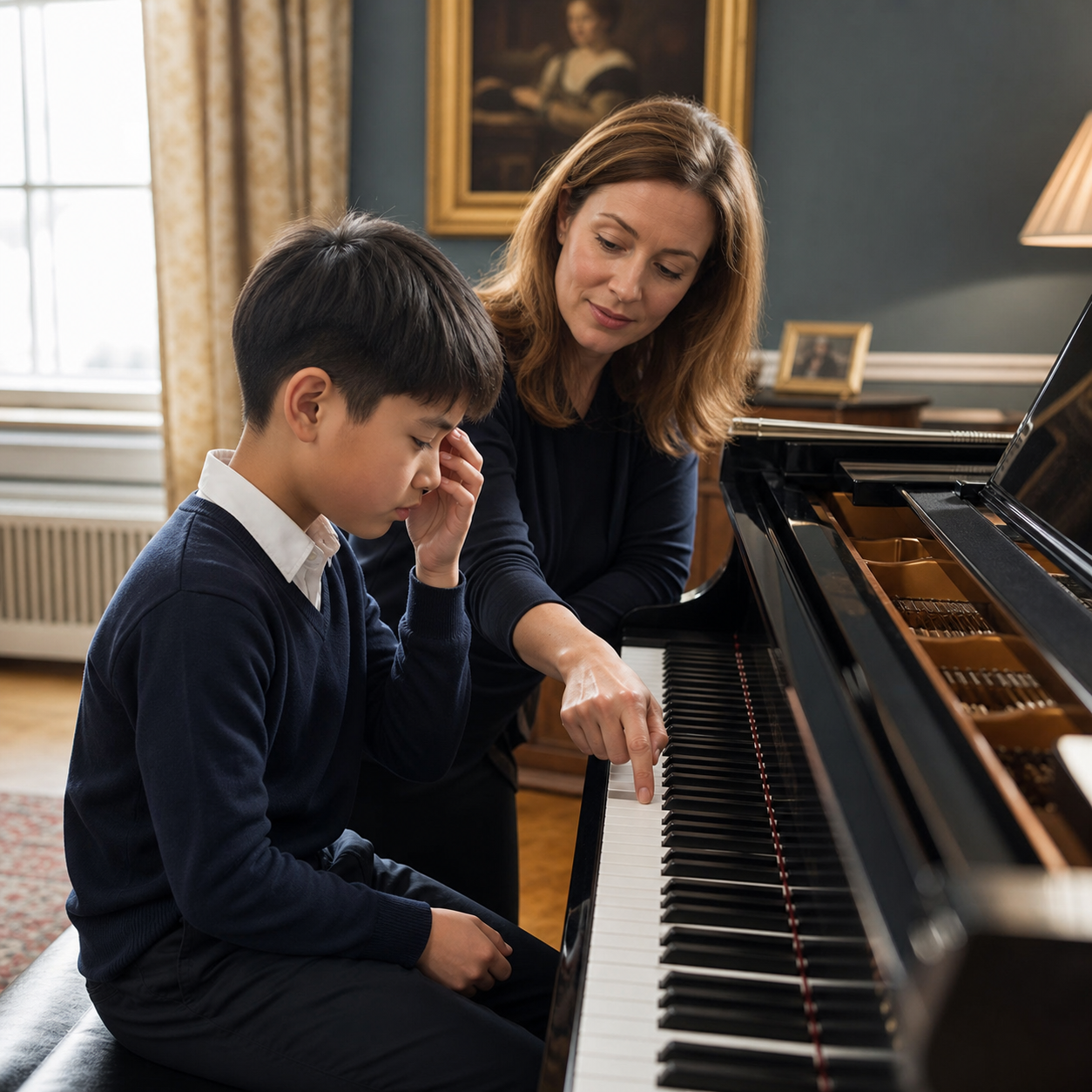
Praise the process, but make the praise truthful
“Well done for trying” can be kind, yet it teaches little if the child knows the result did not change. More useful praise identifies a process: “You kept the pulse when the hands changed,” or “That fingering made the phrase easier.” The child learns which action produced progress and can use it again.
Research on praise distinguishes comments about intelligence from comments about process. Praising a child as naturally talented can make a later mistake feel like evidence that the talent has vanished. Process feedback keeps attention on choices. A growth mindset is therefore less about protecting a child from difficulty than helping them interpret difficulty accurately.

A mistake is valuable only when the child can use it to choose a better next action.
A growth mindset practice routine for children
Begin with a goal small enough to hear. “Practise the piece” is vague; “keep the left-hand pulse through bars nine to twelve” is clear. Ask the child to predict what will help. After one attempt, pause for a description rather than an immediate verdict. This develops self-observation as well as persistence.
Before
Choose one musical aim and one short passage.
During
Use two or three attentive attempts, not an endless loop.
After
Name the change in sound, timing or ease.
Later
Return after a break so the child experiences relearning and retention.
The Harvard Center on the Developing Child describes how supported practice builds executive-function skills. Piano offers immediate feedback within that broader process: the child holds a plan, resists rushing, monitors a result and changes course.
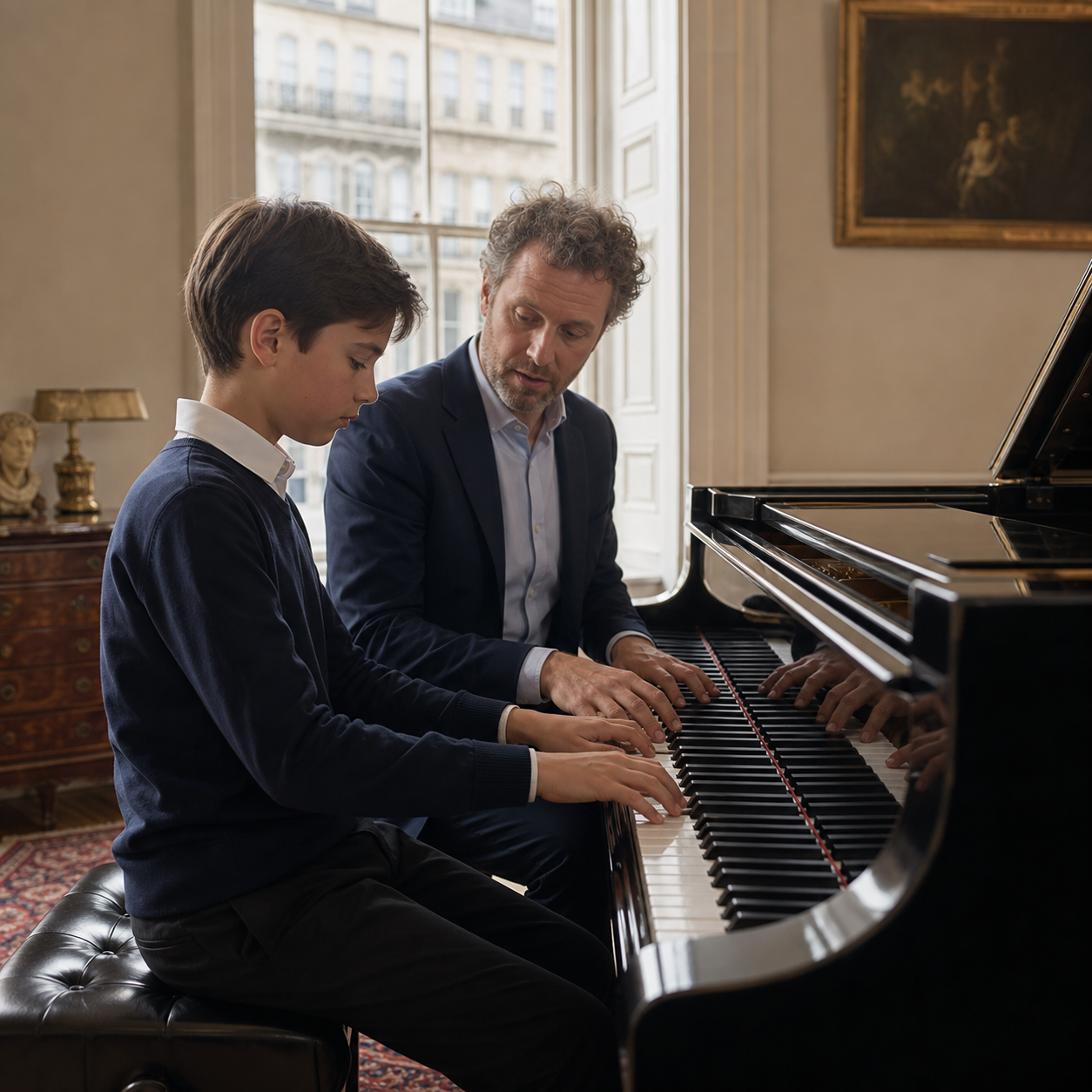
When persistence should become a change of plan
Persistence is not always continuing. A tired child may need a smaller task, a different piece or rest. Pain, repeated distress and escalating conflict are not evidence of weak character. They are signals that the plan or environment needs attention. A healthy growth mindset includes knowing when to seek help.
The Education Endowment Foundation emphasises planning, monitoring and evaluating learning. Those habits translate naturally to piano. The teacher models a strategy, the child tries it, and both decide from evidence whether to continue or adapt.

What growth mindset can and cannot promise
Growth mindset does not make every child improve at the same speed, nor does it remove differences in experience, attention, opportunity or physical development. Its value is more grounded: it gives the child a humane and accurate way to understand learning. Ability today is not a permanent ceiling, and effort is most powerful when guided by knowledge.
Piano makes that principle audible. A phrase that once broke apart begins to flow. The child remembers not merely that practice happened, but how listening, strategy and patient support made the change possible.
WKMT London
Discover how WKMT London supports young learners through individual teaching, thoughtful practice and secure musical foundations.
Sources for growth mindset
- Growth mindset and cognitive training in children
- National growth-mindset intervention study
- Harvard Center on the Developing Child: executive function
- Education Endowment Foundation: metacognition and self-regulation
- Carol Dweck revisits growth mindset
Sources last checked 24 August 2026.