
 TRIAL LESSON
Uncategorized
Orchestral string equipment – Theory of Paganini Caprice
Nov
Paganini Caprices study in London
Paganini Caprices and the Piano — Liszt’s Grandes Études Explained
When Liszt first heard Paganini play in Paris in 1832, he resolved to become the keyboard equivalent of that violinist. The result was a set of transcriptions that redefined what the piano could do and what a pianist could survive. This guide covers all six of Liszt’s Grandes Études de Paganini, Schumann’s two sets of Paganini piano études, and what every serious piano student can learn from studying them.
What You Will Find in This Guide
- Who Paganini was and why his Caprices inspired the greatest piano composers
- How Liszt approached transcription as a compositional act
- All 6 Liszt Grandes Études de Paganini (S.141) with difficulty ratings and performance notes
- Schumann’s Op.3 and Op.10 Paganini piano études — the more accessible alternative
- What transcription teaches about composition, voice leading, and texture
- How to practise this repertoire without injuring yourself
- Whether these pieces are right for your current level
Paganini Violin Caprices
Liszt Piano Études (S.141)
Final Liszt Revision
Schumann Paganini Sets
Why Paganini Matters to Pianists
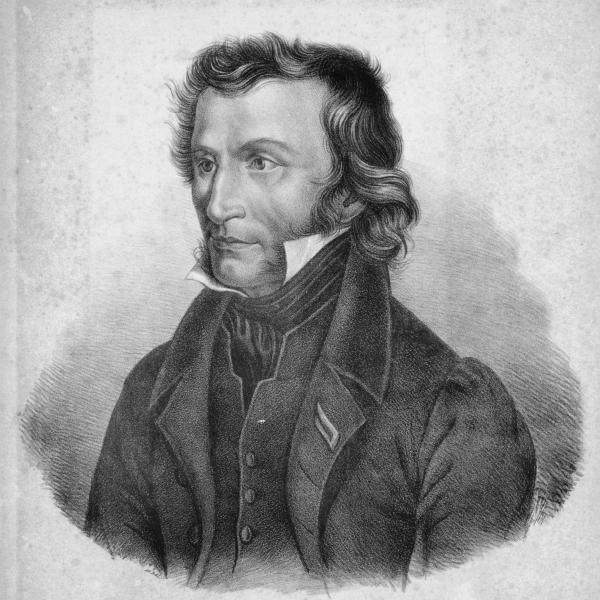
Niccolò Paganini (1782–1840) was the first modern superstar of the concert hall. His 24 Caprices for Solo Violin, published in Milan by Ricordi in 1820, represented a quantum leap in violin technique: double-stopped trills, left-hand pizzicato, ferocious ricochet bowing, harmonics, and stretches that exceeded what most violinists could physically achieve. Contemporary audiences at his concerts suspected supernatural involvement. Paganini, who reportedly had Marfan syndrome, possessed extraordinary hand flexibility that extended his reach well beyond the normal.
The Caprices were written between 1802 and 1817, and the 24th — a theme with 11 variations in A minor — became the most imitated theme in the concert music repertoire. Brahms, Rachmaninoff, Andrew Lloyd Webber, and countless others have written variations on it. But the pianists who engaged with Paganini most deeply were those who tried to do the impossible: transcribe his violin writing note for note onto a keyboard instrument. Chief among them were Franz Liszt and Robert Schumann.
“I want to indicate by my piano the whole range of sounds, chords, and effects. This is an ambition, perhaps a crazy one.”
— Franz Liszt, in a letter to his student, after hearing Paganini perform (1832)
Liszt and the Paganini Project
Liszt attended Paganini’s concerts in Paris in April 1832, and the experience was transformative. He wrote to a friend that he intended to do for the piano what Paganini had done for the violin. The practical result was two sets of transcriptions: the Études d’exécution transcendante d’après Paganini (S.140) of 1838, and the revised Grandes Études de Paganini (S.141) of 1851.
The 1838 version is widely considered unplayable — a first attempt that pushed the piano beyond what pianists could reliably manage. The 1851 revision, which is the standard performing edition today, retains the ambition but channels it through more pianistically intelligent writing. The difficulty remains extreme, but the notes are at least within the theoretical reach of the finest pianists. It is the 1851 version that this guide addresses.
Liszt’s transcription method was not literal. He did not simply transpose violin notes to piano: he reinvented the music, adding bass lines, inner voices, and harmonic context that the solo violin could only imply. In doing so, he transformed composition problems into piano composition solutions. Every student of composition who wants to understand voice leading, textural distribution, and the logic of keyboard writing will learn something invaluable from studying even a few bars of these études.
All 6 Liszt Grandes Études de Paganini — Complete Guide
The six études are based on specific Paganini Caprices, with the exception of No.3 (“La Campanella”), which draws on the finale of Paganini’s Violin Concerto No.2 in B minor. Each has a distinct technical focus and a distinct musical character.
| No. | Key / Nickname | Paganini Source | Technical Focus | ABRSM Equiv. |
|---|---|---|---|---|
| No.1 | G minor | Caprice No.5 | Rapid tremolo, hand crossing, sforzando accents on off-beats | Post-diploma / LRAM |
| No.2 | E-flat major | Caprice No.17 | Octave passages, rapid chord changes, wide registral span | Post-diploma / LRAM |
| No.3 | G-sharp minor “La Campanella” | Paganini Concerto No.2 (Rondo finale) | Rapid hand leaps, bell-like staccato in extreme registers, right-hand melody over left-hand accompaniment spanning four octaves | Post-diploma / LRAM+ (one of the most famous and recognisable piano showpieces ever written) |
| No.4 | E major | Caprice No.1 | Perpetual motion arpeggiation, continuous sixteenth-note texture across full keyboard range | Post-diploma / LRAM |
| No.5 | E major “La Chasse” | Caprice No.9 | Hunt-style rhythms, staccato octaves, horn-call imitation | Post-diploma / LRAM |
| No.6 | A minor | Caprice No.24 (Theme & Variations) | Eleven variations, each with distinct technical demand: thirds, octaves, trills, double-note runs, chromatic passages. The longest and most varied of the set. | Post-diploma / LRAM (requires weeks of dedicated preparation per variation) |
La Campanella — The Most Famous Paganini Piano Transcription
No.3, “La Campanella” (The Little Bell), is the piece most audiences will recognise. The nickname refers to the little bell that sounds in the orchestra in the original Paganini concerto finale, here rendered on the piano as a staccato high note in the right hand. The musical problem Liszt set himself was considerable: maintain a singing melody in the upper register, leap rapidly across the keyboard to imitate the bell effect, and sustain harmonic context in the left hand, all simultaneously.
The solution Liszt found involves wide hand leaps — often spanning two octaves or more — that the pianist must execute with mechanical precision at tempo. The right hand must feel like two independent instruments. The difficulty lies not only in the technical demands but in the musical challenge: the piece must sound light, even delicate, despite the physical effort required. Played well, it sounds effortless and magical. Played poorly, it sounds like what it is — a pianist frantically leaping around the keyboard.
All six Liszt Paganini Études are post-diploma level. No.3 “La Campanella” and No.6 (Caprice No.24 variations) are among the most technically demanding piano pieces in the entire repertoire. Students below LRAM or conservatoire level should treat them as long-term goals and listening exercises rather than immediate repertoire targets.
The SVG Difficulty Map: Liszt vs Schumann
Schumann’s Paganini Sets — The More Accessible Route
While Liszt was reimagining Paganini as a force of nature, Robert Schumann was working on his own Paganini transcriptions for piano — with rather different goals. Schumann’s 6 Studies of Paganini Caprices Op.3 (1832) and 6 Concert Studies on Paganini Caprices Op.10 (1833) were written when Schumann was in his early twenties, still studying the piano and hoping for a career as a performer (before the injury to his right hand ended that ambition permanently).
Schumann’s approach to transcription is more conservative than Liszt’s. He stays closer to the original violin writing, adds less invention of his own, and generally keeps the difficulty at a level that gifted advanced students — rather than only the most exceptional concert pianists — can aspire to reach. Op.3 corresponds roughly to Grades 7–8; Op.10 to Grade 8 and beyond. They are not easy, but they are achievable with serious preparation at pre-diploma level.
Op.3 is sometimes treated as an intermediate étude set in its own right, separate from its Paganini origins. The first three pieces (based on Caprices Nos.1, 17, and 6) are the most manageable; the sixth piece, based on Caprice No.24, is the most demanding in the set. Op.10 raises the technical bar further and introduces elements — extended chromatic passages, wide hand spans, rapid registral leaps — that begin to approach Liszt’s level without quite reaching it.
“Schumann’s Paganini sets are an ideal bridge between the advanced étude repertoire and the virtuoso piano literature. They give students a genuine encounter with Paganini’s harmonic and rhythmic world, without the requirement for a concert-pianist’s technique.”
— WKMT Teaching Notes
Transcription as a Composition Lesson
One of the most valuable ways to study these Paganini transcriptions is not to learn them as performance pieces but to analyse them as composition exercises. The question Liszt and Schumann both faced was: how do you take music written for a single melodic instrument — one line at a time — and give it the harmonic depth, textural variety, and structural clarity that a piano composition requires?
The answers are instructive for any student of composition or harmony. Violin writing implies harmonic context through broken chords and double stops; Liszt made that implicit context explicit, adding bass lines and inner voices that the violin could only hint at. He distributed registers across the keyboard in ways that mirror orchestral thinking. He also changed figurations where the violin technique had no keyboard equivalent — rapid string crossings became rapid hand alternations; double stops became thick chords or rolled intervals.
- Start with Caprice No.24. Compare Paganini’s original violin score with Schumann’s Op.3 No.6 and Liszt’s Étude No.6. Three versions of the same material reveal three entirely different compositional solutions. Notice how each composer handles the theme statement, the harmonic skeleton, and the transition between variations.
- Identify where Liszt departs from the original. In La Campanella, he does not transcribe a violin piece — he composes a piano piece inspired by one. Mark every bar where he adds material not in Paganini’s original. Ask why.
- Analyse the register distribution. Pick one étude and mark which voices appear in which register in each phrase. How does Liszt maintain clarity when writing in four or five simultaneous voices? How does he avoid muddiness in the low register?
- Study the harmonic rhythm. Paganini’s violin caprices often imply one harmony per bar or even one per phrase. Liszt’s transcriptions frequently expand the harmonic rhythm, adding passing chords and secondary dominants that were only suggested by the original. Map these additions.
- Try your own small transcription. Take a short passage from a Paganini Caprice (the opening of No.24 is ideal) and attempt your own piano arrangement. Compare it with Schumann’s version — not to evaluate quality, but to understand the compositional choices involved.
How to Practise This Repertoire Without Injury
The Liszt Paganini Études have a reputation for causing injury, and for good reason. The wide hand spans, sustained octave passages, and rapid leaping figures can stress the tendons and muscles of the hand and forearm if approached carelessly. Before attempting any piece from this set, read these guidelines carefully.
First: if you experience any pain, stop immediately. Pain is not a sign of working hard; it is a sign of working wrongly. Most injuries from advanced piano repertoire are caused by playing at full tempo before the technique for the passage is secure at a slow tempo, and by practising the same difficult passage too many times in a row without rest.
Second: practise hands separately for much longer than you think necessary. In La Campanella, the right hand alone has a physically demanding task; adding the left hand before the right is completely secure will increase the physical load without improving the musical result. Secure the hands separately, then combine at a reduced tempo, then build gradually.
Third: use arm weight rather than finger or wrist tension for octave passages. The Scaramuzza technique, which underlies the teaching approach at WKMT London, addresses this directly — transferring weight from the torso through the arm and into the keys, rather than gripping from the fingers or wrist. This is the difference between sustainable technique and the kind of tension-based playing that leads to injury over time.
Is This Repertoire Right for You?
For students at Grades 7–8, the Schumann Op.3 set is within realistic reach with sustained effort. The first three pieces in particular are appropriate preparation for diploma-level work. Students at this level who want to engage with the Paganini Caprices as piano music should start here.
For diploma and post-diploma students, the Schumann Op.10 set provides serious challenges without the extreme demands of the Liszt. One or two pieces from Op.10 work well as programme items at this level, and the analytical insights from studying them are valuable regardless of whether they reach performance standard.
For the Liszt Grandes Études de Paganini: these are concert-level works intended for the finest pianists in the world. No.3 (“La Campanella”) is a standard audition piece at the world’s top conservatoires; No.6 is a standard competition showpiece. Students below LRAM level should treat them as listening and analytical material. Students at or above that level who want to add one to a recital programme should plan on many months of preparation, working with a teacher experienced in advanced repertoire.
At WKMT London, we introduce the Paganini-Liszt connection early as an analytical tool — showing students how transcription reveals the compositional architecture of music they might otherwise only hear as technique. For students approaching the Schumann Op.3 set, we work through score analysis before technical preparation, understanding the harmonic framework that Schumann built around Paganini’s melodic lines. The Scaramuzza technique’s emphasis on weight transfer is particularly relevant here: the ferocious physical demands of Liszt in particular can only be safely managed when the technique is rooted in weight and relaxation rather than grip and tension.
Frequently Asked Questions about Paganini Caprices and the Piano
What are the Liszt Paganini Études?
The Liszt Grandes Études de Paganini (S.141) are six piano transcriptions of Paganini’s violin music, published in their final revised form in 1851. They are based on five of Paganini’s 24 Caprices for Solo Violin and on the finale of his Violin Concerto No.2. They are among the most technically demanding works in the entire piano repertoire.
What is “La Campanella”?
“La Campanella” (The Little Bell) is the nickname for the third of Liszt’s Grandes Études de Paganini, in G-sharp minor. It is based on the Rondo finale of Paganini’s Violin Concerto No.2. The nickname refers to the bell-like staccato notes in the upper register that imitate the little bell sound in the original concerto. It is one of the most famous and recognisable piano showpieces ever written.
Are the Schumann Paganini études easier than Liszt’s?
Yes, substantially. Schumann’s Op.3 corresponds roughly to Grades 7–8, and Op.10 to Grade 8 and above. Liszt’s S.141 is post-diploma level throughout. Schumann’s sets are excellent preparation for students who want to engage with this repertoire without yet having the technique for Liszt.
Which Paganini Caprice is the most famous in its piano version?
Caprice No.24 in A minor is the most frequently transcribed, arranged, and set as variations by composers for piano. Brahms wrote 28 Variations on it (Op.35), Rachmaninoff wrote his Rhapsody on a Theme of Paganini for piano and orchestra, and Liszt’s Étude No.6 is a set of variations on the same theme. It is one of the most borrowed themes in all of Western music.
How long does it take to learn La Campanella?
For a pianist at post-diploma level with a strong existing technique, a serious performance standard typically takes six months to a year of dedicated work. For a pianist approaching it from diploma level, two years or more is not unusual. The piece demands not only technical facility but musical maturity and physical endurance that cannot be shortcut.
What should I study before approaching Liszt’s Paganini Études?
Standard preparation includes the Chopin Études Op.10 and Op.25, the Liszt Transcendental Études (S.139), Brahms Paganini Variations Op.35, and Schumann’s Paganini Op.10 set. A thorough grounding in octave technique, wide-span chord playing, and rapid fingerwork is essential. Working with an experienced teacher who can monitor technique and flag injury risk is strongly recommended before attempting this repertoire.
Study Advanced Piano Repertoire in London
WKMT London’s teachers work with students across all levels, from beginner through to post-diploma and conservatoire preparation. If you are looking for expert guidance on advanced piano repertoire, technique, and composition in London, we are here to help.