
 TRIAL LESSON
Piano Lessons
Weighted Keys for Beginner Pianists: What Adult Learners Need from an Instrument
Oct
WKMT London adult learner guide
Weighted Keys for Beginner Pianists: What Adult Learners Need from an Instrument
An adult’s first instrument should make regular practice easy without teaching the hands to ignore sound. Weighted keys matter because they connect movement with dynamic response, yet the label alone does not guarantee a convincing action. The useful test is musical: can the instrument let you shape, repeat and listen?
In brief
A weighted keys beginner piano should have 88 full-size, touch-sensitive keys, a stable hammer-style action, a dependable sustain pedal, an adjustable bench and a piano sound that responds clearly from soft to loud. Weighted keys help adult learners develop control that transfers more naturally to acoustic pianos. They do not need to feel extremely heavy, and no keyboard should require force or cause discomfort.
What does weighted keys beginner piano actually mean?
In an acoustic piano, pressing a key sets a lever system in motion and sends a hammer towards a string. The player feels resistance, acceleration and release rather than a simple spring returning a plastic key. Digital pianos cannot reproduce every detail, but a hammer-style weighted action is designed to give the finger a more piano-like journey and to translate the speed of the key into a range of dynamics.
The words weighted, semi-weighted and hammer action are not interchangeable guarantees. Semi-weighted actions usually add resistance to a lighter keyboard mechanism; fully weighted or hammer actions aim more directly at piano behaviour. Graded actions make the bass feel somewhat heavier than the treble, echoing an acoustic design. For a weighted keys beginner piano, consistency and controllable response matter more than dramatic heaviness.
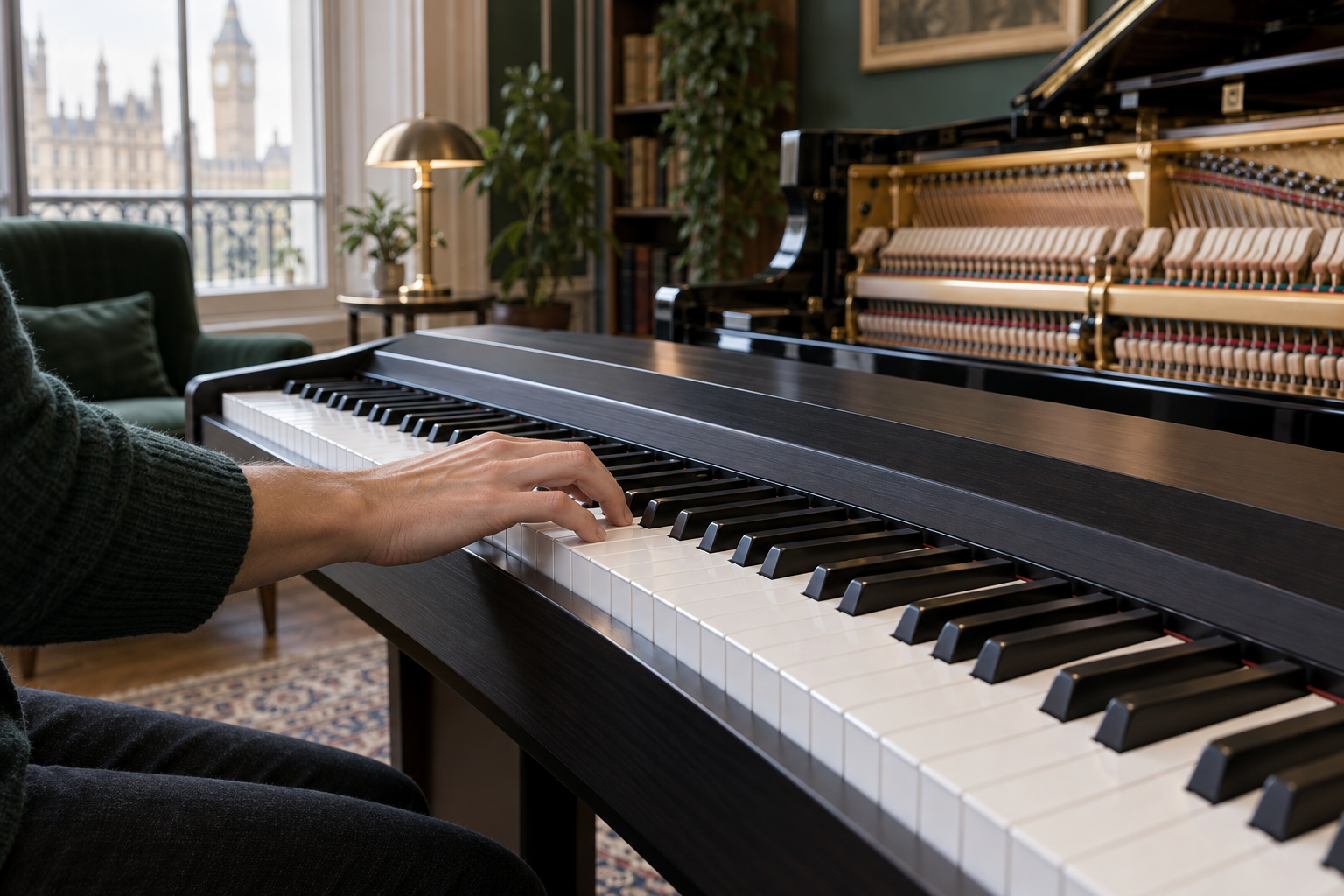
Why touch response matters before difficult repertoire
A beginner starts learning tone from the first five-note phrase. If every key speaks at nearly the same volume, the player receives little feedback about balance. A responsive action lets an adult compare a supported melody with a quieter accompaniment, hear when two hands arrive unevenly and repeat a note at several dynamic levels. Those are musical decisions, not advanced decorations reserved for later years.
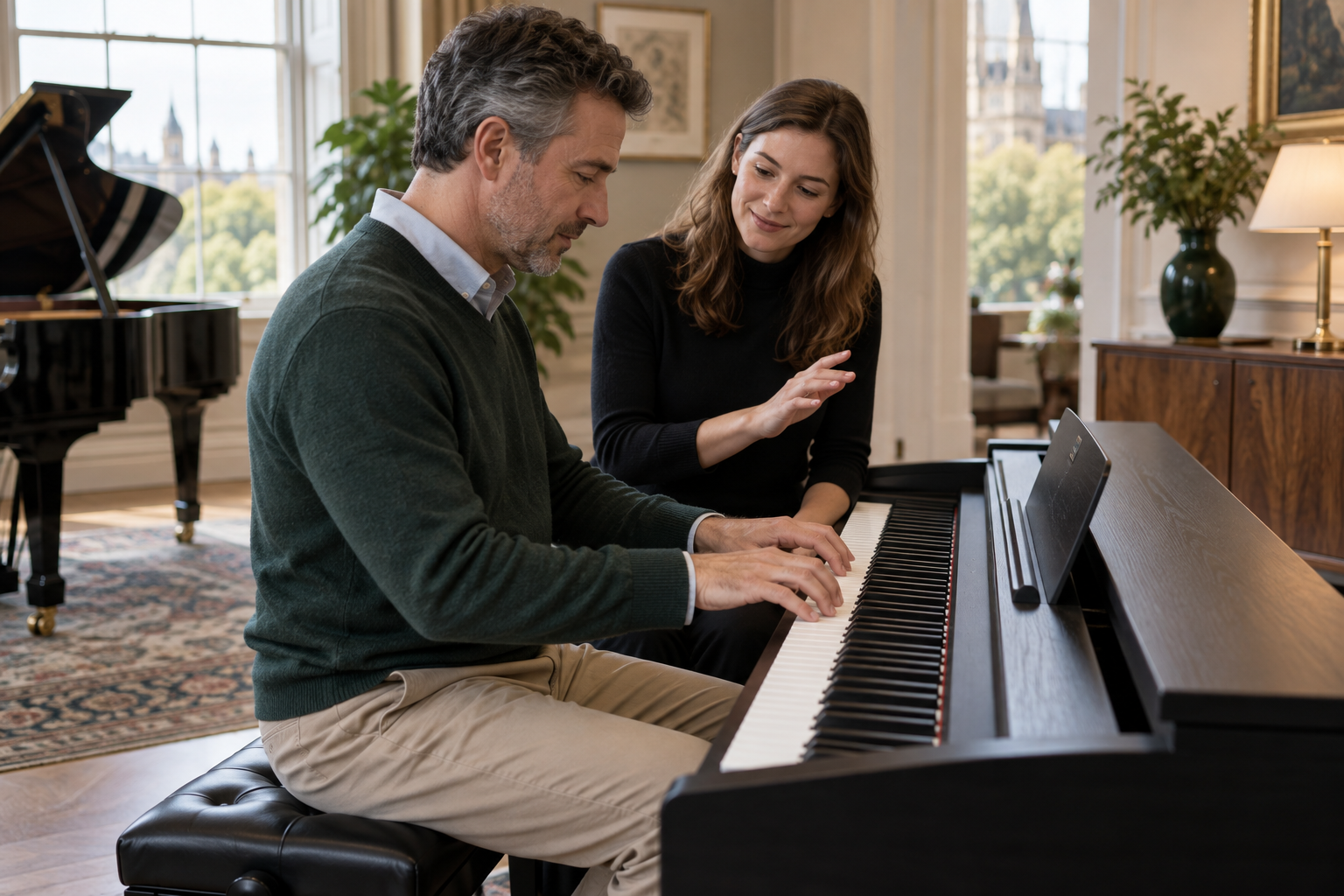
Research groups studying piano biomechanics note that performers adapt to different instruments through resistance and required force. That does not prove one model prevents injury or creates technique automatically. It does explain why the physical conversation with the key is part of learning. In face-to-face piano lessons in London, a teacher can compare what the pupil feels at home with the acoustic response in the lesson room and adjust movement without asking for unnecessary force.
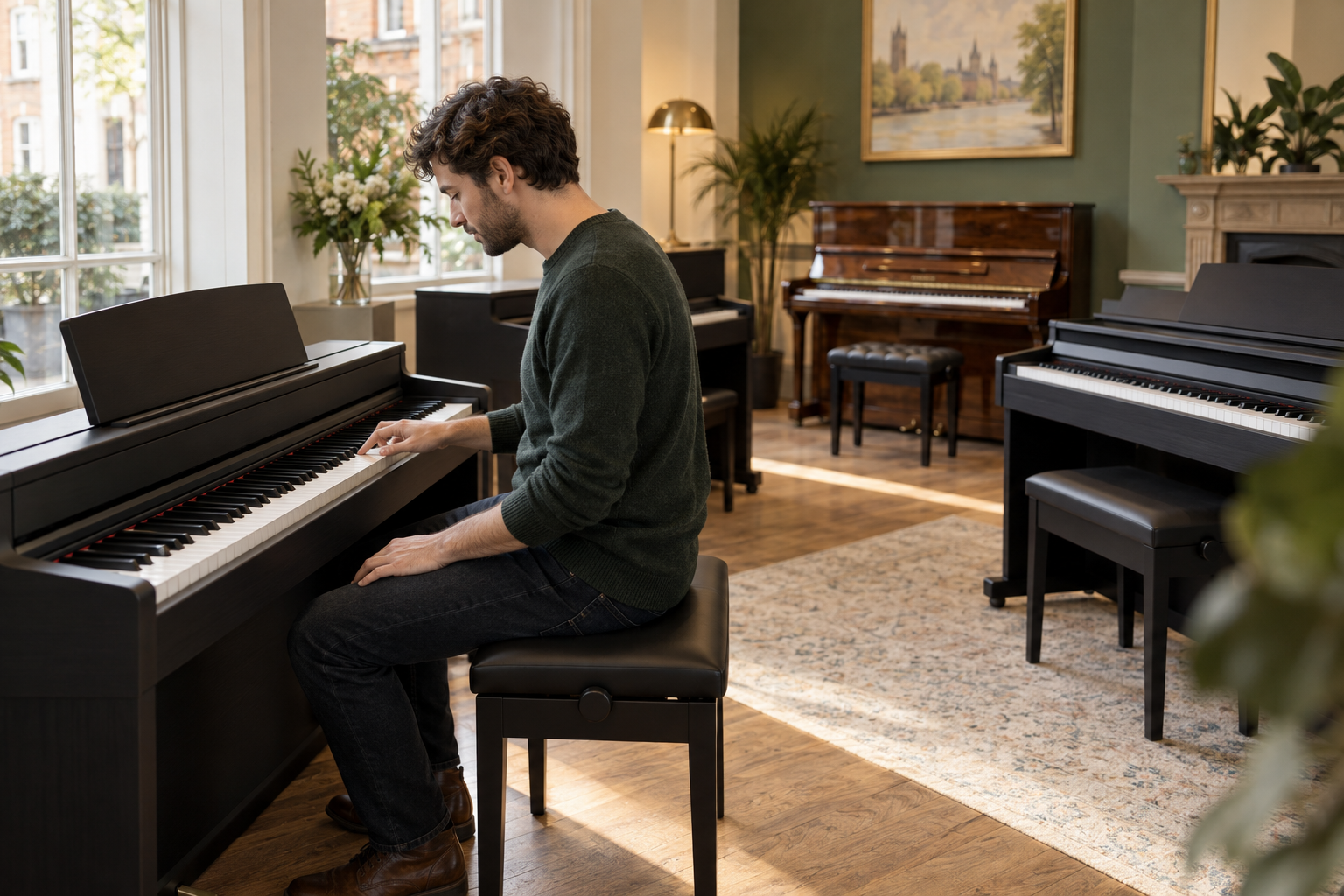
A five-minute shop test for a weighted keys beginner piano
Begin with one note in the middle register. Play it as softly as possible ten times, then grow gradually to a full sound without striking. The steps should feel controllable rather than jumping suddenly from silence to loud. Repeat the test in the bass and treble. Next, play two-note slurs and a simple melody over repeated left-hand chords. Listen for whether the accompaniment can remain genuinely quieter.
Then test repetition, release and pedal. Can a note repeat cleanly at a moderate speed? Do adjacent keys feel broadly consistent? Does the sustain pedal allow more than an on-off switch, where the model provides continuous sensing? Sit for several minutes at the correct height. An impressive demonstration voice cannot compensate for noisy keys, a flexing stand or an action that makes the forearms work harder with every phrase.
The best beginner action is not the heaviest one; it is the one that makes small differences in movement audible.
88 keys, pedals and the parts adults are tempted to overlook
ABRSM’s performance-grade specification says that a suitable digital piano should use a recognisable piano tone, touch-sensitive full-size weighted keys and an action, range and facilities comparable with a conventional acoustic piano, including pedals required by the repertoire. An adult may begin within five notes, but 88 keys preserve normal keyboard geography and avoid an early instrument change when repertoire expands.
A secure stand and adjustable bench are part of the instrument. The elbows should meet the keyboard without raised shoulders, and the pedal should stay beneath the foot. BAPAM’s healthy-practice guidance recommends supported setup, gentle playing at the start and stopping when discomfort appears. A weighted keys beginner piano should support neutral movement; heavier is not inherently more authentic, serious or healthy.
Choose for a London home, then verify transfer in the lesson
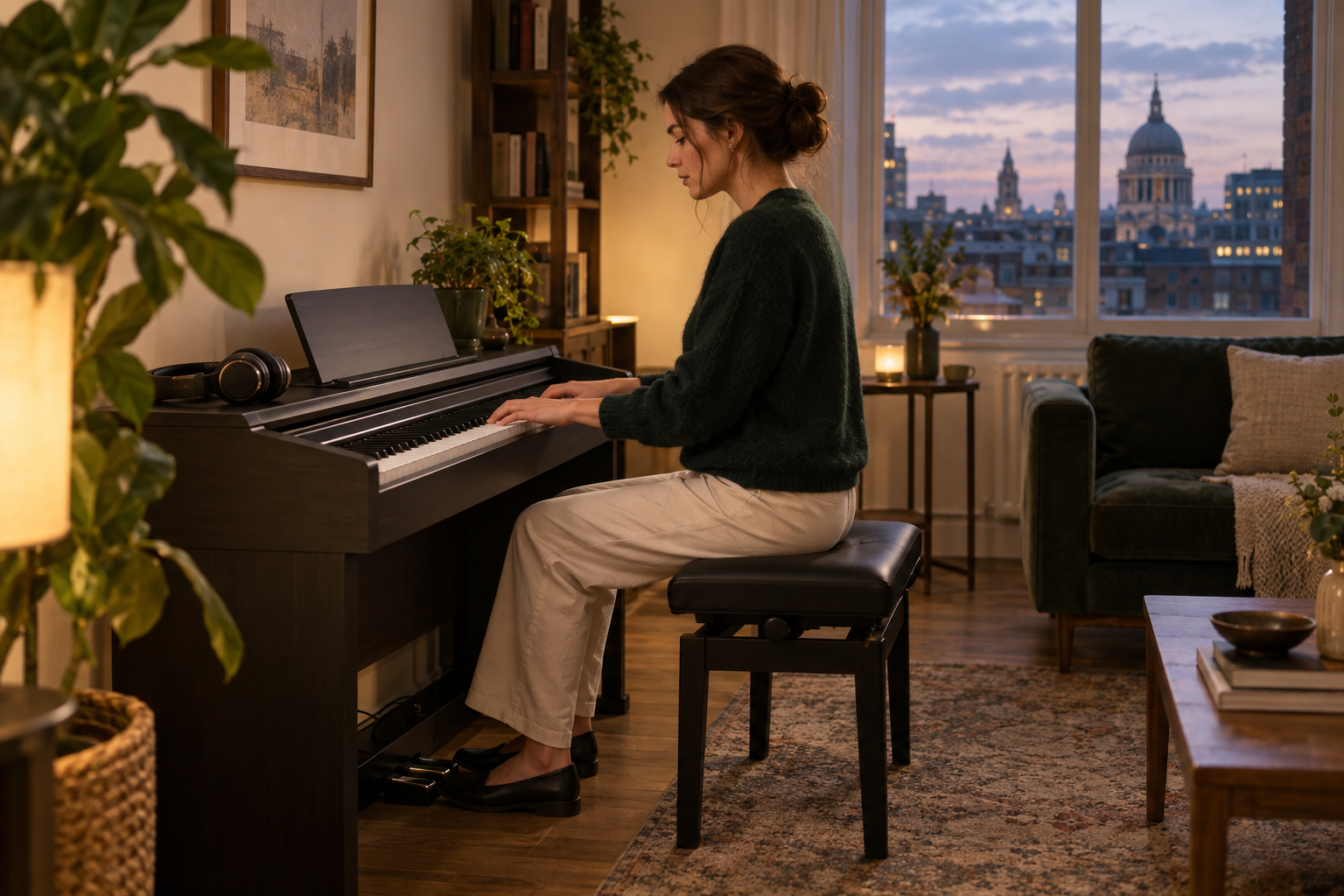
London learners often balance floor space, neighbours, household schedules and the wish for a real piano response. Headphones can make frequent practice possible, while built-in speakers reveal balance differently and should be used regularly at a considerate level. Before buying, measure the complete setup, including bench depth and pedal position, and check whether the instrument can remain ready rather than being packed away after every session.
WKMT’s beginner keyboard guide discusses current practical options, while its article on serious digital piano practice explains how to use recording, speakers and acoustic transfer. Bring the exact model name or a short playing video to a first lesson. A teacher can help distinguish a workable weighted keys beginner piano from features that look persuasive online but do little for the music you want to play.
See what the key sets in motion
Piano technician and educator Robert Grijalva demonstrates the connected levers, hammer and escapement within a grand-piano action. Watching the mechanism clarifies why a piano key feels unlike a simple switch. Video attribution: embedded from YouTube for educational commentary; all rights remain with Robert Grijalva and the rights holder. WKMT is not affiliated with or endorsed by the creator.
WKMT London
Build an adult piano course around a playable home instrument, clear technical guidance and regular experience of an acoustic piano in London.
Sources on weighted keys beginner piano
- ABRSM: Piano Performance Grades specification
- Metropolitan Museum of Art: Keyboard Instruments bulletin
- University of Minnesota Duluth: Biomechanics Piano Study
- University of Michigan: The Virtual Piano Action
- BAPAM: Healthy practice and return-to-play guidance
- Music for All: Buying a musical instrument guide
Sources checked 14 October 2026. Educational guidance; individual circumstances and progress vary.