
 TRIAL LESSON
Piano Lessons
How Many Years Does It Take to Learn Piano? A More Useful Answer for Adults

Oct
WKMT London adult learner guide
How Many Years Does It Take to Learn Piano? A More Useful Answer for Adults
Adults often ask for a finish date because they want to know whether lessons will justify the time. Piano study is better measured by musical freedoms: reading a simple score, shaping a phrase, learning independently and performing music that once seemed out of reach.
In brief
How many years to learn piano? Most adults can play short, satisfying pieces within three to six months of regular study. One to two years can establish reading, coordination and a dependable practice routine; three to five years can support confident intermediate repertoire. Advanced artistry takes longer and remains open-ended. Progress depends more on consistency, teaching, repertoire fit and practice quality than on age alone.
How many years to learn piano depends on the goal
Learning piano can mean playing a familiar melody, reading both staves, accompanying a singer, passing graded examinations, performing a Chopin nocturne or developing a personal recital programme. These outcomes sit at different distances. A useful timeline begins with the music an adult wants to make, not with a universal label such as complete.
A beginner who practises four focused sessions each week may build a small repertoire within months. Comfortable independent learning takes longer because it combines reading, rhythm, listening, technique and judgement. The question is therefore not simply how many years to learn piano, but which musical abilities should become dependable at each stage.
What adults can expect in the first year
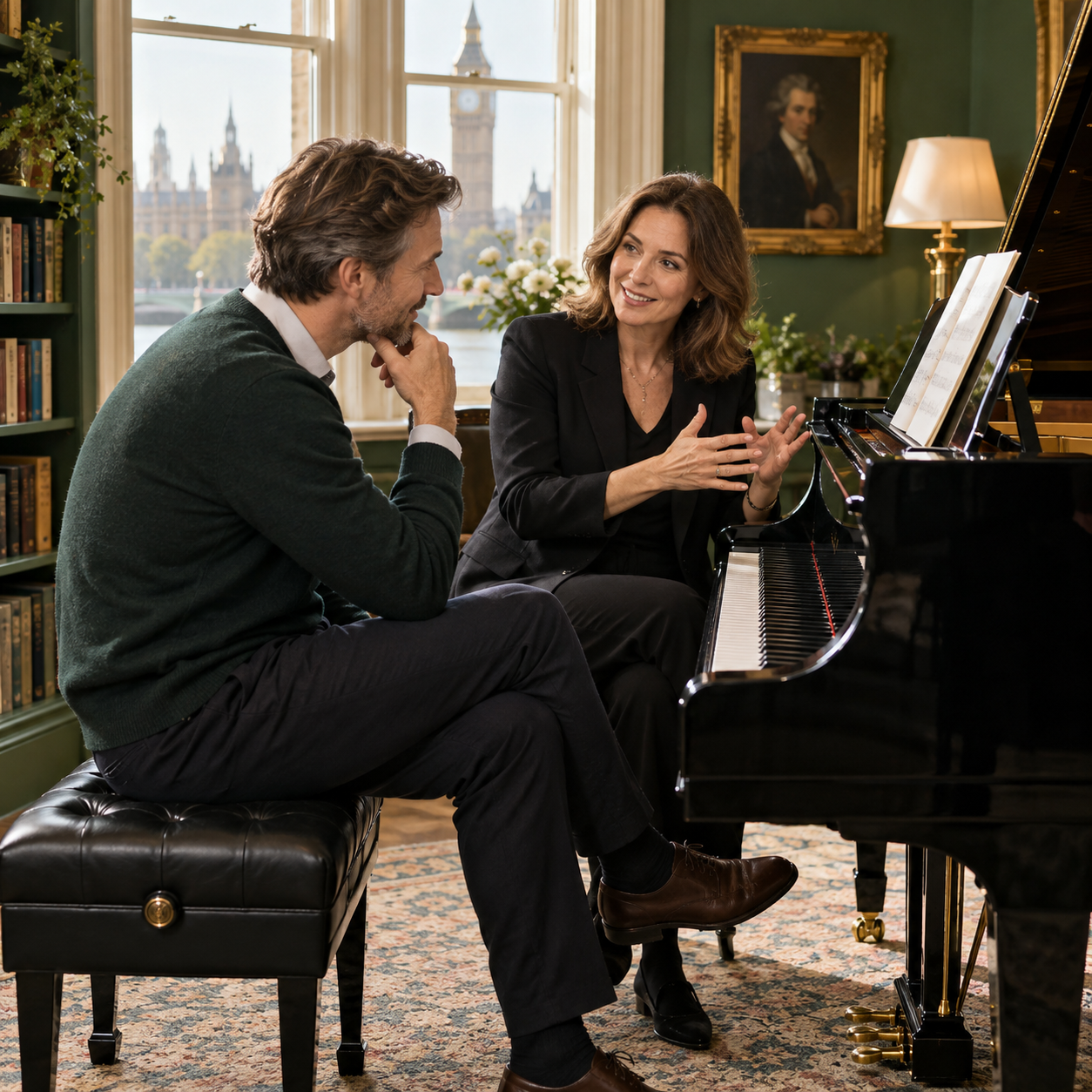
During the first three months, many learners establish keyboard geography, basic pulse, simple five-finger coordination and a few short pieces. By six months, they may read uncomplicated hands-together textures, use basic pedal and hear when rhythm or balance needs correction. Progress is rarely even: one skill may move quickly while another needs patient reinforcement.
By the end of a thoughtful first year, an adult should possess more than a list of completed pieces. They should know how to begin a new score, isolate a difficulty, practise slowly without losing musical direction and listen critically. Adult piano lessons at WKMT can organise those skills around individual experience, time and repertoire.
A realistic three-to-five-year picture
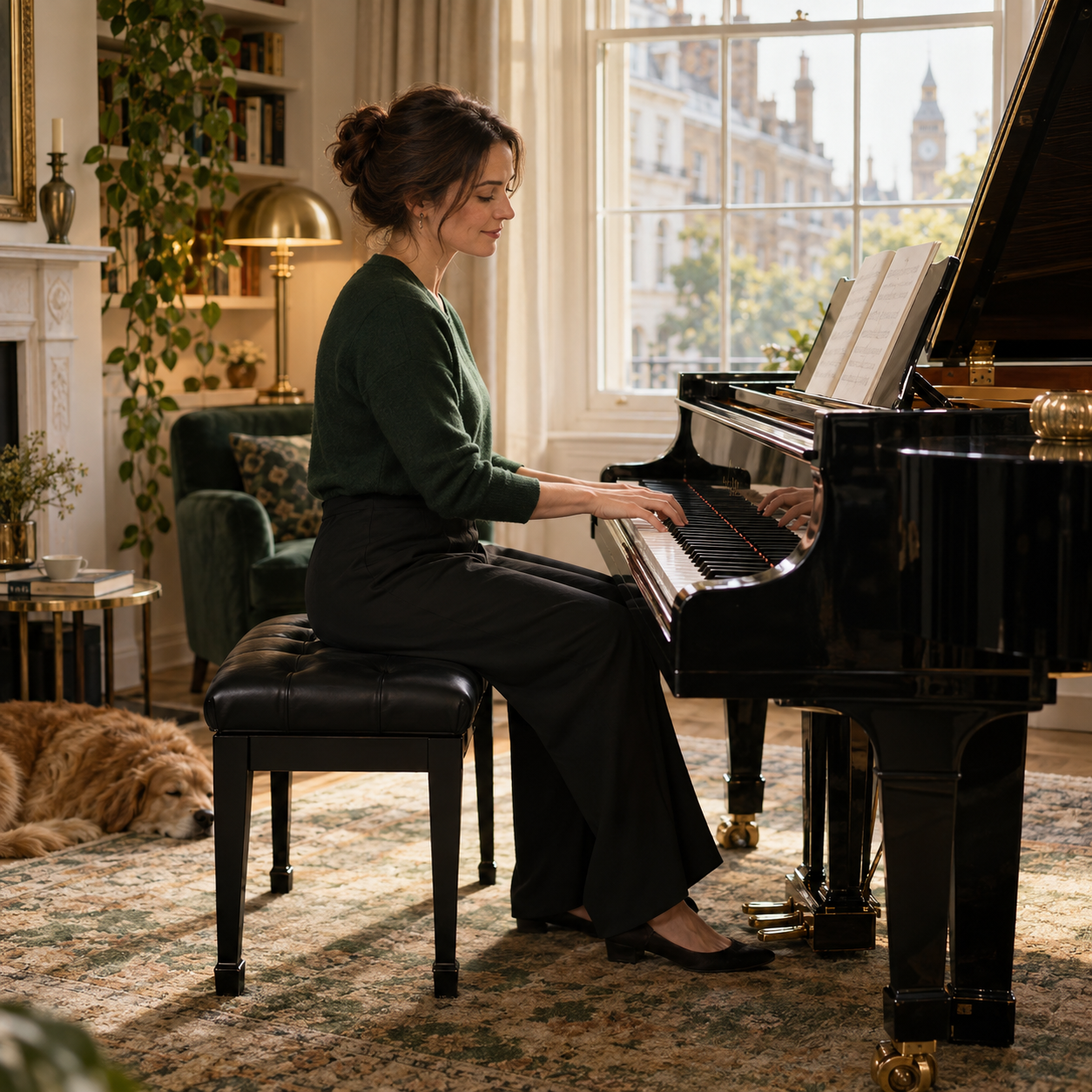
Over two or three years, regular learners can develop broader reading, more reliable coordination, greater tonal control and a repertoire that reflects personal taste. Intermediate pieces demand layered listening: one hand may sing while the other supports, pedalling must follow harmony and longer forms require memory of direction rather than isolated bars.
Three to five years can produce genuine independence, but it is not a guarantee tied to the calendar. Someone practising attentively for twenty-five minutes on most days may progress more securely than someone relying on occasional long sessions. WKMT’s guide to efficient piano practice shows how precise goals and immediate feedback make time more productive.
The most useful timeline is not years until finished, but months between freedoms that once felt impossible.
Why hours alone do not predict musicianship
Research on expertise emphasises purposeful work, but the popular idea of a fixed number of hours is too crude for ordinary learning. Repetition only helps when the learner notices the result and adjusts. Good teaching reduces wasted effort by choosing manageable material, diagnosing movement and giving the ear a clear model.
Sleep, spacing and recovery also matter because motor learning settles between sessions. Practising every day without reflection can rehearse tension or inaccurate rhythm. A better weekly pattern combines focused work, easier continuity playing, listening and occasional recording. Adults need sustainable attention, not heroic fatigue.
Measure progress by musical freedoms
Keep a simple record of what has become easier: finding a starting note, maintaining pulse, reading a new phrase, balancing melody, recovering after a slip or learning without fingering every note again. These are durable gains. They show that the learner is acquiring tools rather than merely repeating one piece until it survives. A teacher can answer how many years to learn piano more honestly when these musical freedoms are visible.
If the question remains how many years to learn piano, use milestones instead of a deadline. Choose one piece for fluency, one for reading, one technical pattern and one listening goal each term. WKMT’s advice on building a daily piano routine can help turn intention into regular work. The reward is not reaching the end of piano, but gaining more music to understand and enjoy.
WKMT London
Build an adult piano plan around your present level, available time and the repertoire you genuinely want to play.
Explore adult piano lessonsSources on how many years to learn piano for adults
- University of Texas: Intelligent Music Practice
- University of Texas: Tips for Effective Practice
- University of Colorado: The Role of Deliberate Practice
- Royal College of Music: Centre for Performance Science
- LSU repository: self-regulation of pianists
- Georgia Southern: beginning older adult instrumentalists
Sources checked 12 October 2026. Educational guidance; individual circumstances and progress vary.