
 TRIAL LESSON
Piano Lessons
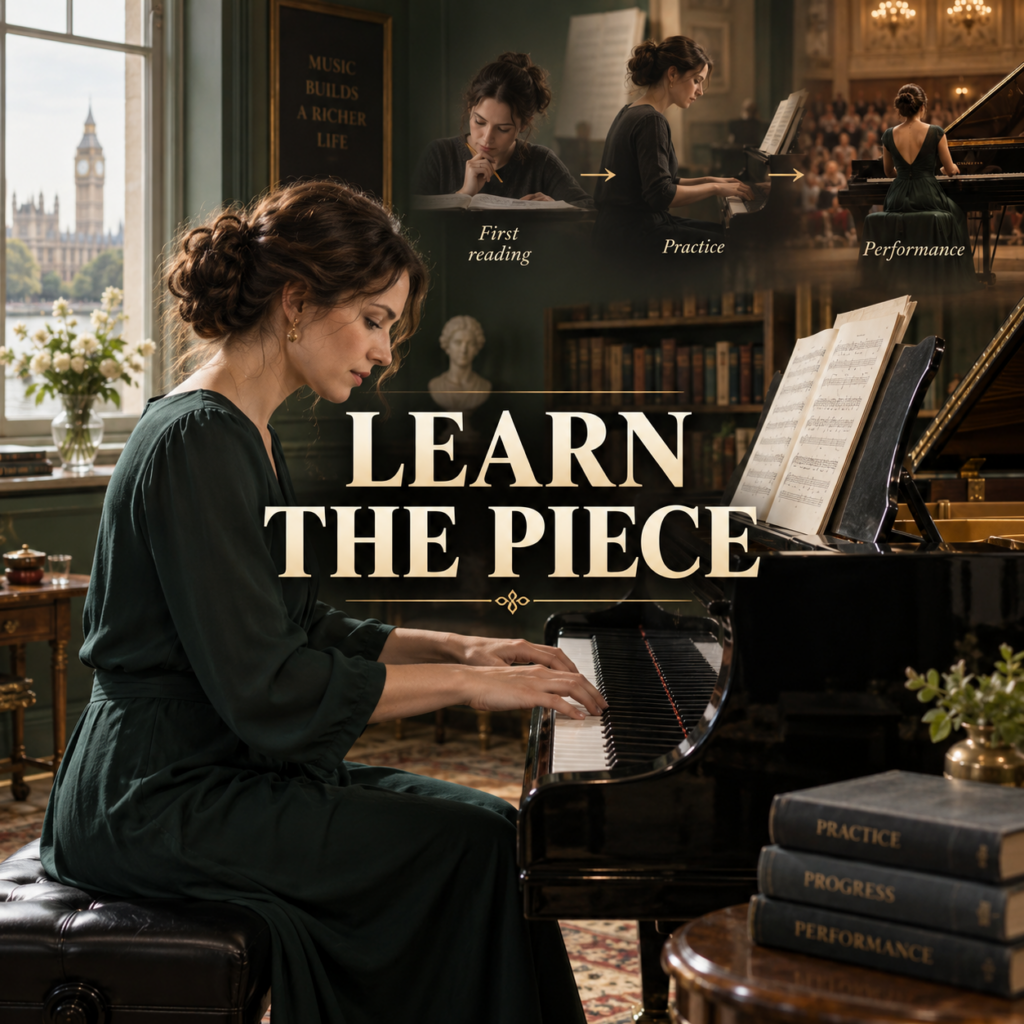
How to Learn a Piano Piece: An Adult’s Route from First Reading to Performance
Oct
WKMT London adult learner guide
How to Learn a Piano Piece: An Adult’s Route from First Reading to Performance
Learning a piece is not a straight climb from wrong notes to a correct run-through. It is a cycle of reading, listening, solving, connecting and testing. Adults progress faster when each stage has a clear purpose and when repetition remains attentive rather than merely frequent.
In brief
To learn a piano piece, first preview its form, key, metre, patterns and difficult points. Hear and finger small units slowly, practise hands separately only where useful, then reconnect phrases with overlap. Alternate detailed work with complete play-throughs, test starting points away from the beginning, record yourself and schedule spaced reviews. Increase tempo only when movement, rhythm and sound remain secure.
How to learn a piano piece before playing every note
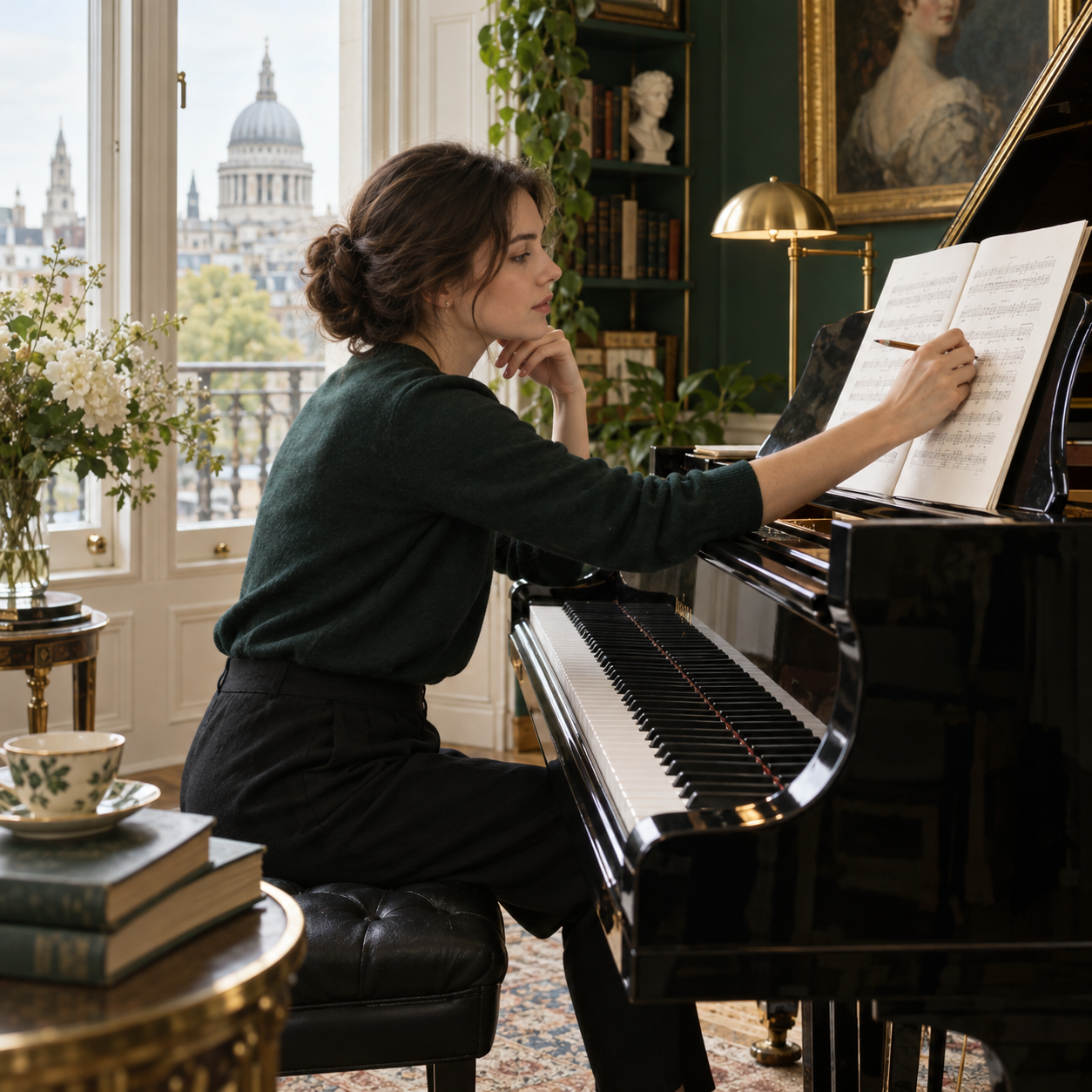
Begin away from the keyboard. Read the title, composer, tempo, key signature and metre. Scan for repeats, changes of texture, cadences and the most demanding bars. Divide the score into meaningful sections and mark a few starting points. This first map prevents the piece from becoming one long corridor entered only at bar one.
Play or sing the bass line, then the principal melody. Notice recurring motives and harmonic destinations. A short preview allows the ear to form expectations before the fingers accumulate habits. When adults ask how to learn a piano piece efficiently, this structural orientation is often the missing first step.
Solve small units with sound and movement together
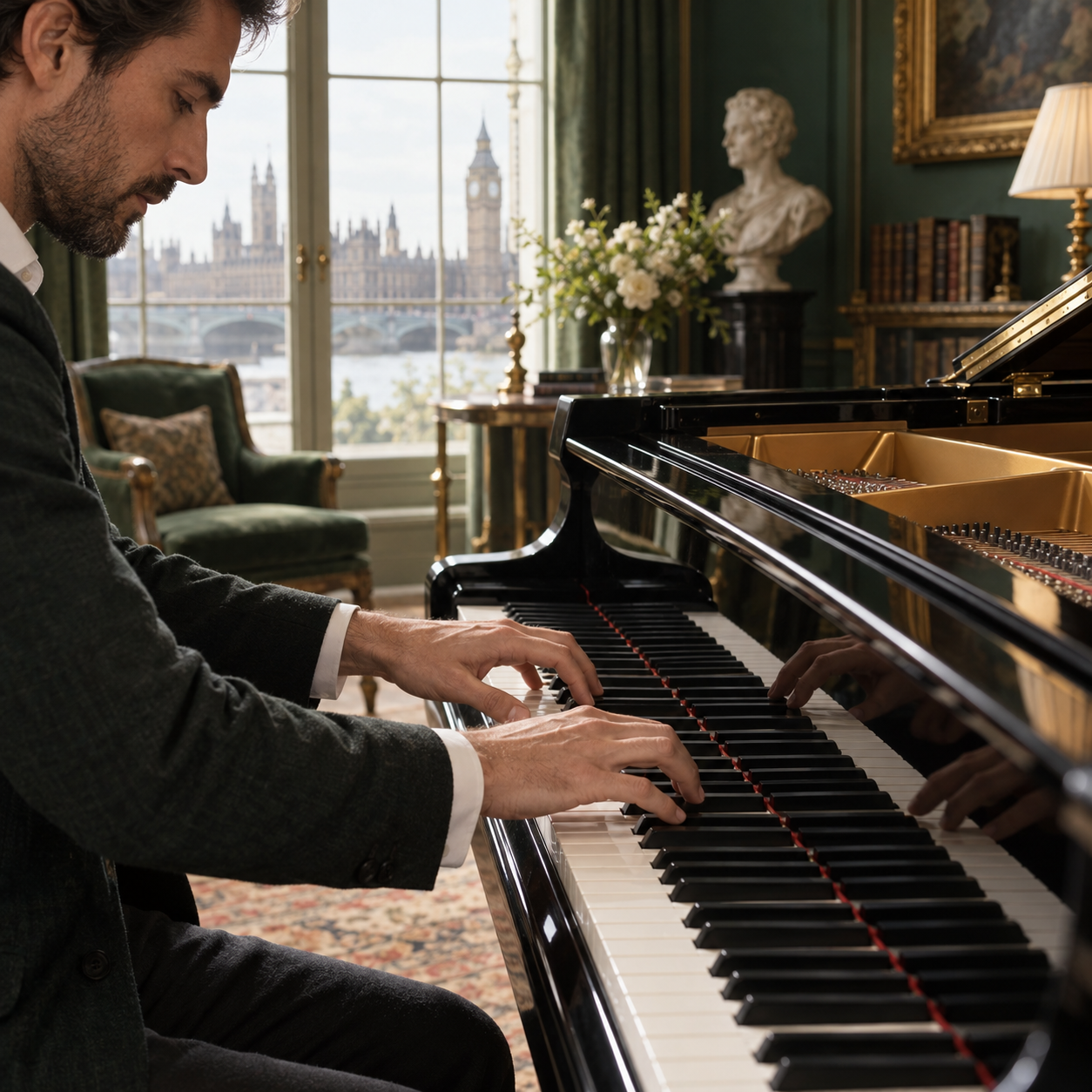
Choose a unit short enough to remember accurately: perhaps one beat, one gesture or one phrase. Decide the fingering, hear the rhythm and play at a tempo that permits comfortable movement. Repeat only while attention remains specific. Three thoughtful versions with a changed balance or release are more useful than twenty identical attempts.
In adult piano lessons in London, a teacher can distinguish a reading problem from a technical or aural one. WKMT’s guide to slow practice at the piano explains why reduced tempo works only when it preserves the movement and listening needed later.
Connect phrases with overlaps, not hopeful run-throughs
After solving two units, overlap their boundary. Begin a beat or bar before the join and continue beyond it. Then vary the starting point. This prevents the first bar from becoming the only reliable cue and exposes transitions that disappear during separate practice. Hands-separate work can clarify texture, but it should return promptly to coordinated listening.
If the same mistake recurs, diagnose it rather than starting again. Is the fingering unsettled, the rhythm unheard, the harmony unclear or the movement late? The answer determines the next practice mode. Knowing how to learn a piano piece means choosing a method that fits the error instead of applying slow repetition to everything.
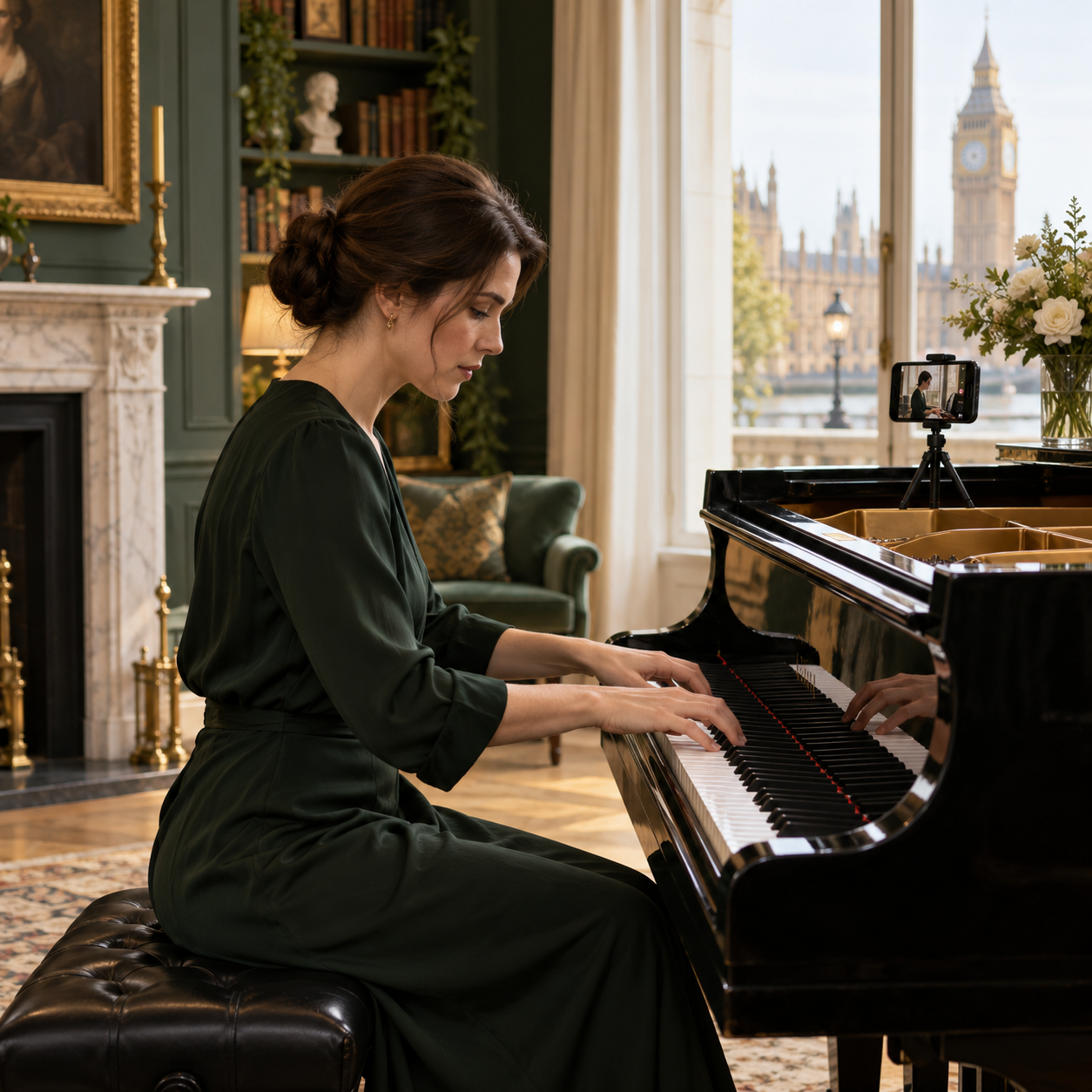
A piece becomes dependable when memory has several routes and every detail still belongs to the whole.
Build tempo, memory and interpretation in parallel
Tempo should rise in small steps only when the gesture remains easy and the musical shape survives. Alternate a comfortable tempo with brief faster tests, then return to check whether tension appeared. Memory also deserves multiple routes: visual landmarks, harmonic understanding, inner hearing and physical sequence should support one another.
Interpretation does not wait until the notes are finished. Decide where a phrase travels, which voice leads and how pedal clarifies harmony from the beginning. Record a short section and listen without the score. WKMT’s guide to recording your piano playing can help separate intention from the result that actually reaches a listener.
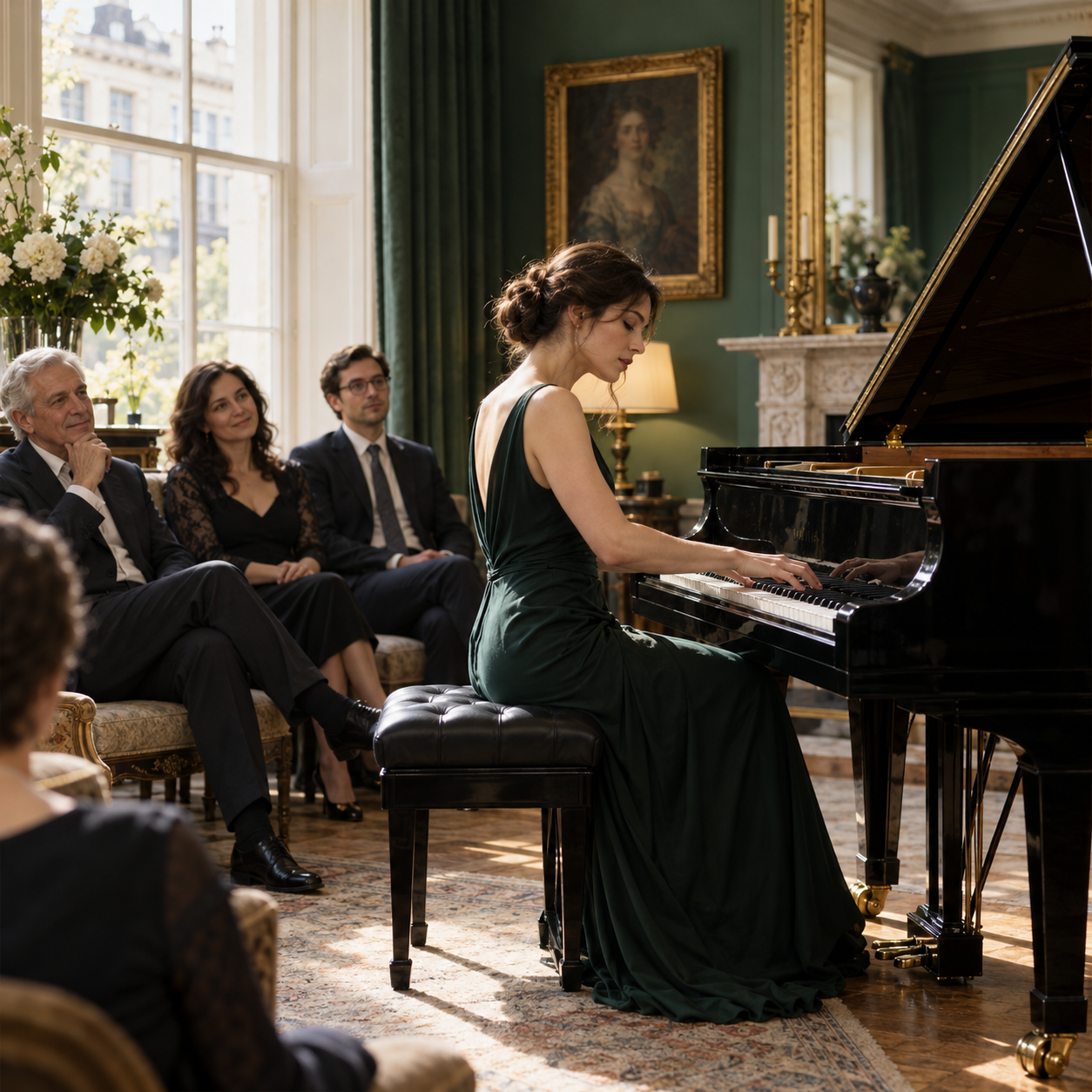
Rehearse performance, recovery and the next day
Complete play-throughs are tests, not the whole practice session. Before one, choose a performance condition: no stopping, a clear opening tempo and one musical priority. Afterwards, write down two repair points and work on them separately. Practise recovering from several internal starting places so a small slip does not erase the entire piece.
Finish by playing one secure passage musically and naming tomorrow’s first task. Spaced return matters because learning continues between sessions. The best answer to how to learn a piano piece is therefore a rhythm of focused repair and widening continuity: detail becomes phrase, phrase becomes form, and form becomes a performance that can survive attention, nerves and time.
WKMT London
Build an adult practice method that turns limited time into secure technique, deeper listening and persuasive performance.
Explore adult piano lessonsSources on how to learn a piano piece
- Royal College of Music Centre for Performance Science
- BAPAM: healthy practice resources
- Oxford Handbook of Music Performance
- PMC: music practice and self-regulation
- Frontiers: distributed practice and motor learning
- The Musician’s Way research resources
Sources checked 11 October 2026. Educational guidance; individual circumstances and progress vary.