
 TRIAL LESSON
Piano Lessons
Hand Independence at the Piano: What Adult Learners Are Really Coordinating
Oct
WKMT London adult learner guide
Hand Independence at the Piano: What Adult Learners Are Really Coordinating
Two hands rarely become independent by being trained as strangers. At the piano they must share a pulse while carrying different rhythms, touches and dynamic priorities. Adult learners progress faster when this is treated as a coordination problem with clear stages.
In brief
Hand independence piano practice means learning to coordinate distinct roles between the hands while maintaining one musical pulse. Practise each part until its rhythm and fingering are clear, reduce both hands to a shared rhythmic skeleton, combine very short units slowly, and restore dynamics and articulation gradually. Tension and repeated breakdowns usually signal that the task is still too complex.
Hand independence piano playing is coordinated dependence
One hand may sing while the other accompanies, or one may sustain notes while the other moves. The actions differ, but they are organised by the same metre, harmony and phrase. Thinking of two unrelated streams can increase mental load. A better question is where the hands meet, alternate, support or release together.
Research on bimanual performance shows that skilled pianists develop specialised control through long practice. That does not mean an adult beginner should force neurological adaptation with mechanical repetition. Hand independence piano skill grows when the musical relationship is simplified enough to be understood and repeated accurately.
Prepare each hand beyond mere note accuracy
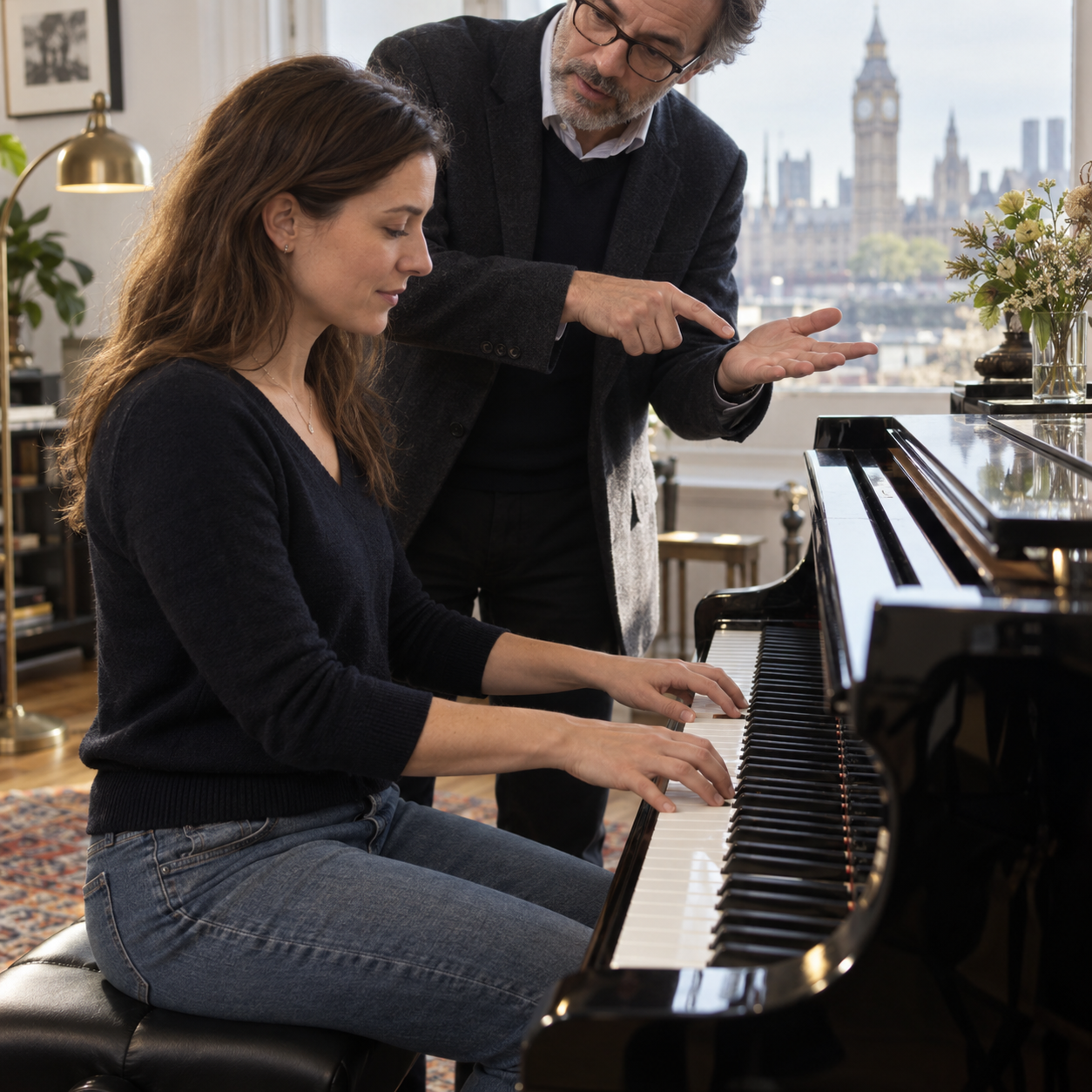
Separate-hand work is useful only when the part has rhythm, fingering and direction. Play the left hand while singing the right; then reverse the task. Tap one rhythm while speaking the counts of the other. These exercises create an inner representation of the missing part rather than allowing each hand to live in isolation.
In adult piano lessons in London, a teacher can identify whether the obstacle is reading, fingering, rhythm or attention. Hand independence piano difficulties often disappear when the true bottleneck is repaired. WKMT’s guide to slow piano practice offers a related framework for hearing more at a manageable speed.
Build a shared rhythmic skeleton
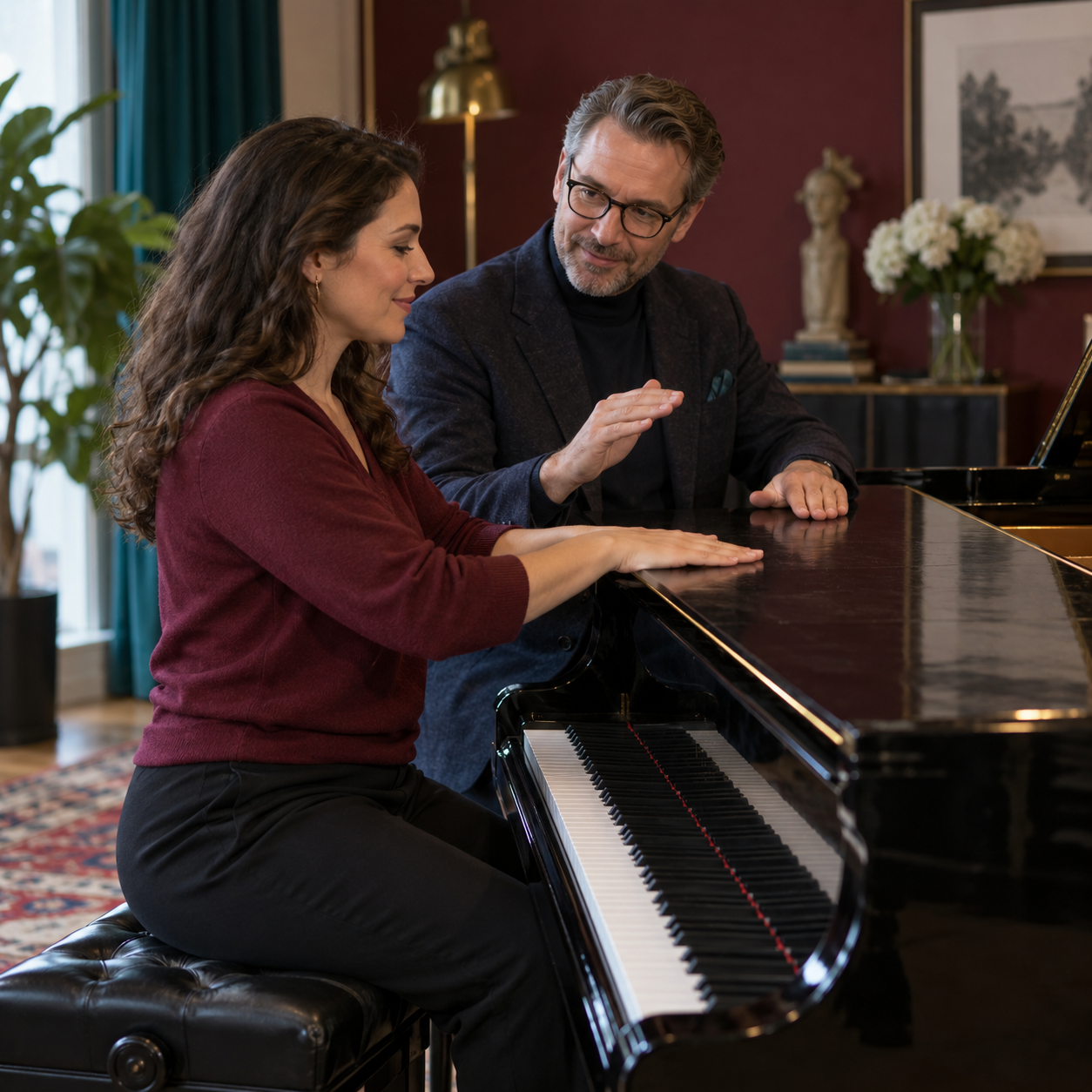
Reduce a passage to the notes that occur on each beat. Play those landmarks together and notice which attacks coincide. Add the notes between beats only after the skeleton feels stable. This turns a dense texture into a coordination map and prevents slow practice from becoming a vague crawl through every symbol.
For unequal rhythms, choose the smallest useful pulse and mark how each hand fits inside it. Do not count faster than you can hear. Hand independence piano practice succeeds when the subdivision becomes an internal grid and the hands can place different events within it without tightening.
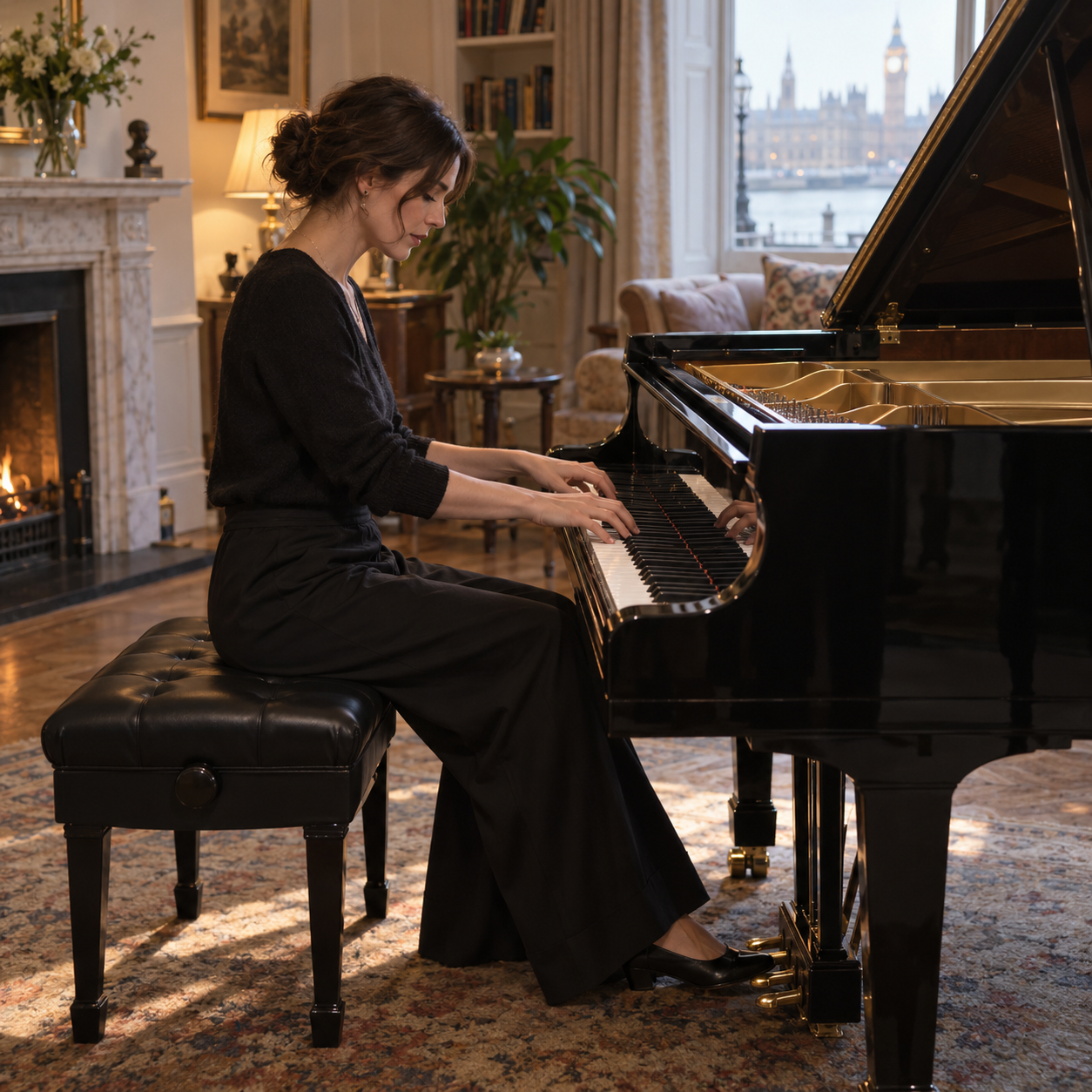
Two-hand freedom arrives when different actions are organised by one pulse and one musical intention.
Balance, articulation and attention
Correct simultaneity is only the beginning. A melody and accompaniment require different weights; a legato line may sit above detached chords; one hand may need attention while the other runs on a secure pattern. Practise the accompaniment very softly while singing the melody, then play both and retain the same hierarchy.
Shift attention deliberately. Listen once to the bass, once to the melody and once to the joins between them. Skilled coordination does not mean attending equally to everything at every moment. It means that stable patterns free attention for the part carrying the musical decision. This is a central hand independence piano principle.
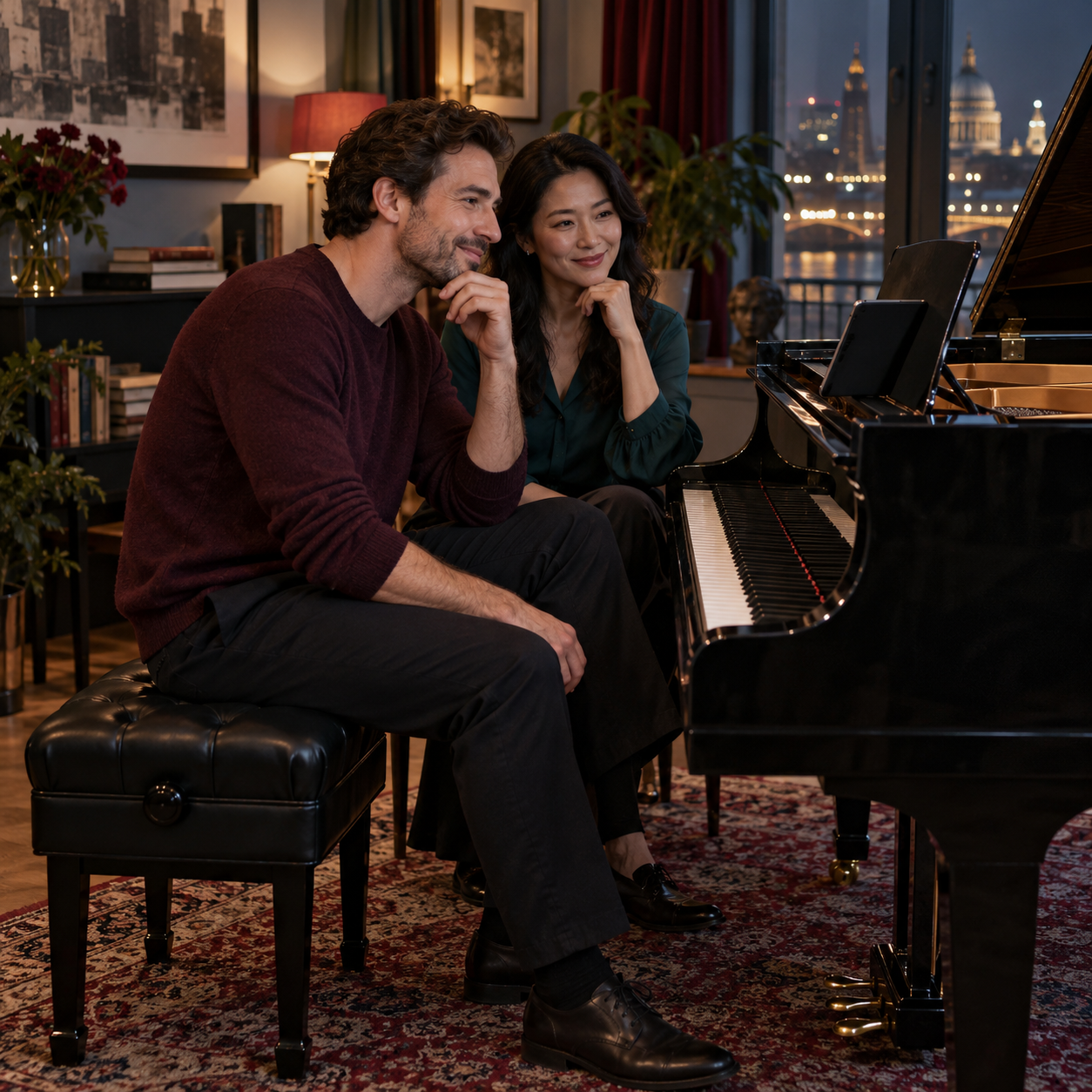
A seven-step route for difficult bars
Choose one or two bars. Confirm each fingering; tap both rhythms; play only shared beats; add the intervening notes; repeat at a comfortable tempo; restore dynamics; then connect one bar before and after. Stop after several accurate repetitions rather than rehearsing fatigue.
The next day, begin with both hands once before dismantling the passage. That test shows what memory retained. Hand independence piano progress is rarely dramatic in one sitting, but it compounds when coordination is rebuilt without panic. The destination is not two autonomous hands; it is one musical intention realised through two well-organised parts.
WKMT London
Build secure two-hand coordination through teaching that adapts rhythm, fingering and practice structure to the adult learner.
Explore adult piano lessonsSources on hand independence piano
- PMC: left-hand piano practice and bimanual control
- PubMed: interhemispheric inhibition and musicians’ dexterity
- PLOS ONE: neural mechanisms of bimanual coordination
- ScienceDirect: acquisition of individuated finger movements
- BAPAM: healthy practice guidance
- Royal College of Music Centre for Performance Science
Sources checked 7 October 2026. Educational guidance; individual circumstances and progress vary.