
 TRIAL LESSON
Piano Lessons
Brain Development Activities: A Careful Parent’s Guide to What Piano Can Support

Oct
WKMT London parent guide
Brain Development Activities: A Careful Parent’s Guide to What Piano Can Support
Parents are often offered grand claims about music and the brain. Piano learning does engage attention, memory, hearing and coordinated movement, but its strongest value begins with music itself. A careful approach replaces miracle promises with rich, repeatable experiences.
In brief
Useful brain development activities at the piano include copying short rhythms, singing before playing, finding patterns, coordinating two hands, recalling a phrase and inventing a musical answer. These tasks can exercise attention, working memory, auditory prediction and fine movement. Research suggests possible developmental benefits, but effects vary and piano lessons are education, not treatment or a guaranteed route to higher intelligence.
Brain development activities begin with meaningful music
The nervous system learns through repeated, attentive action. At the piano, a child sees a pattern, imagines or hears a sound, chooses a movement and receives immediate feedback. This chain makes musical study unusually integrated, yet integration matters only when the task is understandable. Random finger drills are less useful than a short phrase the child can hear, remember and shape.
The best brain development activities therefore have a musical goal. Copying a rhythm should lead to a pulse; recognising a repeated shape should help the child predict a phrase; coordinating the hands should create a texture worth listening to. Meaning supports motivation, and motivation makes careful repetition possible.
Listening and memory games at the piano
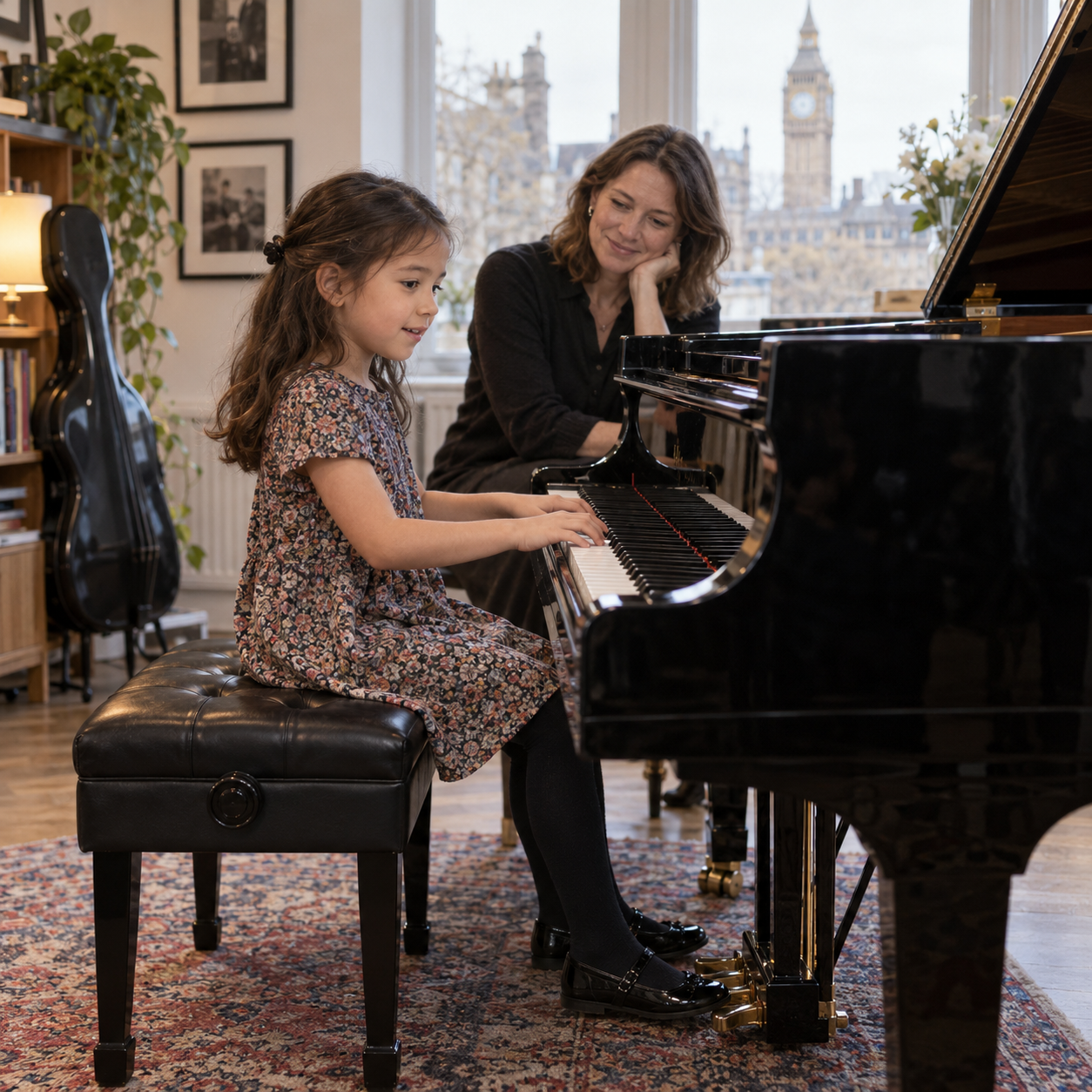
Play a two- or three-note pattern while the child looks away. Ask them to sing it, tap its rhythm and then find it on the keyboard. Change one feature at a time. This practises auditory attention and short-term retention without overloading the learner. The game can grow as the child becomes more secure.
In children’s piano lessons in London, such brain development activities can be adjusted to the individual child. WKMT’s guide to auditory memory activities explains how grouping and prediction make recall more musical than simple repetition.
Movement, pulse and two-hand coordination
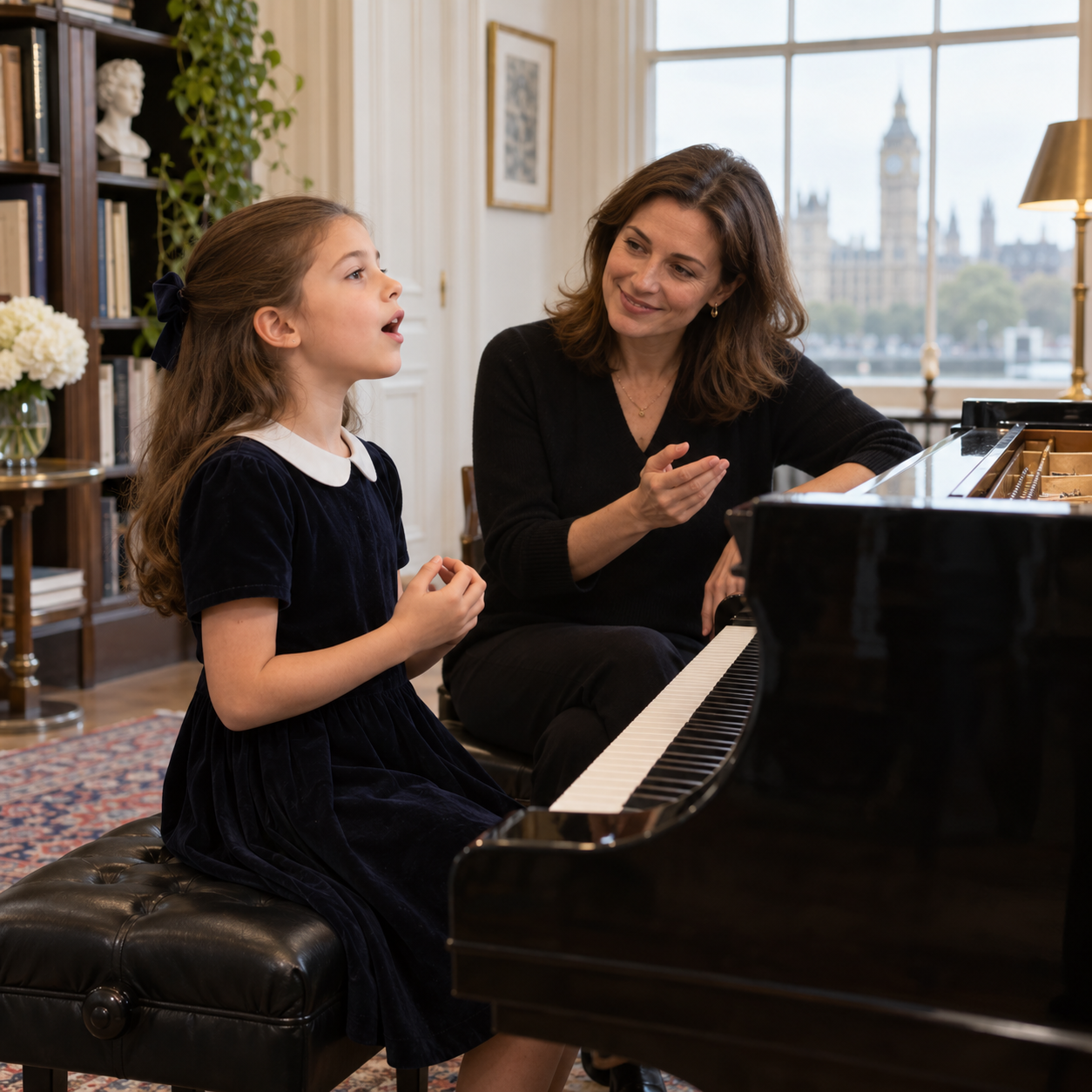
Ask one hand to keep a steady two-note pattern while the other plays a slower answer. Begin with tapping away from the keyboard, then use one comfortable key per hand. The aim is not true independence, as though the hands belonged to separate players. It is coordinated attention: each part has a role within one shared pulse.
Movement-based brain development activities should stay relaxed. A child who stiffens, holds the breath or loses the beat needs a simpler pattern. Walking a pulse, clapping accents and moving between high and low registers can connect whole-body timing with smaller finger actions. Musical accuracy grows more reliably when the body is not fighting the task.
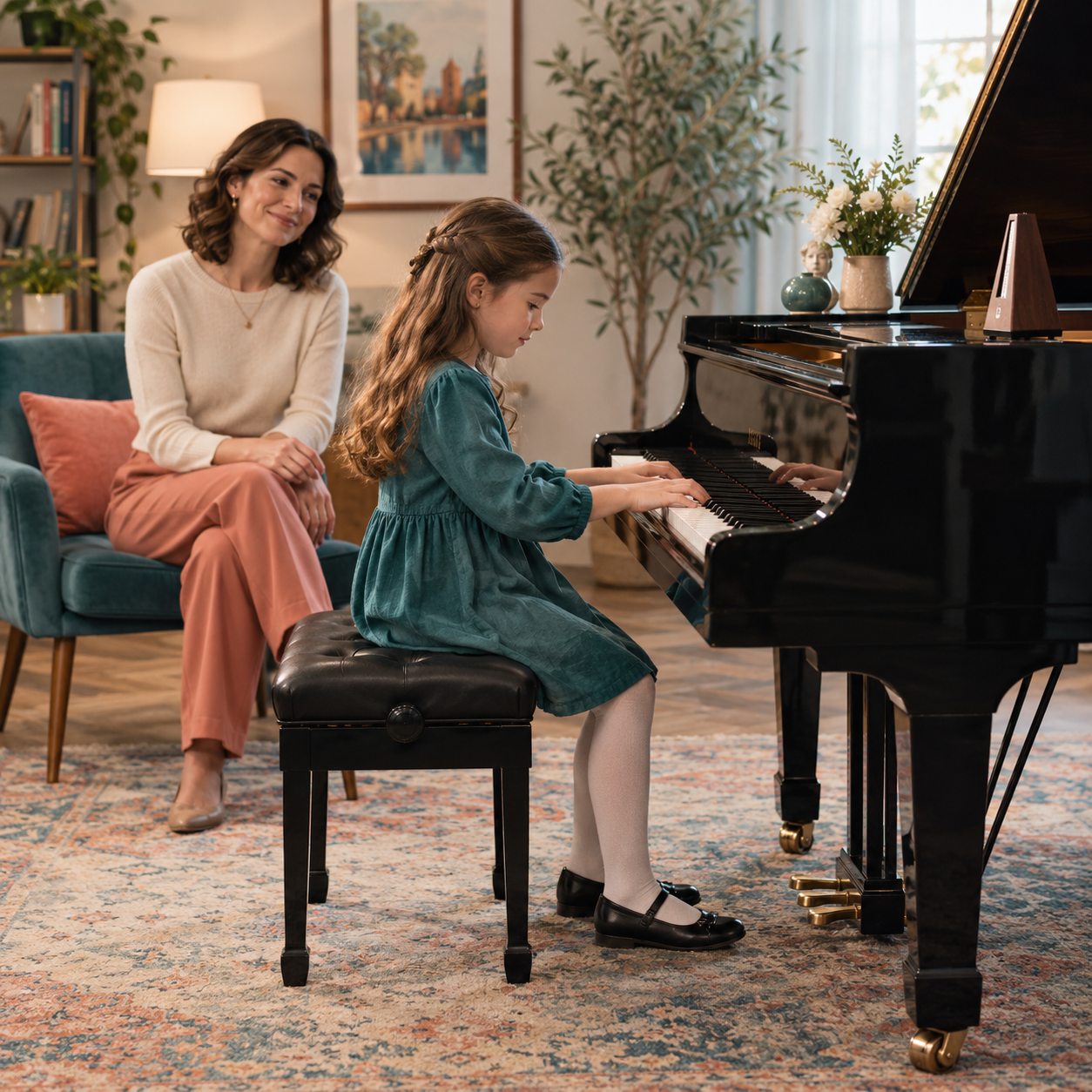
The strongest claim for piano is also the most honest: it gives a child complex musical experiences worth attending to.
What research can and cannot promise
Systematic reviews and meta-analyses report promising associations between music education and areas such as executive function, memory and motor development. They also find substantial variation between studies, age groups, teaching structures and outcome measures. Better-designed studies often produce smaller effects than enthusiastic headlines suggest.
Parents should be cautious when brain development activities are sold as a clinical intervention or an intelligence shortcut. Piano lessons cannot diagnose developmental differences and should not replace specialist care. Their defensible benefit is rich musical learning: sustained attention, listening, expression, persistence and coordinated action practised in a responsive relationship with a teacher.
A ten-minute family routine
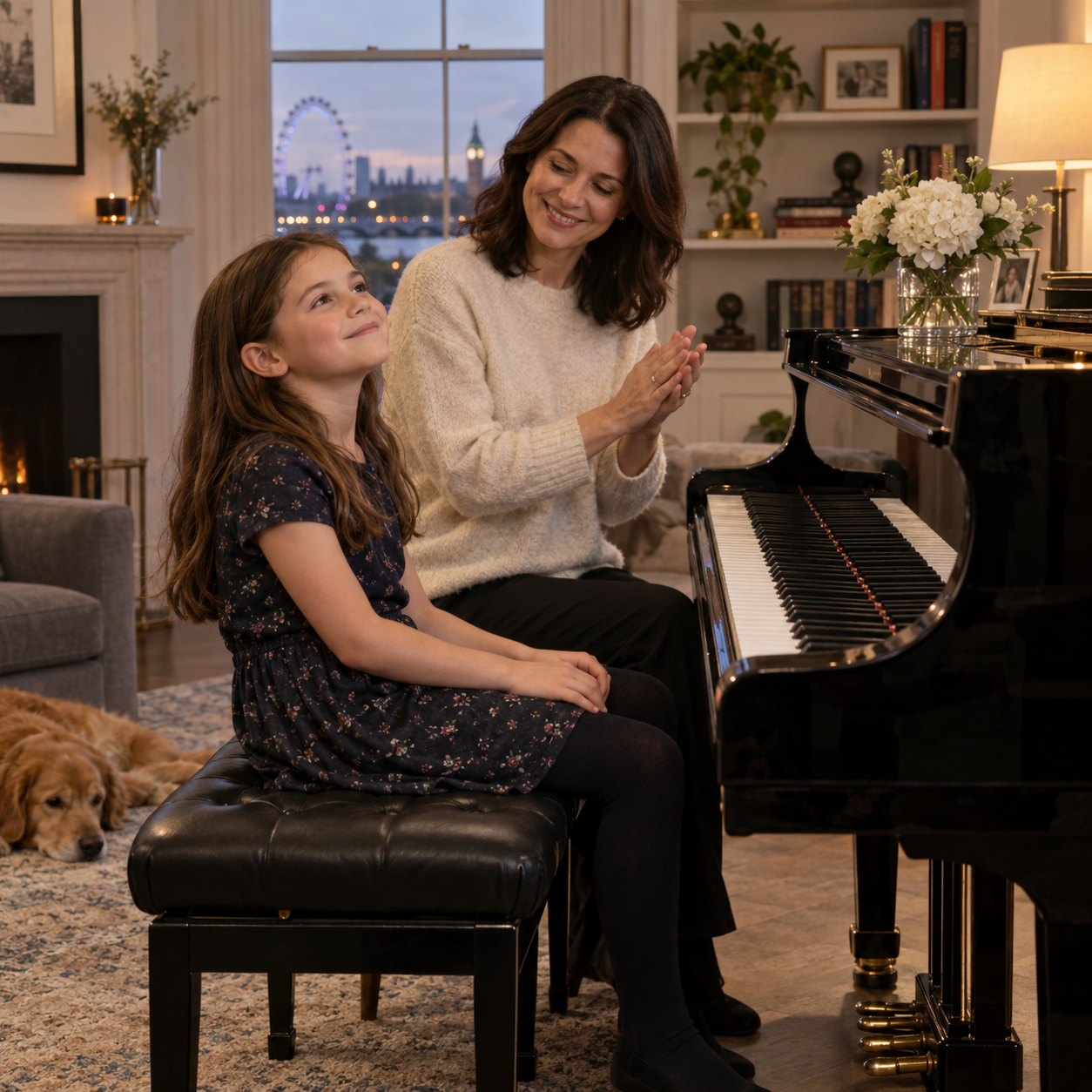
Spend two minutes echoing rhythms, two minutes singing and finding a three-note pattern, three minutes on a familiar piece, two minutes inventing an ending, and one minute asking what the child noticed. Keep the challenge slightly below the point of frustration so attention remains available for sound.
Repeat the routine on several days and vary only one element. These brain development activities work through continuity, not novelty for its own sake. Progress is visible when the child predicts, self-corrects, remembers a starting point or shapes a phrase with less prompting. The musical behaviour matters more than a score on an unrelated brain-training game.
WKMT London
Give your child a thoughtful musical environment where listening, movement, memory and imagination can develop together.
Explore children’s piano lessonsSources on brain development activities
- PubMed: meta-analysis of music education and executive function
- PMC: music intervention and paediatric neurodevelopment meta-analysis
- PMC: critical review of music interventions and child development
- PMC: music and rhythm in children’s cognitive development
- Educational Research Review: cognitive transfer meta-analysis
- Harvard Center on the Developing Child: executive function
Sources checked 7 October 2026. Educational guidance; individual circumstances and progress vary.